Player Training
Fuel the Fire: How to Keep Players Motivated with Practice Goals
Discover proven strategies and practical drills to keep your basketball and netball players engaged, motivated, and driven through effective goal setting.
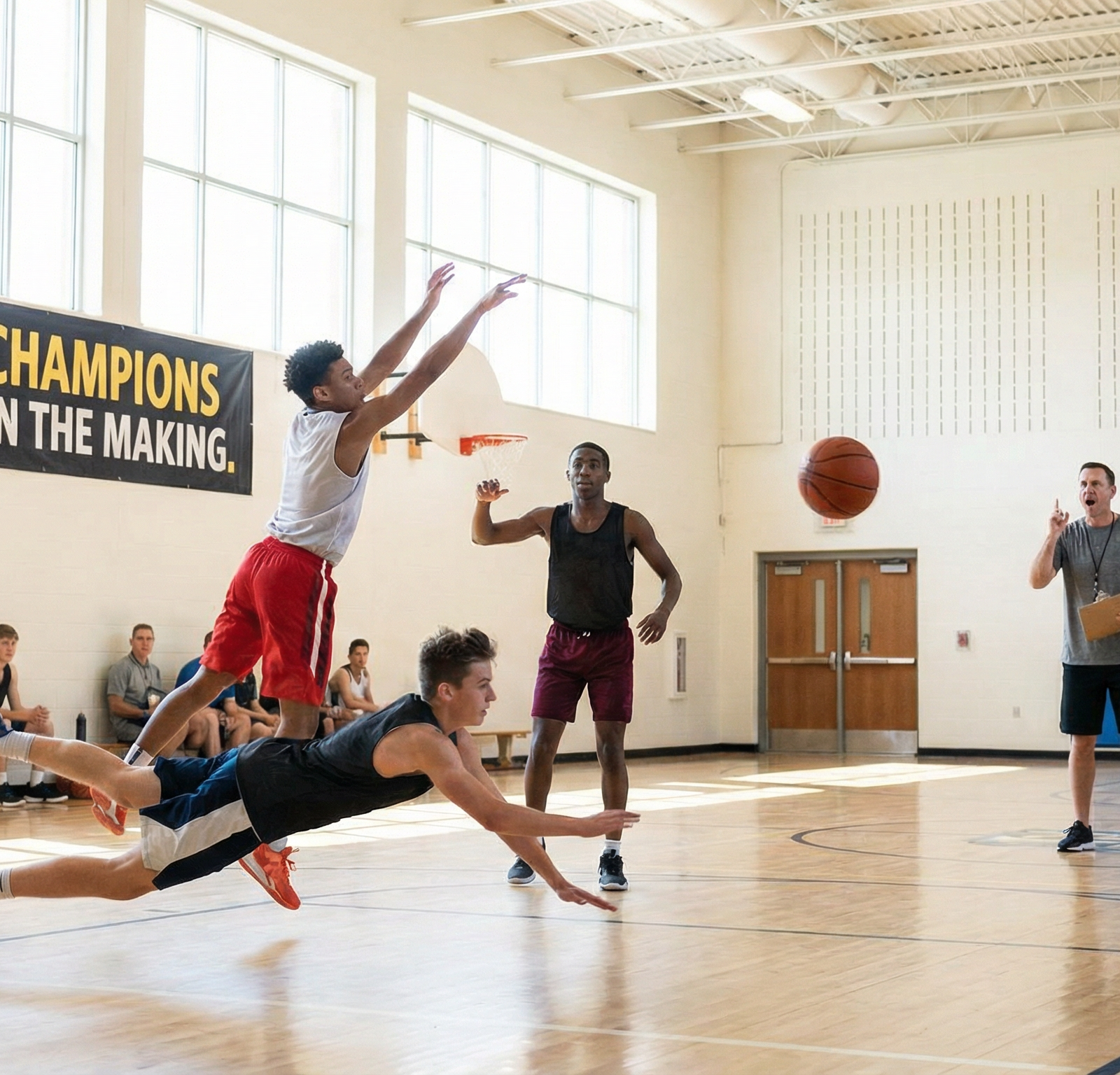
Fuel the Fire: How to Keep Players Motivated with Practice Goals
As a coach, you pour your energy into developing your players' skills, strategies, and teamwork. But in a world filled with digital distractions, one of the biggest challenges is keeping young athletes consistently engaged and driven. How do you turn the daily grind of practice from a chore into a challenge they are excited to tackle? The answer lies in the power of effective goal setting.
Setting the right kinds of goals can transform your team's motivation, focus, and performance. It's the difference between players just going through the motions and players who train with purpose. This guide will explore the psychology behind motivation and provide a practical framework for setting and tracking goals that will keep your basketball and netball players fired up all season long.
The Psychology of Motivation: Why Goal Setting is a Game-Changer
Motivation isn't a magical force; it's a psychological process that you can influence. For athletes, motivation is built on three core pillars: purpose, progress, and ownership. When players understand why they are doing a drill, see tangible evidence that they are improving, and feel a sense of control over their development, their inner drive ignites. This is where goal setting becomes your most valuable coaching tool.
Research and experience from top coaches consistently show that clear, well-defined goals lead to enhanced focus, discipline, resilience, and confidence. As the old adage goes, "The way you practice is the way you play the game". By embedding goal-setting into your practice culture, you empower players to take accountability for their effort and see the direct link between their training habits and their in-game success.
The Coach's Playbook: 4 Pillars of a Motivational Environment
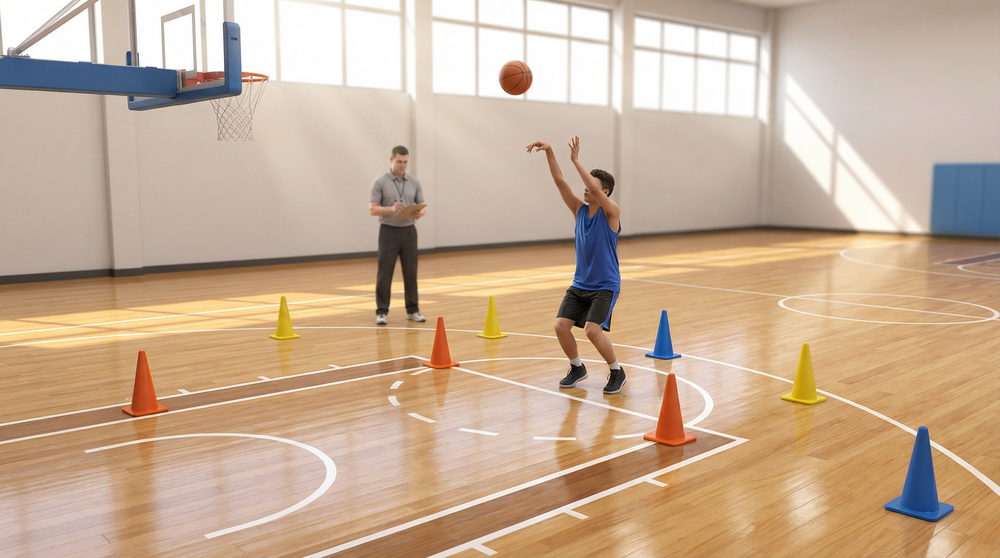
Before you can effectively implement goal-setting with your players, you must first cultivate an environment where motivation can thrive. This involves shifting your coaching perspective in a few key areas.
Pillar 1: Be a Teacher, Not Just a Drill Sergeant
The legendary UCLA coach John Wooden was, first and foremost, a teacher. A study of his methods revealed that a staggering 75% of his interactions with players were instructional moments. He famously used a three-part teaching method: model the right way, show the incorrect way, and then model the right way again. This approach removes judgment and focuses on understanding.
Beyond just showing what to do, always explain the why. When a player understands the biomechanics of why getting low improves their defensive stance or why a specific footwork pattern creates a better scoring opportunity, they internalize the lesson. This knowledge empowers them to self-correct and apply the principles to other areas of their game.
Pillar 2: Celebrate Progress and Reward Growth
Success is the most powerful natural motivator. When players see that their hard work is paying off, they are intrinsically driven to continue. As a coach, you can facilitate this by making progress visible. Track key metrics like shooting percentages, successful pass completions, or defensive stops. Remind players of where they started and show them, with data, how far they've come.
This is where modern tools can make a huge impact. Manually tracking stats for an entire team is time-consuming. A platform like Vanta Sports simplifies this process immensely. With the Vanta Coach App, you can easily plan sessions and track attendance, while the Vanta Player App gives players a tool to log their own goals and achievements. When a player can open an app and see a chart of their free-throw percentage climbing over the past month, it provides instant positive reinforcement that no verbal praise can replicate.
Pillar 3: Foster Team Accountability
While individual goals are crucial, leveraging the power of the team can amplify motivation. Research suggests that peers can be the most effective motivators. Instead of singling out a player who is not giving their full effort, create team-based challenges and rewards.
Set collective goals for a practice or a game. For example, challenge the team to achieve a certain number of assists, secure a specific number of rebounds, or complete a drill with a high success rate. When the team succeeds or fails together, it builds camaraderie and creates positive peer pressure. Teammates will encourage each other to stay focused because they all share in the outcome.
Pillar 4: Make it Fun and Competitive
Practices need to be demanding, but they should also be enjoyable. Instead of ending every session with grueling, non-contextual sprints, integrate conditioning into competitive drills. This not only improves physical fitness but does so in a way that directly relates to the sport. Small-sided games, timed challenges, and drill-based competitions keep the energy high and the players engaged.
Remember, especially for younger athletes, the primary goal is to foster a lifelong love for the game. A positive and fun environment is essential for maintaining that excitement.
The SMART Framework: Your Blueprint for Effective Goals
To ensure the goals you and your players set are effective, they must be well-defined. The SMART framework is a simple and powerful tool used by professionals in sports and business to create actionable objectives.
| Component | Description | Basketball/Netball Example |
|---|---|---|
| Specific | Goals must be clear and unambiguous. | Instead of "Get better at shooting," use "Improve my three-point shooting percentage from the top of the key." |
| Measurable | You must be able to track your progress. | "Increase my free-throw percentage to 80% in practice sessions." |
| Achievable | Goals should be challenging but realistic. | A 10% improvement in shooting accuracy is a great goal; a 50% improvement in one week is likely not. |
| Relevant | The goal must matter to the player. | The goal should align with the player's personal ambitions and the team's needs, not just what a parent or coach wants. |
| Timely | Goals need a deadline to create urgency. | "I will master the crossover dribble with my non-dominant hand within the next 6 weeks." |
Using the SMART framework transforms vague wishes into a concrete plan. It provides a roadmap for improvement and a clear benchmark for success. The Vanta Player App is perfectly designed to support this methodology, allowing players to input their SMART goals, set deadlines, and track their measurable progress directly within the app.
Drills That Drive Motivation
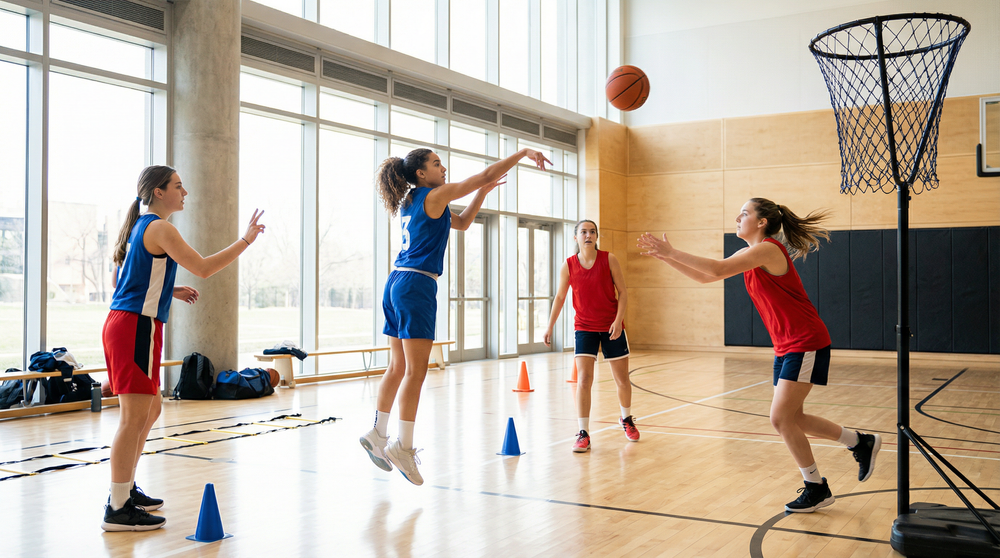
Here are three practical drills for basketball and netball that incorporate goal-setting and competition to keep players motivated.
1. The "Plus-Minus" Shooting Challenge
- Objective: To improve shooting accuracy under pressure and track consistency.
- Setup: Players shoot from 5-7 designated spots on the court (e.g., baseline, wing, top of the key).
- Execution: For each spot, the player takes 5 shots. They get +1 point for a make and -2 points for a miss. The goal is to finish the entire circuit with a positive score. For an advanced challenge, require them to finish with a score of +5 or higher.
- Goal Tracking: This drill provides a clear, measurable score. Players can log their score after each session in the Vanta Player App and work to beat their personal best over time.
2. The "3-in-a-Row" Rebounding Drill
- Objective: To improve rebounding technique and team focus.
- Setup: Divide the team into two groups, offense and defense.
- Execution: The coach shoots the ball. The defense must secure three consecutive defensive rebounds (boxing out and communicating) before the offense scores or gets an offensive rebound. If the offense scores or gets an offensive rebound, the count resets to zero. Once the defense gets three in a row, the teams switch.
- Goal Tracking: This is a team-process goal. The objective is clear and requires the entire unit to work together. It builds communication and a shared sense of accomplishment.
3. The "Target Practice" Passing Drill
- Objective: To improve passing accuracy and decision-making.
- Setup: Set up cones or targets in various positions on the court. Players work in pairs.
- Execution: Player 1 has the ball and must pass to Player 2, leading them toward a specific target. The goal is for Player 2 to receive the ball in a position where they can immediately shoot or attack from that spot. Set a goal of completing 10 successful target passes in 60 seconds.
- Goal Tracking: This is a measurable, time-bound drill. Coaches can use the Vanta Coach App to pre-load this drill into their session plan, and players can track their completion rates, fostering a sense of continuous improvement.
Ready to Take Your Training to the Next Level?
Track your shots and level up with the Vanta Player App. Learn more about Vanta Sports
Tags