Basketball Skills
Mastering the Art of the Pass: Essential Accuracy Drills for Basketball and Netball Coaches
Discover five proven passing accuracy drills that will transform your team's ball movement, reduce turnovers, and create high-percentage scoring opportunities.
The Foundation of Elite Ball Movement
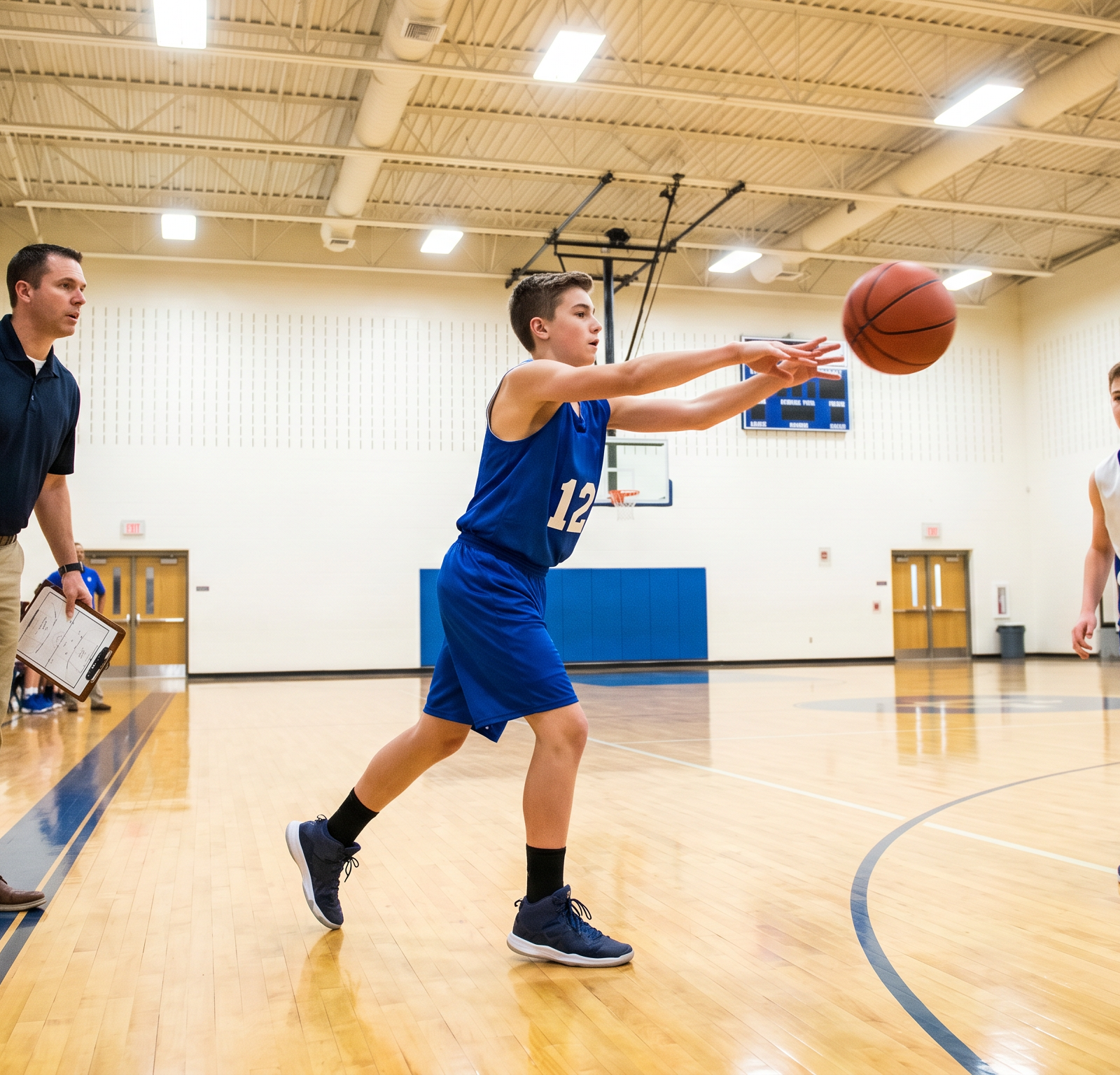
In both basketball and netball, passing is the lifeblood of an effective offense. A team that can move the ball quickly, accurately, and unselfishly will consistently break down defenses and generate high-percentage scoring opportunities. However, many youth and amateur teams struggle with turnovers, missed connections, and forced passes because they lack fundamental passing accuracy.
For coaches, dedicating practice time to passing accuracy is not just about refining a single technical skill—it is about building the foundation of your team's offensive identity. A perfectly placed pass, delivered on time and on target, allows the receiver to catch in stride and immediately make a play. Conversely, an inaccurate pass forces the receiver to break their rhythm, allowing the defense a crucial fraction of a second to recover or intercept.
This comprehensive guide explores the biomechanics of an accurate pass, the importance of decision-making under pressure, and five proven drills that coaches can immediately implement to elevate their team's ball movement.
The Biomechanics of a Perfect Pass
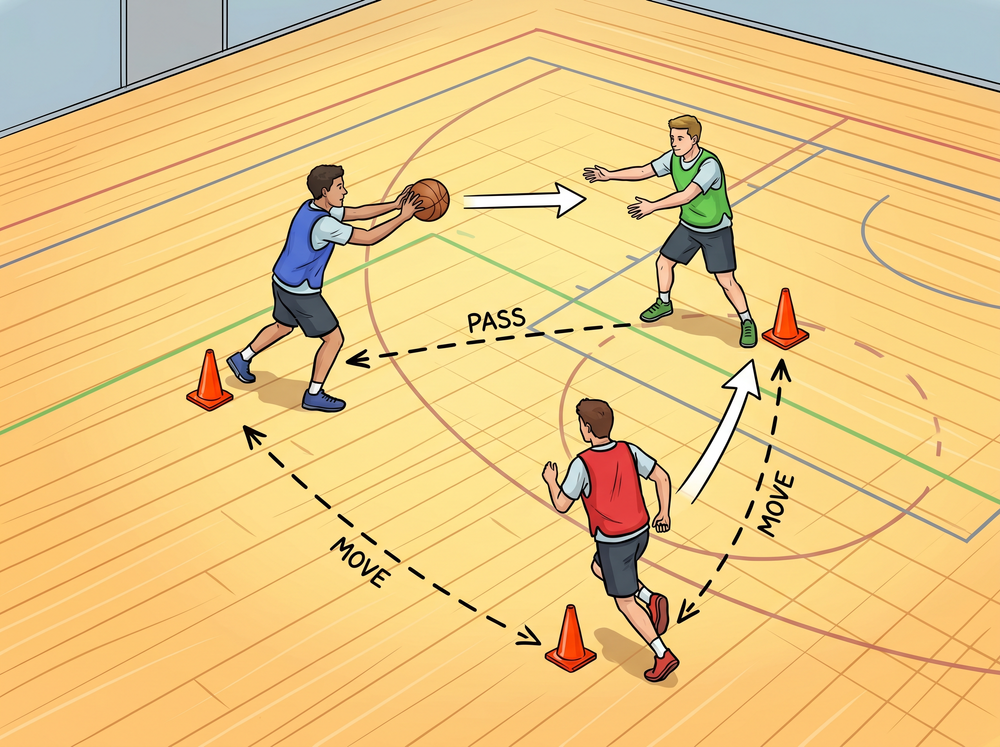
Before introducing complex drills, coaches must ensure players understand the correct biomechanics of a standard chest pass. Whether on a basketball or netball court, a flawless chest pass involves a coordinated sequence of movements, transferring energy from the lower body through the core and out through the arms and fingertips.
Key Technical Elements to Reinforce
- Hand Position: Fingers should be spread wide behind the ball in a "W" shape, with thumbs pointing slightly inward for stability and control.
- Elbow Position: Elbows must be tucked in close to the body. Avoid "chicken wings," which dissipate power and reduce accuracy.
- Weight Transfer: Players should step forward with one foot, transferring their body weight through the pass to generate power without sacrificing balance.
- Follow-Through: Arms, wrists, and fingers must extend fully toward the target upon release. A strong wrist snap provides final acceleration and backspin (in basketball).
- Targeting: The pass should be aimed directly at the receiver's chest or their "target hand."
Coaches who embed these technical cues into every passing session will find that players develop consistent muscle memory far more quickly than those who focus only on repetition without technical reinforcement.
5 Essential Passing Accuracy Drills
The following drills are designed to develop technique, consistency, and decision-making under pressure. They are scalable for different age groups and skill levels.
1. The Wall Target Drill: Building the Foundation
Best for: Beginners, technical correction, and individual practice.
Setup: Mark a target on a flat gymnasium wall at chest height using tape. Create a small bullseye (approximately 20 cm in diameter). Players begin 3 metres from the wall.
Execution: Players execute chest passes aiming directly for the bullseye, concentrating strictly on the full technical sequence: the W-grip, tucked elbows, weight transfer, flat release, and complete follow-through. Each player completes sets of 10 passes.
Coaching Focus: This drill provides immediate, objective feedback. A pass that hits low indicates the player is dropping their elbows or failing to follow through. As players improve, increase the distance or introduce a time limit to add pressure.
2. Triangle Passing Circuit: Passing on the Move
Best for: Small groups, developing passing footwork, and cardiovascular conditioning.
Setup: Place three cones in a triangle formation, approximately 4 to 5 metres apart. One player stands at each cone, with additional players queuing behind them if necessary.
Execution: Player A executes a crisp chest pass to Player B, then immediately sprints to join the queue behind Player B. Player B receives the ball, pivots to face Player C, executes a chest pass, and sprints to Player C's queue. This continuous circuit runs for 60 to 90 seconds per set.
Coaching Focus: Emphasize receiving the ball cleanly and re-balancing quickly before executing the next pass. The focus must remain on delivering the ball accurately to the receiver's chest while managing physical fatigue.
3. Partner Pressure Drill: Maintaining Technique Under Duress
Best for: Intermediate players, developing composure when facing a defensive mark.
Setup: Two players face each other 4 to 5 metres apart. A third player acts as a defender, standing beside the passer and applying a static mark with arms raised over the ball.
Execution: The passer must execute an accurate pass to their partner despite the visual obstruction of the defender's arms. The receiver catches the ball and becomes the new passer, while the defender rotates to apply pressure. Rotate the defender role every 10 passes.
Coaching Focus: Players often rush their technique when a defender is present. Coaches must ensure the passer maintains their grip, steps strongly into the pass, and follows through fully. For advanced players, allow the defender to move laterally, forcing the passer to utilize a quick pivot to create a passing lane.
4. Monkey in the Middle: Vision and Passing Choice
Best for: All levels, developing spatial awareness and real-time passing selection.
Setup: Players are divided into groups of three with one ball. Two passers line up 12-15 feet apart. The third player is the "monkey in the middle" (defender).
Execution: The two outside players must pass to each other without using lob passes or dribbling. They must use pivots and fakes to open up passing space and get the ball past the active defender. When the defender gets a steal or deflection, players rotate positions.
Coaching Focus: This drill transitions from pure technique to tactical application. It teaches players how to utilize fakes to create passing angles. The offensive players must wait for the defender to commit before making the pass.
5. The Moving Target Lead Drill: Anticipating the Receiver
Best for: Advanced players, developing the ability to pass into space ahead of a moving teammate.
Setup: Two players start side by side on the baseline, approximately 3 metres apart.
Execution: Both players jog down the court together. Player A passes to Player B, aiming slightly ahead of Player B so they do not have to break stride to catch the ball. Player B catches, takes their allowed steps (or dribbles in basketball), and passes back to Player A, leading them perfectly into space. The pair continue this pattern the length of the court.
Coaching Focus: Accuracy often means passing to where the player will be, rather than where they are. Coaches should watch for passes thrown behind the receiver, forcing them to twist backward and lose momentum. The pass must be firm and flat, arriving exactly at chest height as the receiver drives forward.
Structuring a Passing Accuracy Session
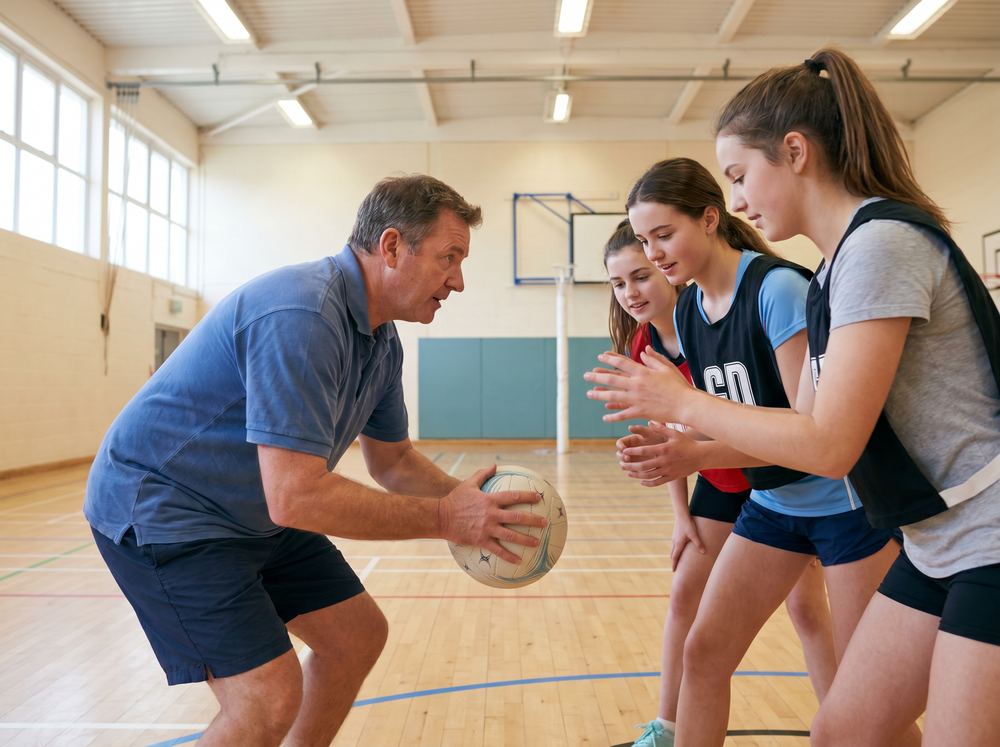
To get the most from these drills, coaches should structure their sessions with a clear progression from technical isolation to game-realistic application.
| Session Phase | Duration | Activity |
|---|---|---|
| Warm-Up | 8 minutes | Light jogging, dynamic stretching, and basic partner passing. |
| Technical Focus | 10 minutes | Wall Target Drill — isolating biomechanics without pressure. |
| Movement Integration | 10 minutes | Triangle Passing Circuit — adding footwork and fatigue. |
| Pressure Application | 10 minutes | Partner Pressure Drill — introducing defensive context. |
| Game Application | 7 minutes | Monkey in the Middle — replicating match conditions and decision making. |
This structure ensures players first consolidate correct technique before being asked to apply it under pressure, which is the most effective sequence for skill acquisition.
Streamlining Your Coaching Workflow
While developing your players' passing skills on the court is your primary focus, managing the logistics of a youth sports team off the court can often consume hours of valuable time. Tracking attendance, organizing practice schedules, and communicating with parents are essential tasks that can distract from your core mission: coaching.
This is where having the right club management and team organization platform becomes crucial. When evaluating technology to support your coaching efforts, look for solutions that offer a complete ecosystem tailored specifically for youth sports like basketball and netball.
Vanta Sports provides a comprehensive suite of tools designed to eliminate administrative friction. For organizations, Vanta Club handles the heavy lifting of registrations, payments (integrated seamlessly with Stripe), and compliance. For the dedicated volunteers running practices, the Vanta Coach App is completely free, offering intuitive session planning and attendance tracking right from your smartphone. Meanwhile, the Vanta Guardian and Vanta Player apps keep parents and athletes connected, ensuring everyone is informed about schedules, achievements, and team events. Built specifically for the needs of youth basketball and netball, Vanta Sports combines modern design with built-in safeguarding features, allowing you to focus entirely on player development.
Ready to Take Your Training to the Next Level?
Discover how Vanta Sports helps coaches run better practices. Learn more about Vanta Sports
Tags