Netball Technique
Essential Wing Attack Feeding Techniques: A Masterclass for Netball Coaches
Master the art of midcourt play with our comprehensive guide to wing attack feeding techniques, featuring practical drills, positional strategies, and expert coaching tips.
Essential Wing Attack Feeding Techniques: A Masterclass for Netball Coaches
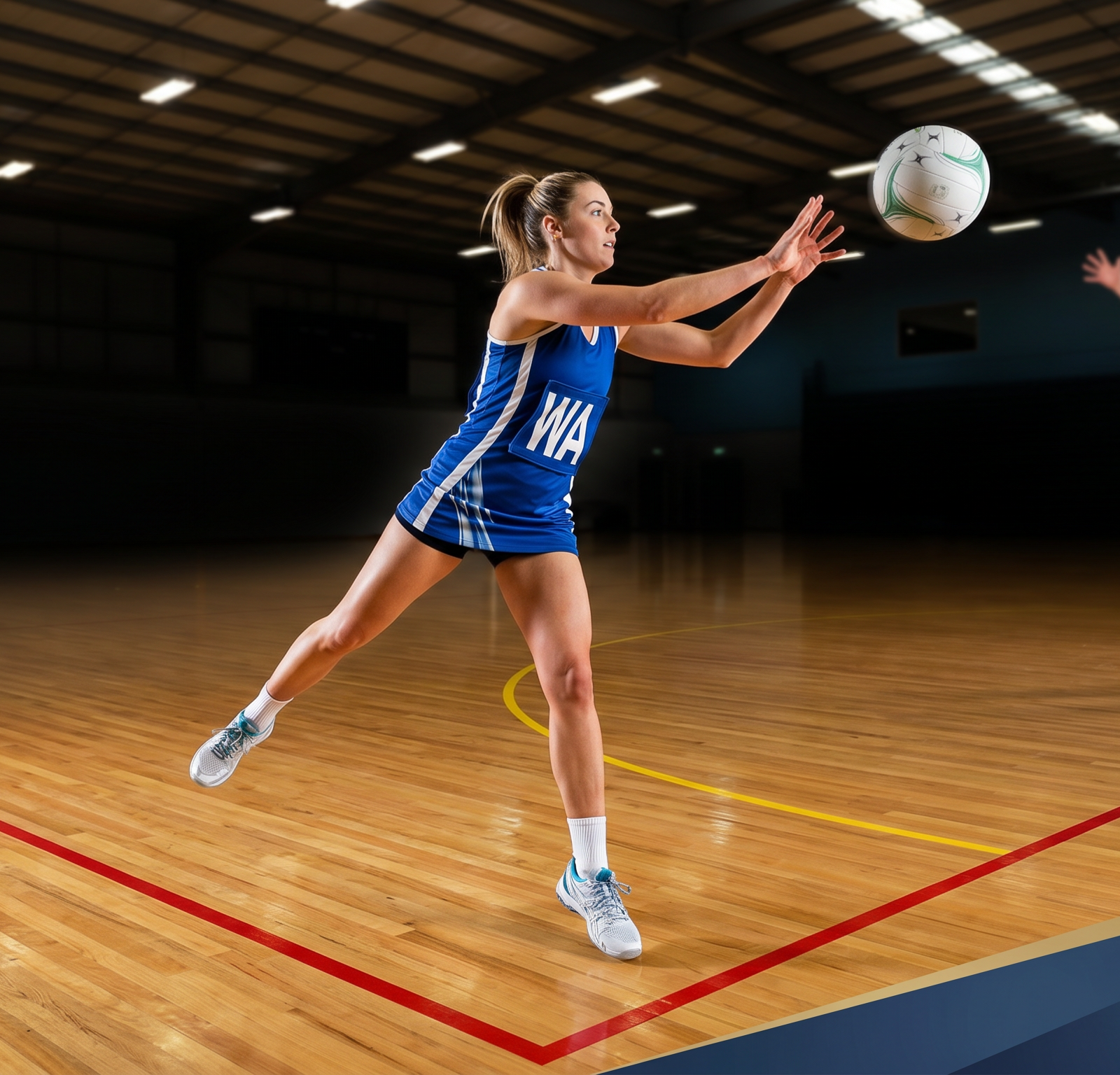
The midcourt is the engine room of any netball team's attack, and the wing attack (WA) sits right at the heart of it. A skilled wing attack dictates the tempo of the game, creating space where there seems to be none and delivering the ball onto the goal circle edge with precision. As a coach, developing a wing attack who can consistently beat their opponent and feed the shooters is critical to your team's success.
This comprehensive guide explores the essential feeding techniques, positional strategies, and practical drills that will help you cultivate assertive and available wing attacks. Whether you are coaching a youth team or an elite squad, these techniques will elevate your midcourt play.
The Role of the Wing Attack: More Than Just Passing
A wing attack is the primary playmaker, responsible for transitioning the ball from the centre third to the goal third and setting up scoring opportunities. The role requires a unique blend of speed, spatial awareness, selflessness, and quick decision-making.
While athleticism is a fantastic baseline, the best wing attacks separate themselves through their ability to read the play. They must know when to drive hard, when to hold space, and when to drop back and reset the play. A "catch me if you can" attitude, combined with a deep understanding of court balance, makes a wing attack truly dangerous.
Key Feeding Techniques Every WA Must Master
Feeding the goal circle is an art form. It's not just about throwing the ball; it's about putting it in a space that advantages the shooter and neutralises the defender.
1. The One-Handed High-Release Pass
One of the most common mistakes young midcourters make is attempting to feed a holding goaler with a standard chest pass. Because the ball starts low, it has to travel on an upward trajectory, making it difficult to judge the drop and easy for a defender to intercept.
The solution is the one-handed high-release pass. By releasing the ball from above head height, the WA can lob it accurately into tight spaces. This technique reduces the time the ball spends in the air and allows the shooter to judge the trajectory much more easily.
Coaching Tip: For shorter wing attacks trying to pass over tall defenders, the high release is essential. Teach them to use a baulk (fake pass) to shift the defender's hands, step through with their inside foot to hold their body position, and look long and through the defender's arms.
2. Feeding the Best Space: The Clock Face Method
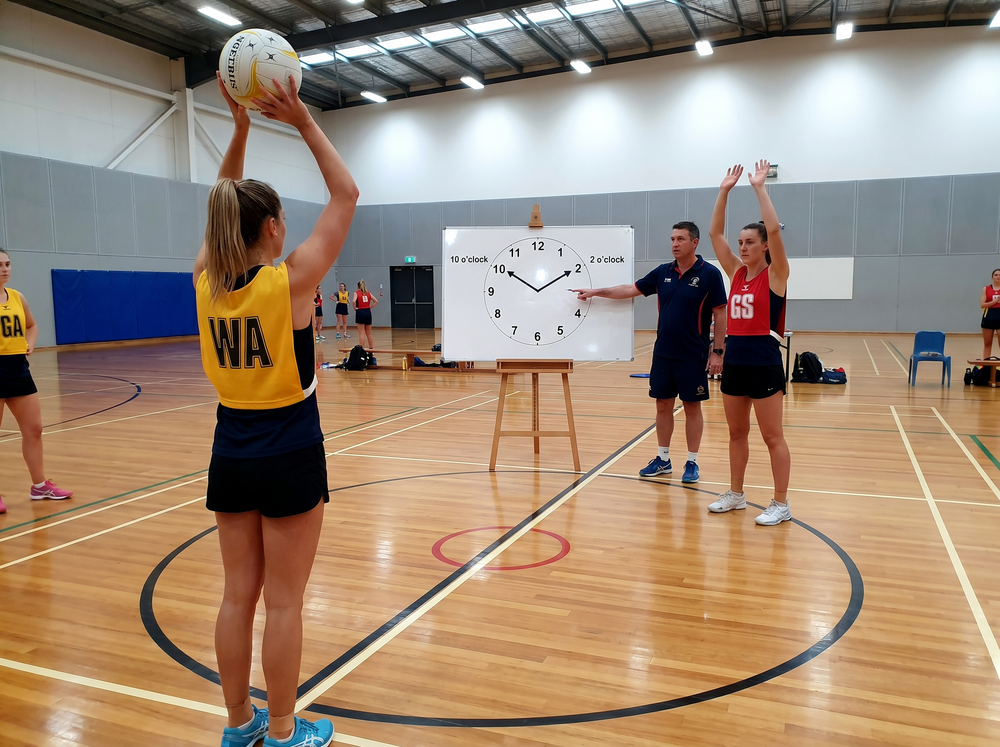
When feeding a holding shooter (especially on a side hold), the placement of the ball is everything. Passing the ball directly over the shooter's head (12 o'clock) invites a contest from the defender.
Instead, teach your wing attacks to use the "clock face" method. The ball should be placed out in front of the shooter's body at either 2 o'clock or 10 o'clock, depending on which side they are holding. This placement keeps the ball away from the defender and allows the shooter to snatch it cleanly.
3. The Throw and Go (Double Play)
The "throw and go" is a devastating weapon against a settled defence. It involves the WA passing the ball to a teammate (often a goaler driving out of the circle) and immediately driving onto the circle edge to receive a pass back.
This quick give-and-go movement slices through the defence before they have a chance to react. For advanced players, practice releasing the pass at the exact same time they start their drive.
Positional Strategies: Owning the Circle Edge
Getting to the circle edge is only half the battle; what a wing attack does once they arrive is equally important.
Working the Hotspots
The circle edge isn't just one continuous line; it has distinct "hotspots" that a WA should aim to hit:
- The top of the circle
- The 45-degree angles
- The corners/pockets
A wing attack should avoid sitting on the circle edge for more than a second or two. If the pass isn't immediately available, they must reset by driving off the ring and re-offering, rather than getting stuck deep in the pockets.
Balancing the Court
A common issue is the WA clogging up the middle channel with busy, short leads. Teach your players to divide the court into three imaginary vertical lanes. If the middle lane is congested, the WA should work the wide channels to create space, maintaining court balance and opening up the backspace for a clear drive to the circle edge.
Managing the Transition
When the ball is coming out of defence, a WA's instinct is often to sprint up into the centre third to help. However, this usually just clogs the space. A smart WA knows when to hang back at the goal third transverse line, waiting for the defence to bring the ball over before initiating their lead.
Practical Drills for Wing Attacks
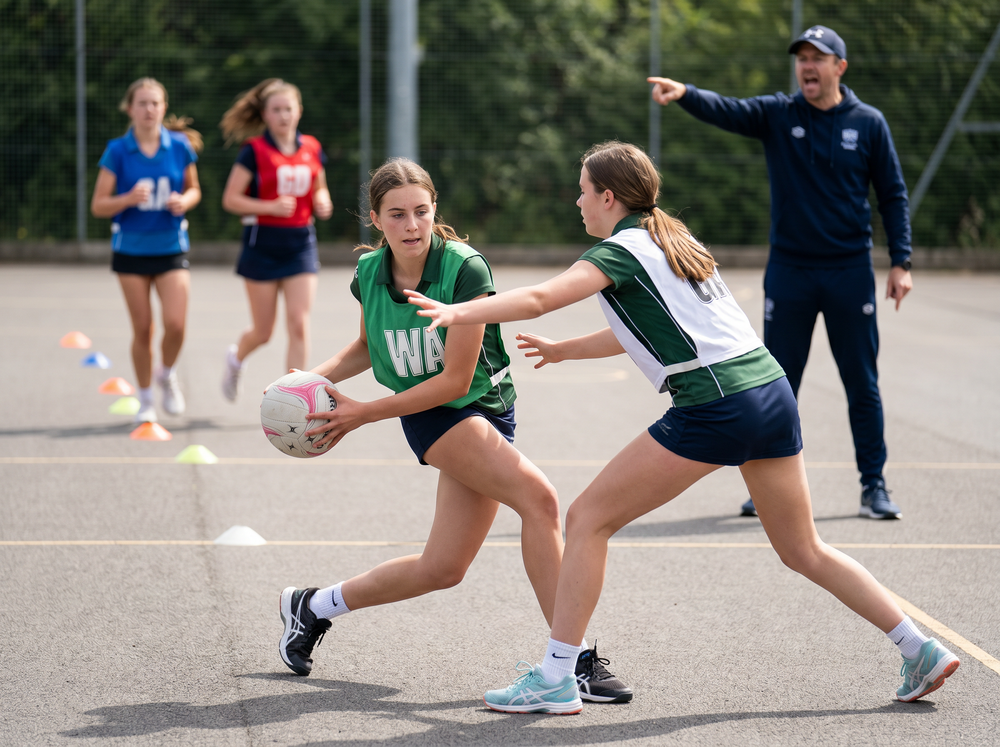
Implement these drills into your next session to develop your midcourters' feeding and movement skills.
Drill 1: High Release Cone Feeding
Objective: To practice accurate, high-release passes into specific spaces.
Setup:
- Place two cones inside the goal circle to represent a holding shooter (one for a 2 o'clock hold, one for a 10 o'clock hold).
- Have a defender stand in front of the WA on the circle edge with arms raised.
Execution:
- The WA must use a baulk to shift the defender's hands.
- The WA executes a one-handed high-release pass, aiming to drop the ball perfectly onto the designated cone.
- Progression: Add a moving shooter who establishes a hold, requiring the WA to read the hold and place the ball accordingly.
Drill 2: The Throw and Go Gauntlet
Objective: To develop the quick pass-and-drive movement.
Setup:
- Set up a channel using cones down the length of a third.
- Have a stationary thrower (representing a goaler) positioned halfway down the channel.
Execution:
- The WA starts at the top of the channel, passes to the stationary thrower, and immediately sprints past them.
- The thrower pops the ball back into the space ahead of the driving WA.
- Progression: Add a defender tracking the WA. The WA must use a front cut or change of pace to beat the defender after releasing the initial pass.
Drill 3: Hitting the Hotspots
Objective: To practice balancing the circle edge and working with a co-attacker.
Setup:
- Mark the key hotspots (top, 45s, pockets) on the circle edge with spots.
- Have a WA and a Centre (C) start off-set just inside the goal third.
- Place a feeder inside the circle and one on the transverse line.
Execution:
- The WA and C must work together to hit the hotspots on the circle edge, receiving passes from either feeder.
- They must ensure they are not overloading one side of the circle and are not stationary on a hotspot for more than two seconds.
- Progression: Introduce a "two-second rule" where the player must release the ball within two seconds of catching it, creating match-like urgency.
Empowering Your Coaching with the Right Tools
Managing a youth sports team involves juggling practice plans, player attendance, and parent communication. While many clubs use generic apps, having a platform specifically designed for the nuances of sports management makes a world of difference.
This is where Vanta Sports steps in. Unlike other platforms, Vanta Sports provides a complete, purpose-built ecosystem tailored for youth basketball and netball clubs.
For volunteer coaches, the Vanta Coach App is completely free and allows you to seamlessly plan your sessions (like incorporating the drills above!), track attendance, and communicate with your squad. Meanwhile, the Vanta Club platform handles the heavy lifting of registrations, compliance, and payments with integrated Stripe infrastructure.
By streamlining the administrative side of coaching, Vanta Sports frees you up to focus on what really matters: developing your players and perfecting those wing attack feeds.
Ready to Take Your Training to the Next Level?
Discover how Vanta Sports helps coaches run better practices. Learn more about Vanta Sports
Tags