Mastering the Flex Offense: A Complete Continuity Playbook
Learn how to run the Flex Offense to create constant movement, mismatch opportunities, and high-percentage shots near the rim.
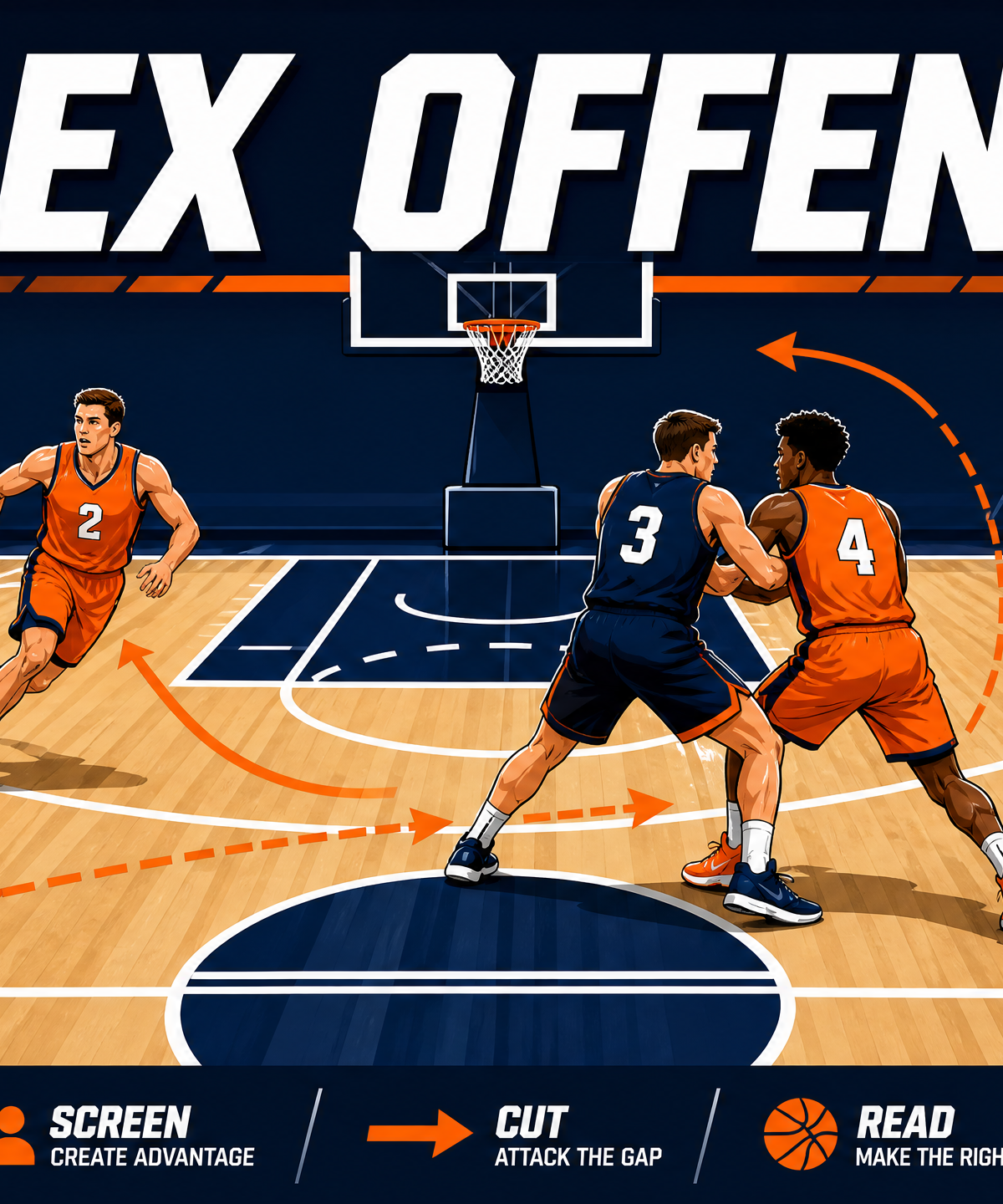
Equipment Needed
1. Overview
The Flex Offense is a timeless continuity pattern designed to break down man-to-man defenses through relentless screening, cutting, and ball reversal. It relies on the 'flex cut' (a baseline cut off a screen) followed immediately by a down screen, creating a continuous loop of action. This offense is highly effective because it forces all five defenders to communicate and navigate screens, inevitably leading to defensive breakdowns. It is positionless by nature, making it an excellent choice for teams without a dominant true center or those looking to exploit mismatches by forcing bigs to defend on the perimeter and guards to defend in the post.
2. Setup
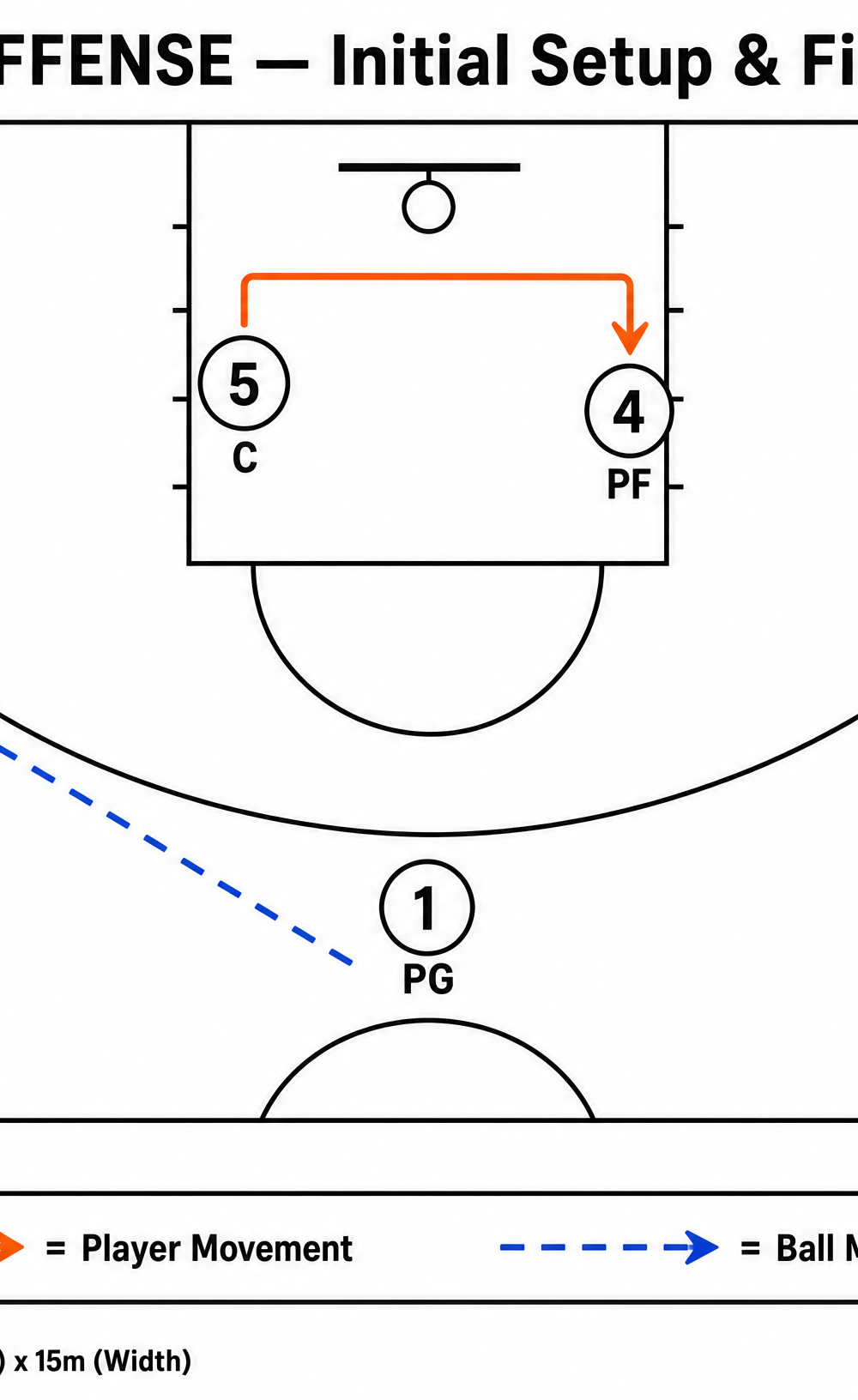
Court Dimensions: Standard FIBA half-court (28m x 15m full court, 14m x 15m half-court).
Equipment Needed: 1 Basketball, half-court setup.
Player Positions:
- 1 (Point Guard): Top of the key, initiating the offense.
- 2 (Shooting Guard): Right wing, free-throw line extended.
- 3 (Small Forward): Left wing, free-throw line extended.
- 4 (Power Forward): Right low block.
- 5 (Center): Left low block.
3. Step-by-Step Instructions
The Initial Action: The Flex Screen
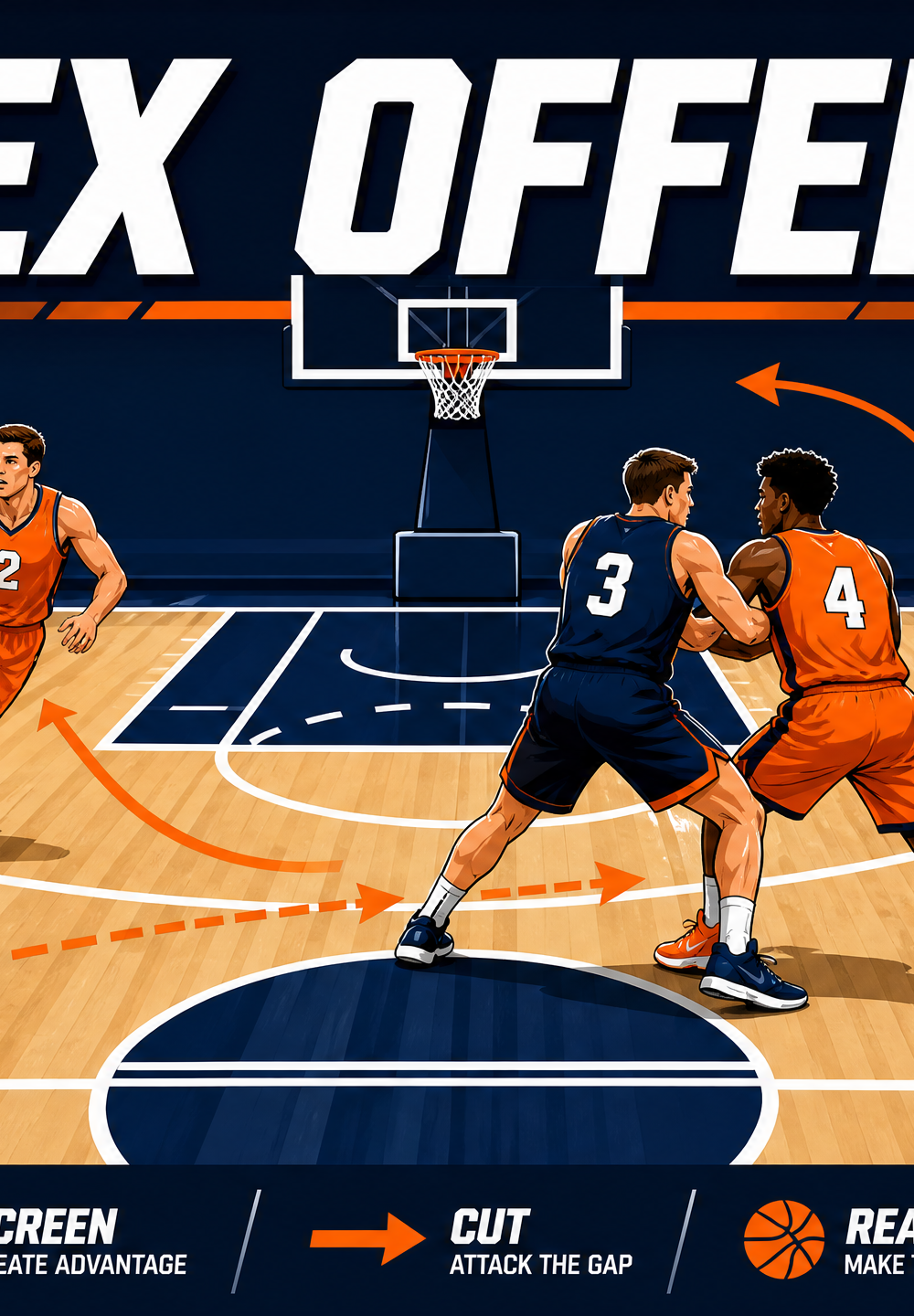
- Initiation: The play begins with 1 (PG) at the top of the key. 1 passes the ball to 3 (SF) on the left wing.
- The Flex Screen: As the pass is made, 5 (C) sets a hard baseline screen (the 'flex screen') for 4 (PF).
- The Cut: 4 cuts baseline, rubbing shoulders with 5 to ensure the defender cannot slip through, and looks for the pass from 3 for a quick layup.
The Second Action: The Down Screen
- Setting the Down Screen: Immediately after 4 clears the lane, 1 (PG) moves down to set a down screen for 5 (C) at the elbow/low block area.
- The Pop: 5 curls off the down screen and pops to the top of the key.
- Ball Reversal: 3 passes the ball to 5 at the top of the key. 5 immediately looks to reverse the ball to 2 (SG) on the right wing.
Continuity and Scoring Options
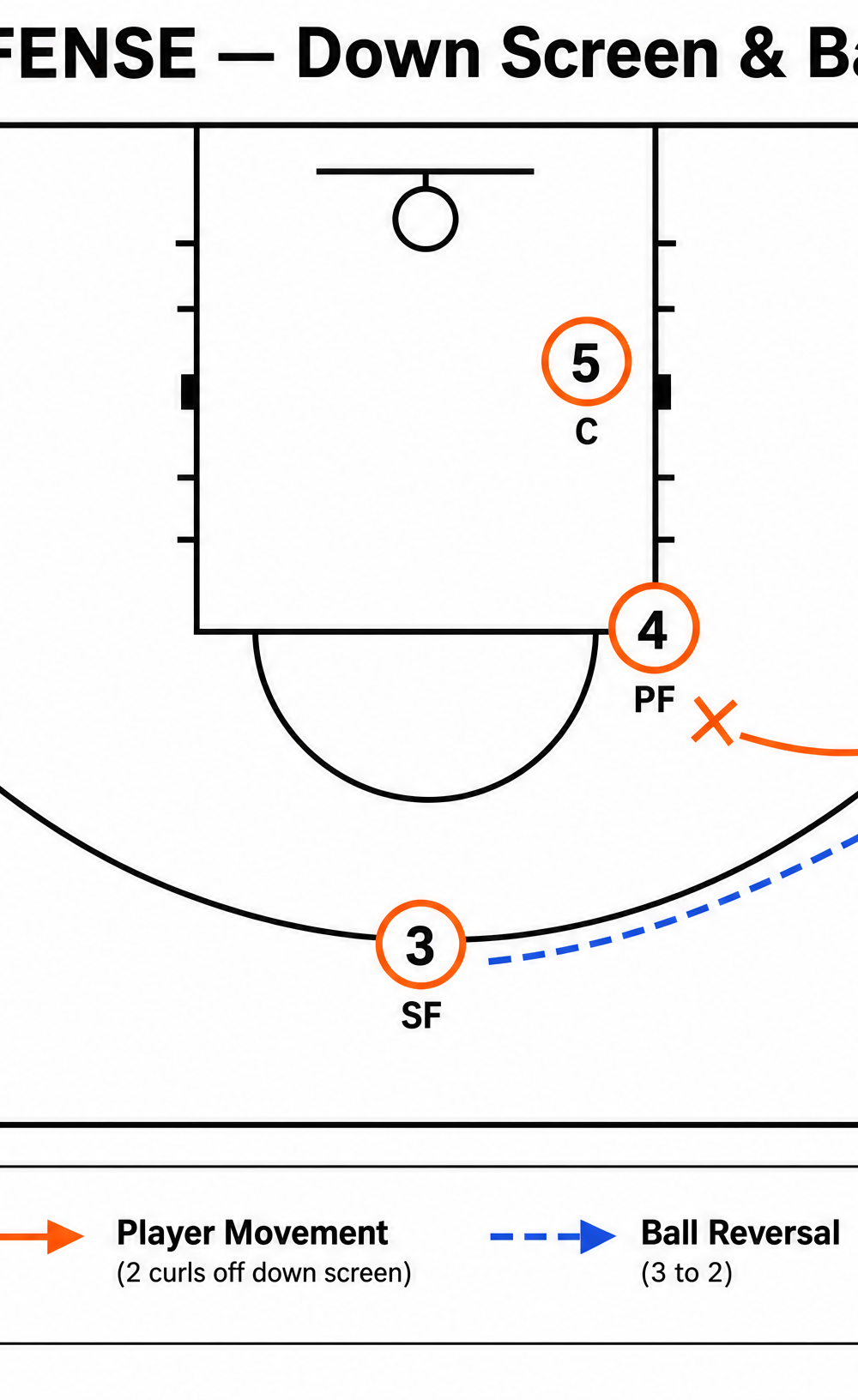
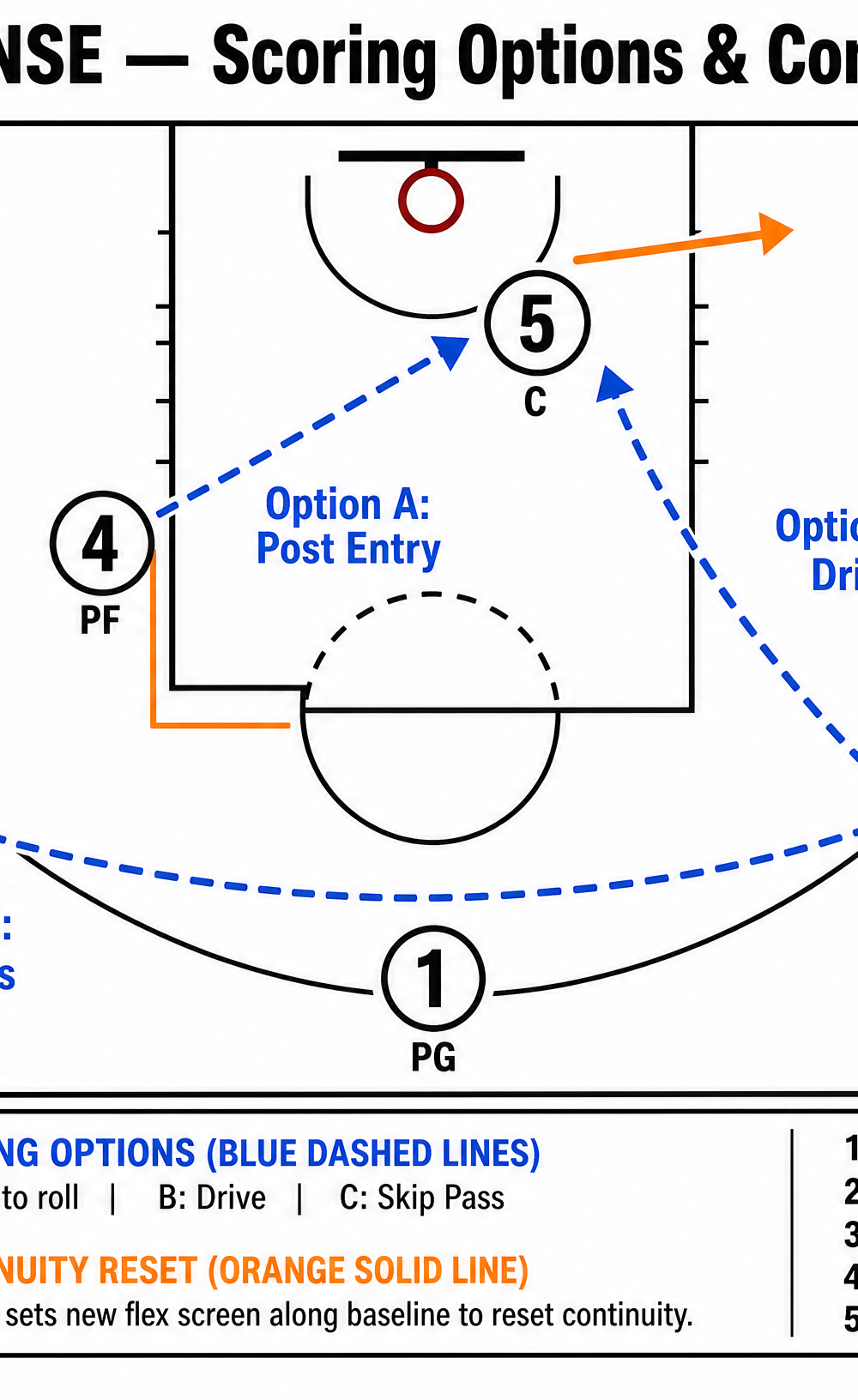
- The Reset: As the ball is reversed to 2, the pattern repeats on the opposite side. 4 (now on the left block) sets a flex screen for 3 (now on the left wing cutting baseline). 5 sets the subsequent down screen for 4.
- Reading the Defense: The offense continues this loop until a high-percentage shot is generated.
4. Key Coaching Points
- Screening Angles: Screeners must jump stop and establish a wide base. The angle of the screen must force the defender to go over the top, trailing the cutter.
- Cutting Hard: Cutters must sprint off the screens shoulder-to-shoulder with the screener. A slow cut allows the defense to recover.
- Patience on Ball Reversal: The offense relies on shifting the defense. Players must be patient and ensure the ball is reversed quickly and accurately to make the defense work.
- Post-Up Opportunities: If a switch occurs on the flex screen, the cutter (often a guard) must immediately post up the bigger defender, or the screener (often a big) must seal the smaller guard in the paint.
5. Common Mistakes
- Slipping Screens Early: Screeners leaving early before the cutter has used the screen, resulting in offensive fouls or ineffective cuts.
- Poor Spacing: Players creeping inside the three-point line on the wings, clogging the passing lanes and taking away driving gaps.
- Staring Down the Cutter: The ball handler telegraphing the pass to the flex cutter, allowing the defense to jump the passing lane.
6. Variations & Progressions
- Flex to Pick and Roll: If the continuity breaks down, the player at the top of the key can seamlessly flow into a high pick and roll with the player on the wing.
- Dribble Entry: Instead of a pass to initiate the offense, the point guard can dribble at the wing, pushing the wing player down to the block to start the flex action.
7. Age Adaptations
- Under 12s: Focus heavily on the mechanics of setting and using screens legally. Run the pattern as a dry drill without defense first.
- Under 14s/16s: Introduce defensive reads. Teach players how to react if the defense switches the flex screen or goes under the down screen.
- Open/Advanced: Incorporate counter-actions like 'screen the screener' plays or backdoors when the defense starts to overplay the passing lanes.