Mastering the Middle Overs: Strategic Bowling Changes & Field Placements
Learn how to dictate the pace of the game between overs 11-35 by deploying effective bowling changes, setting strategic fields, and executing the perfect containment strategy.
Equipment Needed
1. Overview
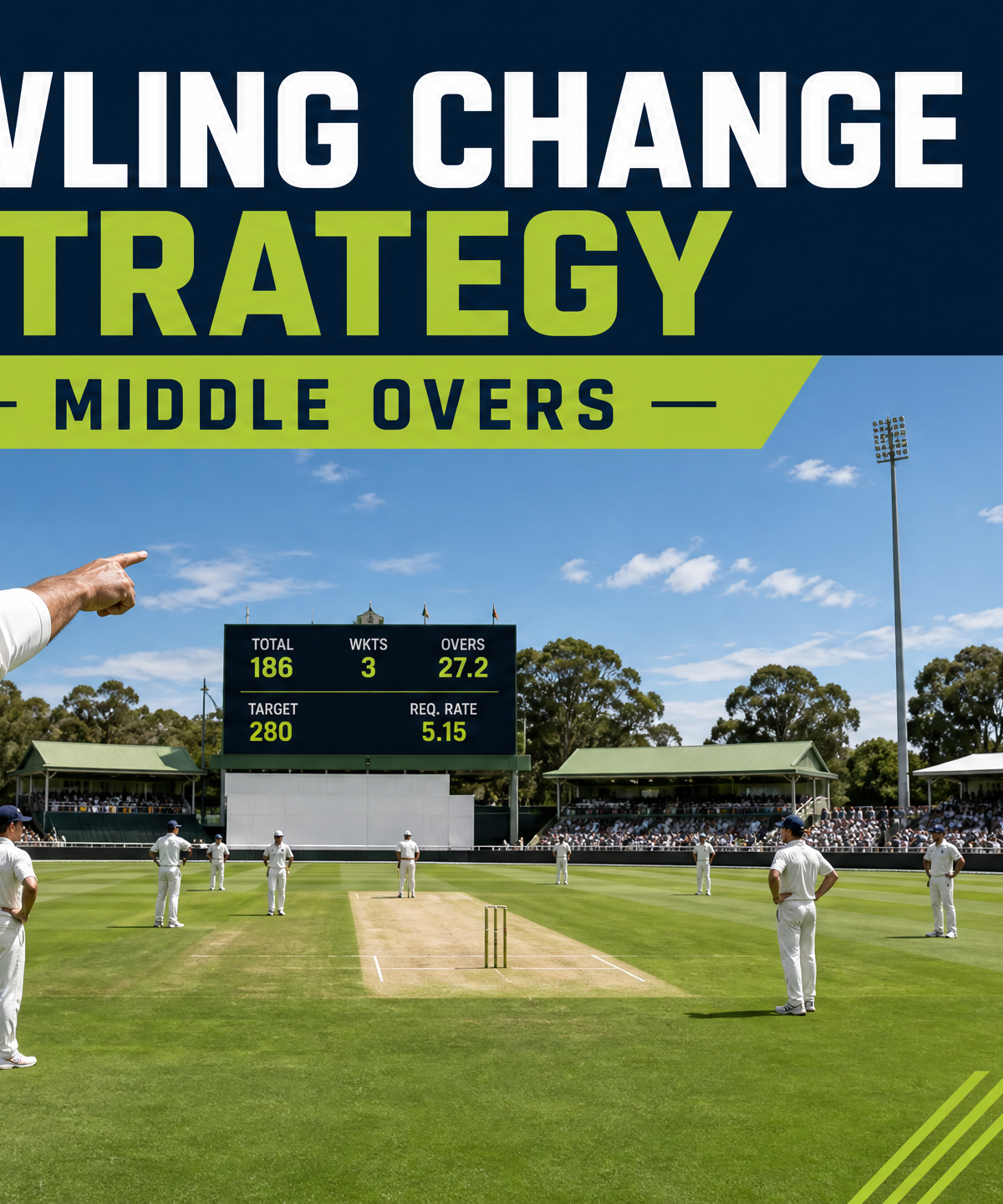
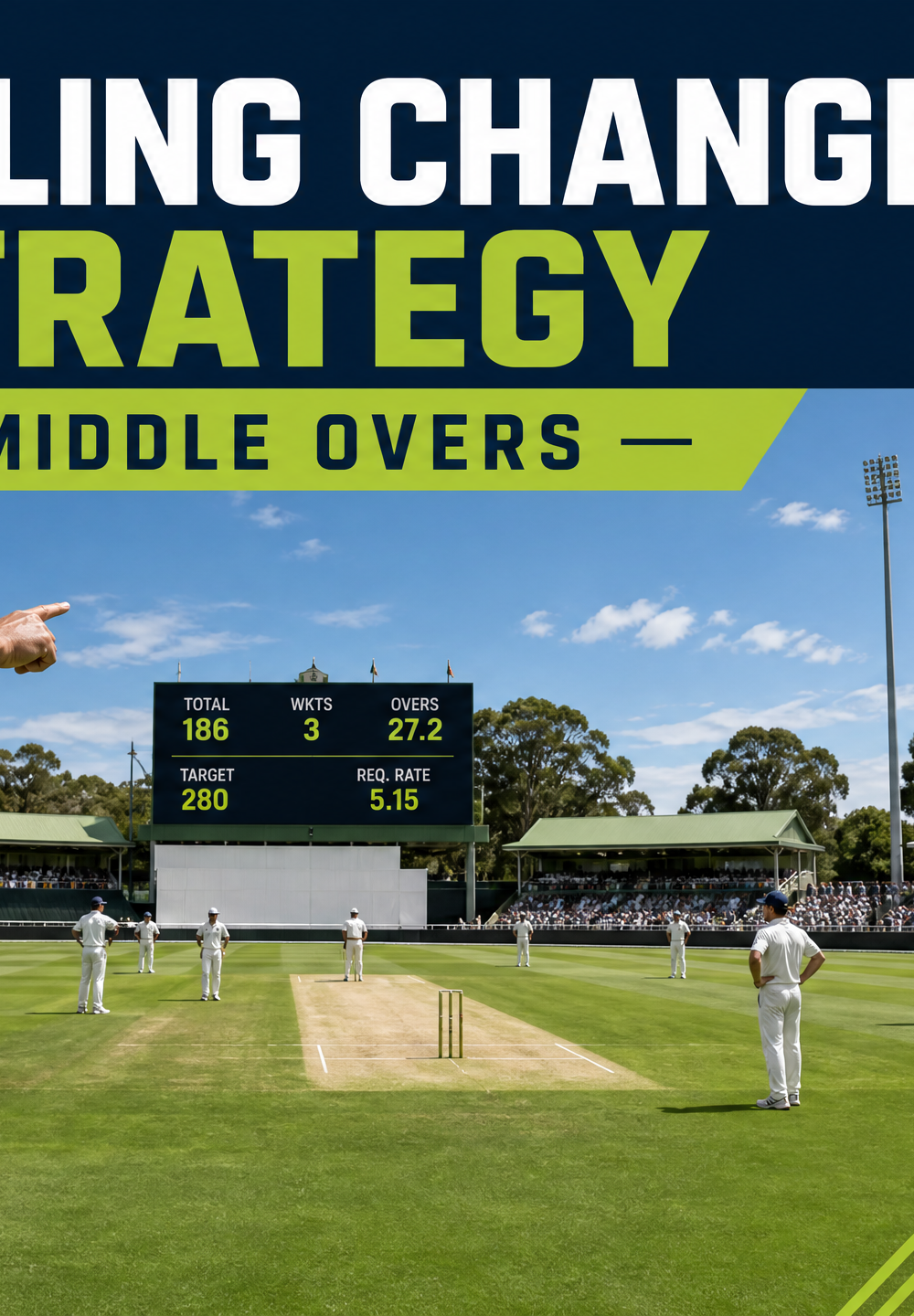
The middle overs (typically overs 11-35 in a 50-over match) are the engine room of an innings. This is where the game is often won or lost. As a coach, your objective during this phase shifts from outright wicket-taking (the primary goal of the powerplay) to a dual strategy of containment and calculated strikes. This set play resource focuses on how to execute effective bowling changes, rotate your attack, and set fields that build pressure, ultimately forcing the batters into making mistakes.
By mastering these bowling changes, you ensure your team maintains control of the run rate while continually asking questions of the opposition.
2. Setup
To effectively practice and implement this strategy, ensure the following setup:
- Pitch/Field Setup: A standard 22-yard pitch on a full oval ground (approx. 140m x 160m). Mark the 30-yard inner circle clearly.
- Equipment Needed: Match-quality cricket balls (both new and semi-used to simulate middle overs), markers/cones for fielding positions, and a whiteboard for tactical briefings.
- Player Positions: A full XI fielding side. Key roles include a primary spinner, a medium-pace "change" bowler, and a reliable wicketkeeper to orchestrate angles.
3. Step-by-Step Instructions
Implementing a bowling change is more than just throwing the ball to a new bowler; it requires a coordinated shift in field placements and team mindset.
Step 1: The Trigger Identification
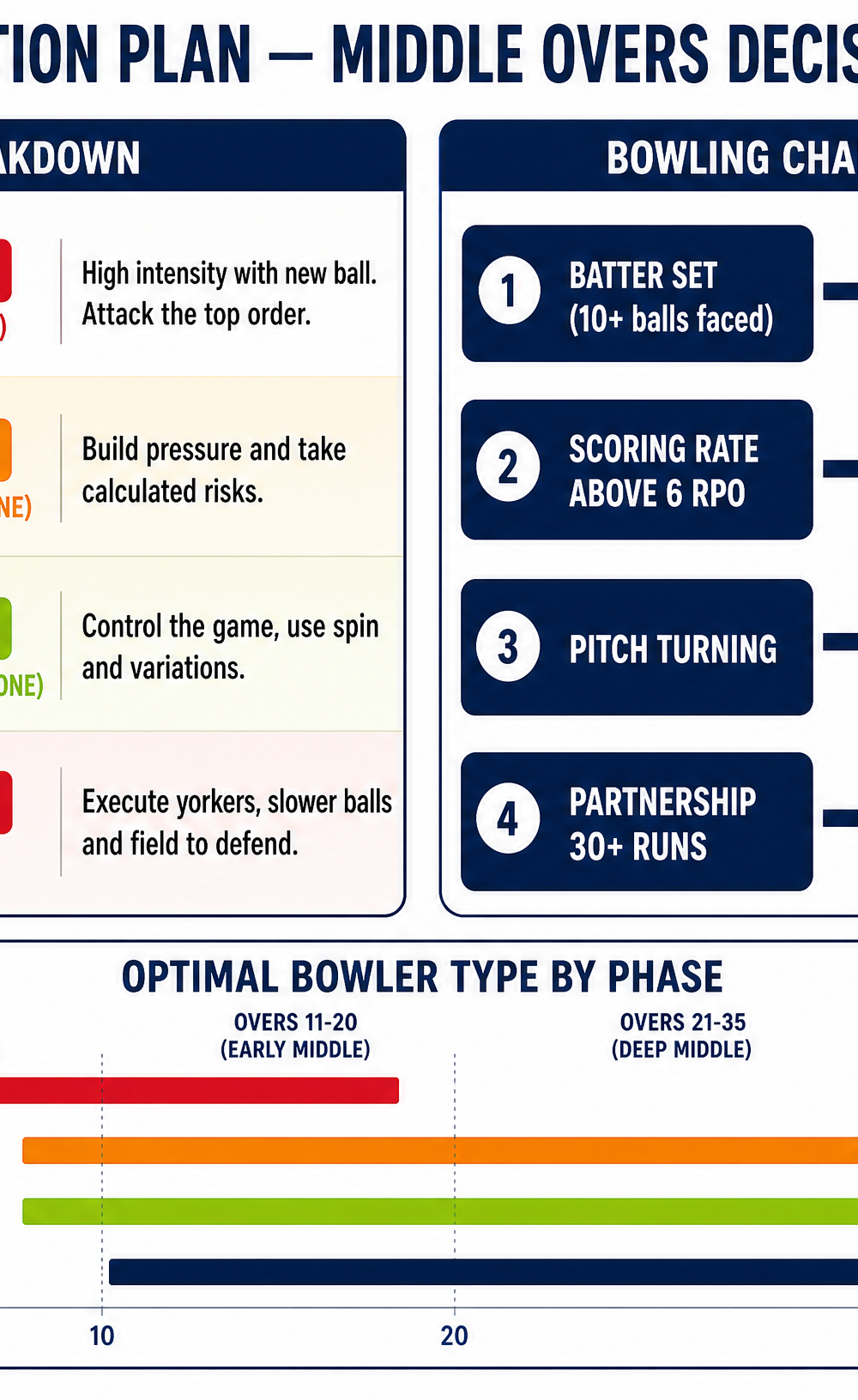
Identify the moment for change. This could be a partnership crossing 30 runs, the run rate creeping above 6.00 RPO, or a new batter arriving at the crease.
Step 2: The Spin Introduction (Overs 11-20)
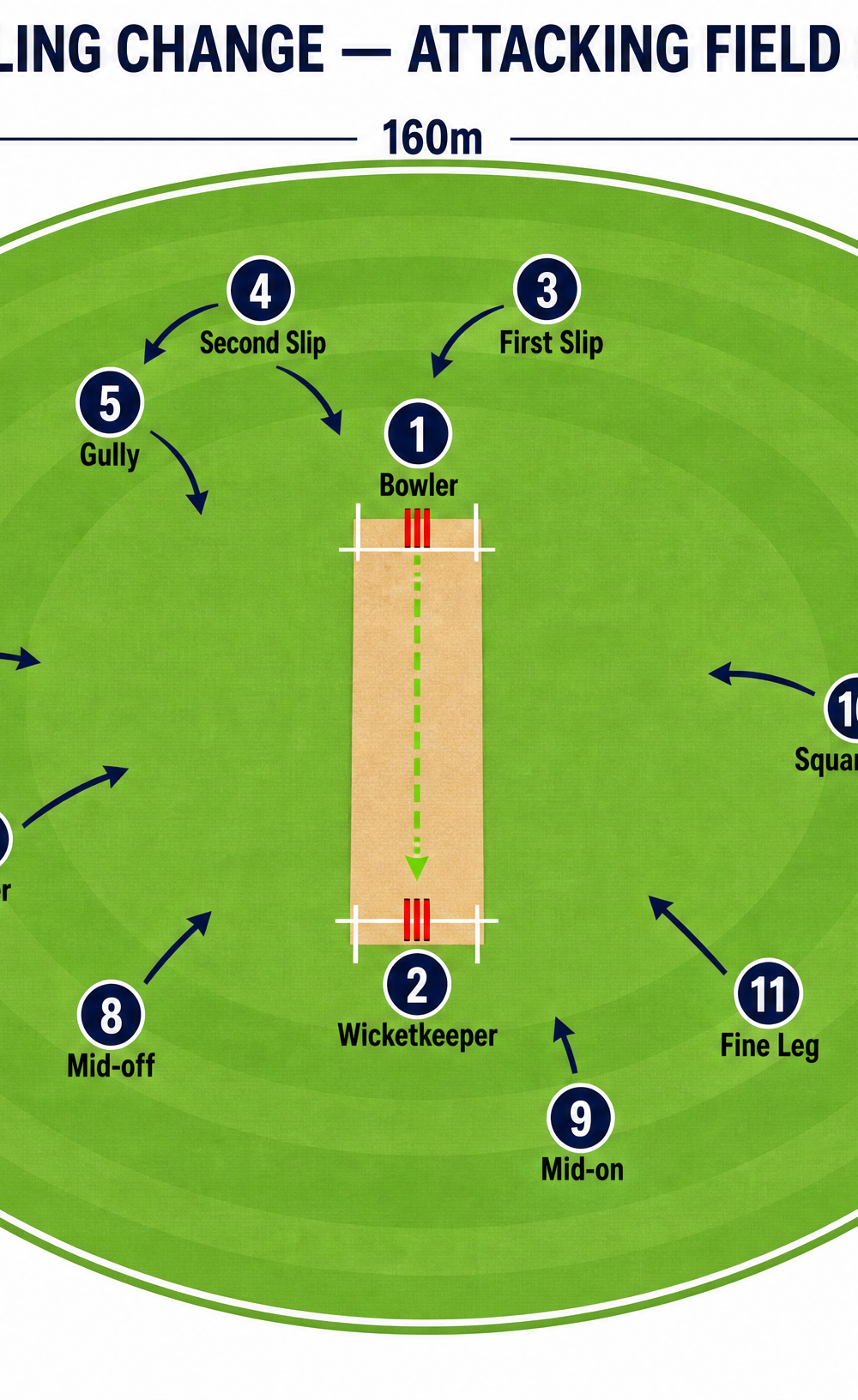
Bring on your primary spinner to exploit any turn and bounce. Set an attacking field initially to test the new batter or break a partnership.
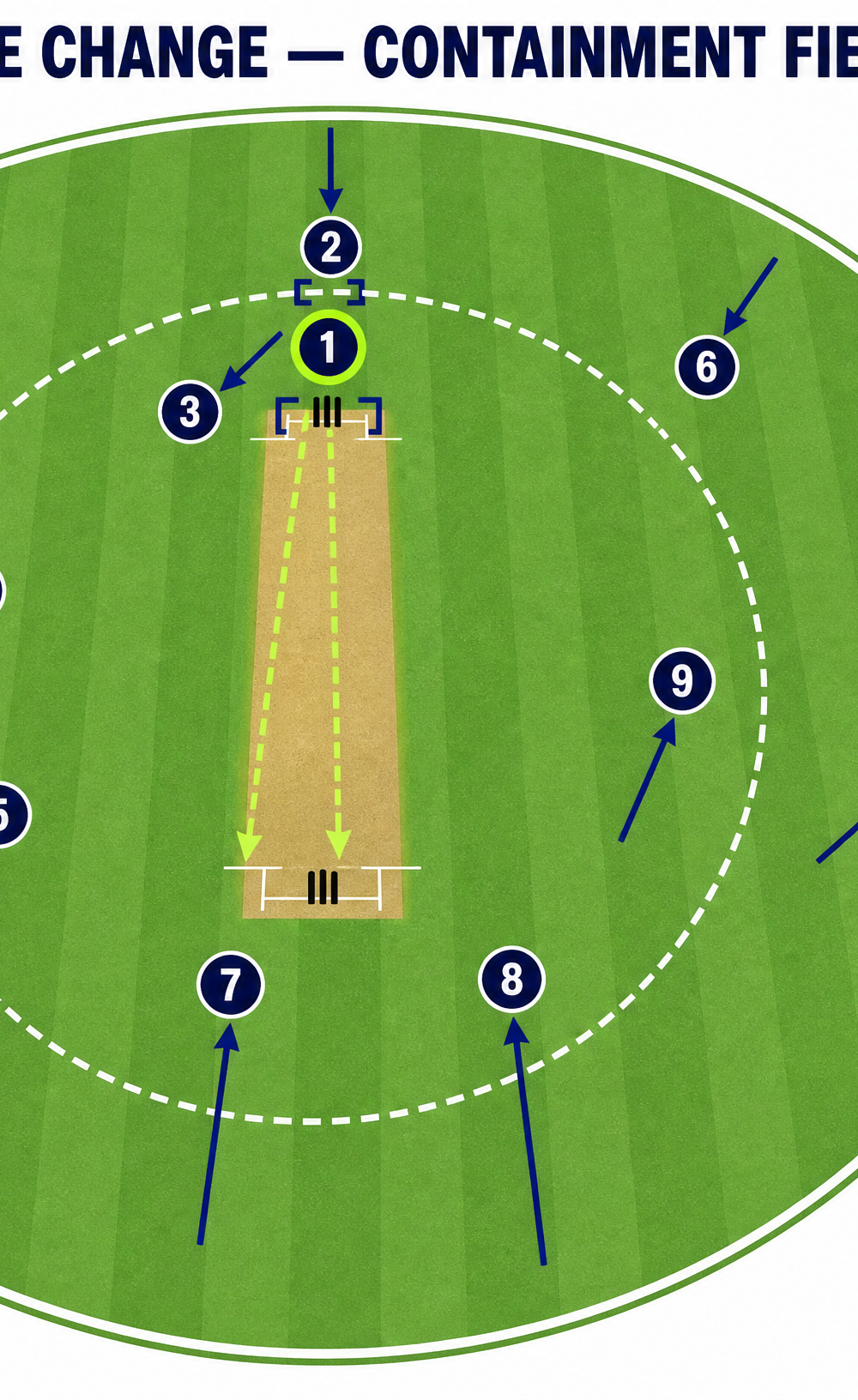
- Field Placement: Position a Slip (3) and a Gully (5) or short leg depending on the pitch. Ensure Mid-off (8) and Mid-on (9) are inside the circle to cut off singles, while Square Leg (10) and Fine Leg (11) protect the boundaries.
- Execution: The bowler (1) must target the top of off-stump consistently, using flight to deceive the batter.
Step 3: The Medium-Pace Containment (Overs 21-35)
If the pitch is flat or the batters are settled, switch to a medium-pace bowler focusing on a tight line and length.
- Field Placement: Push 5 fielders outside the 30-yard circle (e.g., Deep Point, Deep Square Leg, Long-on, Long-off, Third Man). Keep the inner ring tight with Cover Point (5) and Extra Cover (6) saving the single.
- Execution: The bowler (1) bowls "dry"—targeting the fourth stump line, denying any width, and forcing the batter to hit to the sweepers.
Step 4: The Over-by-Over Rotation
Do not let batters settle against one style of bowling. Rotate your bowlers in short spells (3-4 overs max) during the deep middle overs.
- Use the decision framework to dictate changes. If the pitch turns, consider a double-spin attack. If a partnership builds, bring back a strike pace bowler for a 2-over burst.
4. Key Coaching Points
- Bowl in Partnerships: Ensure bowlers at opposite ends are complementing each other (e.g., one containing, one attacking).
- Fielding Anticipation: Fielders must move dynamically as the ball is bowled, not after it is hit. Walk in with the bowler.
- Communication: The wicketkeeper and captain must constantly communicate regarding the batter's trigger movements and weaknesses.
- Patience: Teach bowlers that a maiden over in the 25th over is as valuable as a wicket. Pressure creates chances.
- Adaptability: Never stick rigidly to a plan if the match situation changes drastically. Be prepared to switch to Plan B immediately.
5. Common Mistakes
- Bowling Too Short: Dropping short allows batters easy singles to the sweepers, releasing all built-up pressure.
- Static Fields: Failing to adjust the field for a new batter or a specific bowling variation (like a slower ball).
- Over-bowling the Spinner: Keeping a spinner on for too long when they are leaking runs, rather than making a proactive change.
- Neglecting the Sweepers: Poor positioning on the boundary edge leading to easy twos instead of restricted singles.
6. Variations & Progressions
- Progression 1 (Advanced): Introduce "Death Over" scenarios early. Ask the medium pacer to execute two wide yorkers per over during the containment phase to practice variation.
- Progression 2 (Pressure Simulation): Start the training drill with the batting team already at 120/2 after 20 overs. Challenge the fielding team to restrict them to under 220.
- Variation (Double Spin): If the pitch allows, practice operating with two spinners simultaneously, focusing on trapping the batters with men around the bat.
7. Age Adaptations
- Under 12s: Focus purely on bowling straight and setting a basic ring field. Complex sweepers are less necessary as power hitting is limited.
- Under 14s/16s: Introduce the concept of "bowling dry" and rotating the strike. Teach captains how to manage 3-4 different bowlers in a 10-over block.
- Open/Seniors: Full implementation of the tactical framework, including advanced data analysis on opposition batters to dictate specific field placements.