Football
Drill
intermediate
under 14
Defensive Heading and Clearing: Dominating the Aerial Battle
Master the art of defensive heading and clearing to ensure your backline dominates aerial duels and neutralizes crossing threats effectively.
Jul 18, 20263 min read20 min drill8 players
Equipment Needed
10-15 footballs
Cones
Bibs (2 colors)
1. Overview
Defending crosses and set-pieces is a fundamental requirement for any successful football team. This drill focuses on the mechanics, timing, and tactical awareness required to execute powerful and decisive defensive headers. By isolating the technique before applying it in a live scenario, coaches can ensure defenders develop the confidence to attack the ball at its highest point, clear their lines effectively, and organize for the crucial second ball.
2. Setup
- Pitch Area: Penalty area and extending 10m beyond it (approx. 40m x 30m).
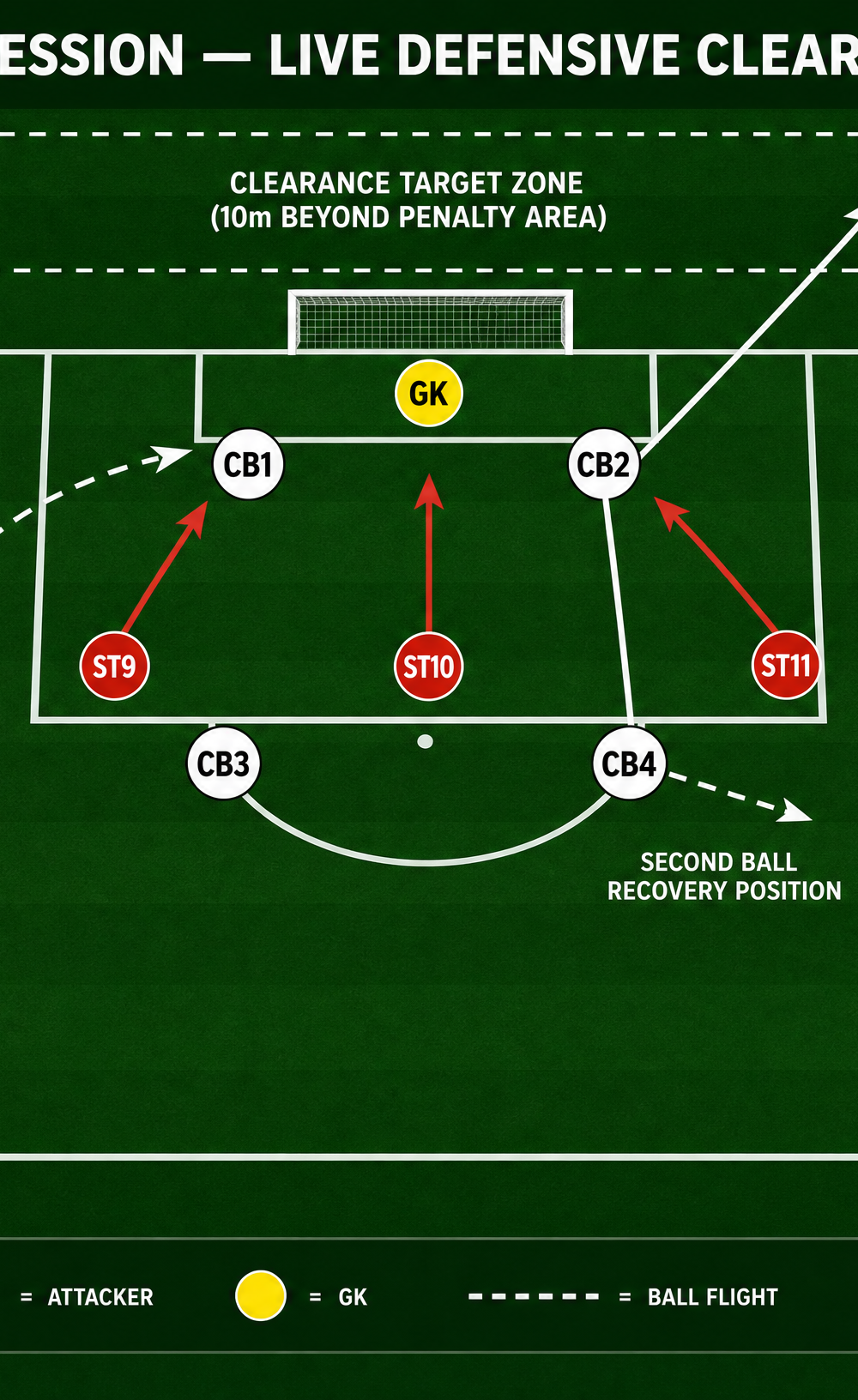
- Players: 1 Server (S), 3-4 Defenders (CB1, CB2, CB3, CB4), 2-3 Attackers (ST9, ST10, ST11), 1 Goalkeeper (GK).
- Equipment: 10-15 footballs, cones to mark zones, bibs for attackers and defenders.
- Positions: Set defenders in a realistic defensive line inside the penalty area. The server positions just outside the area or at the corner flag.
3. Step-by-Step Instructions
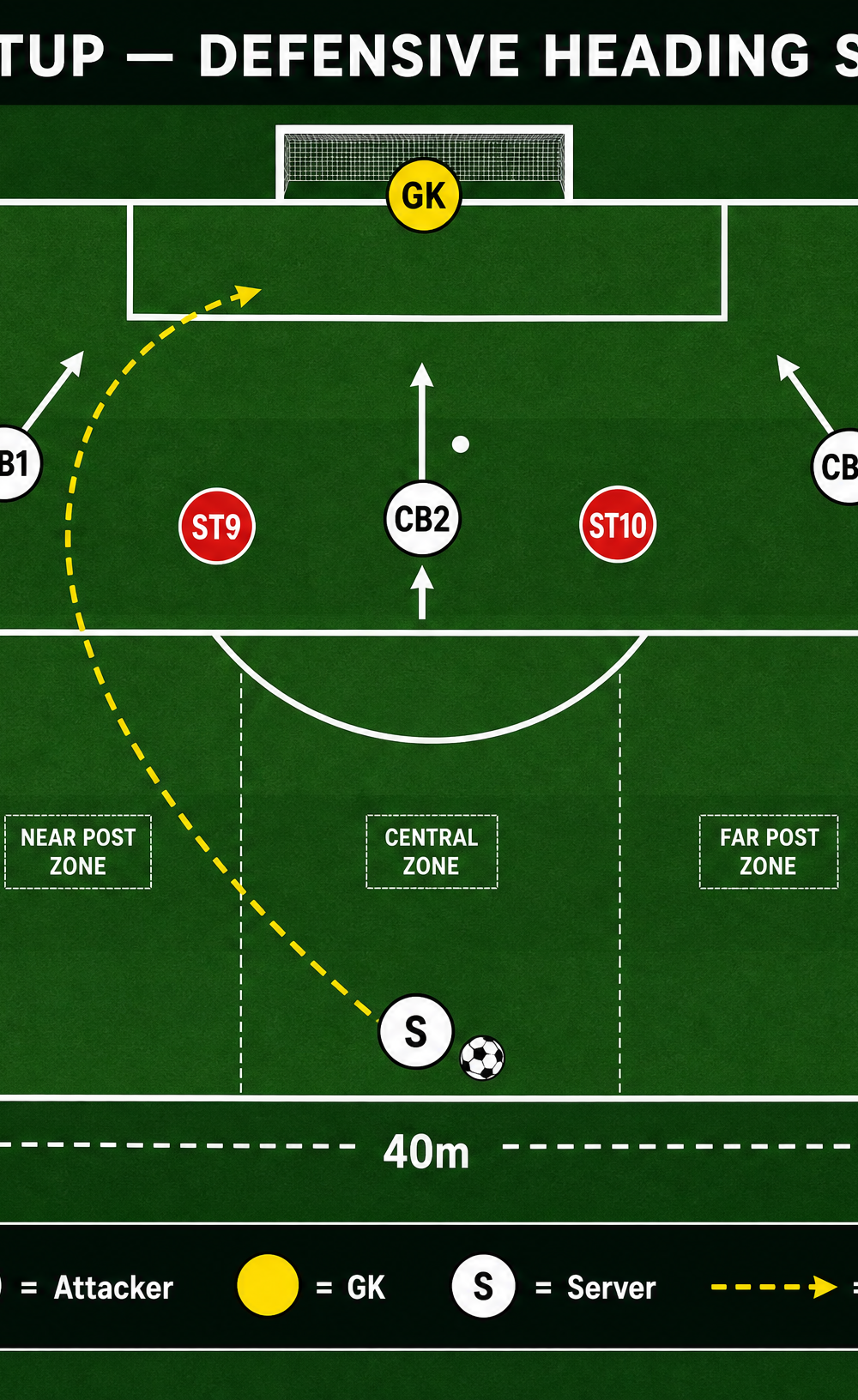
- Initial Positioning: Defenders take up starting positions in the near post, central, and far post zones. Attackers position themselves between the defenders.
- The Delivery: The Server (S) lofts a varied cross into the penalty area.
- Reading the Flight: Defenders must quickly read the trajectory of the ball and adjust their footwork accordingly.
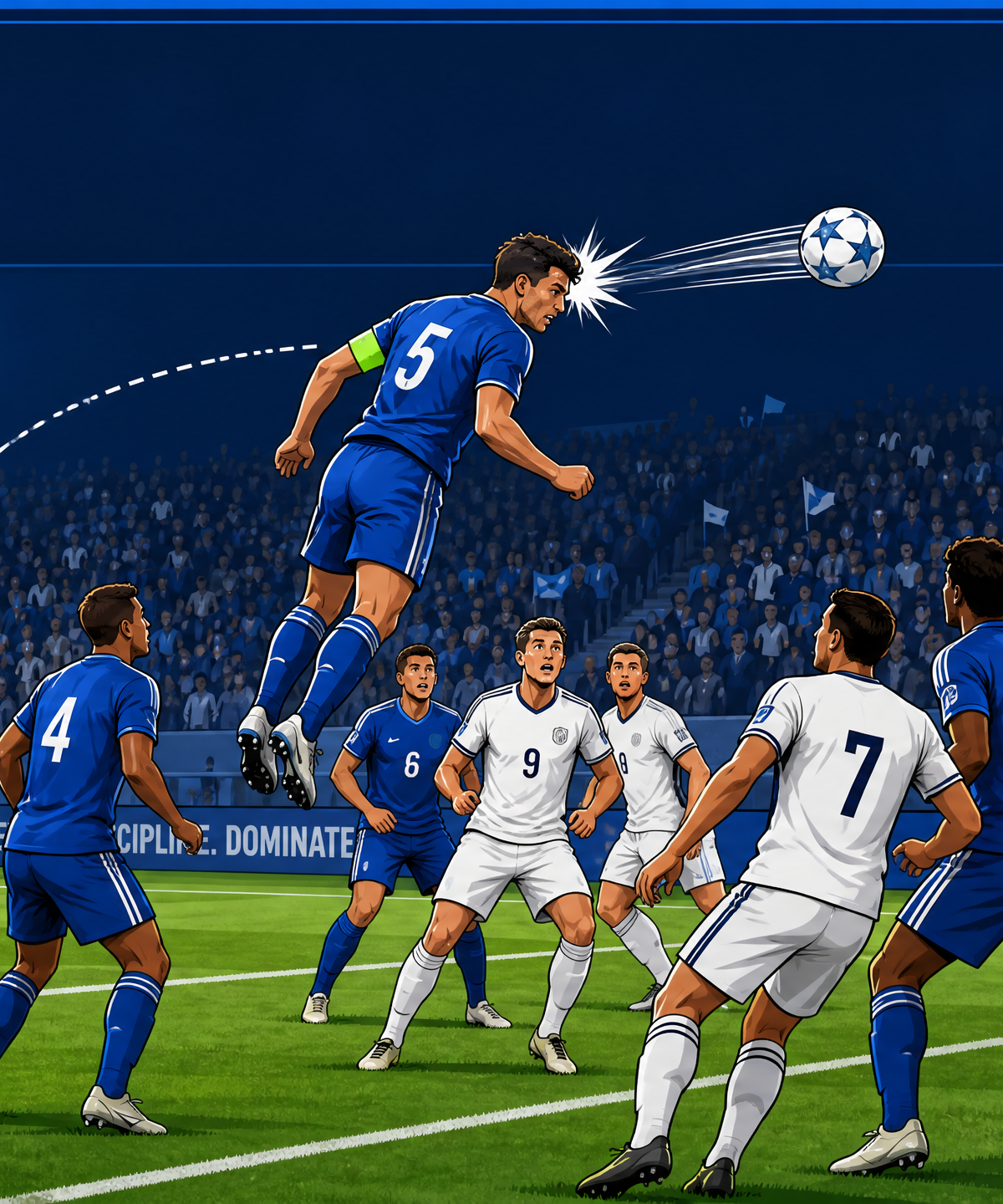
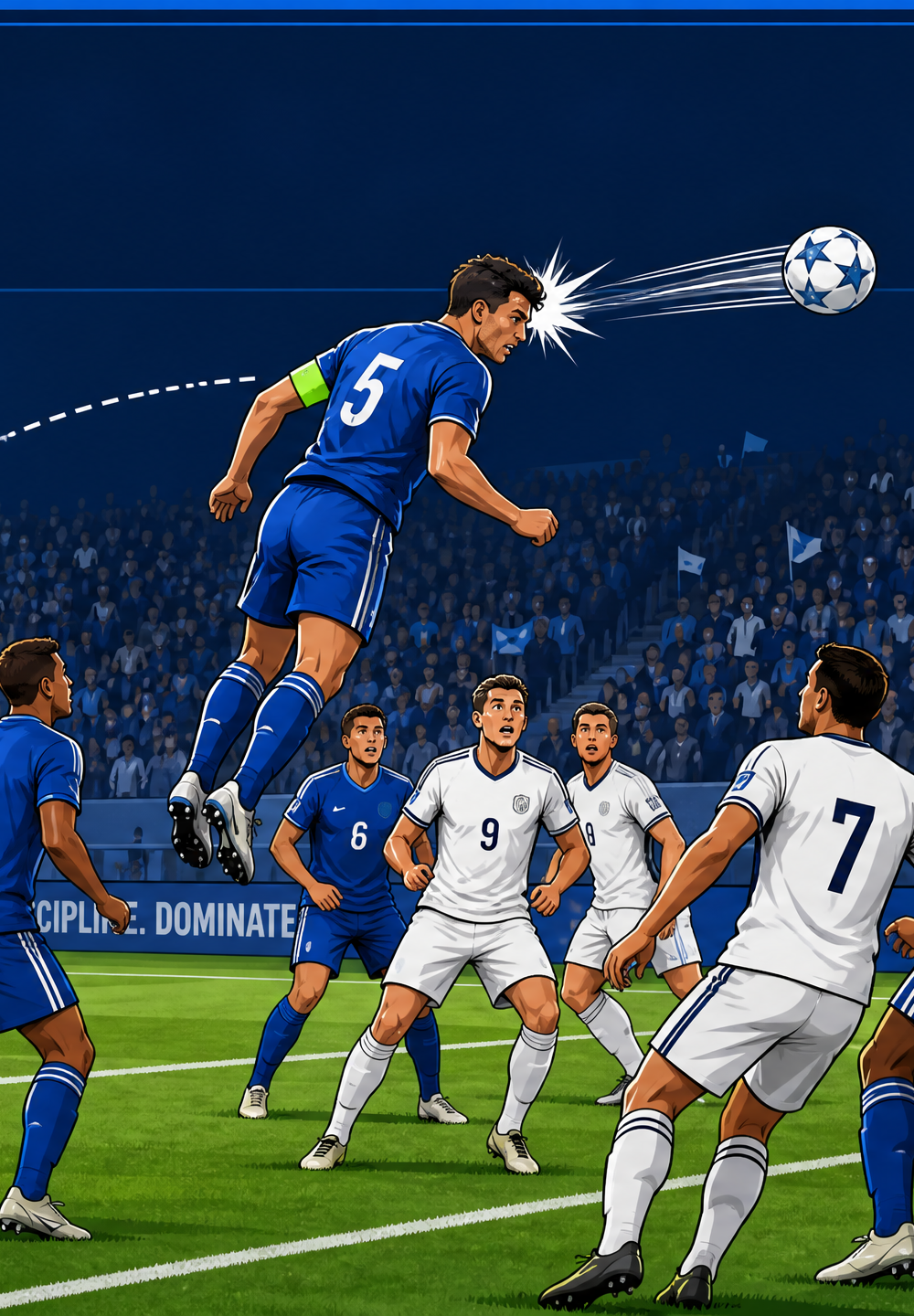
- Attacking the Ball: The designated defender attacks the ball, jumping off one foot to maximize height and power.
- The Clearance: The defender heads the ball powerfully, aiming high and wide to clear the danger zone.
- Reset and Reorganize: Immediately after the clearance, the defensive line pushes up to compress space and prepare for the next phase.
4. Key Coaching Points
- Eye on the Ball: Keep eyes open and fixed on the ball right through the point of contact.
- Use the Forehead: Strike the ball with the center of the forehead for maximum power and control.
- Neck Muscles: Use strong neck muscles to snap through the ball, rather than letting the ball hit the head.
- Timing the Jump: Explode upwards to meet the ball at its highest possible point.
- Direction of Clearance: Always aim high and wide. Never clear the ball centrally into the path of oncoming midfielders.
- Communication: Loud, clear calls (e.g., "Keeper's!" or "Away!") to avoid collisions and confusion.
5. Common Mistakes
- Closing Eyes: Players close their eyes upon impact, leading to mistimed and misdirected headers.
- Waiting for the Ball: Defenders stay static and wait for the ball to drop, allowing attackers to win the duel.
- Poor Arm Use: Failing to use arms for leverage and protection while jumping.
- Clearing Centrally: Heading the ball straight back down the middle, setting up an easy shot for the opposition.
6. Variations & Progressions
- Add Active Attackers: Introduce fully active attackers who genuinely compete for the ball, increasing the pressure.
- Second Ball Focus: Place midfielders on the edge of the box. After the initial header, the drill continues until the second ball is secured or cleared.
- Different Delivery Angles: Serve the ball from various angles (corners, deep free-kicks, wide crosses) to test different defensive adjustments.
7. Age Adaptations
- Under 8 / Under 10: Focus strictly on technique using softer, lighter balls. Emphasize heading with the correct part of the forehead without jumping.
- Under 12 / Under 14: Introduce jumping and attacking the ball. Use regular balls but manage the volume of headers to prevent injury.
- Under 16 / Open: Full competitive scenarios. Emphasize tactical positioning, communication, and aggressive clearance.