Football
Set Play
advanced
Defensive Shape Transition: Mid-Block to High Press
Master the art of transitioning from a compact 4-4-2 mid-block into an aggressive high press to win the ball in dangerous areas.
Jul 9, 20266 min read30 min drill22 players
Equipment Needed
Full size goals
Bibs (two colors)
Cones
Footballs
1. Overview
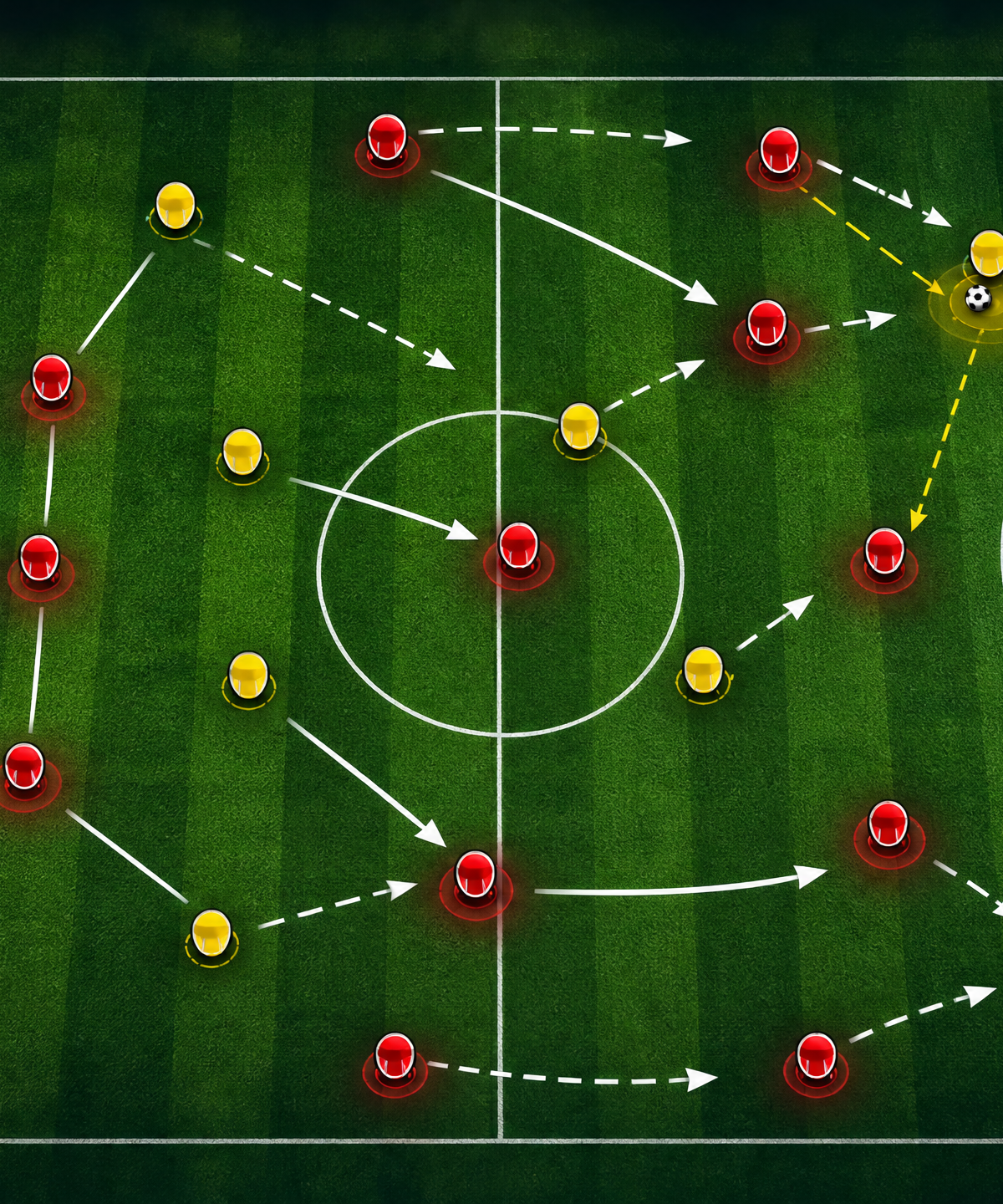
This tactical play focuses on a coordinated team transition from a compact defensive shape (mid-block) into an aggressive pressing action. The goal is to deny the opponent space in the middle third, force the ball wide or backward, and then use specific triggers to initiate a high-intensity press. This transition requires high tactical discipline, communication, and physical conditioning. It is highly effective against possession-based teams that try to build up slowly from the back.
2. Setup
- Pitch Dimensions: Full pitch (100-110m x 64-75m) or a slightly condensed 3/4 pitch for training intensity.
- Players: 11v11 (or 10v10 depending on squad size).
- Formation: Defending team in a 4-4-2; attacking team in a 4-3-3 or 4-2-3-1.
- Equipment: Full size goals, bibs (two colors), cones to mark the 'Press Trigger Zone' (middle third to defensive third of the opponent).
3. Step-by-Step Instructions
Phase 1: The Initial Defensive Shape
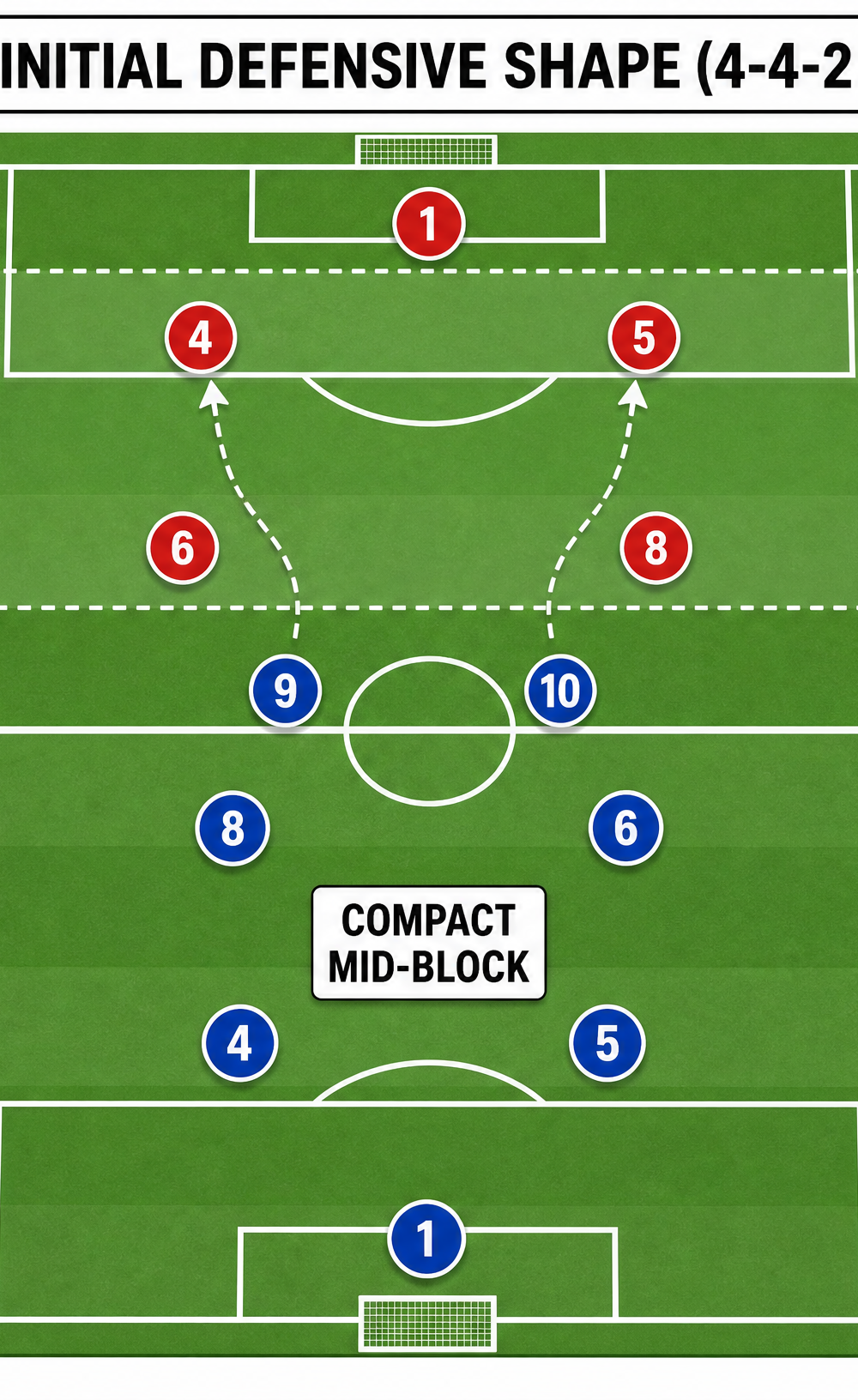
- Establish the Block: The defending team sets up in a compact 4-4-2 mid-block. The defensive line holds a high position near the halfway line, while the two strikers drop slightly to compress the space between the lines.
- Deny Central Penetration: The primary objective here is not to win the ball immediately, but to deny central passing lanes. The two central midfielders (6 and 8) must stay compact, forcing the opponent to play the ball wide or backward.
- Patience and Shifting: As the opponent circulates the ball, the entire defensive block shifts side-to-side as a unit, maintaining the compact shape.
Phase 2: The Press Trigger and Shape Transition
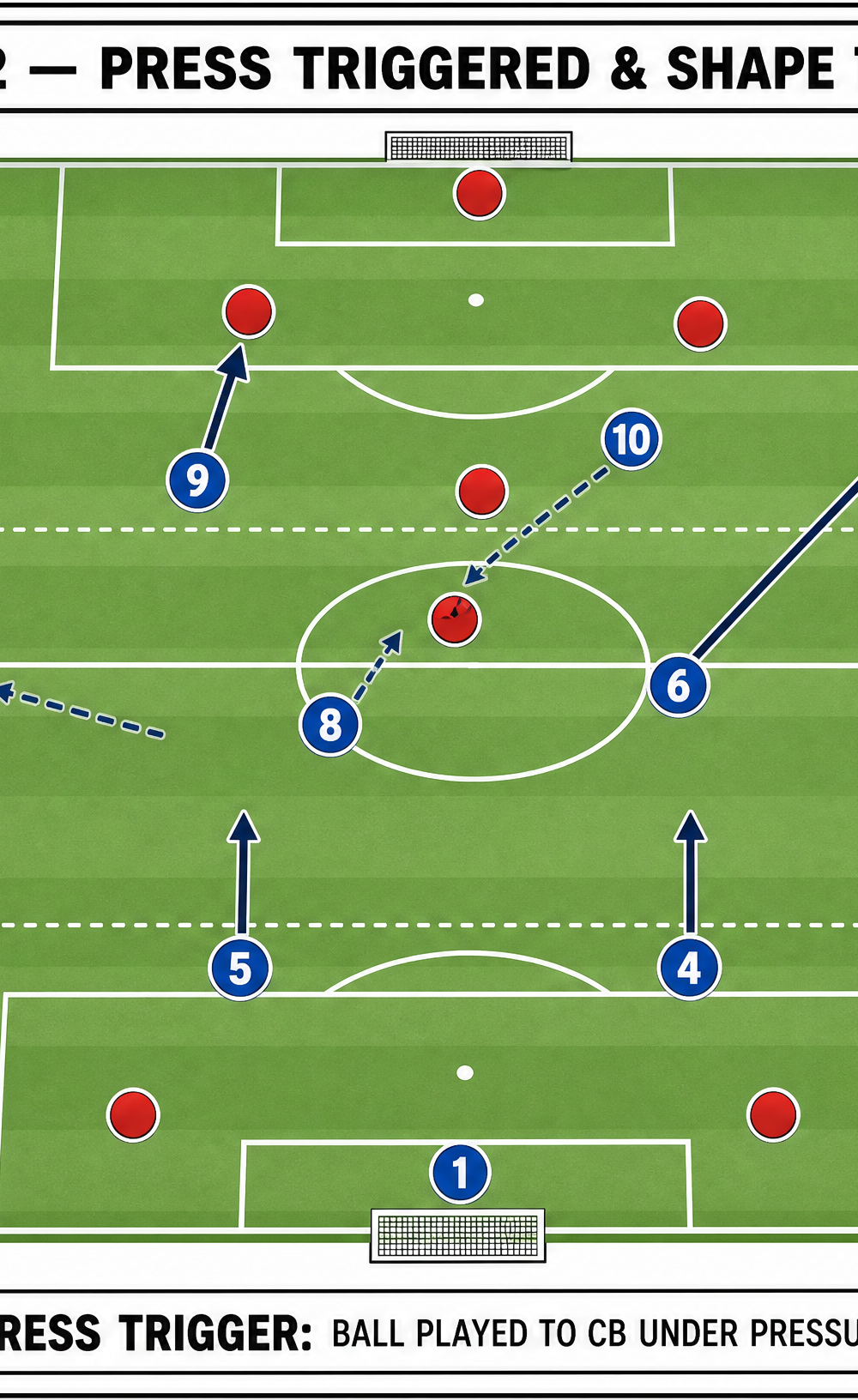
- Identify the Trigger: The press is initiated by a specific trigger. Common triggers include: a slow, looping pass to a center-back; a pass to a full-back who has a poor first touch; or a backward pass to the goalkeeper.
- Aggressive Pressing: Once the trigger occurs, the nearest striker (e.g., 9) aggressively presses the ball carrier. The other striker (10) shifts to cut off the passing lane to the opponent's defensive midfielder (using a cover shadow).
- Midfield Step-Up: The midfield line immediately steps up. The wide midfielder on the ball side (e.g., 7) presses the opposing full-back, while the central midfielders (6 and 8) step up to mark or cut off passing lanes to the opponent's central midfielders.
- Defensive Line Squeeze: The defensive line (2, 4, 5, 3) must push higher up the pitch to compress the space behind the midfield, ensuring the opponent cannot play long balls over the press easily.
Phase 3: Winning the Ball and Attacking Transition
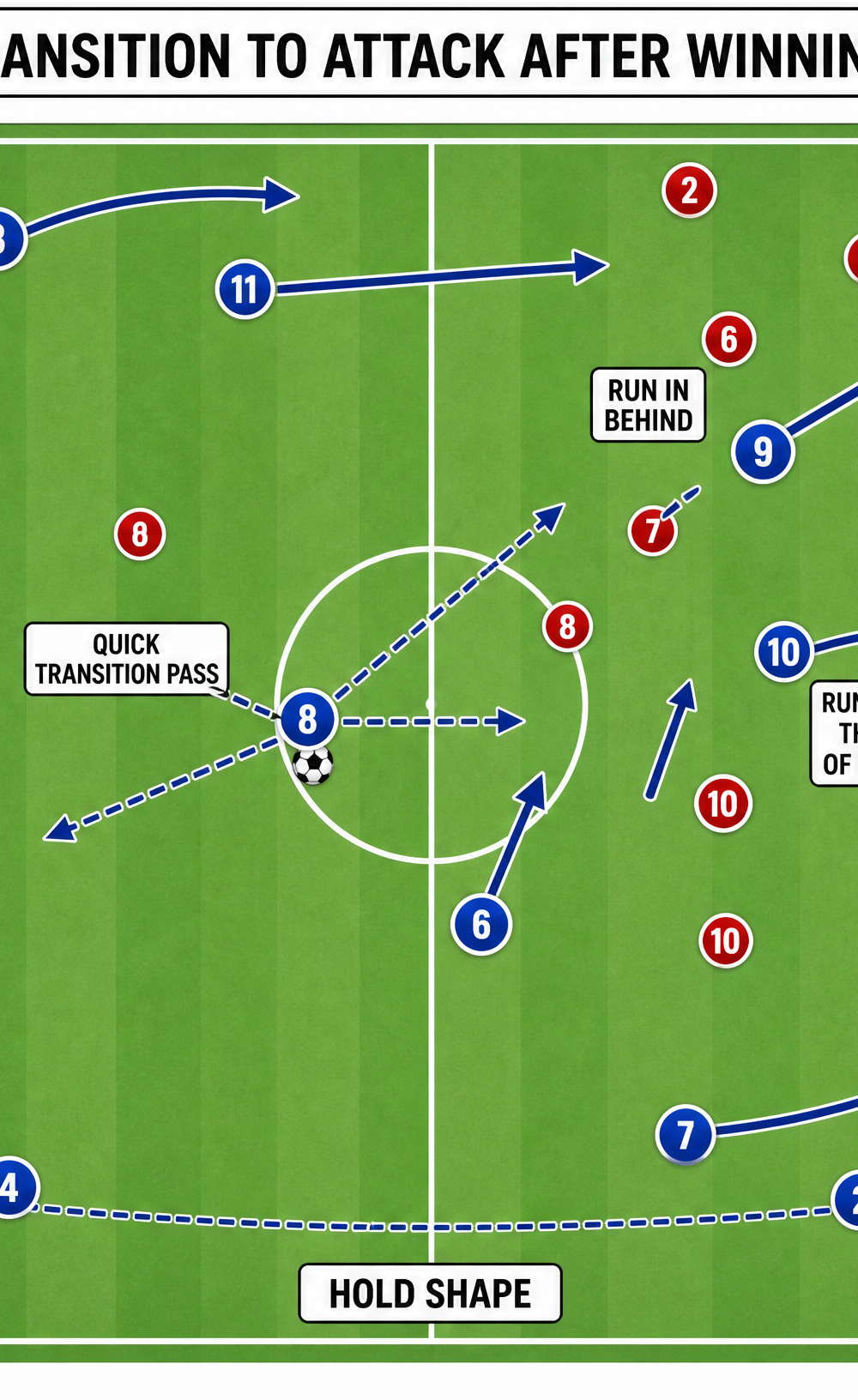
- Secure Possession: Upon winning the ball in the pressing zone, the immediate priority is to secure possession. The player who wins the ball should look for a quick, forward pass if possible, or lay it off to a supporting teammate.
- Exploit Disorganization: The opponent will likely be disorganized having just lost the ball in their own half. The strikers (9 and 10) should immediately make penetrating runs into the spaces left by the opposing center-backs or full-backs.
- Support the Attack: The wide midfielders (7 and 11) should sprint forward to offer wide options or make diagonal runs into the box. The central midfielders (6 and 8) provide support from behind the ball, ready to shoot or recycle possession if the initial attack is blocked.
4. Key Coaching Points
- Compactness is Crucial: The success of the mid-block relies on the team remaining compact both horizontally and vertically. If there are large gaps between the lines, the opponent will easily play through the block.
- Clear Pressing Triggers: Ensure all players understand exactly what the pressing triggers are. A disjointed press where only one or two players step up will be easily bypassed.
- Intensity and Aggression: Once the trigger is activated, the press must be executed with maximum intensity and aggression to force a mistake.
- Communication: Constant communication is required to ensure the entire team shifts and presses as a cohesive unit.
- Quick Transition to Attack: The ultimate goal of winning the ball high up the pitch is to score. Players must be trained to immediately look for forward, penetrating options upon winning possession.
5. Common Mistakes
- Pressing Individually: A single player pressing without support from the rest of the team leaves huge gaps that the opponent can exploit.
- Dropping Too Deep: If the defensive line drops too deep while the midfield presses, it creates a massive space between the lines for the opponent to operate in.
- Lack of Intensity: A half-hearted press will not force mistakes and will only tire the pressing players out unnecessarily.
- Ignoring the Cover Shadow: Players must actively use their cover shadow to block passing lanes while pressing the ball carrier.
6. Variations & Progressions
- Variation 1: Different Formations: Practice this transition using different defensive formations, such as a 4-3-3 or a 4-2-3-1, to adapt to different tactical situations.
- Variation 2: Different Pressing Triggers: Change the pressing triggers based on the opponent's weaknesses. For example, if the opponent has a weak center-back, make passes to that specific player the primary trigger.
- Progression 1: Time Limit on Attack: Once the ball is won, give the attacking team a strict time limit (e.g., 8 seconds) to get a shot on goal to encourage quick, decisive attacking play.
7. Age Adaptations
- Under 10 - Under 12: Focus on the basic concepts of compactness and shifting as a unit. Introduce simple pressing triggers, such as pressing when the opponent takes a bad touch. Keep the playing area smaller to encourage more frequent transitions.
- Under 14 - Under 16: Introduce more complex pressing triggers and emphasize the importance of the cover shadow. Demand higher intensity and faster transitions from defense to attack.
- Open (Adults): Focus on the tactical nuances of the transition, such as adjusting the pressing height based on the opponent's build-up play and exploiting specific weaknesses in the opponent's defensive structure.