Mastering the Defensive Spin Field: Choking Runs & Building Pressure
Learn how to deploy a defensive field for spin bowlers that cuts off boundaries, controls the strike rate, and forces batters into high-risk shots.

Equipment Needed
1. Overview
When the pitch is offering turn but the batters are looking to score quickly, or when defending a modest total, a defensive spin field is your most potent weapon. The goal of this setup is not necessarily to buy wickets through aggressive close catchers, but to choke the run flow, build pressure through dot balls, and force the batter into making a mistake by playing high-risk shots over the infield. This set play focuses on an orthodox off-spin bowler against a right-handed batter, but the principles apply across spin disciplines.
2. Setup
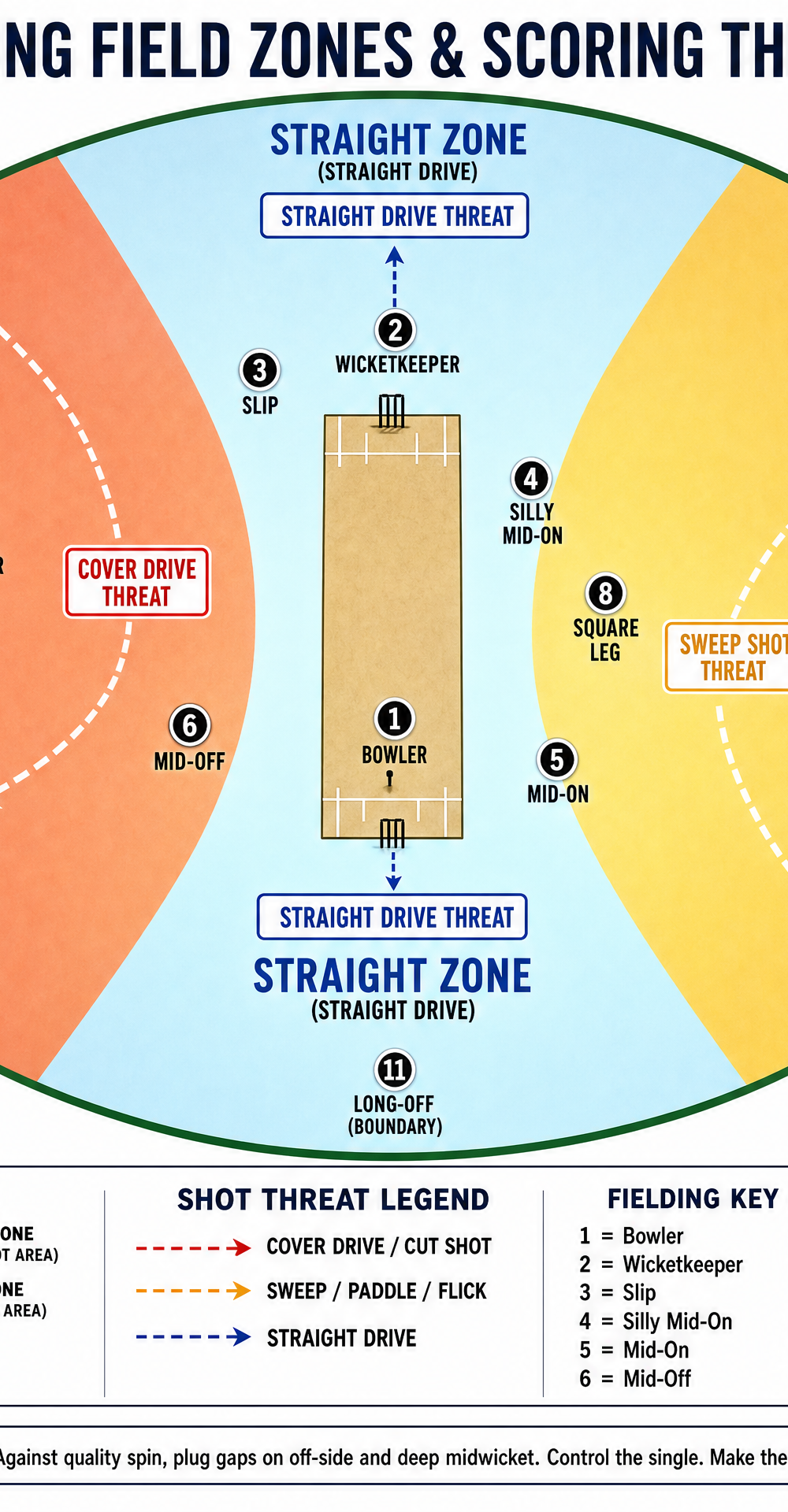
Pitch/Field Setup: Standard 22-yard pitch on a grass or synthetic oval. The field requires a clear 30-yard inner circle and boundary rope.
Players Required: 11 (1 Bowler, 1 Wicketkeeper, 9 Fielders)
Equipment: Match ball, stumps, standard protective gear for the wicketkeeper and close catchers.
Player Positions (Off-Spin vs Right-Hand Batter)
- Bowler
- Wicketkeeper (Standing up to the stumps)
- First Slip (Catching position, slightly wider than for pace)
- Silly Mid-On / Short Mid-Wicket (Catching/saving the single on the leg side)
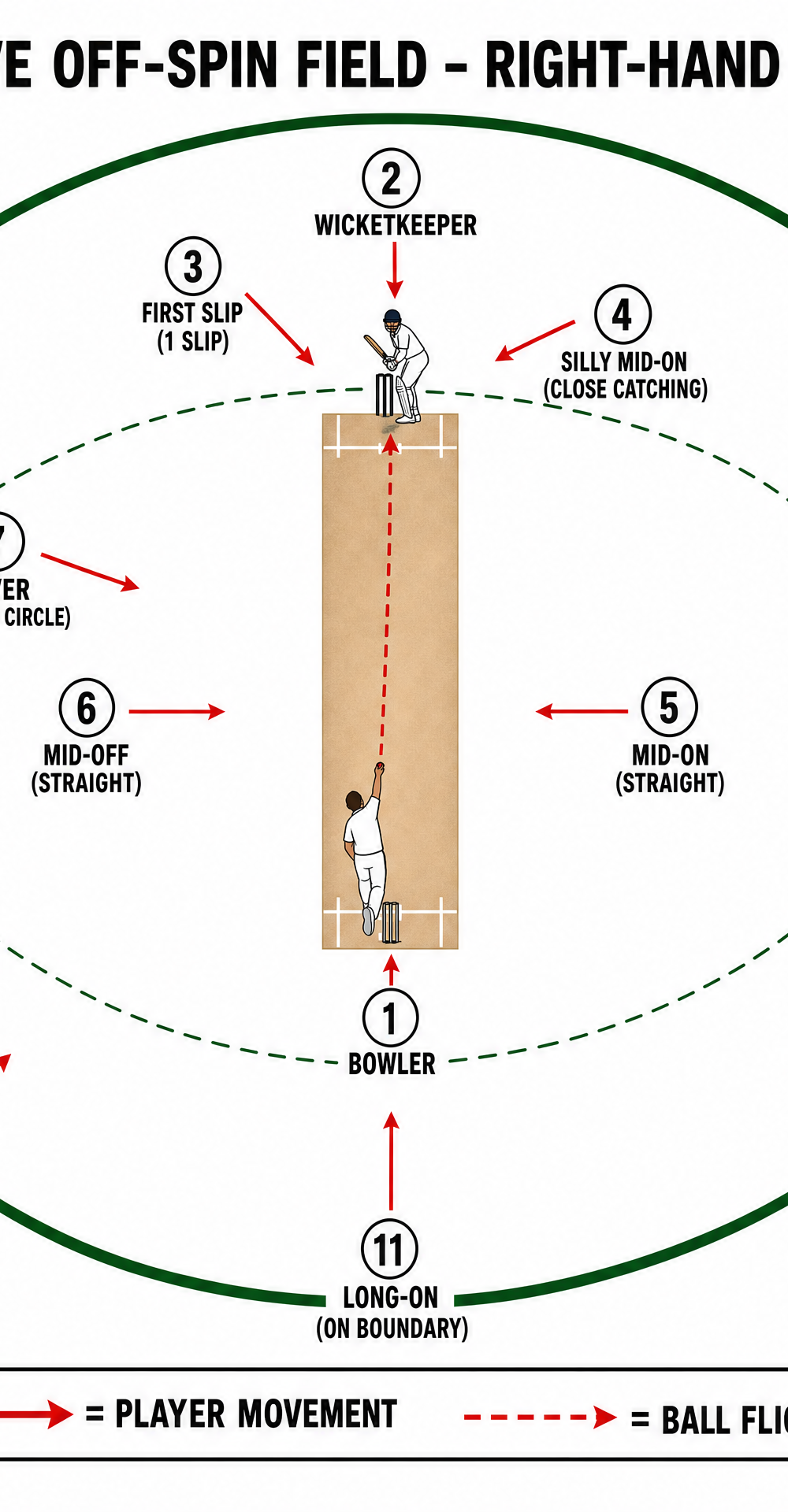
- Mid-On (Inside the circle, straight)
- Mid-Off (Inside the circle, straight)
- Cover (Inside the circle, saving the drive)
- Square Leg (Inside the circle, deep enough to save the sweep)
- Fine Leg (On the boundary)
- Deep Midwicket (On the boundary, patrolling the cow corner slog)
- Long-On (On the boundary, protecting the straight hit)

3. Step-by-Step Instructions
- Set the Sweepers: Start by placing your boundary riders (Long-On, Deep Midwicket, Fine Leg). These are your insurance policies. They must be athletic and possess strong throwing arms to keep the batter to a single.
- Establish the Ring: Position Mid-Off, Cover, and Square Leg precisely on the edge of the 30-yard circle. Their primary job is to cut off the single and stop the boundary. They must walk in with the bowler to reduce the batter's reaction time.
- Set the Trap: Place the First Slip and the close catcher (Silly Mid-On). Even in a defensive field, you must retain a threat of taking a wicket to keep the batter honest.
- Communicate the Plan: The bowler must understand that their line is crucial. For this field to work, the bowler must bowl middle-and-off or slightly outside off stump. Straying onto the pads will result in easy runs behind square on the leg side.
- Adjust to the Batter: If the batter is sweeping effectively, drop Square Leg deeper or move a boundary rider to Deep Square Leg. If they are driving over Cover, consider dropping Cover back or bringing Mid-Off wider.
4. Key Coaching Points
- Walk In: Fielders inside the circle MUST walk in as the bowler delivers the ball. A static fielder is easily beaten by a firm push.
- Bowler Discipline: A defensive field is useless if the bowler bowls bad balls. Consistency in line and length is paramount. The bowler must bowl to the field.
- Body Language: Defensive doesn't mean passive. Fielders must be energetic, vocal, and ready to pounce on any hesitation between the wickets.
- The Wicketkeeper's Role: The keeper is the captain of the fielding ring. They must constantly adjust the angles of the fielders based on the batter's movements and the bowler's line.
- Cut Off the Single: The primary goal of the ring fielders is to stop the easy single. Forcing the batter to hit over the top is the objective.
5. Common Mistakes
- Bowling to the Wrong Line: Bowling on the pads with an off-side heavy field is a recipe for disaster. The bowler must stick to the plan.
- Static Ring Fielders: Fielders standing flat-footed on the circle edge will leak singles. They must be moving forward.
- Boundary Riders Too Deep: Boundary fielders standing on the rope when the batter doesn't have the power to clear it. They should come in 5-10 yards to prevent the easy two.
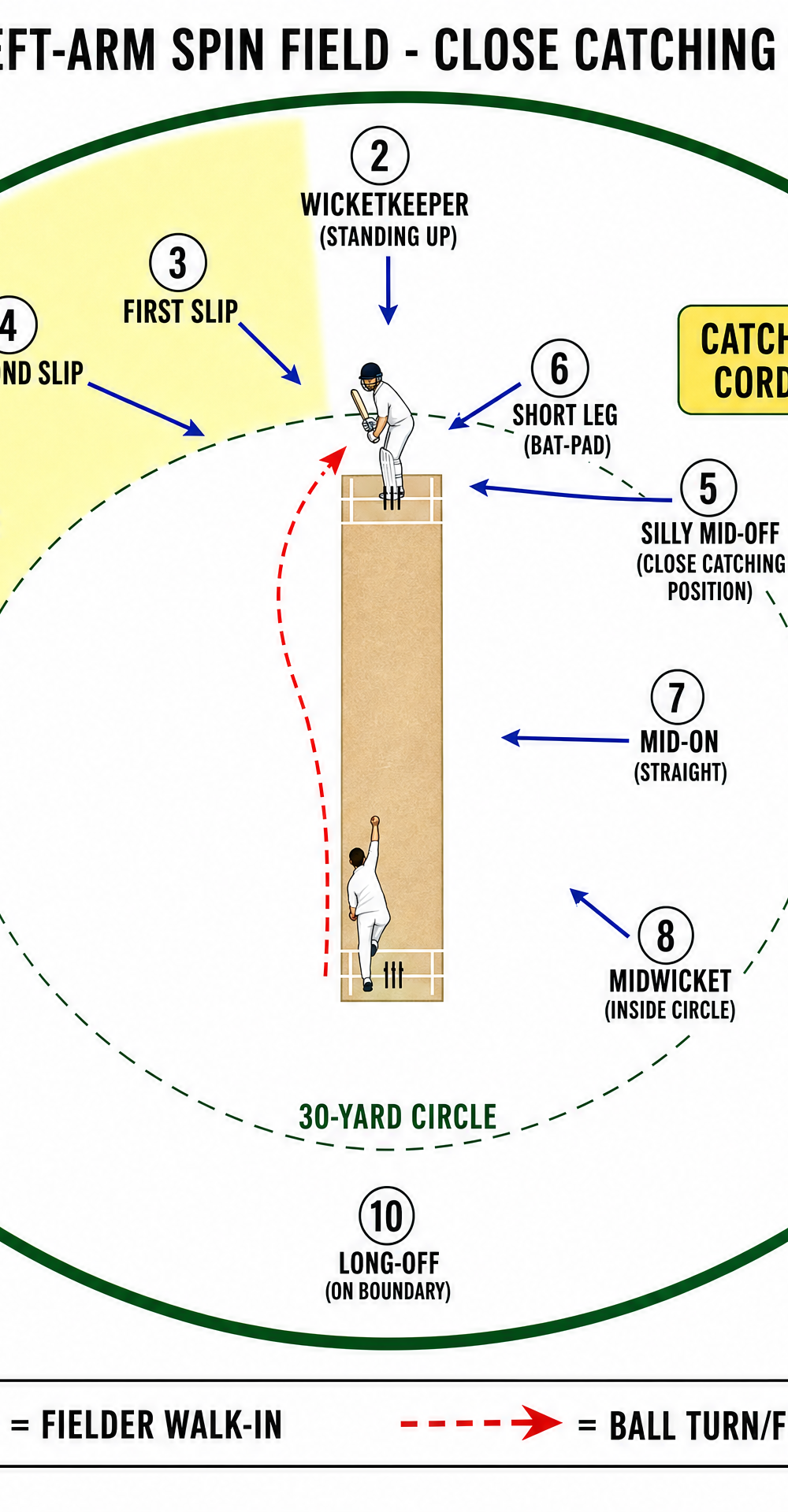
- Removing All Catchers: Going completely defensive and removing the slip removes all pressure from the batter. Always keep at least one catching option to maintain a psychological threat.
6. Variations & Progressions
- The 5-4 Split: For extreme defense against a dominant off-side player, move a leg-side fielder to the off-side (e.g., Deep Point instead of Deep Midwicket).
- The 'In-Out' Field: Bring Mid-On and Mid-Off up tight to stop the single, forcing the batter to hit over the top, but keep deep fielders square on both sides of the wicket.
- Spin Variation (Left-Arm Orthodox): Against a right-hander, the line shifts slightly straighter, and you might employ a Short Leg or Silly Point instead of Silly Mid-On, depending on the pitch.
7. Age Adaptations
- Under 10s / Under 12s: Keep it simple. Focus on the basics of stopping the ball and throwing it back to the keeper. Don't worry about complex angles or boundary riders unless necessary.
- Under 14s / Under 16s: Introduce the concept of bowling to a field. Emphasize the importance of the ring fielders walking in and cutting off the single.
- Open / Senior: Full implementation of the tactical nuances, including adjusting the field ball-by-ball based on the batter's strengths and the match situation.