Mastering the Back-Four Offside Trap: Synchronization and Timing
Learn how to drill your back four to execute a perfectly synchronized offside trap, squeezing the play and catching attackers off guard.
Equipment Needed
1. Overview
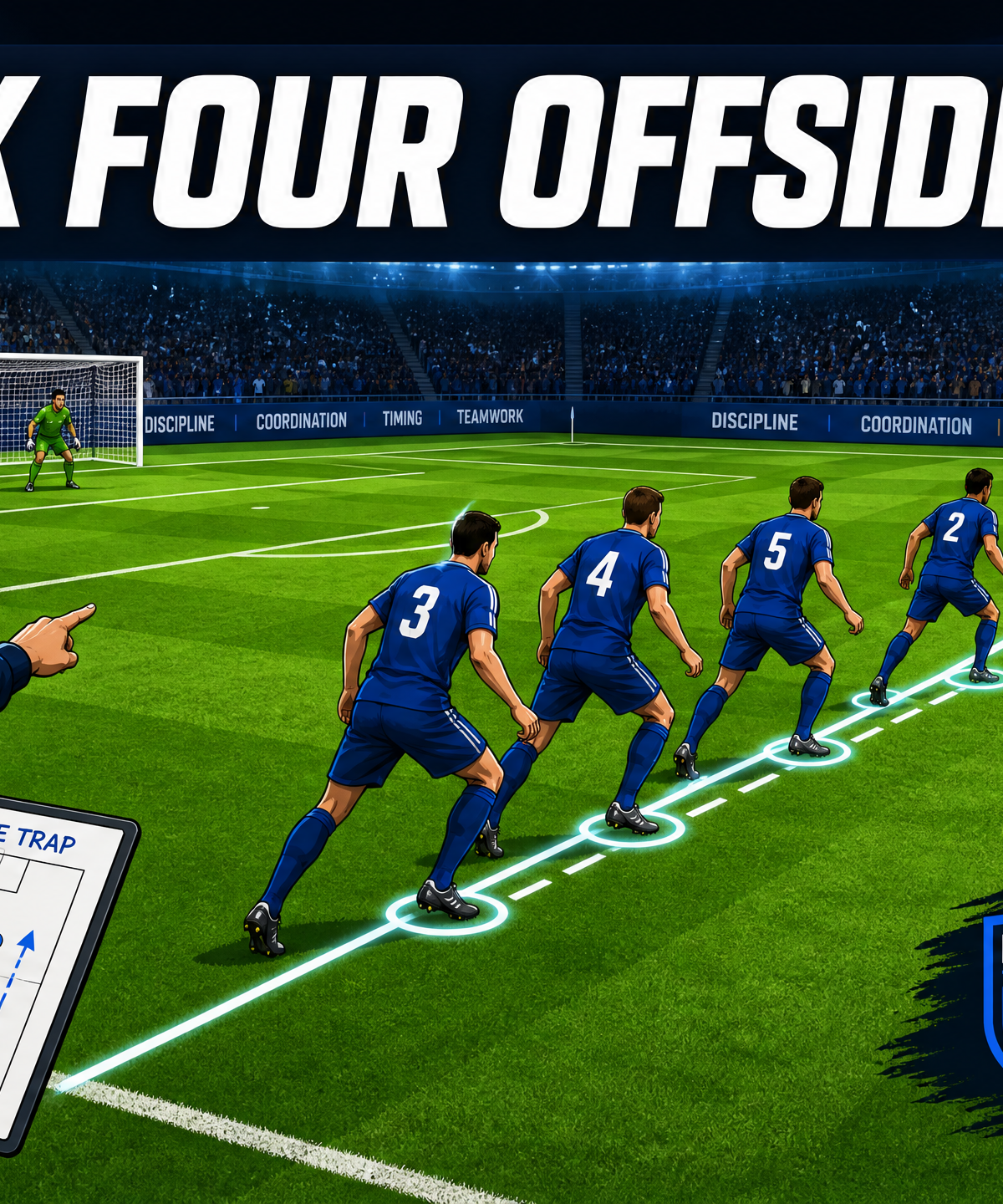
The offside trap is a high-risk, high-reward defensive tactic designed to catch opposing attackers in an offside position by rapidly advancing the defensive line. When executed perfectly, it nullifies dangerous through-balls and forces turnovers. This drill focuses on the synchronization, communication, and timing required by a back four to step up as a single cohesive unit. It is best utilized against teams that rely heavily on playing balls over the top or threading passes through the lines to pacey forwards.
2. Setup
Pitch Area: Use half of a standard football pitch (approximately 50m x 70m).
Players: 1 Goalkeeper, 4 Defenders (Back Four), 2 Central Midfielders, 3 Attackers (2 Strikers, 1 Attacking Midfielder).
Equipment: 1 full-size goal, 10-12 cones, supply of footballs, bibs (two colours).
Starting Positions:
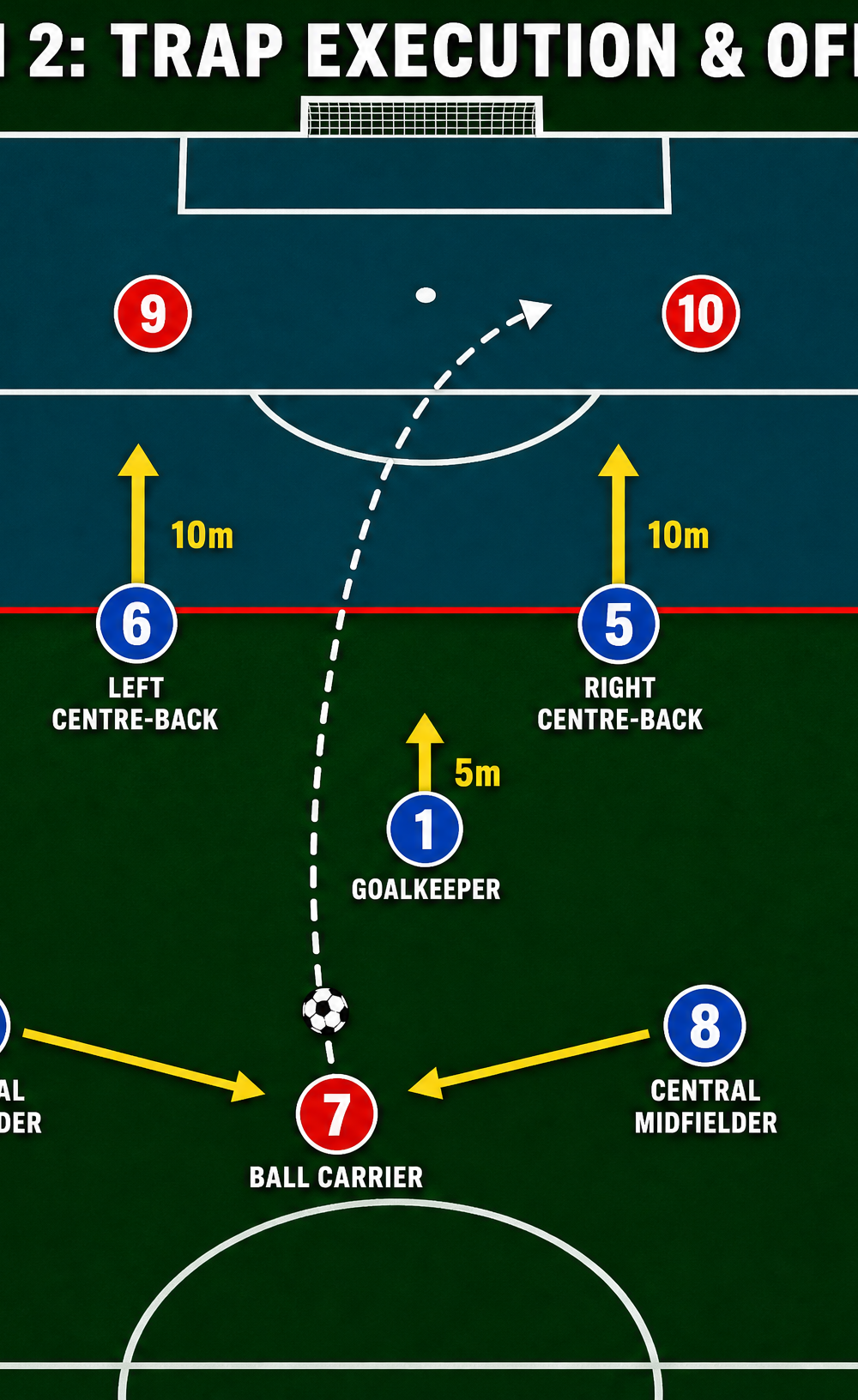
- The Goalkeeper (No.1) starts 5 metres off the goal line.
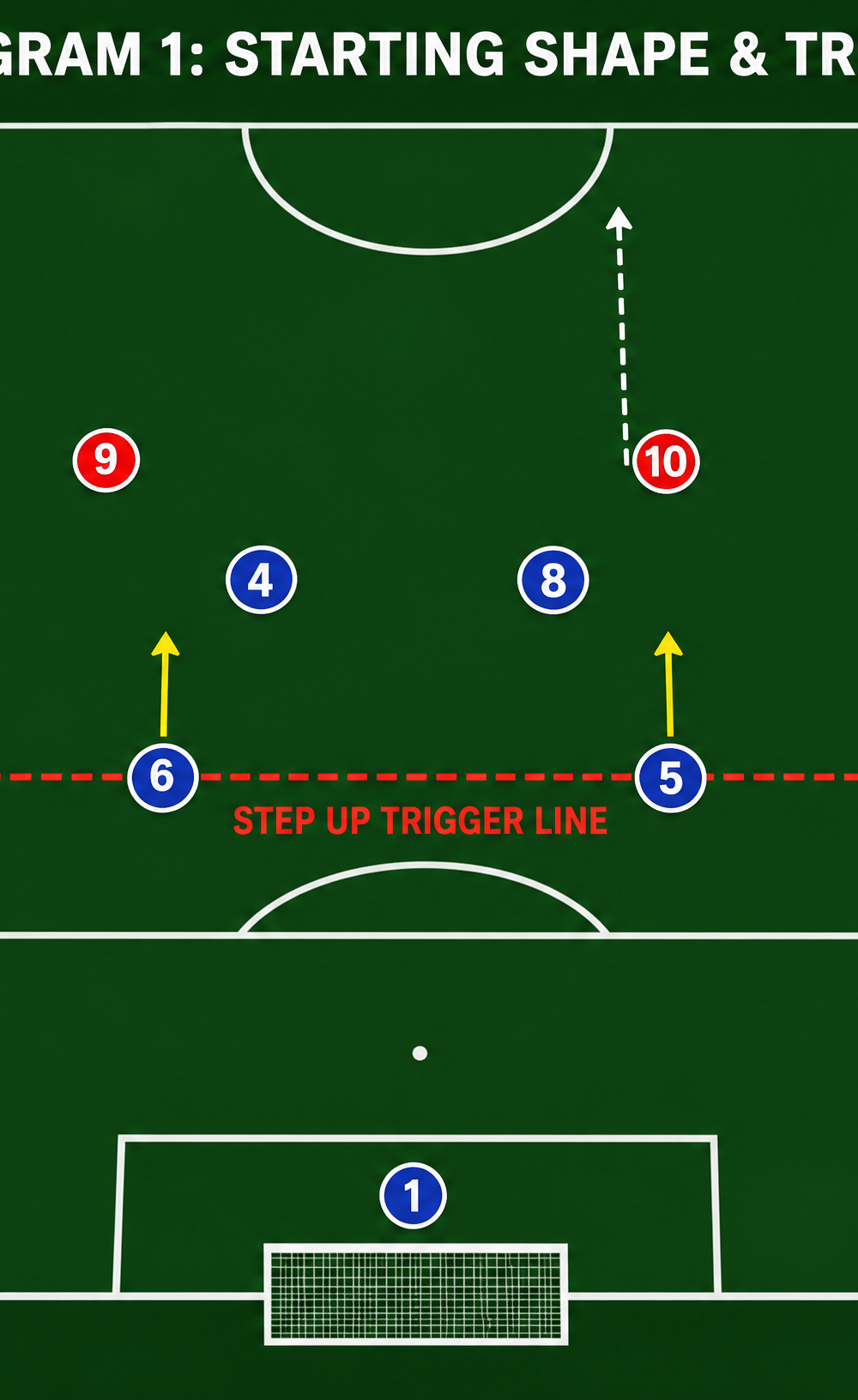
- The Back Four (No.2, No.5, No.6, No.3) set up in a flat line approximately 35 metres from the goal line.
- Two Central Midfielders (No.4, No.8) position themselves 10-15 metres ahead of the defensive line.
- The Attacking Midfielder (No.10) starts with the ball near the halfway line.
- Two Strikers (No.9, No.11) position themselves just onside, hovering near the defensive line.
3. Step-by-Step Instructions
- The Trigger: The drill begins with the Attacking Midfielder (No.10) on the ball near the halfway line, facing their own goal or looking down at the ball, indicating they are not ready to play a forward pass.
- The Call: The designated leader of the back four (usually one of the centre-backs, e.g., No.5 or No.6) reads the trigger and shouts the command clearly, such as "STEP!" or "UP!".
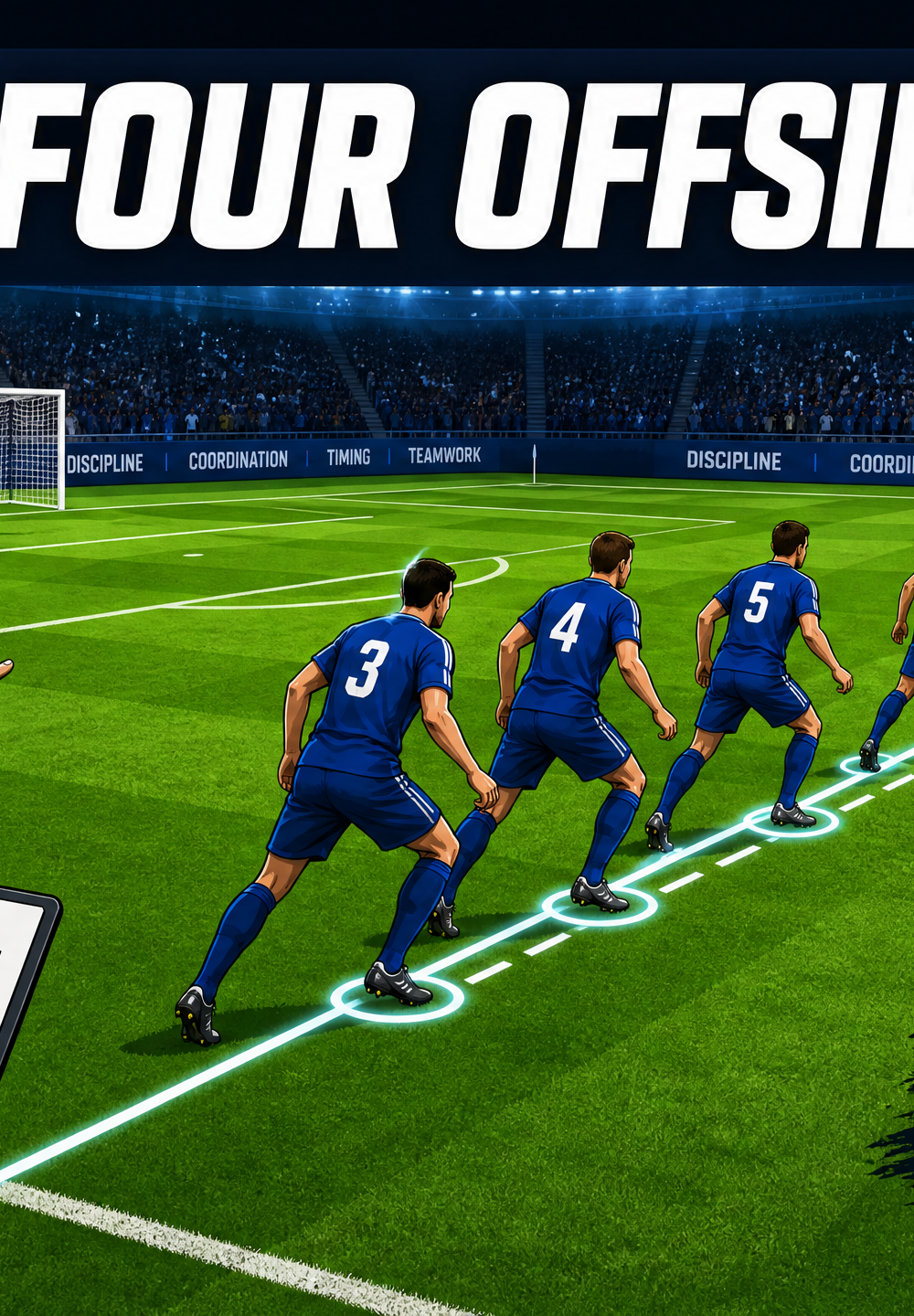
- The Movement: Upon the command, all four defenders instantly step forward 5 to 10 metres in a straight, synchronized line.
- The Trap: As the defenders step up, the Attacking Midfielder turns and attempts to play a through-ball to the Strikers. If the timing is correct, the Strikers will be caught offside.
- The Recovery (If Failed): If the trap fails or the timing is off, the defenders must immediately drop and sprint back towards their own goal to recover, with the Goalkeeper acting as a sweeper-keeper.
- Reset: Reset the positions and repeat the sequence, varying the timing of the trigger and the type of pass attempted by the Attacking Midfielder.
4. Key Coaching Points
- Visual Cues: Defenders must read the body language of the ball carrier. The best time to step up is when the ball carrier's head is down, or they are facing their own goal, making it impossible for them to play an immediate forward pass.
- Vocal Leadership: One player must take charge of the defensive line. The command must be loud, clear, and authoritative. There cannot be hesitation or conflicting calls.
- Synchronized Movement: The back four must move as if connected by a rope. If one player lags behind, the entire trap fails, playing the attackers onside.
- Goalkeeper Positioning: The goalkeeper must be prepared to act as a sweeper. When the defensive line steps up, the space behind them increases, and the goalkeeper must be ready to sweep up any balls played over the top.
- Body Shape: Defenders should keep their body shape open, ready to turn and sprint back if the trap fails or the ball is played unexpectedly.
5. Common Mistakes
- Hesitation: A delayed reaction from even one defender ruins the trap. The entire line must commit fully to the call.
- Stepping on an Open Ball: Stepping up when the ball carrier has time, space, and their head up looking for a pass is extremely dangerous. The trap should only be sprung when pressure is applied to the ball or the carrier cannot play forward.
- Lack of Communication: Silence or conflicting calls lead to confusion and a disjointed defensive line.
- Ignoring the Ball: Defenders must watch the ball and the ball carrier, not just the attackers. The timing of the step is dictated by the ball carrier's actions.
6. Variations & Progressions
- Add Pressure: Introduce a defensive midfielder to apply active pressure on the ball carrier, making the trigger more realistic.
- Live Play: Transition the drill into a small-sided game (e.g., 8v8) where the offside trap can be applied dynamically in open play.
- Vary the Attack: Introduce wingers and have the attack attempt crosses or diagonal balls, requiring the defensive line to adjust their shape and timing accordingly.
7. Age Adaptations
- Under 10 - Under 12: Focus purely on the concept of moving together in a straight line without the pressure of the offside rule. Use cones to guide their movement.
- Under 14 - Under 16: Introduce the offside rule and the specific triggers. Focus heavily on communication and the timing of the step.
- Open/Senior: Execute at match speed with full pressure on the ball. Emphasize the recovery sprint and the sweeper-keeper role if the trap is beaten.