The Decoy Spin: Throw-In Play for Quick Advantage
A dynamic throw-in routine that uses a decoy run to isolate an attacking midfielder in Zone 14, creating immediate goal-scoring opportunities in the attacking third.
Equipment Needed
1. Overview
Throw-ins in the attacking third are often treated as mere restarts rather than genuine attacking opportunities. The Decoy Spin is designed to change that narrative. This set play leverages coordinated movement to pull defenders out of position, specifically targeting the highly valuable "Zone 14" (the area just outside the penalty box, central to the goal).
By utilizing a short, aggressive decoy run from the winger, we drag the opposing full-back or defensive midfielder out of their structured defensive shape. This creates a pocket of space for the attacking midfielder to spin into, receive the throw on the half-turn, and immediately face the opposition's backline with runners ahead of them.
When to use it:
- Attacking third throw-ins (approx. 15-25 meters from the corner flag).
- Against teams employing a rigid man-marking system on throw-ins.
- When you need to inject pace into the game and catch a retreating defense off-guard.
2. Setup
Equipment Needed:
- 1 full-size football.
- Standard 11v11 pitch (100-110m x 64-75m).
- (For practice) Cones to mark starting positions and target zones.
Player Positions:
- Player 2 (Right Back): The thrower. Needs a strong, accurate throw over 10-15 meters.
- Player 7 (Right Winger): The decoy. Positioned 5 meters infield from the touchline, slightly ahead of the thrower.
- Player 10 (Attacking Midfielder): The primary target. Positioned 12 meters infield, slightly deeper than Player 7.
- Player 9 (Striker): Positioned 15 meters ahead, occupying the center-backs.
- Player 11 (Left Winger): Holding width on the far side, ready to attack the far post.
3. Step-by-Step Instructions
Phase 1: The Setup & Decoy Run
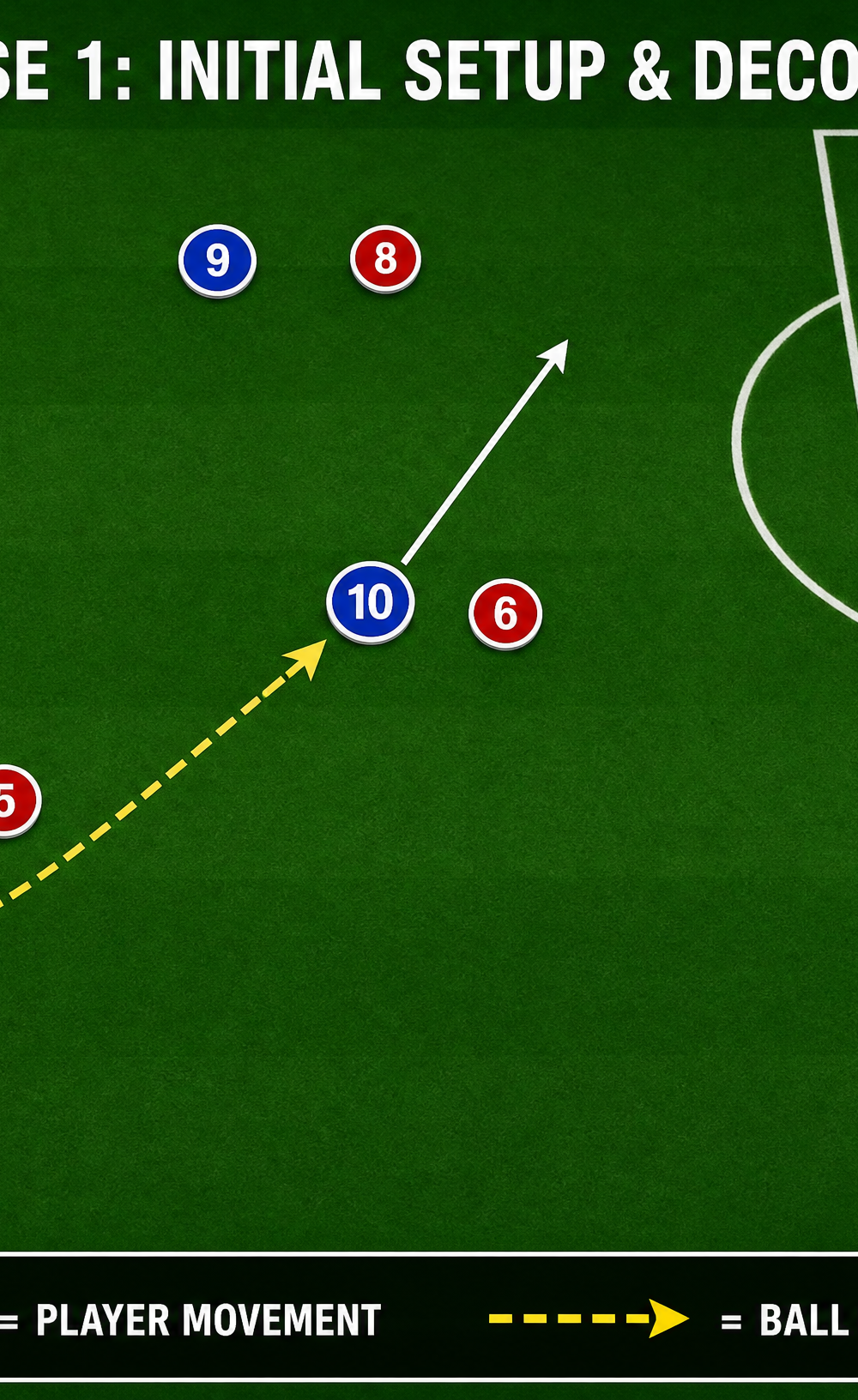
- The Trigger: Player 2 steps up to the touchline holding the ball high. The trigger for movement is Player 2 tapping the ball on the back of their neck.
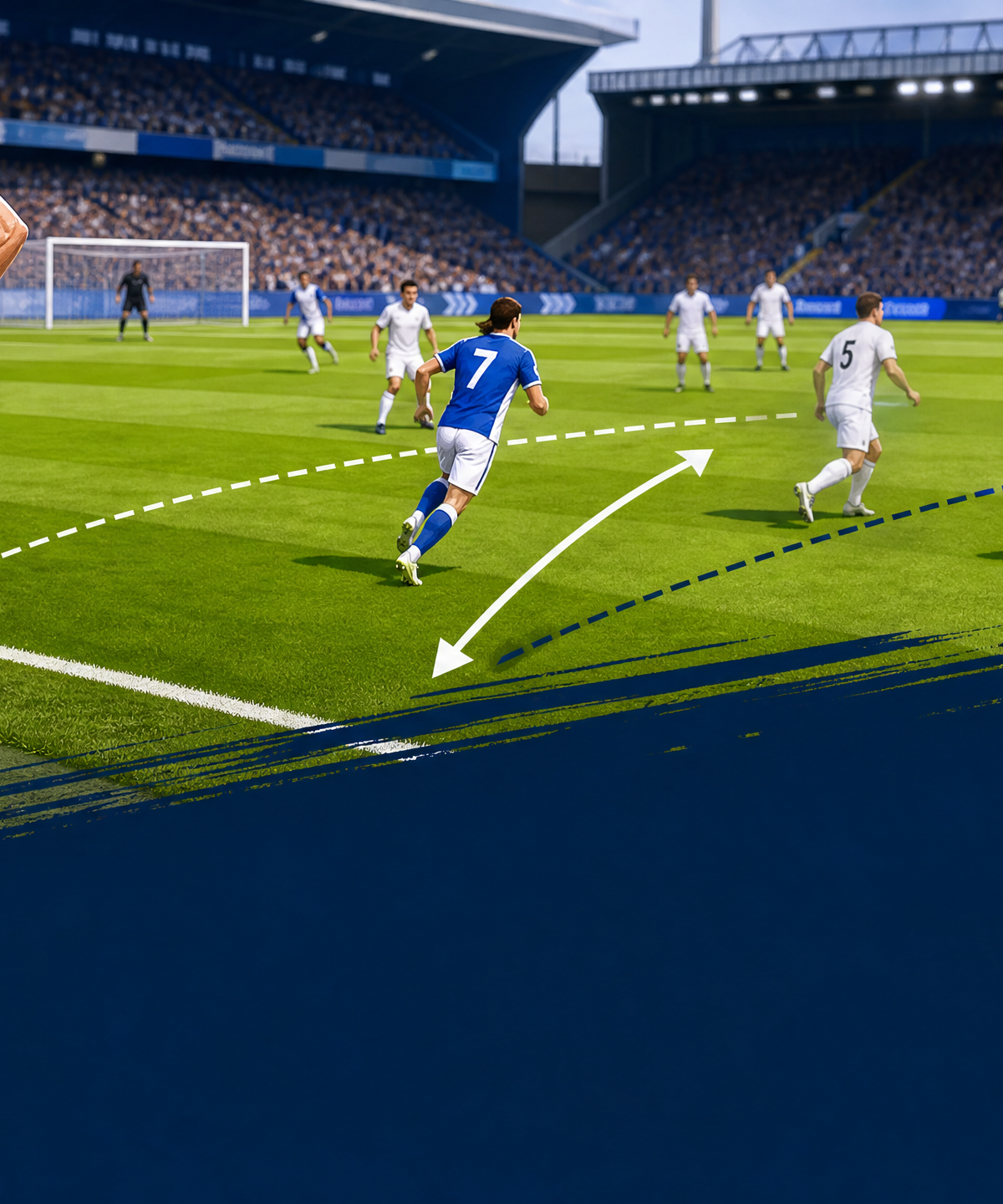
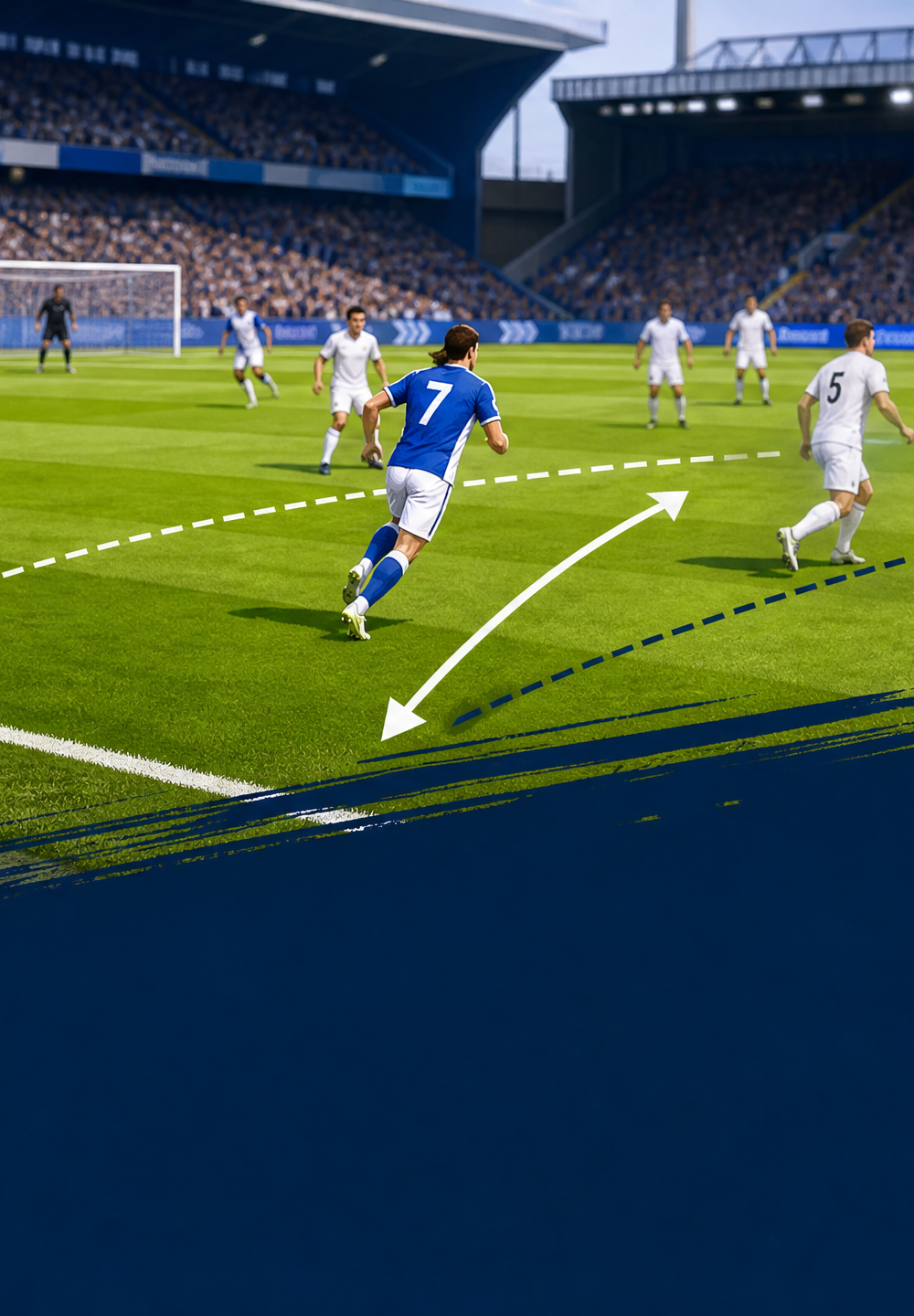
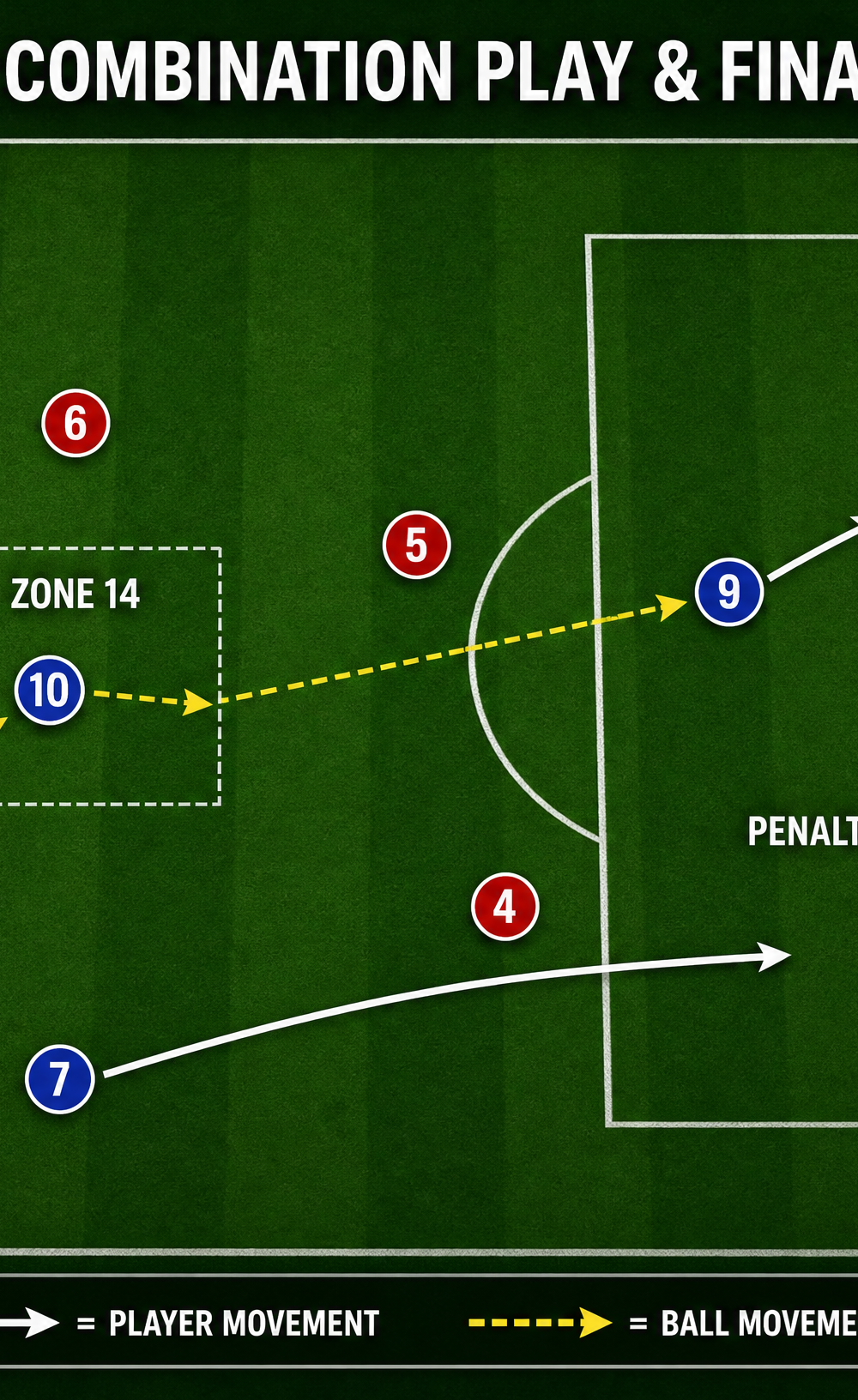
- The Decoy: Immediately upon the trigger, Player 7 makes a sharp, explosive sprint directly toward Player 2, demanding the ball loudly. This run must look convincing to drag the marking defender (Red 5) with them.
- The Spin: As Player 7 clears the space, Player 10, who was initially static, violently spins outward (away from their marker, Red 6) and sprints into the newly vacated space left by Player 7.
- The Throw: Player 2 ignores Player 7 and delivers a firm, flat throw directly to the feet or chest of Player 10 in the created pocket of space.
Phase 2: Combination Play & Final Product
- The Turn: Player 10 receives the ball on the half-turn, allowing their first touch to take them forward toward the penalty area (Zone 14).
- The Penetration: As Player 10 turns, Player 9 makes a diagonal run across the face of the near-side center-back (Red 4) to receive a through-ball.
- The Overlap (Optional): Player 2, after throwing, immediately overlaps down the touchline to provide width if the central pass to Player 9 is blocked.
- The Finish: Player 10 slides the ball to Player 9 for a shot, or switches play to the arriving Player 11 at the far post.
4. Key Coaching Points
- Conviction in the Decoy: Player 7's run is the most important part of the play. If they jog or don't demand the ball, the defender won't follow, and the space for Player 10 won't open up. They must sprint.
- Timing of the Spin: Player 10 must wait until Player 7 has dragged the defender away before spinning. Moving too early crowds the space; moving too late allows the defense to recover.
- Quality of the Throw: The throw from Player 2 must be flat and driven to Player 10's feet. A loopy throw gives the defense time to adjust and challenge for the aerial ball.
- Body Shape on Reception: Player 10 must receive the ball on the half-turn (back foot). Receiving facing the touchline kills the momentum and allows the defense to press.
- Immediate Forward Runs: Players 9 and 11 must anticipate Player 10 receiving the ball and begin their attacking runs as the throw is being taken, not after Player 10 has controlled it.
5. Common Mistakes
- Telegraphing the Play: The thrower (Player 2) staring directly at Player 10 before the movement begins, alerting the defense to the intended target.
- Weak Decoy Run: Player 7 making a half-hearted run that fails to pull the defender out of position.
- Poor Spacing: Players starting too close together, which means the decoy run doesn't create a large enough gap for Player 10 to exploit.
- Foul Throws: In the rush to execute quickly, Player 2 lifting a foot or not bringing the ball all the way behind the head.
6. Variations & Progressions
Progression 1: The "Bounce" Pass
If the opposition wises up and Red 6 tightly marks Player 10's spin, Player 10 can bounce the ball back to Player 7 (who has stopped their run and turned) or directly back to Player 2 for a first-time cross into the box.
Variation: The Long Throw Flick-On
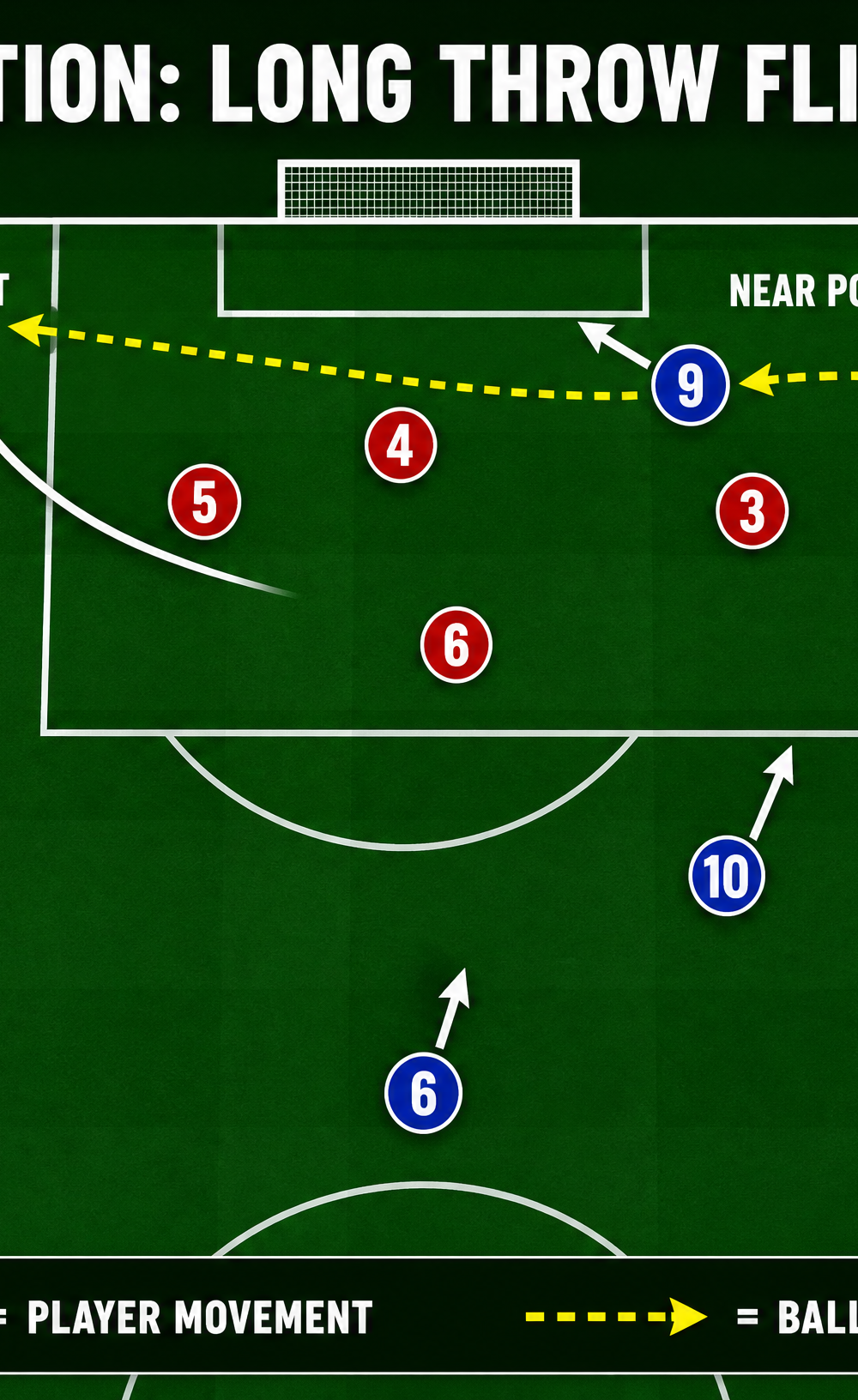
If Player 2 possesses a long throw, use the same initial setup but bypass the short options. Player 9 makes a hard run to the near post area. Player 2 throws long to Player 9 for a flick-on header toward the far post, where Player 11 is arriving aggressively. Player 10 waits at the edge of the box for any clearances.
7. Age Adaptations
- Under 8 - Under 10: Focus primarily on the mechanics of a legal throw-in and simple "throw to a teammate's feet." Introduce the concept of moving into space, but avoid complex decoy runs. Use a simple 1-2 pass back to the thrower.
- Under 12 - Under 14: Introduce the decoy run (Player 7). Emphasize the timing of the run and the quality of the throw. The focus is on retaining possession from the throw-in rather than immediate penetration.
- Under 16 - Open: Implement the full routine. Demand high-speed execution, precise timing on the spin (Player 10), and immediate forward runs from the strikers. Introduce the variations based on the opponent's defensive setup.