Throw-In Set Play: The Quick Advantage Third-Man Run
A dynamic throw-in routine designed to exploit space behind the defensive line using a third-man run and quick combination play in the attacking third.
Equipment Needed
1. Overview
Throw-ins are often viewed merely as a method to restart play, yet they present a significant opportunity to launch coordinated attacks. The Quick Advantage Third-Man Run is a highly effective throw-in set play designed for the attacking third of the pitch. By utilizing rapid ball movement and a deceptive decoy run, this routine aims to draw defenders out of position and exploit the resulting space behind the defensive line.
This play is particularly effective against teams that employ a strict man-to-man marking system on throw-ins or those that are slow to transition defensively. The core principle is to create a numerical advantage (a 2v1 or 3v2 situation) in a dangerous area through a pre-rehearsed combination, specifically a third-man run, which is notoriously difficult for defenders to track.
2. Setup
To execute this set play effectively, a precise setup is required. The play is designed for a standard 11v11 pitch (approximately 100-110m x 64-75m), but the spatial relationships remain consistent on smaller pitches.
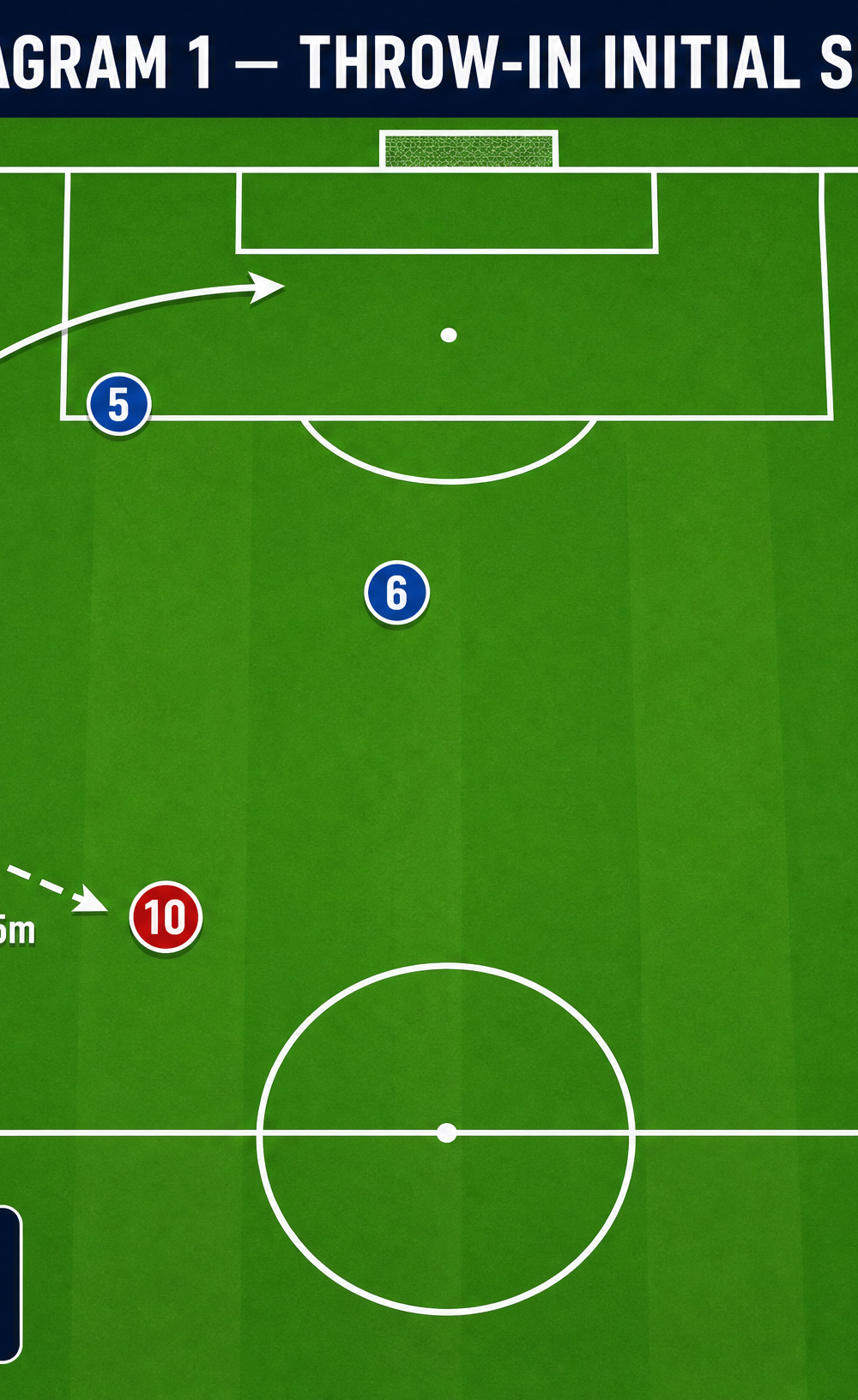
- Location: Attacking third, approximately 25-35 metres from the opponent's goal line.
- Key Personnel:
- Player 2 (Right Back): The thrower. Requires a strong, accurate throw and quick decision-making.
- Player 8 (Central Midfielder): The pivot. Needs excellent first-touch control and the ability to play quick, accurate lay-offs.
- Player 10 (Attacking Midfielder): The playmaker. Must possess excellent vision and the ability to execute a perfectly weighted through ball.
- Player 7 (Right Winger): The runner. Requires explosive acceleration and intelligent timing to exploit the space.
3. Step-by-Step Instructions
The success of this routine relies on synchronized movement and precise timing. The sequence of events must occur rapidly to prevent the defensive unit from adjusting.
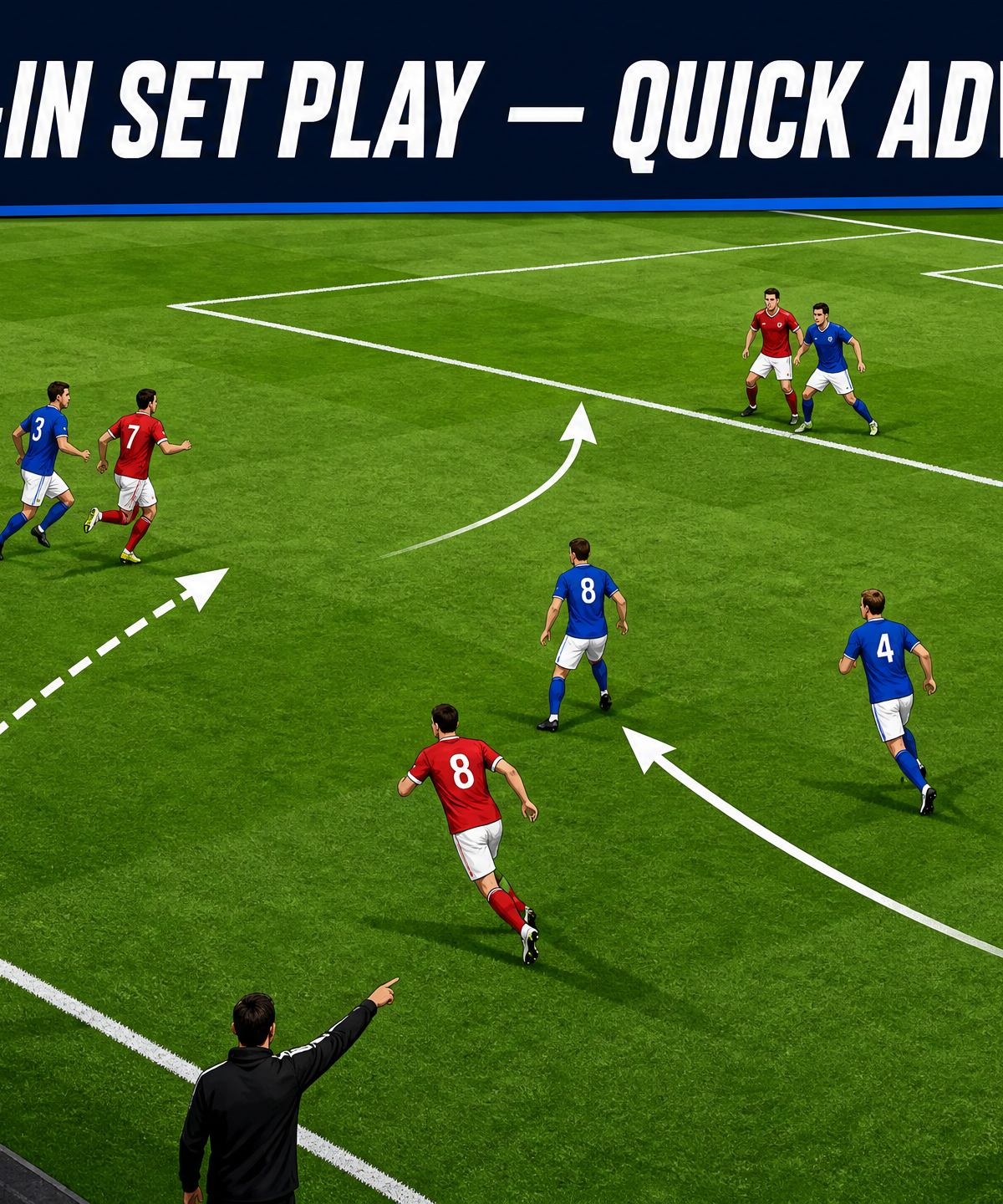
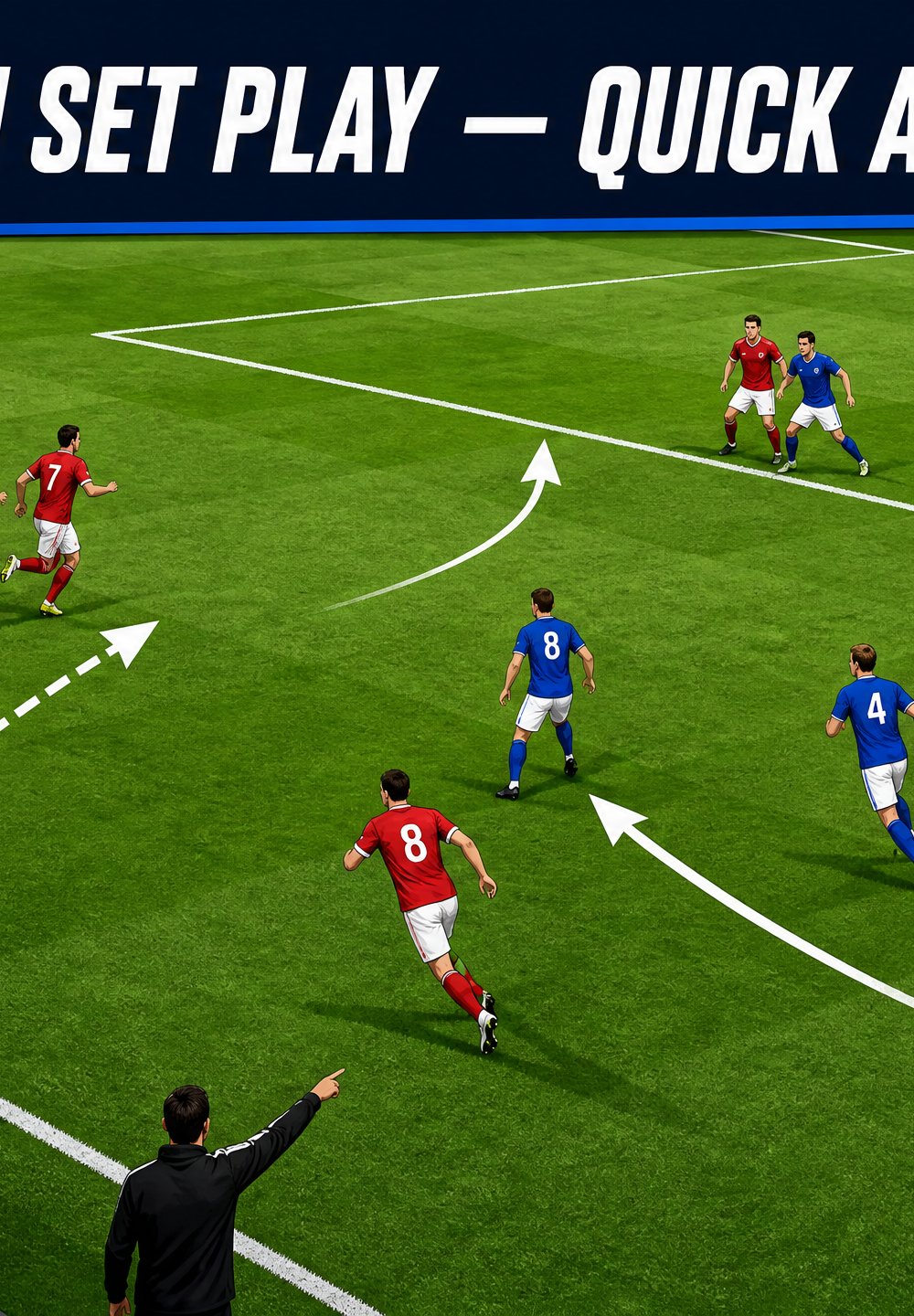
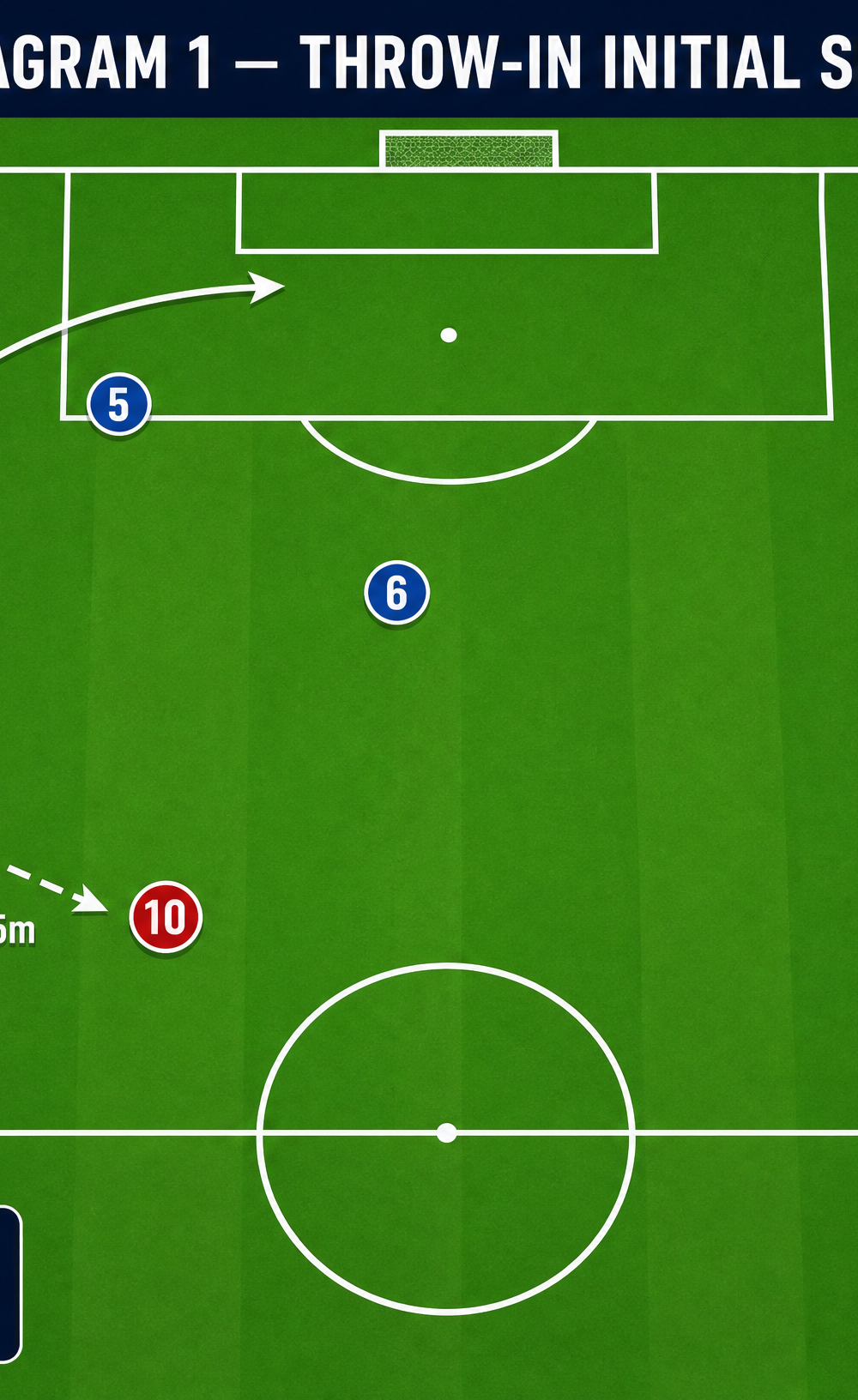
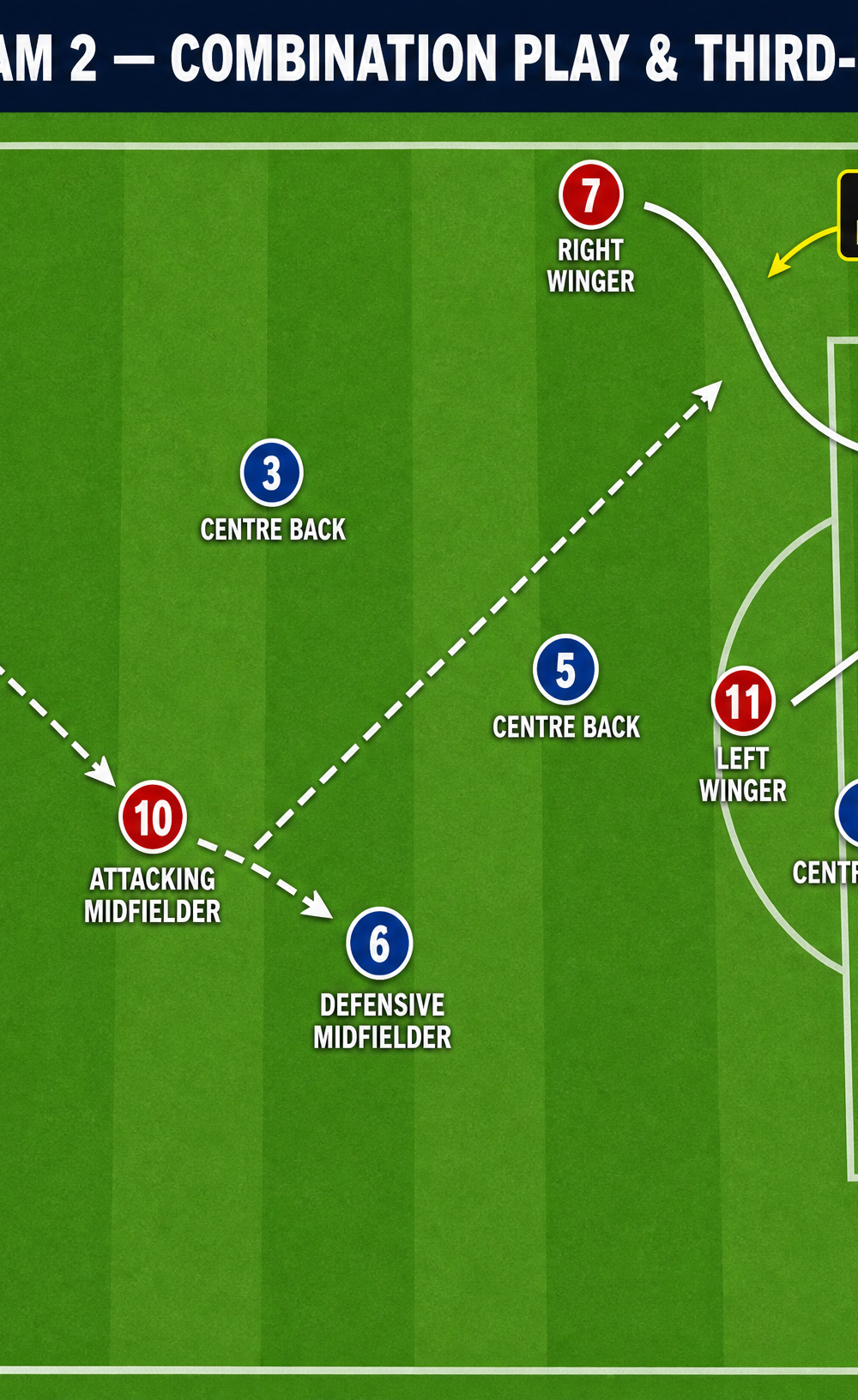
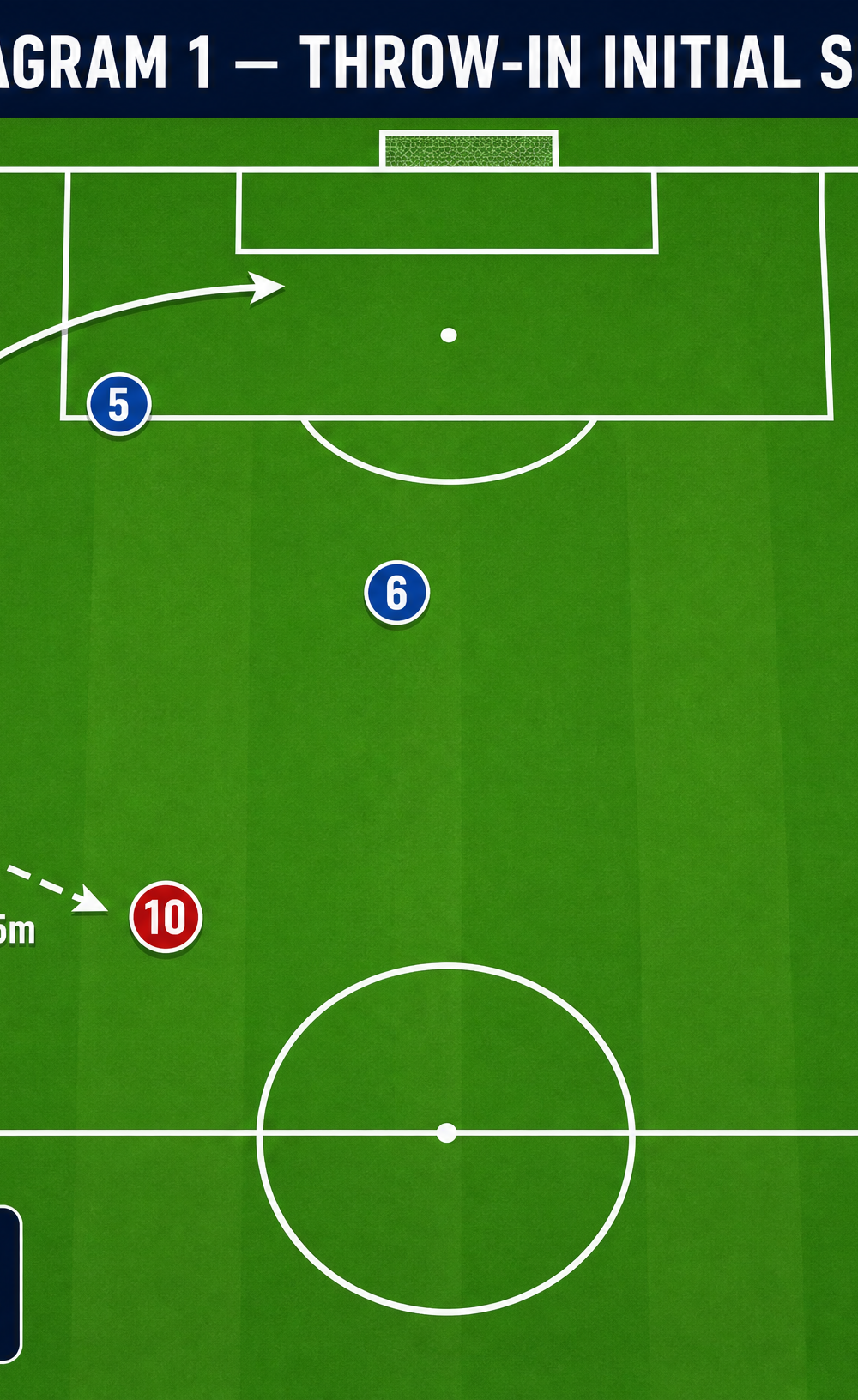
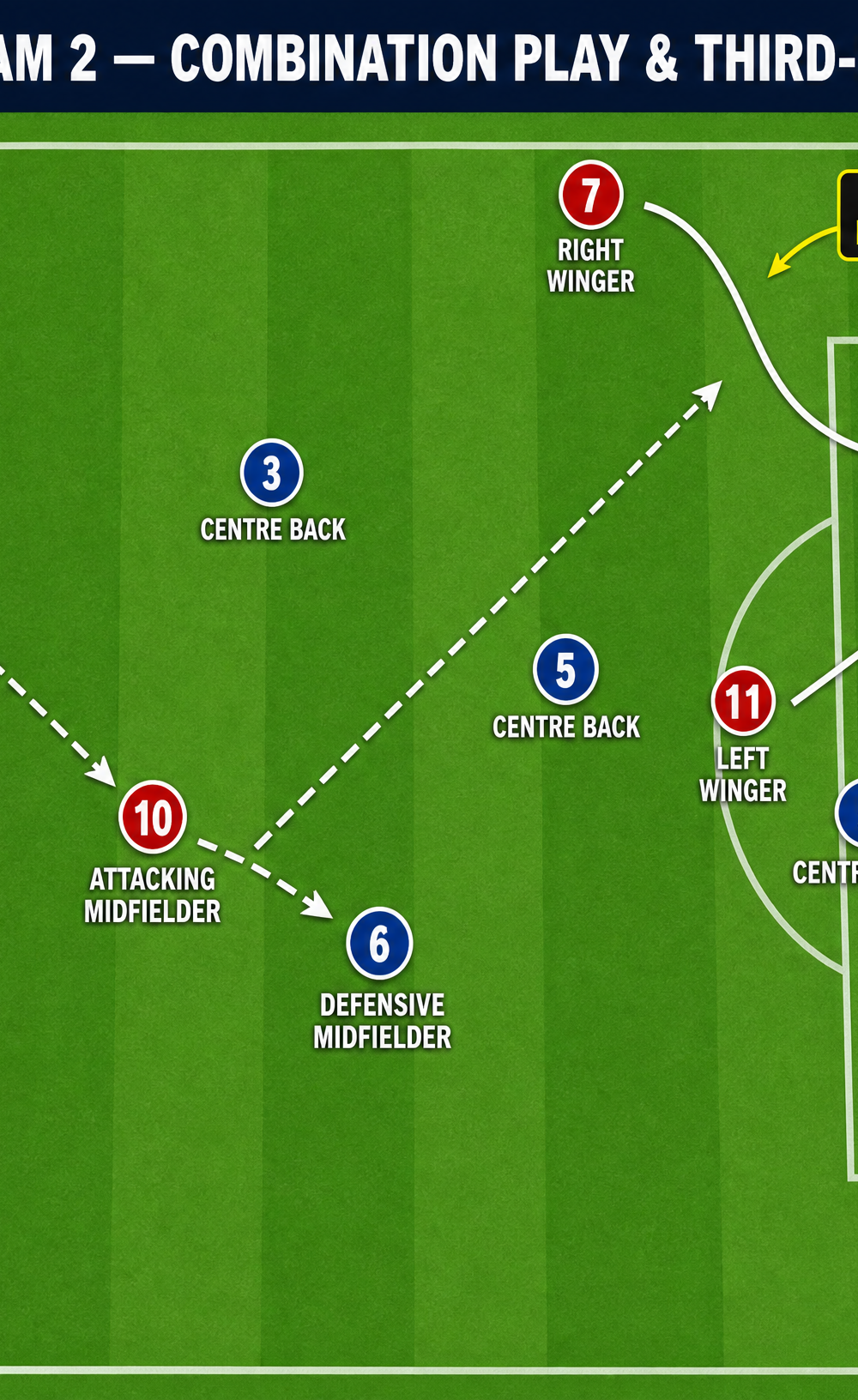
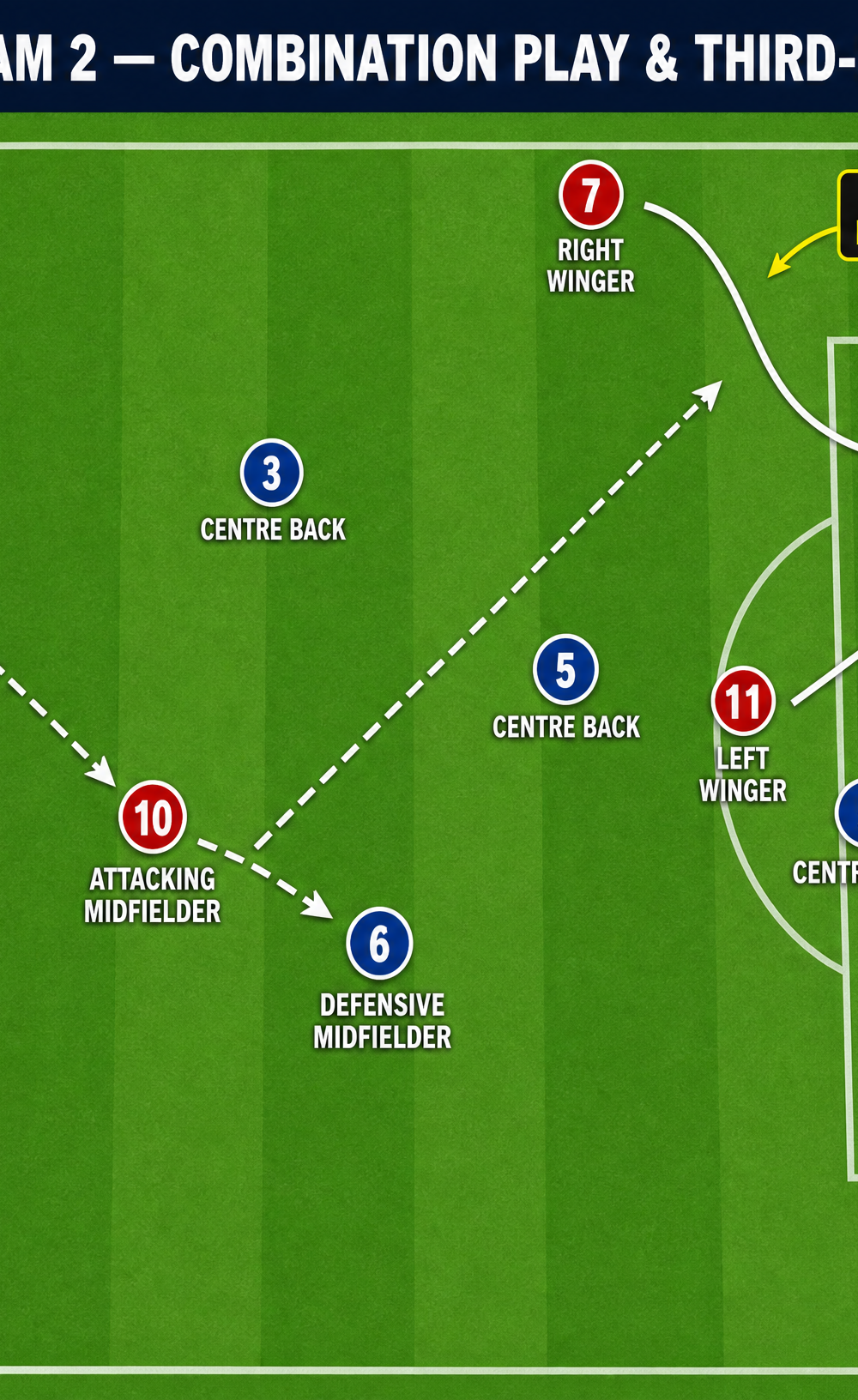
- The Decoy Run: As Player 2 prepares to take the throw, Player 7 (Right Winger) initiates a sharp, aggressive run towards the thrower. This movement is designed to draw the opposing full-back (Defender 3) out of position, creating a vacuum of space behind them.
- The Pivot Check: Simultaneously, Player 8 (Central Midfielder) makes a checking run towards the ball, arriving in the space approximately 8 metres infield from the touchline.
- The Throw and Lay-off: Player 2 executes a firm, accurate throw to the feet of Player 8. Player 8 must immediately play a first-time lay-off pass into the path of Player 10 (Attacking Midfielder), who has drifted into a supporting position centrally.
- The Third-Man Run: The moment Player 8 touches the ball, Player 7 abruptly changes direction, spinning out and sprinting into the space they just vacated behind Defender 3. This is the crucial third-man run.
- The Execution: Player 10 receives the lay-off and instantly plays a weighted through ball into the channel for the advancing Player 7.
- The Final Action: Player 7 receives the ball in a dangerous crossing position or can drive directly towards the penalty area to create a goal-scoring opportunity.
4. Key Coaching Points
To ensure the routine is executed flawlessly during a match, coaches must emphasize the following technical and tactical details during training sessions.
- Timing of the Decoy: Player 7 must make their initial run with genuine intent to receive the ball. If the run is half-hearted, the defender will not follow, and the space will not be created.
- Weight of the Throw: The throw from Player 2 must be driven and directed to the feet of Player 8. A looping throw allows defenders time to intercept or close down the space.
- Quality of the Lay-off: Player 8's first touch is critical. The lay-off to Player 10 must be cushioned and played perfectly into their stride, allowing for a first-time forward pass.
- The Trigger: The trigger for Player 7 to spin and make the deep run is the moment the ball leaves Player 2's hands, or at the latest, when Player 8 makes contact with the ball.
- Body Shape: Player 10 must have an open body shape when receiving the lay-off, allowing them to see both the ball and the run of Player 7 simultaneously.
5. Common Mistakes
Even well-rehearsed set plays can break down due to minor errors. Be vigilant for these common pitfalls.
- Telegraphing the Play: Players staring directly at their intended targets before the play begins, alerting the opposition to the planned sequence.
- Static Receivers: Player 8 waiting for the ball to arrive rather than aggressively checking into the space to meet the throw.
- Poorly Weighted Final Pass: Player 10 overhitting the through ball, sending it out for a goal kick, or underhitting it, allowing the recovering defender to intercept.
- Offside Infringements: Player 7 failing to time their run correctly and moving beyond the last defender before the final pass is played by Player 10.
6. Variations & Progressions
To prevent the opposition from predicting the routine, introduce variations that utilize the same initial setup but result in a different outcome.
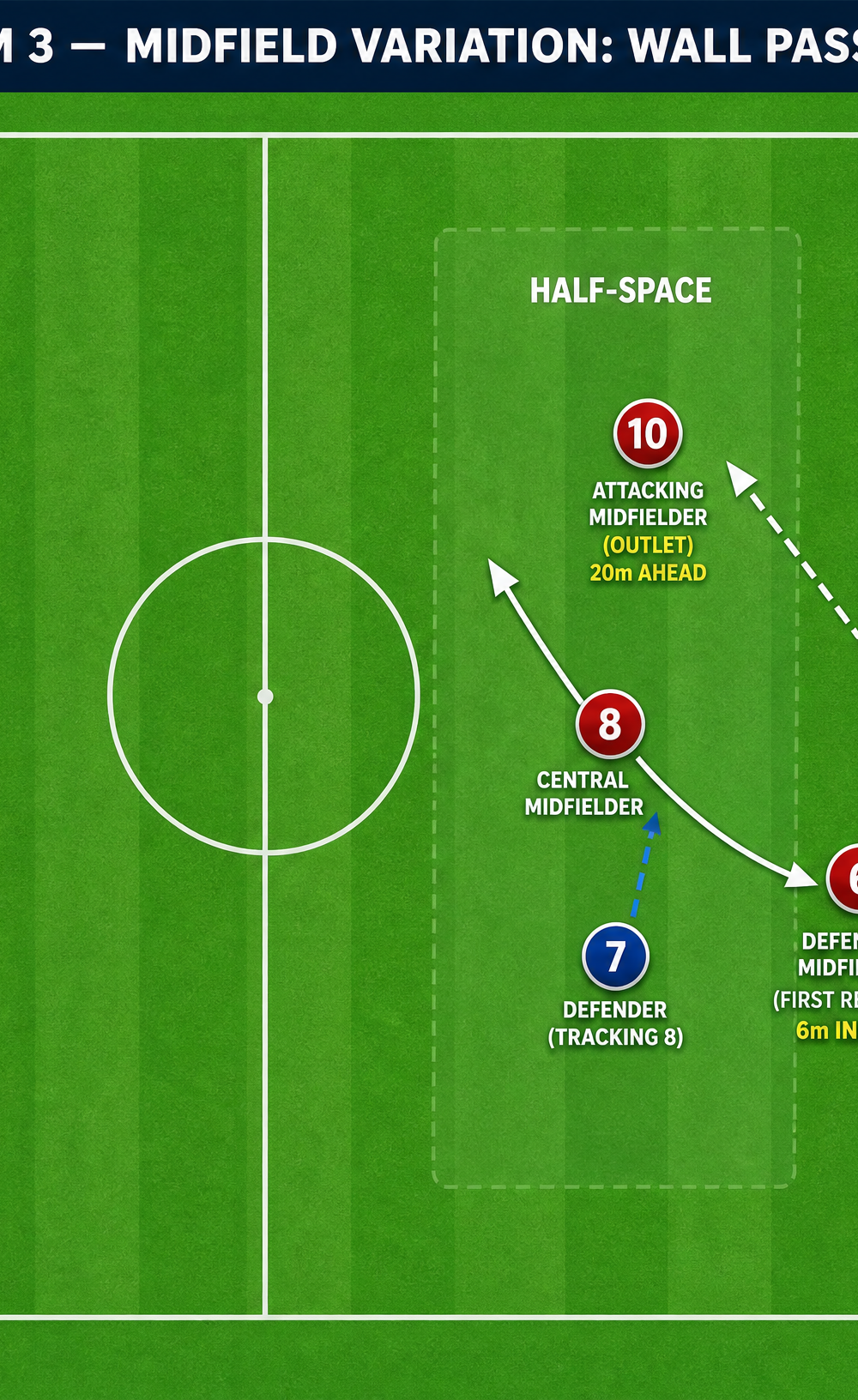
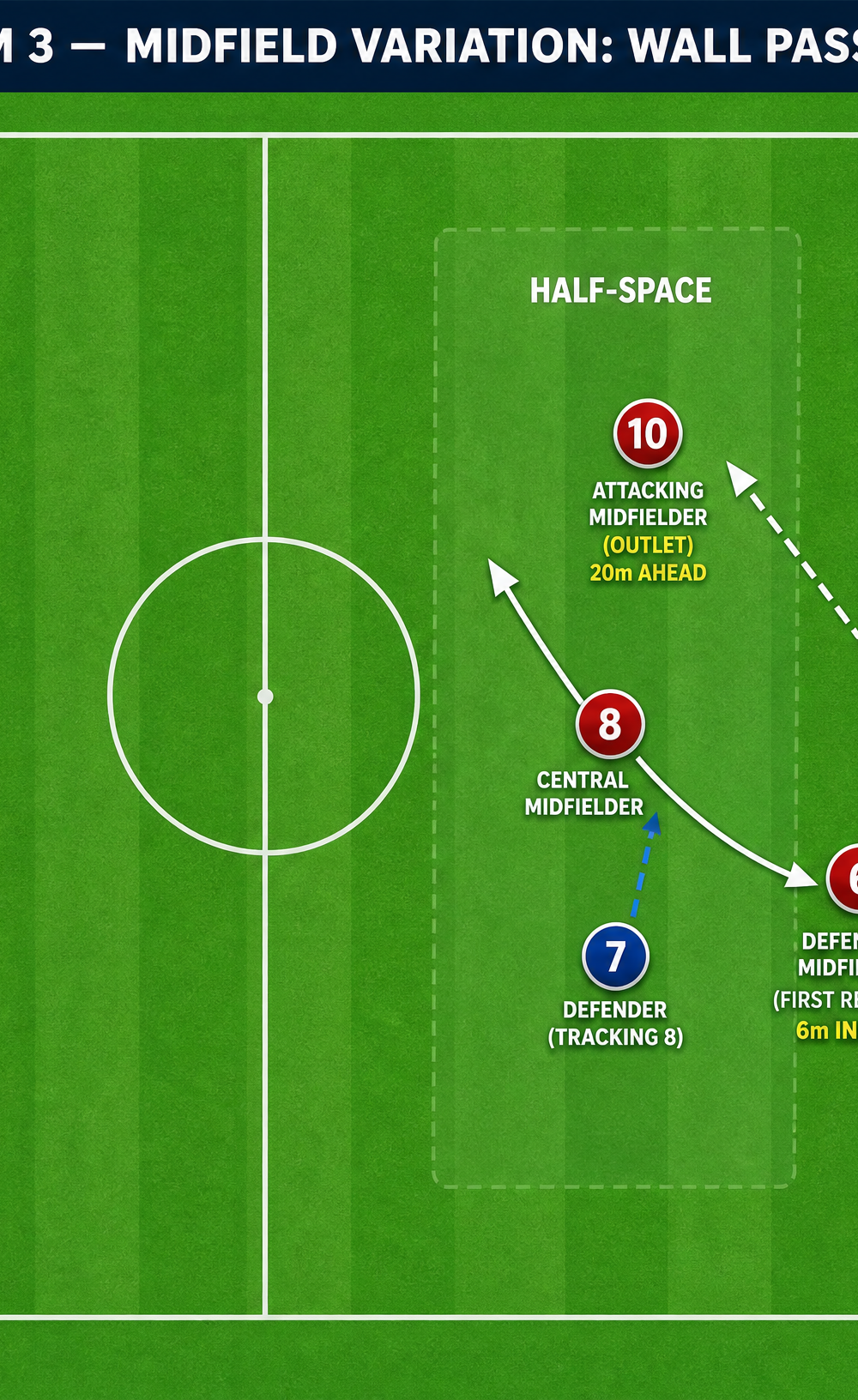
- The Overlap (Midfield Variation): If the opposition begins to anticipate the third-man run, alter the play. Player 8 receives the throw and plays it straight back to Player 2, who immediately makes an overlapping run down the touchline, while Player 7 drifts inside to drag the defender away.
- The Switch of Play: If the defensive team shifts heavily towards the ball side to congest the area, Player 10 can receive the lay-off and immediately play a long diagonal pass to the opposite winger (Player 11), who should be isolated 1v1 against the opposing full-back.
7. Age Adaptations
This set play requires a certain level of technical proficiency and tactical understanding, but it can be adapted for younger age groups.
- Under-10 to Under-12: Focus purely on the mechanics of a legal throw-in and a simple lay-off back to the thrower. The third-man run concept is often too complex at this stage. Emphasize creating space through basic movement.
- Under-14 to Under-16: Introduce the decoy run and the third-man concept, but reduce the distance of the passes. The focus should be on the timing of the movements and the quality of the first touch. The final pass can be a simpler ball to feet rather than a weighted through ball.
- Open / Senior: Execute the full routine as described, demanding high speed of play, precise technical execution under pressure, and the ability to read the defensive reaction and select the appropriate variation.