Mastering the Powerplay: Aggressive Field Settings and Tactics
Learn how to structure your fielding and bowling plans to take early wickets and restrict scoring during the crucial first 6 overs of a T20 match.

Equipment Needed
1. Overview
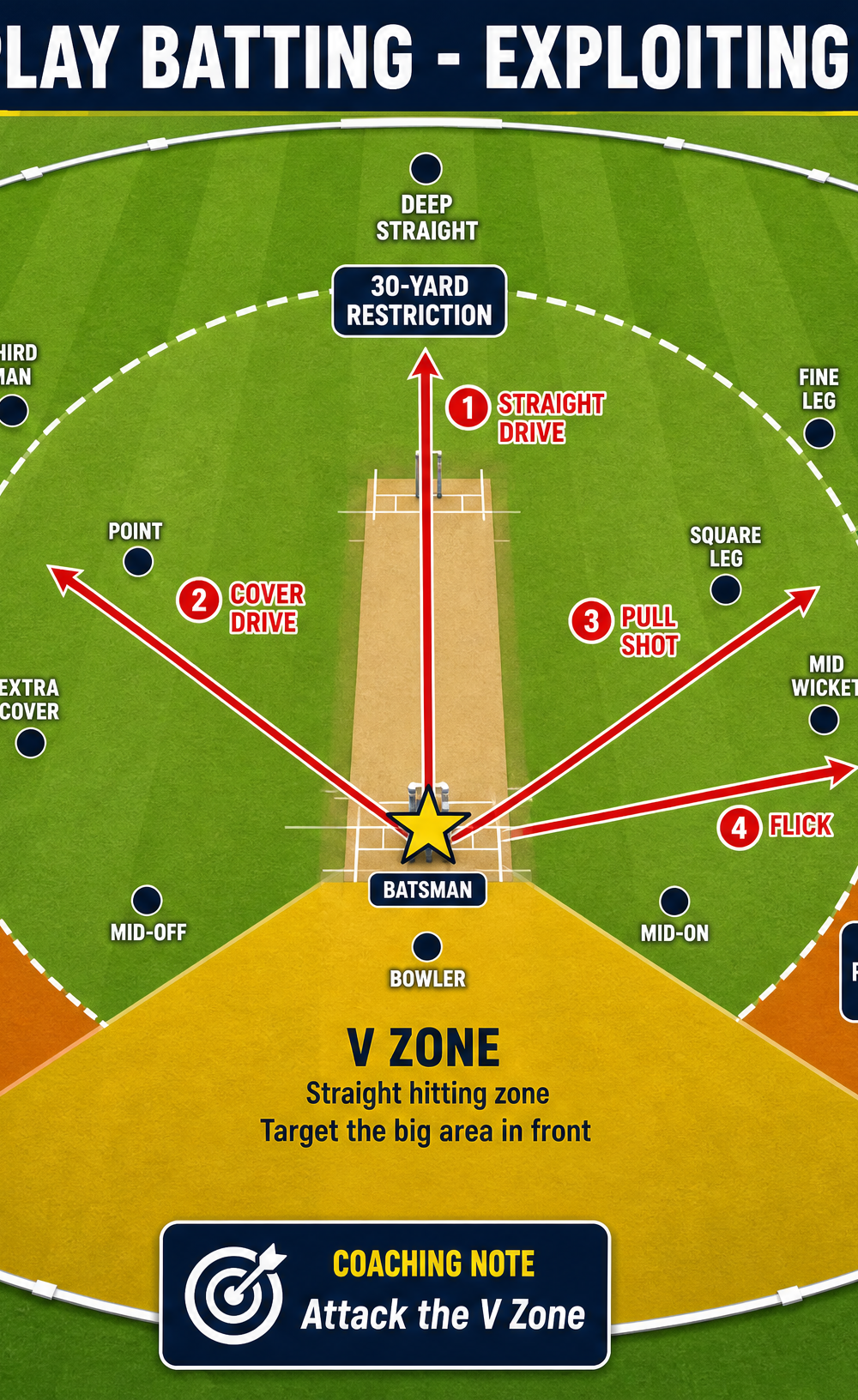
The Powerplay (typically the first 6 overs in a T20 match) is a critical phase that often dictates the momentum of the game. With fielding restrictions allowing only two fielders outside the 30-yard circle, the batting team aims to maximize their score. As a coach, your objective is to equip your bowling unit and captain with aggressive, wicket-taking strategies rather than purely defensive containment. This set play focuses on creating pressure through intelligent field placements, targeted bowling lengths, and exploiting the batsman's need to take risks.
2. Setup
Equipment Needed:
- Match balls (new)
- Full cricket gear for batsmen and wicket-keeper
- Fielding markers (cones) to clearly define the 30-yard circle during practice
Pitch & Field Dimensions:
- Standard 22-yard pitch
- Oval ground with a clearly marked 30-yard restriction ring
Player Positions (Bowling Team):
- Wicket-keeper
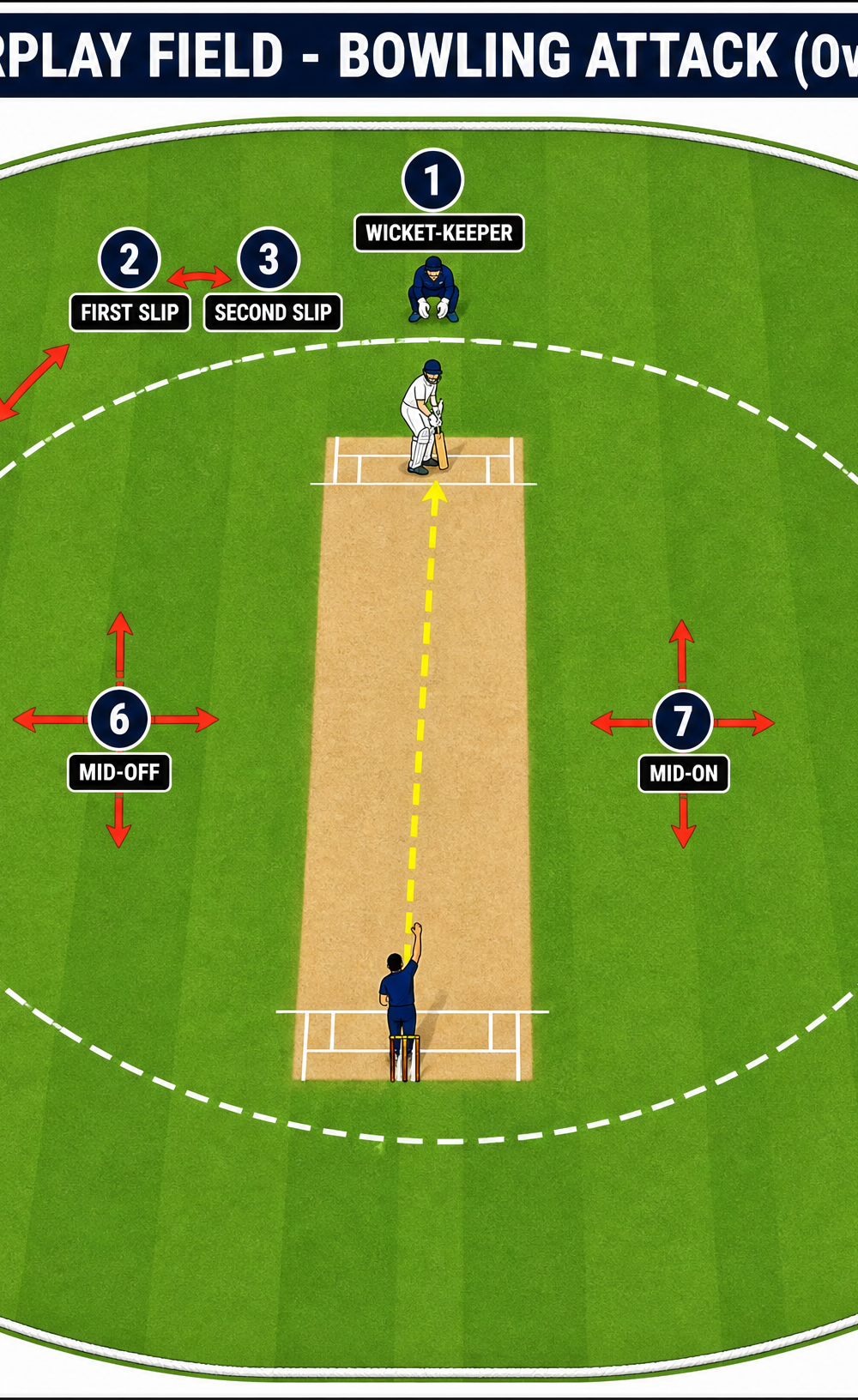
- First Slip
- Second Slip (or Gully depending on the bowler's pace/swing)
- Cover Point
- Mid-off
- Mid-on
- Square Leg
- Fine Leg (often one of the two allowed outside the circle)
- Third Man (the other fielder outside the circle)
3. Step-by-Step Instructions
Step 1: Establish the Standard Powerplay Field
Begin by setting a strong inner ring. Place your key catchers (slips/gully) in position. Ensure your mid-off and mid-on are inside the 30-yard circle to encourage the batsman to hit over the top.

Step 2: Bowling to the Field
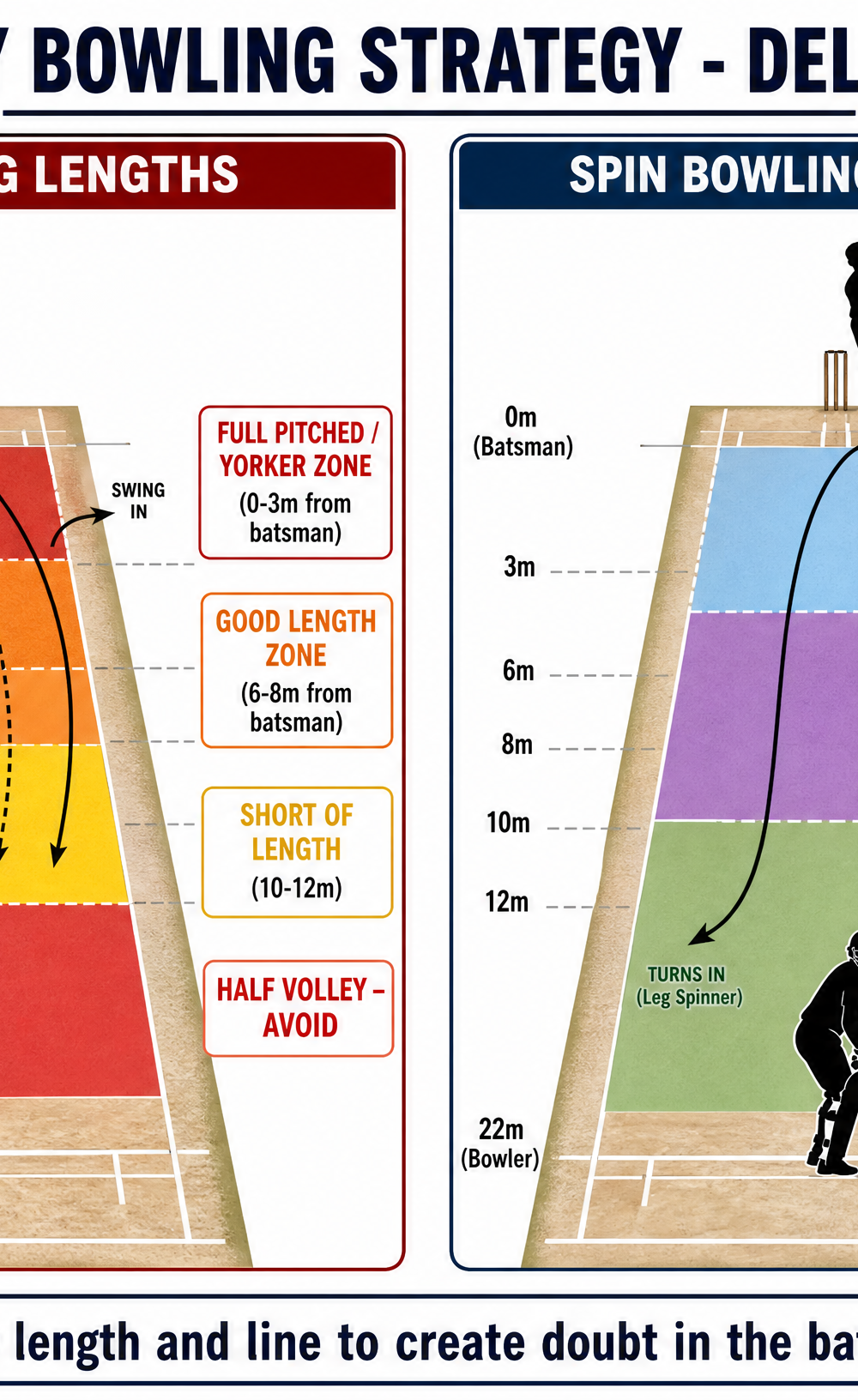
The opening bowlers must bowl to the set field. The primary line should be on or just outside the off-stump, on a good length (6-8m from the batsman). This forces the batsman to play straight or risk hitting across the line against the swinging new ball.
Step 3: Analyzing the Batsman's Intent
Observe the batsman's movement. Are they stepping out to negate swing? Are they backing away to access the off-side? The captain and bowler must communicate after the first two deliveries to adjust the field slightly (e.g., moving point squarer or bringing fine leg inside the circle to push mid-wicket back).
Step 4: Executing Variations
If the batsman settles, introduce variations. A well-disguised slower ball or a sharp bouncer can disrupt their rhythm. However, these must be used sparingly in the Powerplay. The focus should remain on hitting the top of off-stump.
4. Key Coaching Points
- Patience and Discipline: Bowlers must resist the urge to try too many variations early on. Consistency in hitting the 'good length' zone is paramount.
- Dynamic Fielding: Fielders inside the 30-yard ring must be alert, walking in with the bowler to cut down singles and create a sense of claustrophobia for the batsman.
- Communication: The wicket-keeper and captain must constantly relay information to the bowler regarding the batsman's trigger movements.
- Attacking Mindset: The primary goal in the Powerplay is to take wickets. A field that looks aggressive often forces a batsman into a false stroke.
5. Common Mistakes
- Bowling Too Short: Providing width and dropping short allows the batsman to easily clear the infield on the off-side or pull over square leg.
- Static Fielding: Fielders standing flat-footed on the 30-yard circle, allowing easy singles.
- Predictable Bowling: Failing to adjust lines when a batsman clearly favors a particular side of the wicket.
- Defensive Mindset: Pushing fielders back too early after conceding a boundary, rather than backing the bowler to execute the next delivery.
6. Variations & Progressions
- The Squeeze: If a wicket falls, immediately bring in a catching fielder (e.g., a short cover or short mid-wicket) to pile pressure on the new batsman.
- Pace Off: Introduce a spinner early in the Powerplay if the pitch is dry or the opening batsmen are known to struggle against slow bowling.
7. Age Adaptations
- Under 10 / Under 12: Focus heavily on bowling straight and full. Fielding restrictions may not apply, but teach the concept of an 'inner ring' to stop singles.
- Under 14 / Under 16: Introduce the concept of setting a field for a specific bowling plan (e.g., bowling to an off-side heavy field). Emphasize the importance of the new ball.
- Open / Senior: Full implementation of complex tactical fields, utilizing data and match-ups to dictate specific fielding positions for individual batsmen.