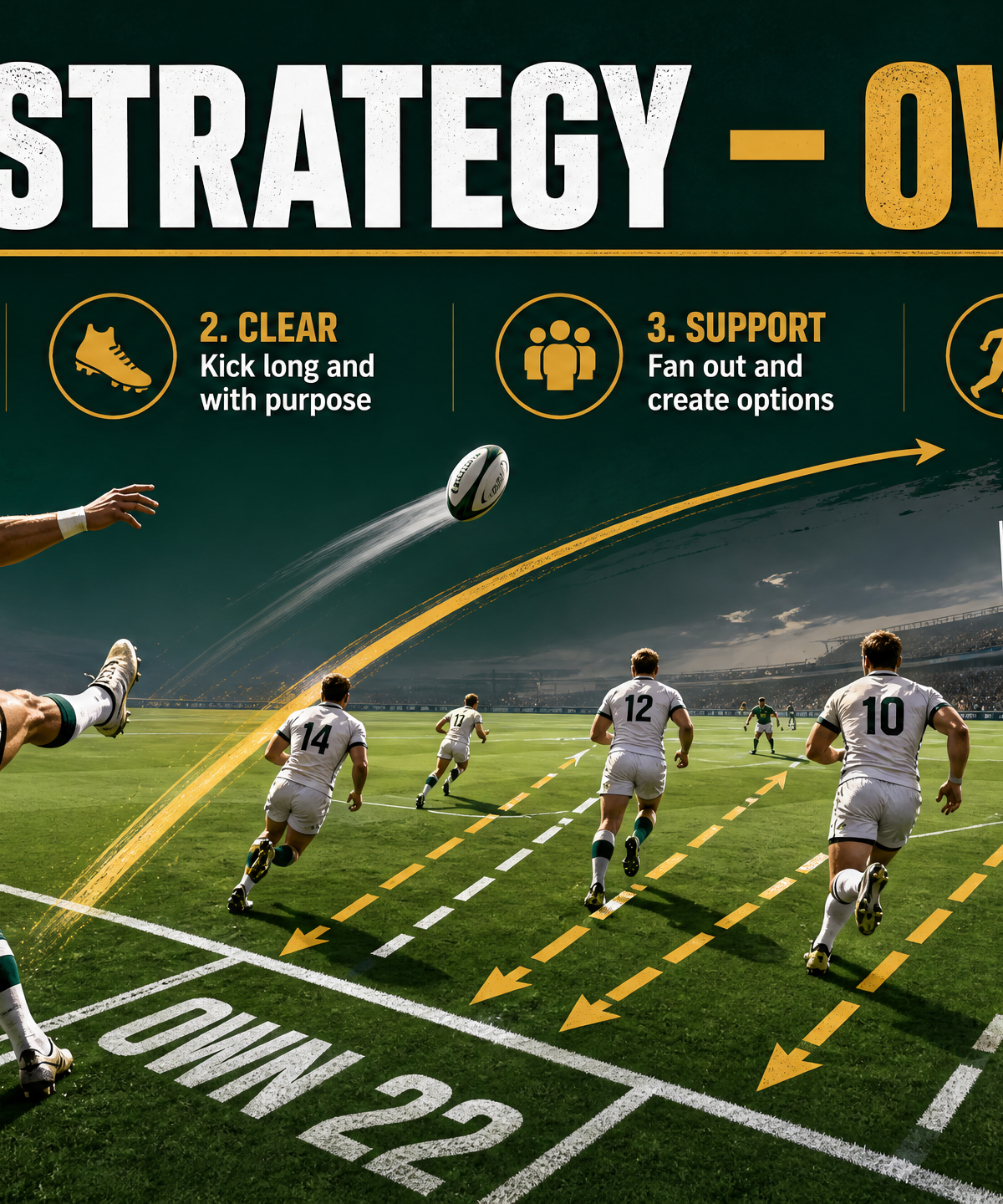
Mastering the Exit: 22-Metre Box Kick & Chase Strategy
A structured, low-risk exit strategy from your own 22 designed to clear lines, relieve pressure, and compete for territory.
Equipment Needed
1. Overview
Exiting your own 22 safely and effectively is a foundational pillar of any successful Rugby team. A poorly executed exit often results in an immediate counter-attack and points conceded. This set play provides a structured, low-risk method to clear your lines, relieve defensive pressure, and turn the opposition around. By utilizing a high, contested box kick or a long diagonal clearance, coupled with an aggressive, organized chase line, your team can transition from defense to attack and win the territorial battle.
This strategy is best used following a lineout, scrum, or turnover deep within your own 22, where the primary objective is to move the ball away from the danger zone while maintaining a strong defensive structure.
2. Setup
Equipment Needed:
- Full-size Rugby pitch (100m x 70m) with clear markings.
- 3-4 Rugby balls.
- Cones to mark the target landing zones and defensive lines.
- Coloured bibs to differentiate attack and defense.
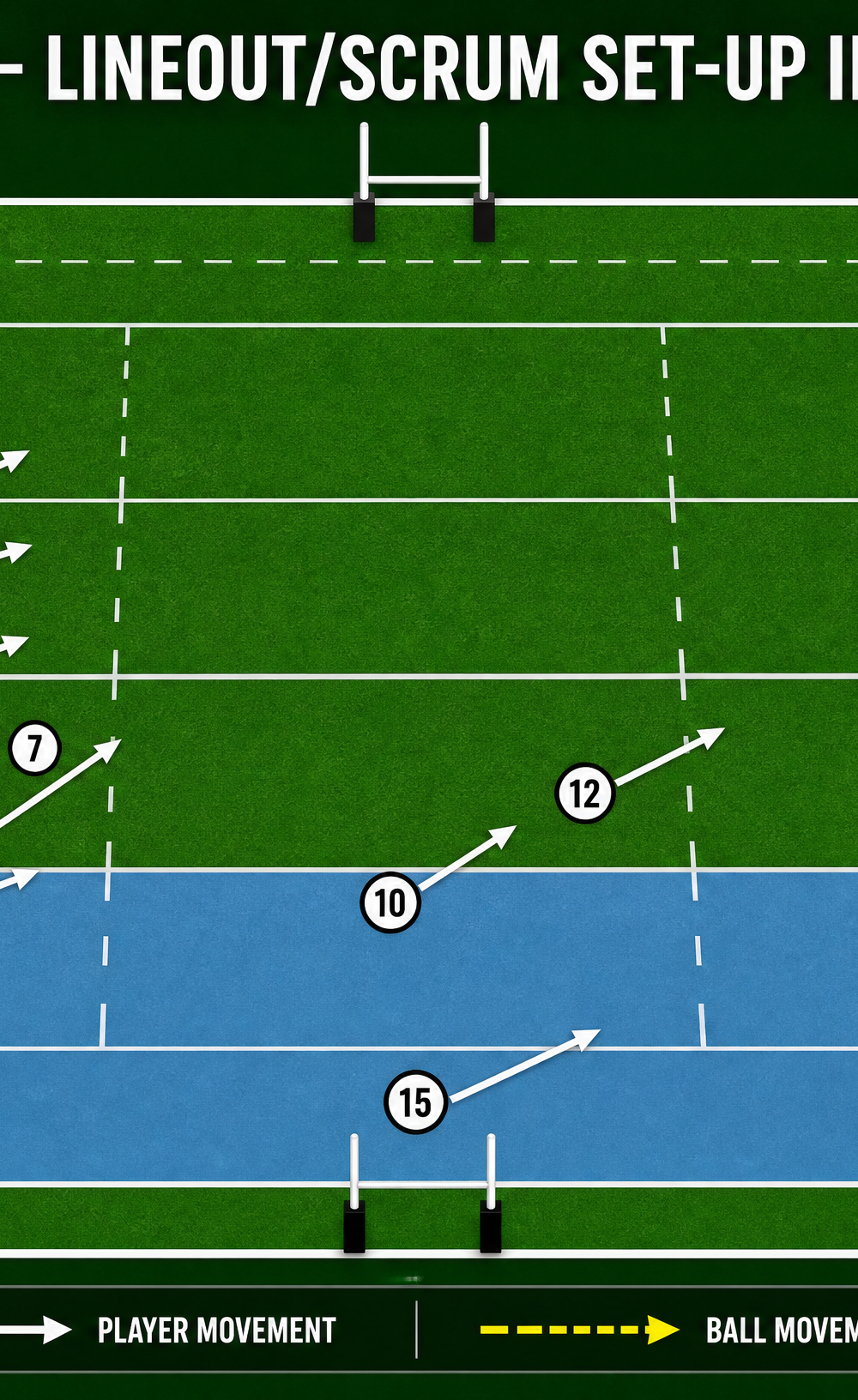
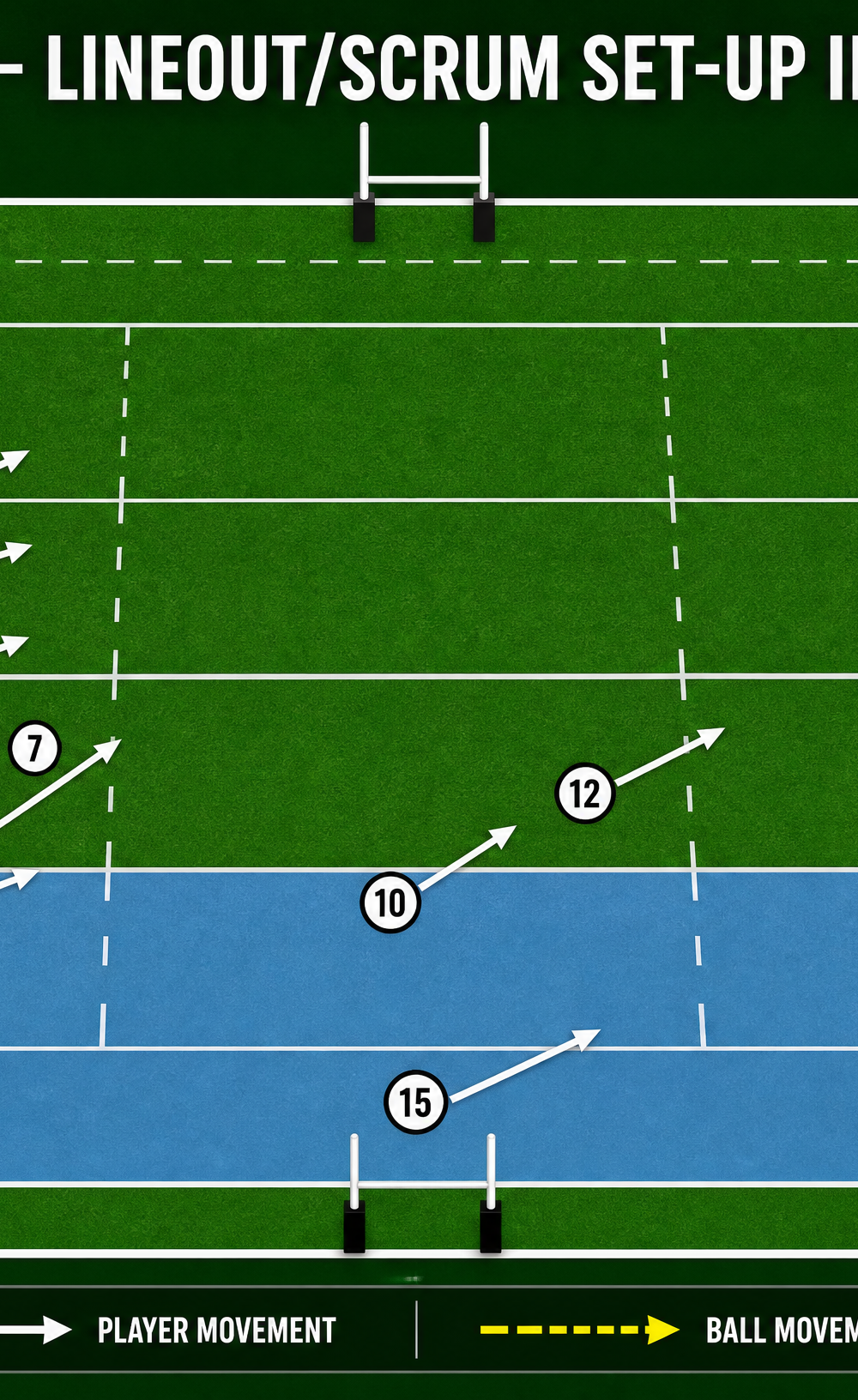
Pitch Setup & Player Positions:
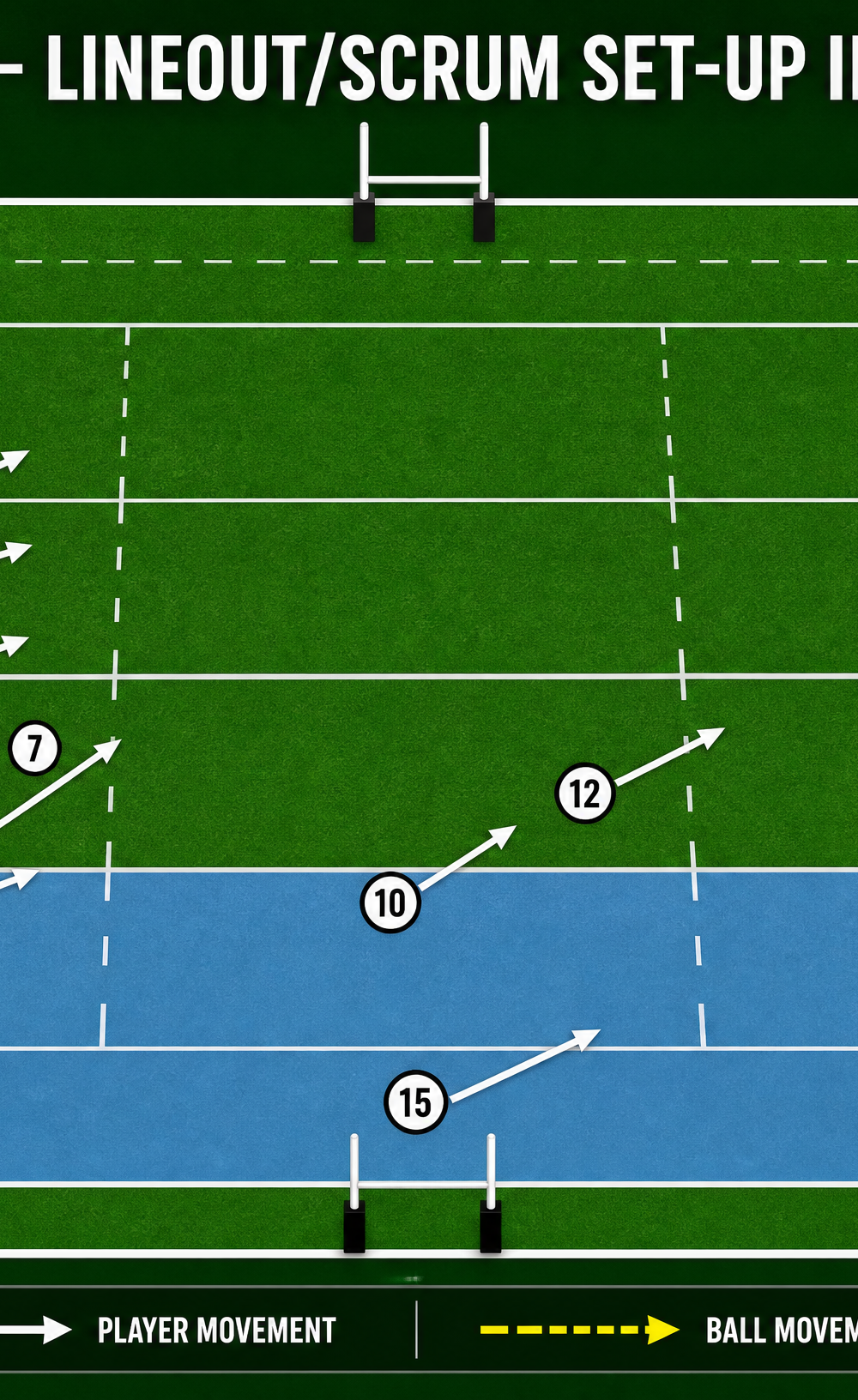
Set up a scrum or lineout scenario near the left or right touchline, inside your own 22-metre area. For this example, we will assume a lineout on the left touchline.
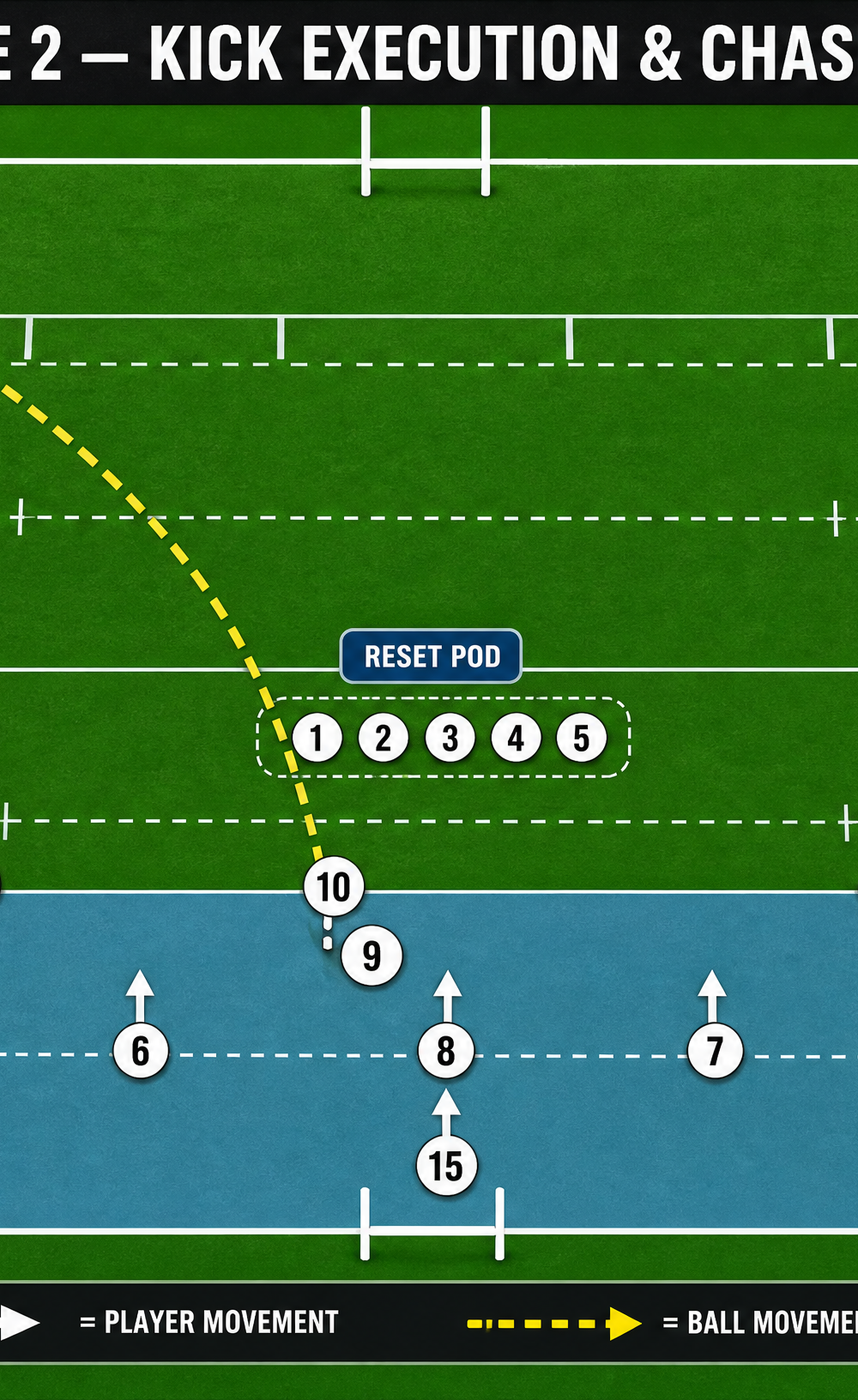
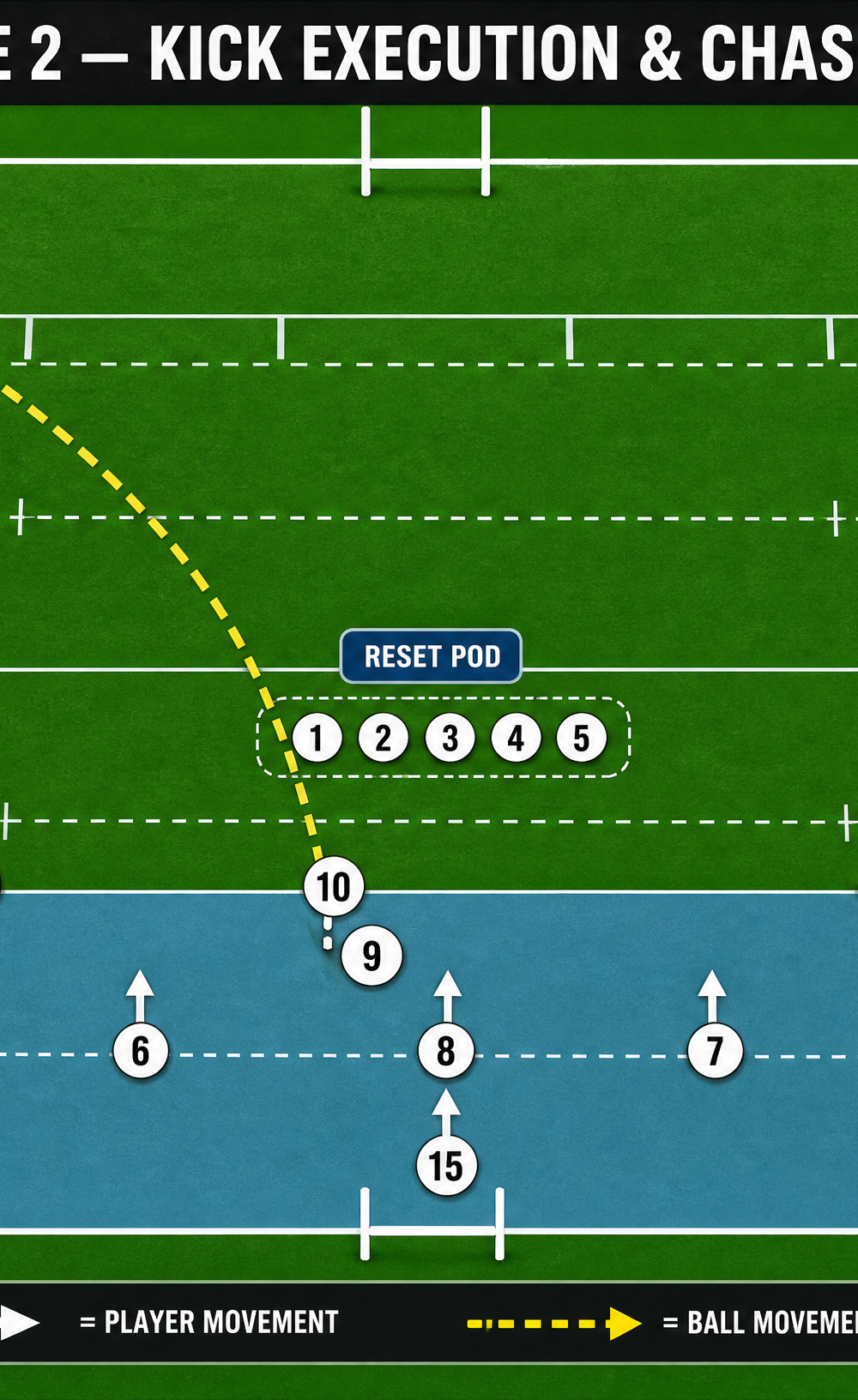
- Forwards (1-8): Clustered near the set piece, ready to secure the ball and provide a protective shield.
- Scrum-half (9): Positioned at the base, ready to execute the kick or pass.
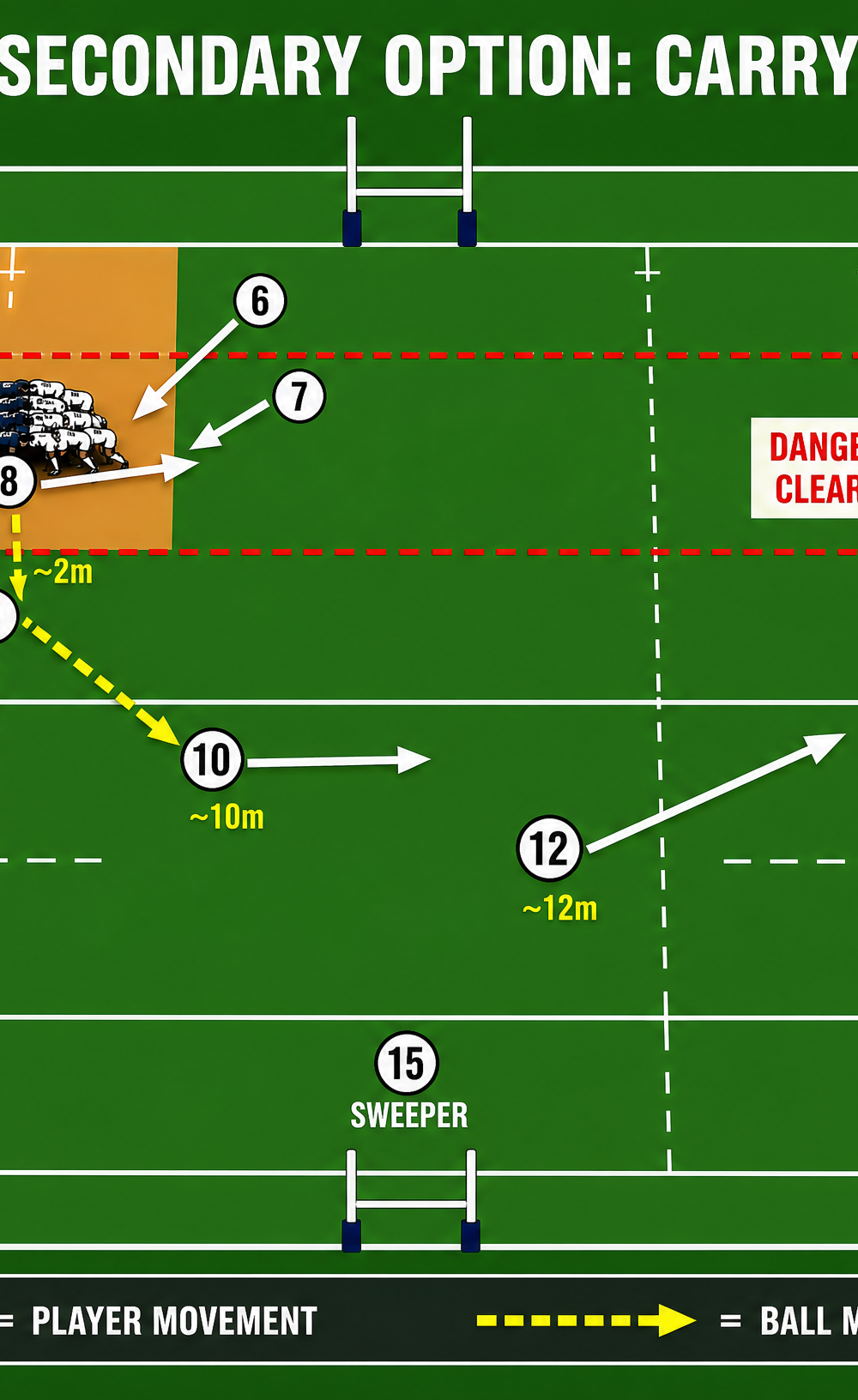
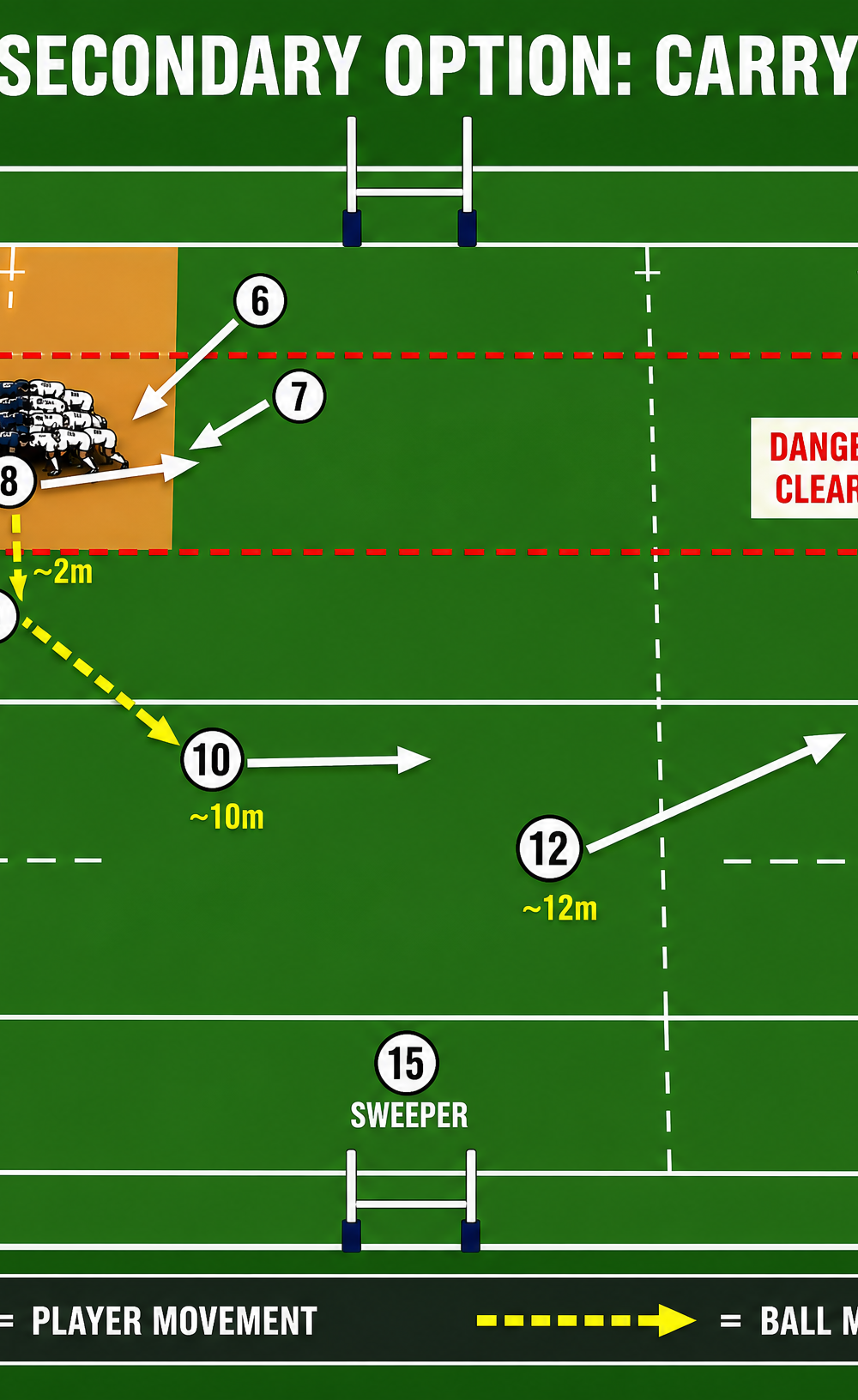
- Fly-half (10): Positioned roughly 10 metres deep, offering a secondary kicking option.
- Centres (12, 13): Positioned 12-15 metres deep, ready to chase or run hard lines.
- Wingers (11, 14): Positioned wide, holding their width, prepared to sprint and contest the kick.
- Fullback (15): Positioned deep (approx. 20 metres) to cover any immediate counter-kicks.
3. Step-by-Step Instructions
Phase 1: Secure and Shield
- Win the Primary Possession: Whether from a scrum or lineout, the forwards must secure clean ball. The hooker (2) delivers the ball to the scrum-half (9).
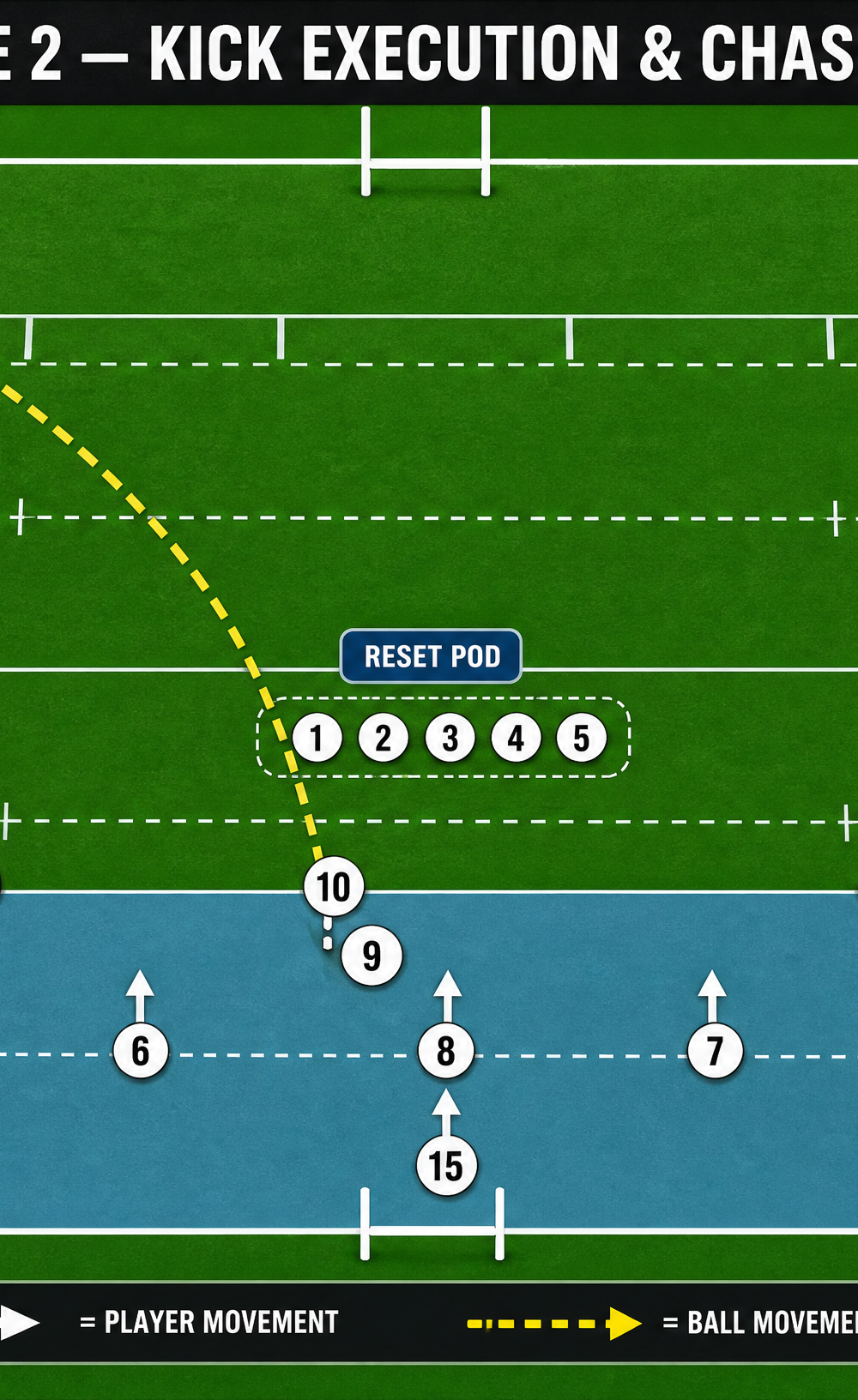
- Establish the Shield: The forwards (1-8) must immediately form a strong, unified protective pod around the ruck or base of the set piece to prevent charge-downs and give the kicker ample time.
Phase 2: The Kick Execution
3. Assess the Options: The scrum-half (9) assesses the defensive pressure. If the box kick is on, they execute a high, hanging kick aimed towards the touchline, aiming for a hang time of 3.5 to 4 seconds to allow the chasers to arrive.
4. Secondary Option (The 10 Kick): If the 9 is under extreme pressure, they pass to the fly-half (10) positioned 10m deep. The 10 executes a long diagonal kick towards the opposite corner, aiming for distance and a favorable bounce.
Phase 3: The Chase and Compete
5. The Escort and Chase: As soon as the ball is kicked, the wingers (11, 14) and outside centre (13) sprint forward as the primary chasers. They must stay onside until the kicker strikes the ball.
6. The Secondary Line: The back row (6, 7, 8) forms a secondary chase line, trailing the primary chasers by about 5 metres. Their role is to secure the breakdown if the ball is caught or gather the loose ball if it's dropped.
7. The Sweeper: The fullback (15) moves forward to support the chase but remains deep enough to cover a quick return kick.
Phase 4: Secondary Option (Carry and Recycle)
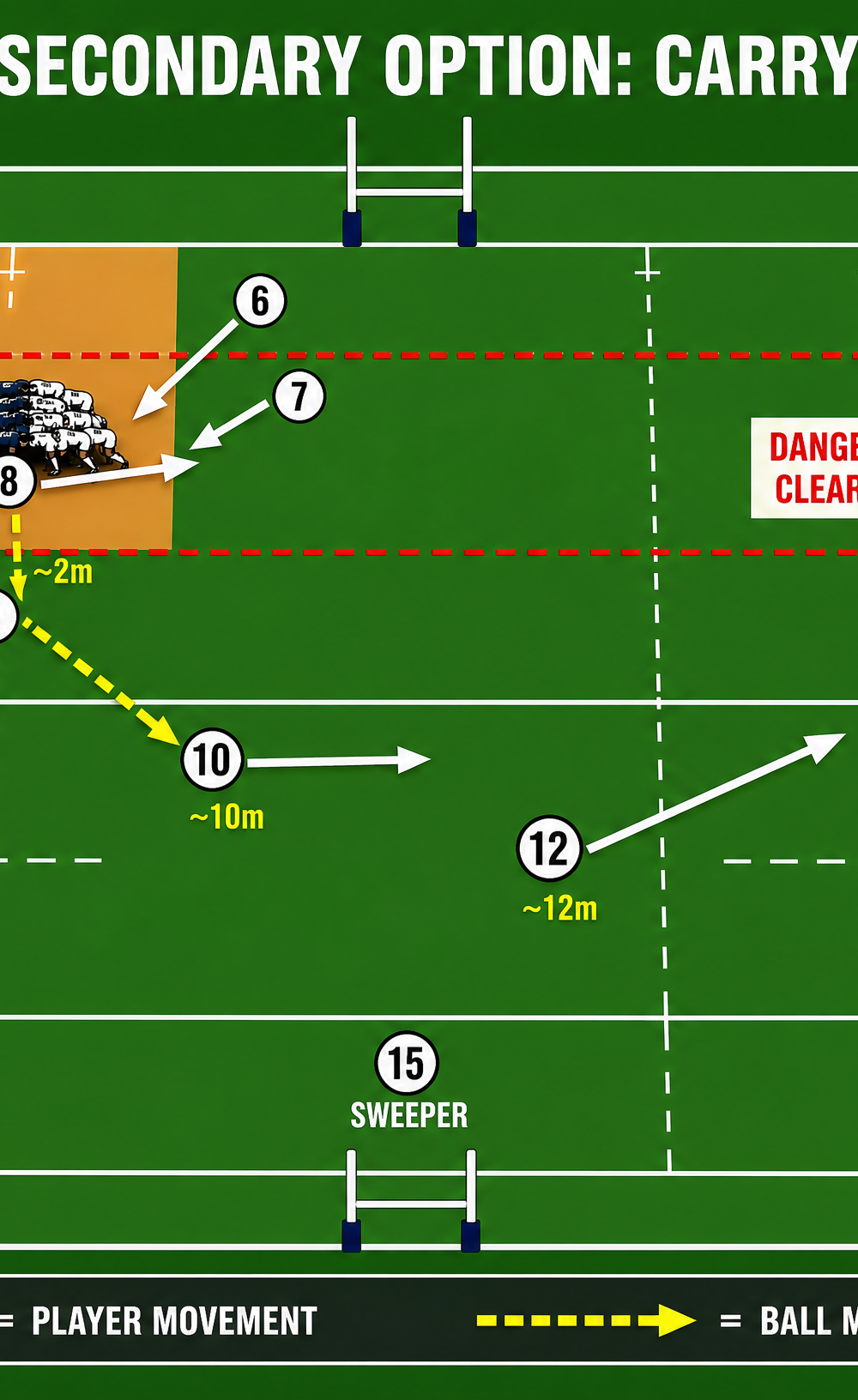
8. If the Kick is Blocked: If the defense completely shuts down the kicking options, the number 8 picks from the base or the 9 passes to a hard-running forward or the inside centre (12) to crash the ball up over the advantage line.
9. Recycle and Reset: The forwards must aggressively clear the ruck to secure the ball, setting up a new phase further away from the try line, allowing the 9 or 10 another opportunity to clear.
4. Key Coaching Points
- Hang Time over Distance: For a box kick, prioritize hang time (3.5 - 4 seconds) over pure distance. The kick is useless if the chasers cannot reach the landing zone simultaneously with the ball.
- Onside Discipline: Chasers MUST hold their runs until the ball leaves the kicker's boot. Giving away a penalty in your own 22 defeats the entire purpose of the exit strategy.
- The Protective Shield: Forwards must act as an impenetrable wall. Any leakage in the shield risks a charged-down kick, which is often fatal in the 22.
- Communication: The 9 and 10 must communicate clearly and early about who is taking the kick based on the defensive alignment.
- Aggressive Compete: The primary chasers must attack the ball in the air, not just tackle the catcher. The goal is to regain possession or force a knock-on.
5. Common Mistakes
- Kicking Too Flat: A low, flat kick allows the opposition back three to easily catch the ball and launch a devastating counter-attack against a disjointed defensive line.
- Slow Service: A slow delivery from the lineout or scrum gives the defense time to close the gap and pressure the kicker.
- Fragmented Chase: If chasers run in single file rather than a unified line, the catcher can easily step the first defender and break the line.
- Ignoring the Blindside: Failing to cover the blindside after the kick can leave a massive gap for a quick counter-attack down the touchline.
6. Variations & Progressions
- The Cross-Field Exit: Instead of a traditional box kick, the 10 kicks a flat, cross-field kick to a tall, fast winger (11 or 14) who has a clear height advantage over their opposite number.
- The Fake Kick and Run: The 9 shapes to box kick, drawing the defense in, then snipes around the fringe or passes inside to a hard-running forward to break the gain line.
- Progression - Added Pressure: Introduce active defenders with tackle shields to pressure the kicker and disrupt the chase line, simulating match conditions.
7. Age Adaptations
- Under 8 - Under 10: Focus purely on catching, passing, and running forward to clear the danger zone. Kicking should be introduced safely, emphasizing technique over distance.
- Under 12 - Under 14: Introduce the concept of the box kick and the organized chase. Focus on the timing of the run to stay onside.
- Under 16 - Open: Implement the full strategy, including the protective shield, secondary kicking options, and aggressive aerial competition.