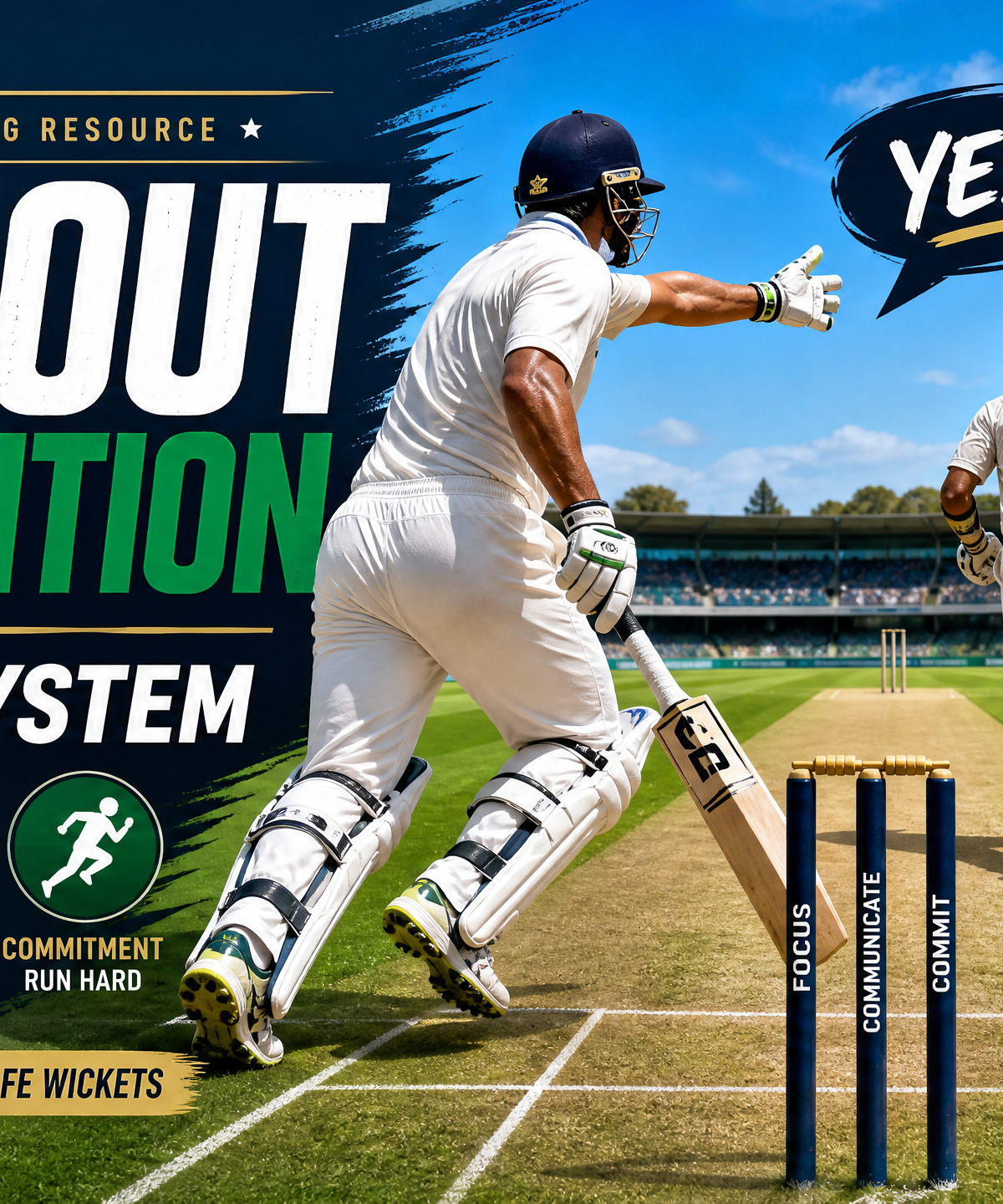
Run Out Prevention & The 3-Zone Calling System
Master the 3-zone calling system and safe running techniques to eliminate unnecessary run-outs and build match-winning partnerships.
Equipment Needed
1. Overview
Run-outs are often the most frustrating dismissals in cricket, usually stemming from poor communication, hesitation, or a lack of situational awareness rather than brilliant fielding. This set play and tactical framework introduces the 3-Zone Calling System, a definitive method for assigning calling responsibilities based on where the ball is hit.
By implementing this system, coaches can train their batting partnerships to communicate decisively, back up safely, and run hard, thereby eliminating the hesitation that leads to run-outs. This resource is designed to be implemented in net sessions and open-wicket scenarios, building ingrained habits that hold up under match pressure.
2. Setup
Equipment Needed:
- 2 Bats (one for each batter)
- Batting pads, gloves, and helmets
- 1 Cricket ball (or hard training balls)
- Wicket stumps (both ends)
- Field markers/cones (to mark fielding positions and zones)
Pitch/Field Setup:
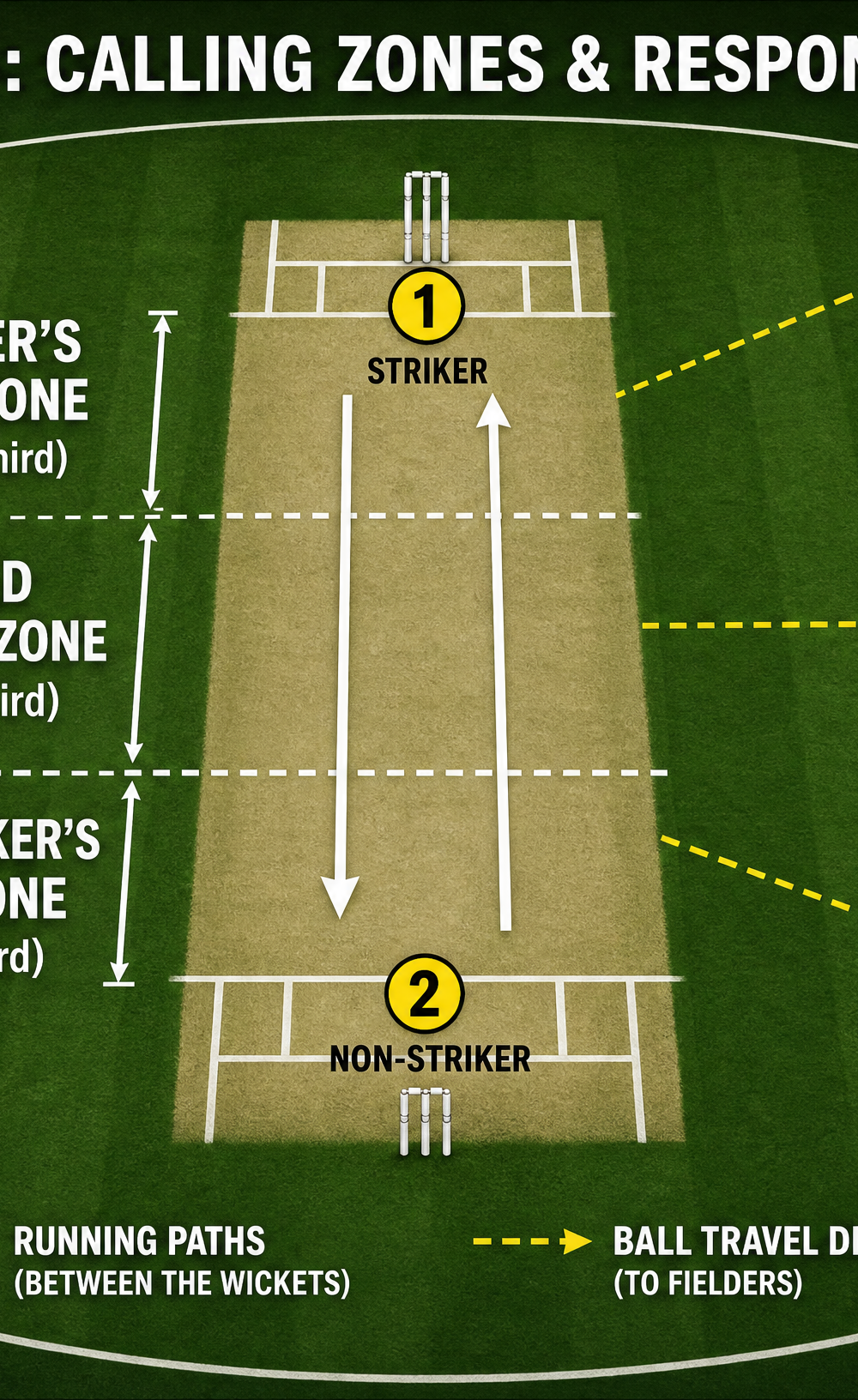
Set up on a standard 22-yard cricket pitch (turf or synthetic). Place cones to divide the pitch into three equal horizontal zones (roughly 7.3 yards each). Set up fielding cones at key inner-ring positions: Mid-on, Mid-off, Cover, Point, and Square Leg to simulate match scenarios.
Player Positions:
- Striker: At the batting crease, ready to face.
- Non-Striker: At the non-striker's end, preparing to back up.
- Fielders/Coach: Stationed at the inner-ring cone positions to receive the ball and execute run-out attempts.
3. Step-by-Step Instructions
The 3-Zone Calling System

Step 1: Understand the Zones
Explain the three zones to your batters:
- Striker's Call Zone (Front Third): Any ball hit into the area in front of the popping crease (e.g., dropped short into the off-side, played straight back down the pitch, or tucked into the leg side near the pitch). The striker has the best view and MUST call.
- Non-Striker's Call Zone (Back Third): Any ball hit behind the striker's popping crease (e.g., late cuts, glances to fine leg, or balls played behind square). The non-striker is looking directly at the ball and MUST call.
- Shared Decision Zone (Middle Third): Balls hit square of the wicket (e.g., square drives, pulls to deep square leg). Both batters have a view, but the batter running towards the danger end (usually where the ball is fielded) should take the lead.
Backing Up and Safe Running
Step 2: The Non-Striker's Back-Up
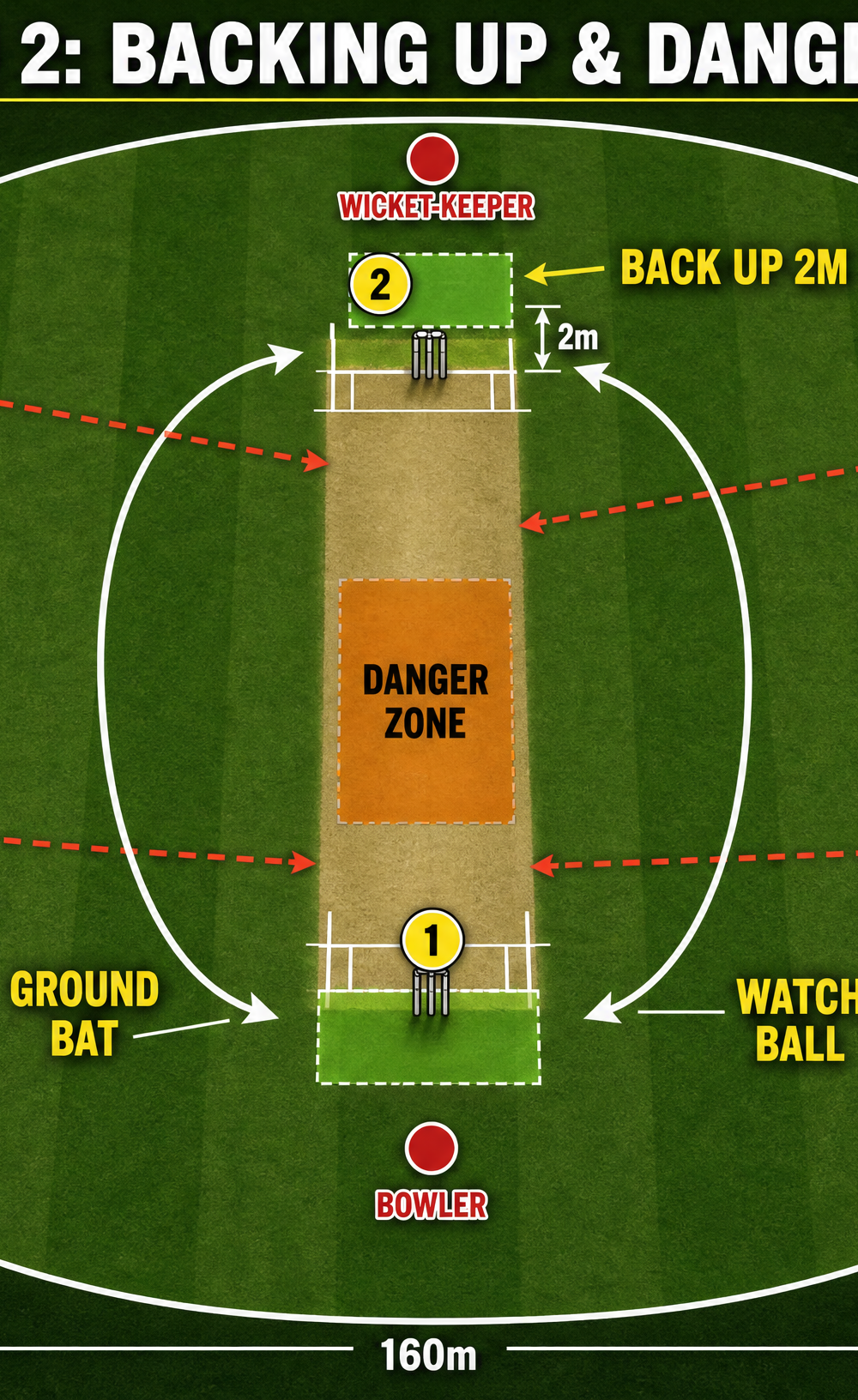
As the bowler enters their delivery stride, the non-striker should walk in with the bowler, staying in their crease until the ball is released. Once released, they should take a controlled 2-metre start (backing up). They must watch the ball, not the striker.
Step 3: The Call and Response
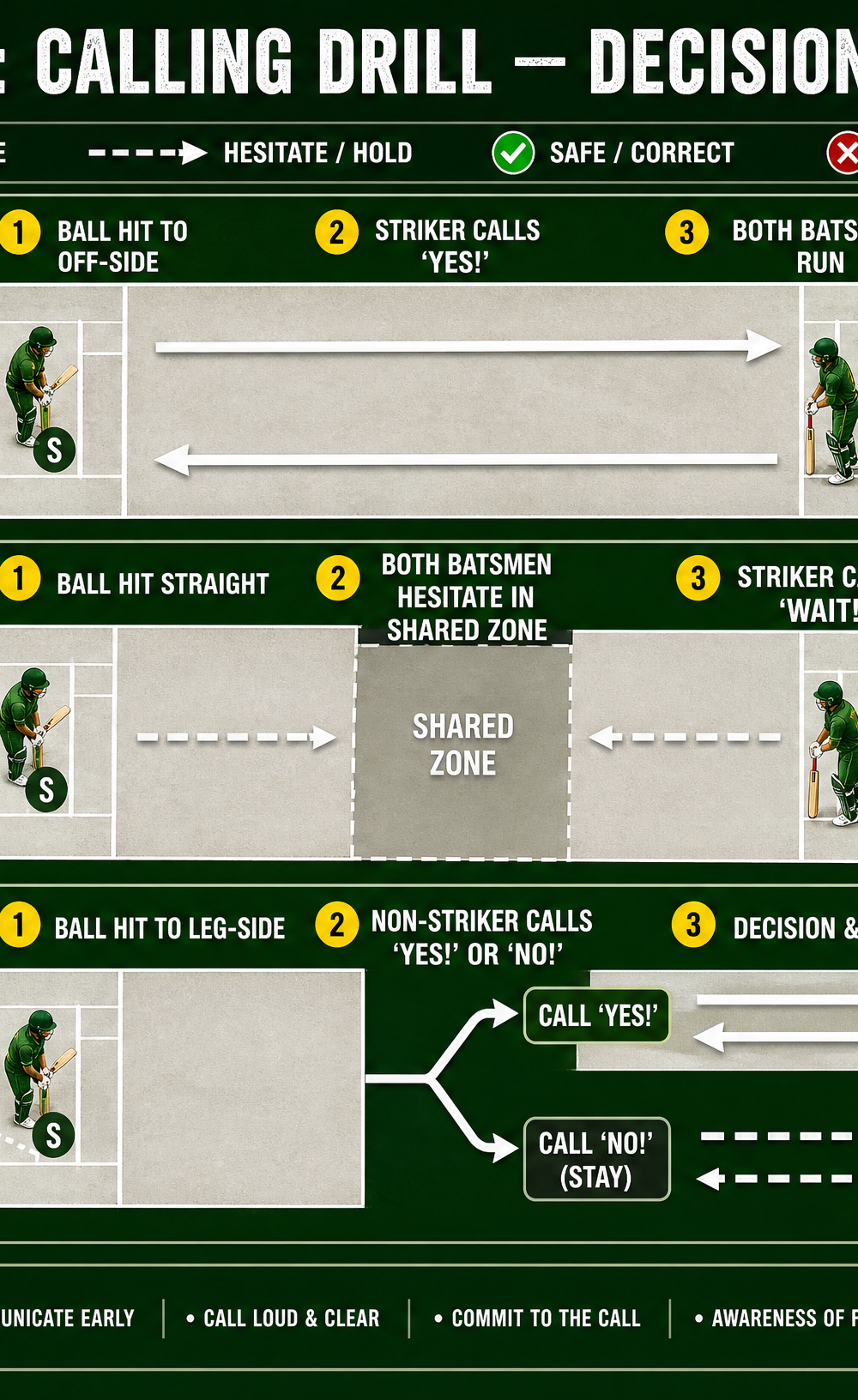
The designated caller (based on the zones) must shout one of three definitive calls loudly and clearly:
- "YES!" (Run immediately)
- "NO!" (Stay in the crease, ground the bat)
- "WAIT!" (Hold position, assess the fielding, ready to run or return)
There are no other acceptable calls (e.g., "maybe", "two", "push"). The non-striker must trust the striker's call in their zone, and vice versa.
Executing the Drill Scenarios
Step 4: Scenario A - Striker's Call
The coach feeds a ball (drop feed or underarm) into the Striker's Zone. The striker plays the ball and immediately calls "YES", "NO", or "WAIT". Both batters execute the decision. If "YES", they run a hard single, grounding their bats across the crease line.
Step 5: Scenario B - Non-Striker's Call
The coach feeds a ball that the striker plays behind square. The non-striker, watching the ball past the striker, makes the definitive call. The striker responds instantly to the non-striker's command.
Step 6: Scenario C - The 'Wait' Call and Misfields
Feed a ball straight to a fielder. The caller shouts "WAIT". Both batters hold their ground slightly out of their creases. The fielder deliberately fumbles. The caller then upgrades the call to "YES" and they complete the run.
4. Key Coaching Points
- Volume and Clarity: Calls must be loud enough to be heard over fielders and crowd noise. A quiet call is a recipe for disaster.
- Decisiveness: Make a decision early. A wrong decision committed to 100% is often safer than a right decision committed to 50%.
- Watch the Ball, Not the Partner: The non-striker must watch the ball off the bat to anticipate the run, not wait to watch the striker's reaction.
- Run the First Run Hard: Always sprint the first run as if a second is possible. Turn blindly (facing the ball) to assess for overthrows or misfields.
- Ground the Bat: Teach players to slide their bat across the crease line, rather than running past it with the bat in the air.
5. Common Mistakes
- Calling the wrong zone: The striker calling for a ball hit behind square, overriding the non-striker who has the better view.
- Hesitation in the middle: Stopping halfway down the pitch when a "WAIT" call is made, instead of committing to returning or continuing.
- Wandering out of the crease: Non-strikers backing up too far or not watching the bowler's release, risking a Mankad or a quick return.
- Looking at the partner: Running while looking at the other batter instead of looking at the fielder or the safe path.
6. Variations & Progressions
- Pressure Fielding: Introduce active fielders who aggressively attack the ball and throw at the stumps to simulate match pressure and force quicker decision-making.
- The "No Call" Penalty: Run a net session where any run taken without a loud, clear call results in a penalty (e.g., loss of 5 runs or dismissal).
- Target Zones: Place target zones in the outfield. Batters get points for hitting the zone and successfully completing a called run.
7. Age Adaptations
- Under 10s: Focus purely on loud "YES" and "NO" calls and running with the bat grounded. Don't overcomplicate with zones yet.
- Under 12s-14s: Introduce the 3-Zone system. Focus heavily on the non-striker's back-up and calling balls behind square.
- Under 16s & Open: Implement full match-scenario pressure. Focus on the "WAIT" call, pushing for tight singles, and exploiting misfields.