Sideline Inbound: The 'Box' Set Against Man-to-Man Defense
A reliable, multi-option sideline inbound play utilizing a classic box formation to create high-percentage scoring opportunities and secure possession against aggressive man-to-man defense.
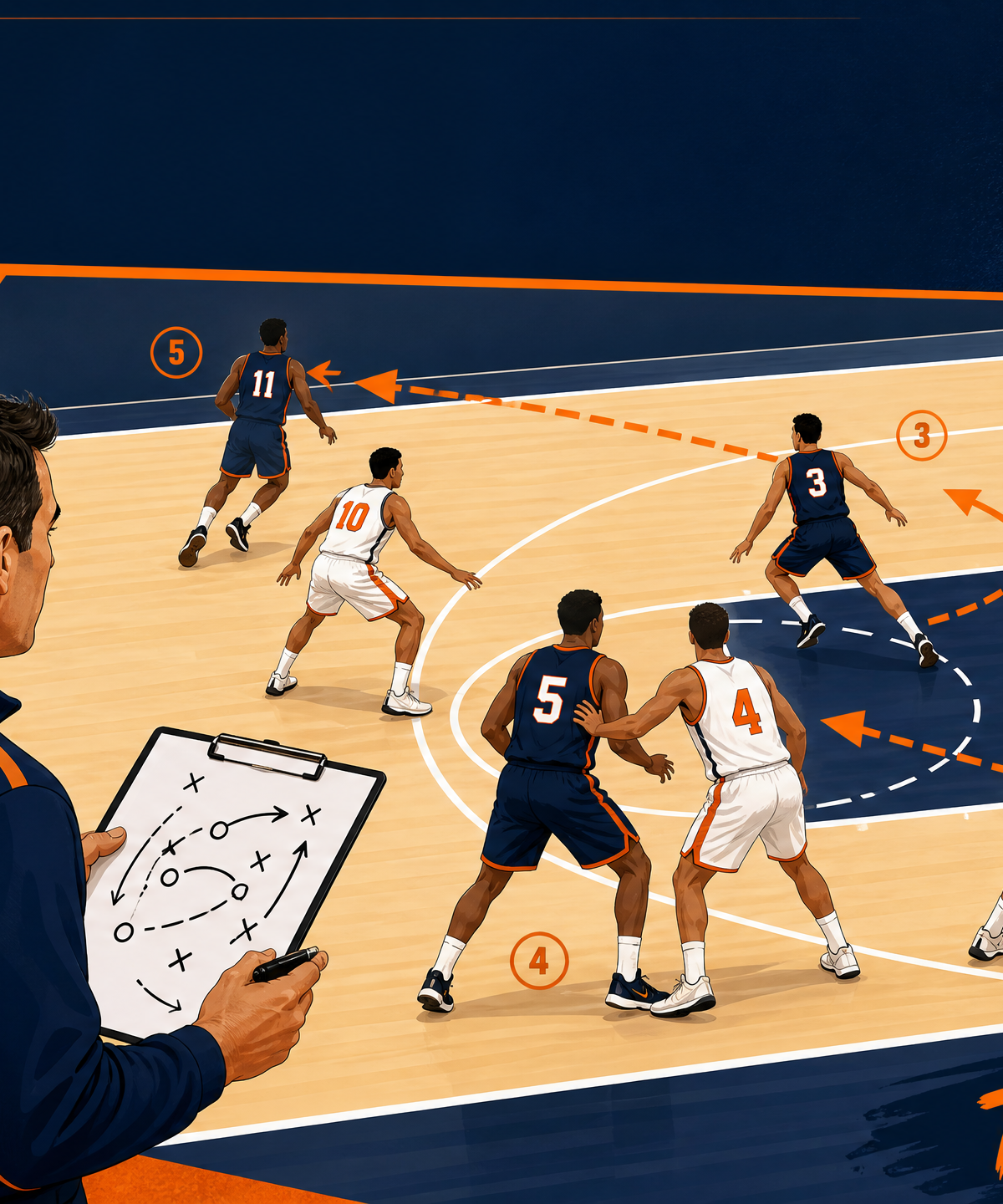
Equipment Needed
1. Overview
Executing effectively from the sideline out-of-bounds (SLOB) is a critical component of offensive efficiency. When facing aggressive man-to-man defense, simply getting the ball inbounds can be a challenge, let alone creating a scoring opportunity. The 'Box' set is a fundamental, highly effective sideline inbound play designed to counter man-to-man pressure.
This play utilizes simultaneous screening actions to force the defense into difficult communication and trailing positions. It provides a primary safety valve for securing possession while simultaneously opening up a high-percentage look at the rim via a back-cut. It is an essential set for any coach's playbook, offering reliability in late-game situations or when needing to break offensive stagnation.
2. Setup
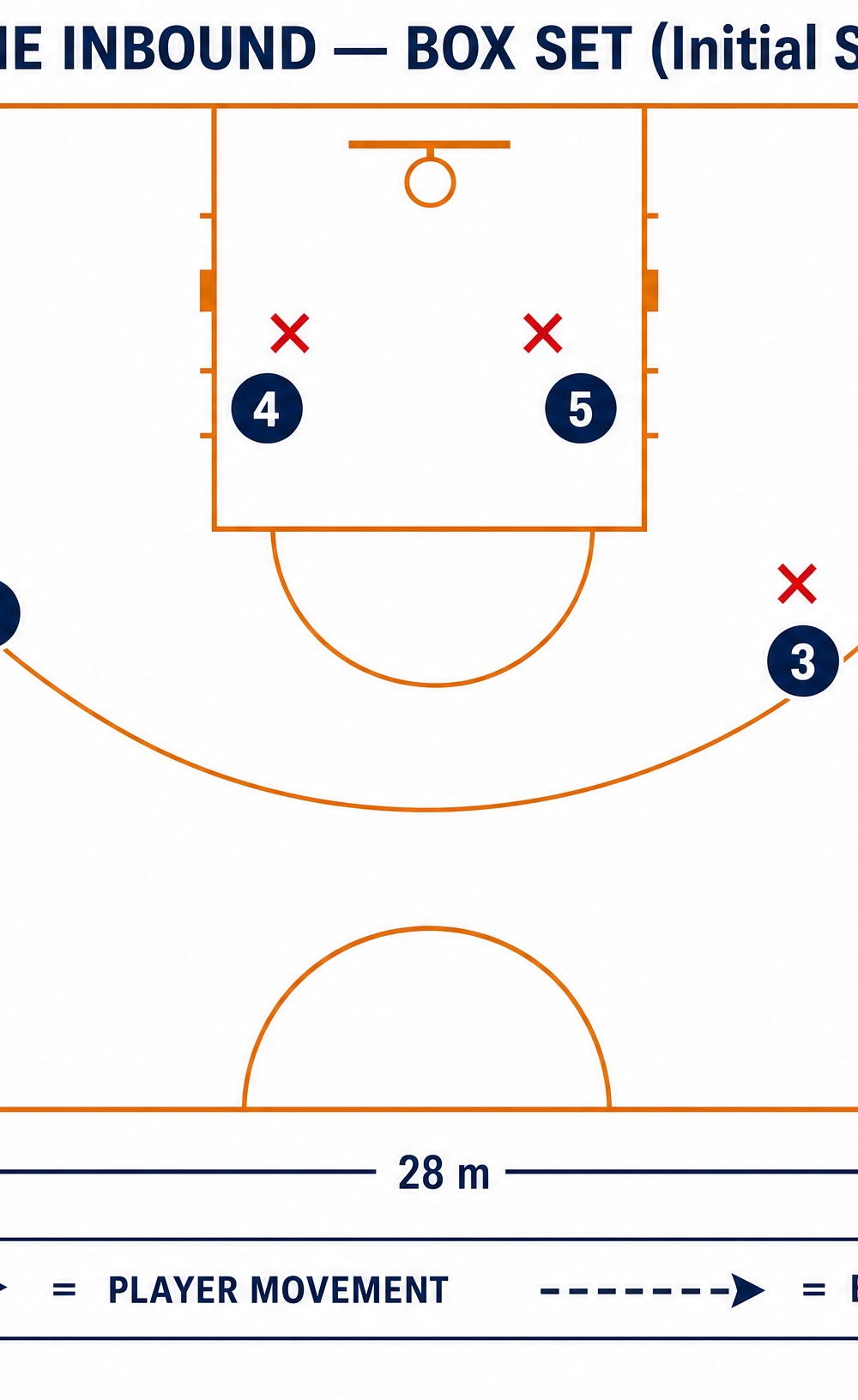
Court Position: Sideline out-of-bounds, typically in the frontcourt near the half-court line (28m x 15m FIBA court dimensions).
Player Personnel & Positioning:
- Player 1 (Inbounder): Your best passer and decision-maker. Positioned out of bounds on the sideline with the ball.
- Player 2 (Shooting Guard): Positioned at the top of the key, ball-side.
- Player 3 (Small Forward): Positioned at the weak-side elbow.
- Player 4 (Power Forward): Positioned at the strong-side low post block.
- Player 5 (Center): Positioned at the weak-side low post block.
This creates the classic "Box" formation inside the three-point arc.
3. Step-by-Step Instructions
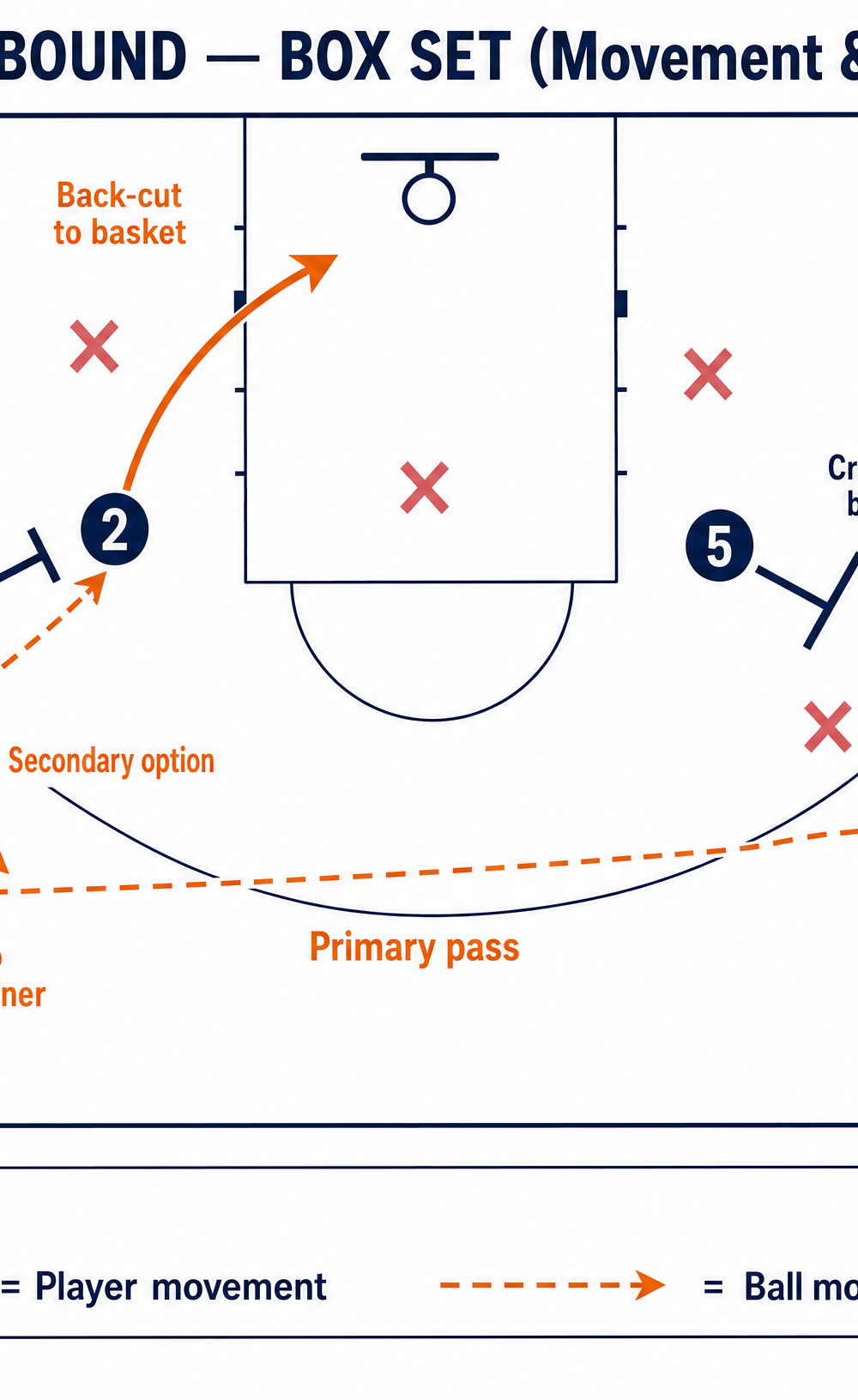
Step 1: The Trigger
The play begins when Player 1 (the inbounder) slaps the basketball. This signals the start of the simultaneous actions.
Step 2: The Back Screen (Scoring Option)
Immediately upon the trigger, Player 4 sprints up from the strong-side low post to set a firm back screen on Player 2's defender at the top of the key. Player 2 must set up their defender with a jab step away from the basket before cutting hard off Player 4's shoulder toward the rim. This is the secondary, but most dangerous, scoring option.
Step 3: The Cross Screen (Safety/Primary Option)
Simultaneously, Player 5 sets a cross screen along the baseline for Player 3. Player 3 uses the screen to pop out to the ball-side wing/three-point line. This is the primary safety pass to secure possession and initiate the offense.
Step 4: The Roll and Read
After setting the back screen for Player 2, Player 4 immediately opens up and rolls toward the ball-side short corner. This provides a secondary outlet if Player 3 is denied.
Step 5: The Inbound Pass
Player 1 reads the defense:
- Option A (Primary): Pass to Player 3 popping to the wing. This secures possession and allows the team to flow into their half-court offense.
- Option B (Secondary/Scoring): If Player 2 is open on the back-cut to the basket, Player 1 delivers a crisp bounce pass or lob for the layup.
- Option C (Outlet): If both A and B are covered, look for Player 4 rolling to the short corner.
4. Key Coaching Points
- Timing is Everything: The back screen (4 on 2) and the cross screen (5 on 3) must happen simultaneously. If they are staggered, the defense can help and recover more easily.
- Screening Angles: Player 4 must set the back screen blindly on Player 2's defender. The angle must be set so Player 2 can cut directly to the rim without bowing out.
- Setting Up the Cut: Player 2 cannot just run. They must take the defender away from the intended path (a quick step toward half-court) before planting and exploding off the screen.
- Inbounder Patience: Player 1 cannot panic. They have 5 seconds. They must read the back-cut first, then look to the wing pop as the safety.
- Screener's Responsibility: The screener must be stationary upon contact to avoid an offensive foul. After screening, they must immediately look for the ball (Player 4 rolling to the short corner).
5. Common Mistakes
- Slipping the Screen Early: Screeners (Players 4 and 5) often slip the screen before making solid contact, rendering the action useless and allowing defenders to stay attached to the cutters.
- Poor Spacing on the Wing Pop: Player 3 pops out too shallow or too close to the inbounder, bringing their defender into the passing lane and shrinking the floor.
- Telegraphing the Pass: The inbounder stares down the primary option (Player 3), allowing the defense to jump the passing lane. The inbounder must use their eyes to manipulate the defense.
- Lack of a Setup Move: Cutters fail to set up their defenders, making it easy for the defense to go over or under the screens without disruption.
6. Variations & Progressions
- Variation 1: The 'Elevator' Look. Instead of Player 3 popping to the wing, Players 4 and 5 set a double screen (elevator doors) at the free-throw line for Player 2 to shoot a three-pointer, while Player 3 cuts to the basket.
- Variation 2: Inbounder Entry. If the pass goes to Player 3 on the wing, Player 1 immediately steps inbounds and receives a hand-off or ball screen from Player 3 to initiate a pick-and-roll action on the side.
- Progression: Add a Dribble Handoff (DHO). If Player 3 catches the ball on the wing but has no immediate scoring option, they can immediately execute a DHO with Player 2 who has cleared out to the corner after their initial cut.
7. Age Adaptations
- Under 10 / Under 12: Focus heavily on the fundamentals of the V-cut and establishing a solid, stationary screen. The primary goal is simply securing possession (passing to Player 3). The back-cut option might be too complex to read consistently.
- Under 14 / Under 16: Emphasize the timing of the simultaneous screens and the reads for the inbounder. Introduce the concept of the screener rolling (Player 4) as a viable third option.
- Open / Advanced: Focus on the nuances of setting up the defender, the exact angles of the screens, and immediate flow into secondary offensive actions (like the inbounder entry variation) if no immediate shot is available.