Cricket
Drill
advanced
under 16
Mastering Spin Variations: The 3-Ball Setup Drill
Develop your spinners' ability to outthink batters by practicing deliberate sequences of variations, focusing on wrist position, flight, and deception.
Jul 10, 20264 min read20 min drill3 players

Equipment Needed
6 cricket balls
Target cones or mat
Stumps
1. Overview
The "3-Ball Setup" is an advanced spin bowling drill designed to transition bowlers from simply "landing the ball" to actively setting up a batter. It teaches spinners how to use their stock delivery in conjunction with variations (like the top spinner, arm ball, or googly) to create doubt and induce false shots. This drill is crucial for developing the tactical mindset required for high-level spin bowling.
2. Setup
- Location: Standard 22-yard cricket pitch (nets or open center wicket).
- Equipment: 6 high-quality cricket balls (match condition preferred), target cones or a target mat, stumps at both ends.
- Player Positions:
- 1 Bowler (at the bowling crease).
- 1 Wicketkeeper (standing up to the stumps).
- 1 Batter (optional, but recommended for advanced progression to provide visual cues).
- 1 Coach (standing behind the bowler or at square leg to observe wrist position and flight).
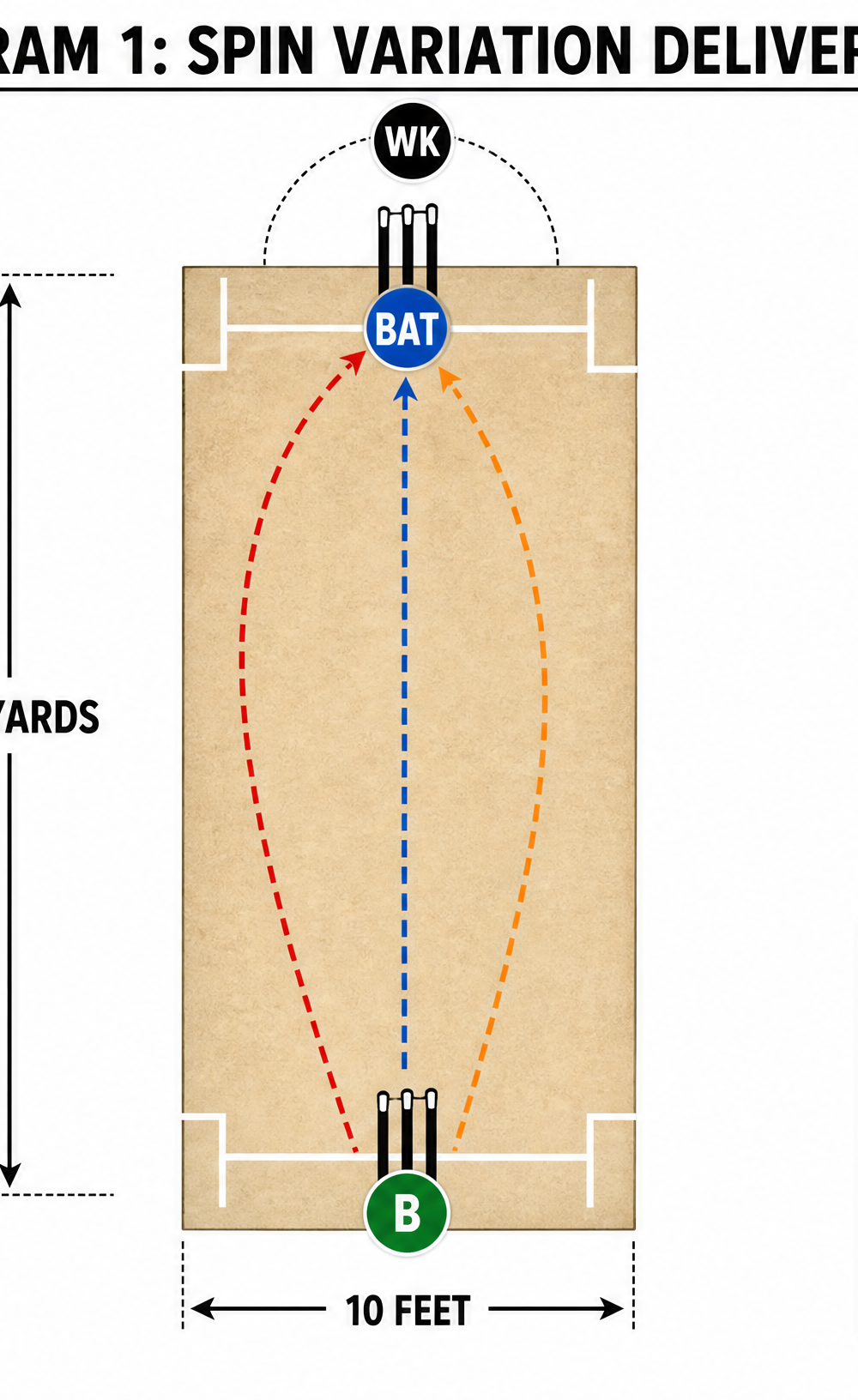
3. Step-by-Step Instructions
- Establish the Stock Ball: The bowler begins by bowling three consecutive stock deliveries (e.g., standard off-breaks or leg-breaks). The goal is to hit a specific target area (usually top of off-stump or just outside) consistently. The coach should verify the revs on the ball and the shape of the flight.
- Declare the Sequence: The bowler must audibly declare to the coach their intended 3-ball sequence. For example: "Stock ball, stock ball with more flight, faster variation (slider/arm ball)."
- Execute Ball 1 (The Anchor): Bowl the standard stock delivery. Focus on hitting the exact length that forces the batter to play forward defensively.
- Execute Ball 2 (The Lure): Bowl the second delivery. This should look identical out of the hand but feature a subtle change—either slightly slower with more loop to tempt a drive, or slightly wider to open the off-side.
- Execute Ball 3 (The Trap): Bowl the variation. If the previous balls spun away, this is the one that slides straight on (arm ball/top spinner) or spins the other way (googly). The key is maintaining the same arm speed and action as the stock delivery.
- Review and Reset: The coach and wicketkeeper provide immediate feedback on the deception. Did the variation look different out of the hand? Was the length correct? Reset and declare a new sequence.
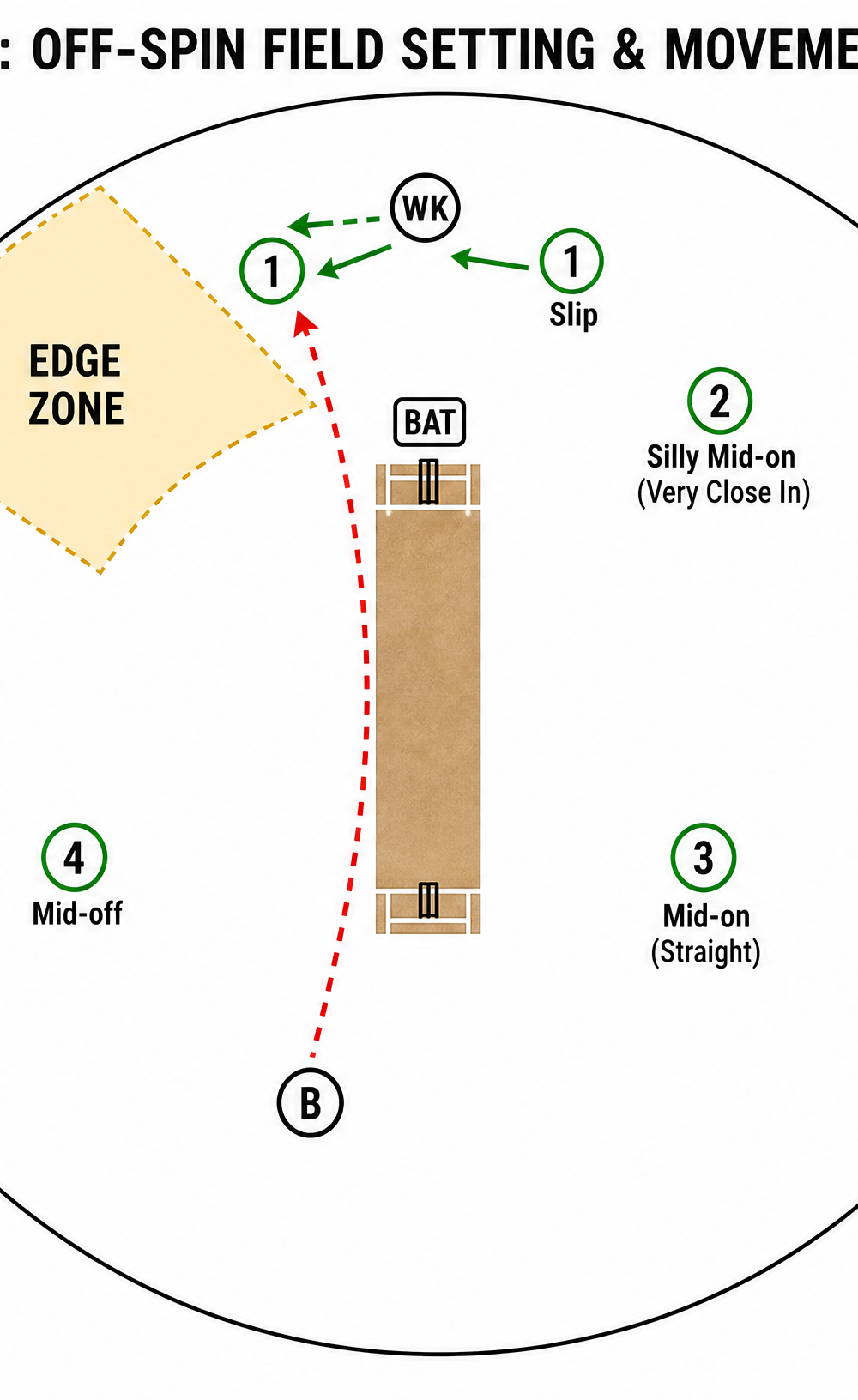
4. Key Coaching Points
- Arm Speed Consistency: The biggest tell for a variation is a change in arm speed. Ensure the bowler maintains identical arm speed for the stock ball and the variation.
- Wrist and Seam Position: Watch the wrist closely at the point of release. The variation must come from a subtle change in wrist angle or finger grip, not a massive change in the bowling action.
- Flight and Dip: Encourage the bowler to use the trajectory (flight) as a variation itself. A ball tossed up above the batter's eyeline can be just as deceptive as a ball that spins the opposite way.
- Bowling to a Field: Always ask the bowler: "What field is set for this sequence?" The sequence must make sense for the tactical field placement.
5. Common Mistakes
- Telegraphing the Variation: The bowler alters their run-up, jump, or load-up when preparing to bowl the variation, alerting the batter.
- Sacrificing Accuracy for Spin: In an attempt to bowl a "magic ball" variation, the bowler completely misses their length, bowling a full toss or a long hop.
- Overusing the Variation: Bowling the variation too often makes it the new stock ball. Remind bowlers that a variation is only effective because it is rare.
6. Variations & Progressions
- Progression 1 (Blind Batter): Introduce a batter who does not know the sequence. The batter must call out what type of delivery they think it is while the ball is in the air.
- Progression 2 (Match Scenario): Give the bowler a specific match scenario (e.g., "Last over of a T20, the batter needs 10 runs"). The bowler must design a 6-ball sequence to defend the runs.
- Variation (Target Zones): Place different colored cones on the pitch. The bowler must hit specific colored zones corresponding to their declared sequence.
7. Age Adaptations
- Under 10 - Under 12: Focus purely on consistency of the stock ball first. Introduce only one simple variation (like a faster, straighter ball). Do not worry about complex sequences yet.
- Under 14 - Under 16: Begin introducing the 3-ball sequence. Focus heavily on hiding the grip and maintaining arm speed.
- Open / Senior: Full implementation. Demand high tactical awareness, precise execution of multiple variations (googlies, carrom balls, arm balls), and the ability to bowl to specific field settings.