Player Training
The Ultimate Guide to Apple Watch Apps for Basketball Training in 2026
Discover how wearable technology is transforming basketball and netball coaching. Learn practical drills, explore the best Apple Watch apps, and see how Vanta Sports provides the complete ecosystem for youth sports management.
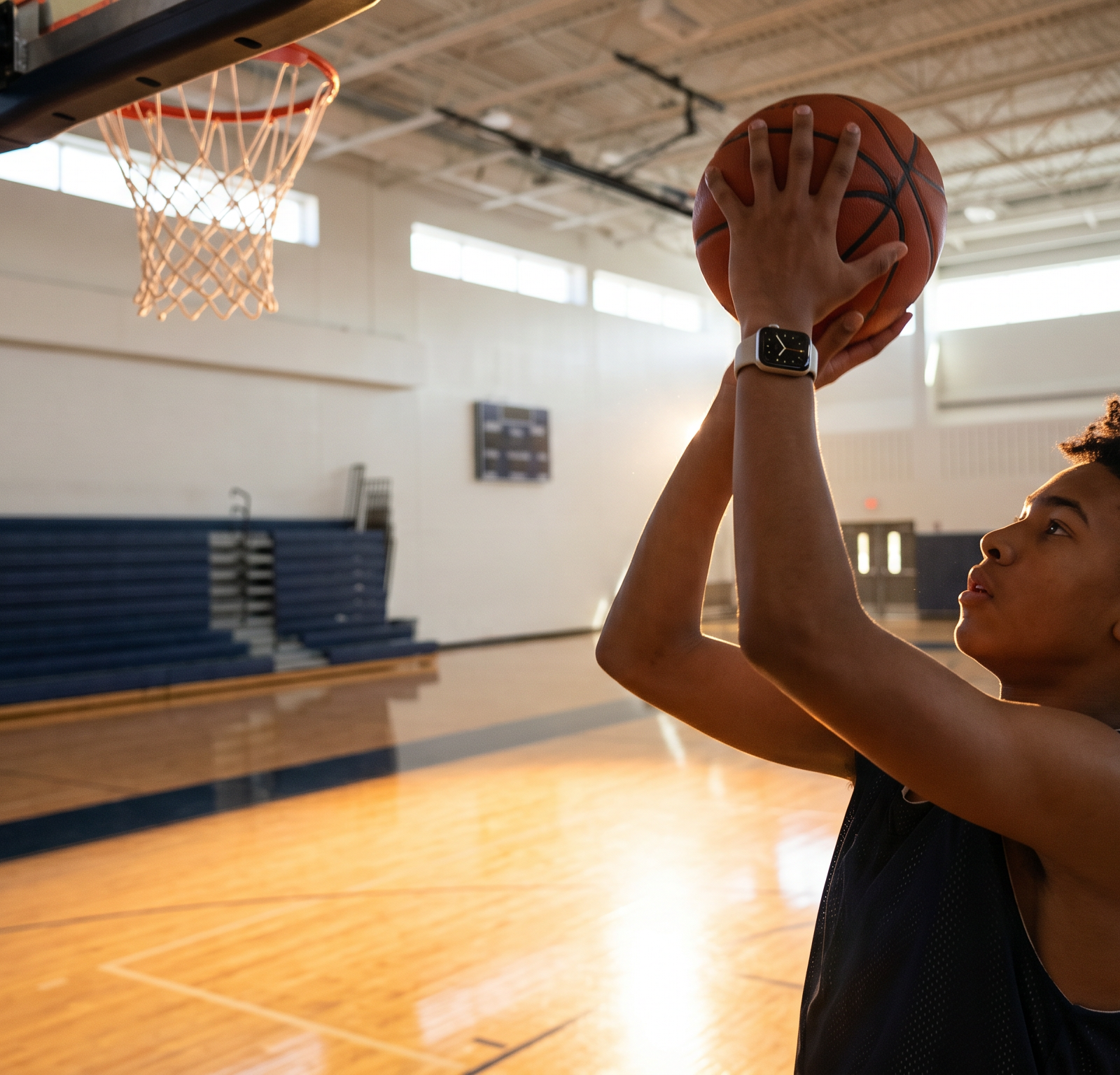
Coaching in 2026 is no longer limited to clipboard notes and intuition-led strategies. Wearable technology has become a foundational pillar of modern coaching, allowing practitioners to access real-time biometric data, behavioral patterns, and activity logs. For basketball and netball coaches, the Apple Watch has transformed from a simple fitness tracker into an essential coaching tool.
Whether you are running a high-intensity interval training session or focusing on shooting mechanics, the integration of wearable devices into your practice plans can elevate player performance and accountability. In this comprehensive guide, we will explore the current landscape of Apple Watch apps for basketball training, practical drills you can implement immediately, and how the Vanta Sports ecosystem provides the ultimate solution for clubs, coaches, parents, and players.
The Evolution of Wearable Tech in Basketball Coaching
The days of manually tracking sprints or guessing a player's cardiovascular load are behind us. Today, professional and youth basketball teams are starting to incorporate wearable technology that collects different biometric data from players. The Apple Watch, with its advanced sensors and seamless ecosystem integration, leads the pack for accessible, high-quality performance tracking.
Moving Beyond the Box Score
Modern coaching draws power from objective, continuous metrics. Instead of relying solely on verbal feedback, coaches now use wearable-sourced biometrics to identify plateaus early and optimize intervention timing.
Key metrics tracked by the Apple Watch during basketball training include:
- Heart Rate Zones: Basketball is an intermittent high-intensity sport. During moderate-intensity basketball, players typically target Zone 3 (70-80% max HR) to improve tempo endurance, and Zone 4 (80-90%) to push their threshold.
- Active Calories: A typical 30-minute basketball session burns approximately 250-350 calories, depending on the player's weight and intensity.
- Heart Rate Recovery: Monitoring how quickly a player's heart rate returns to normal after a drill is a crucial indicator of cardiovascular fitness.
The Shift Toward AI and Predictive Coaching
Artificial intelligence is quietly transforming coaching by analyzing historical biometric data and projecting future outcomes. Smart coaching platforms do not just track; they predict burnout or plateaus before players feel them. By feeding in wearable data like heart rate variability (HRV) and training load, AI tools deliver pattern recognition and flag anomalies for the coach to act on proactively.
Top Apple Watch Apps for Basketball Training
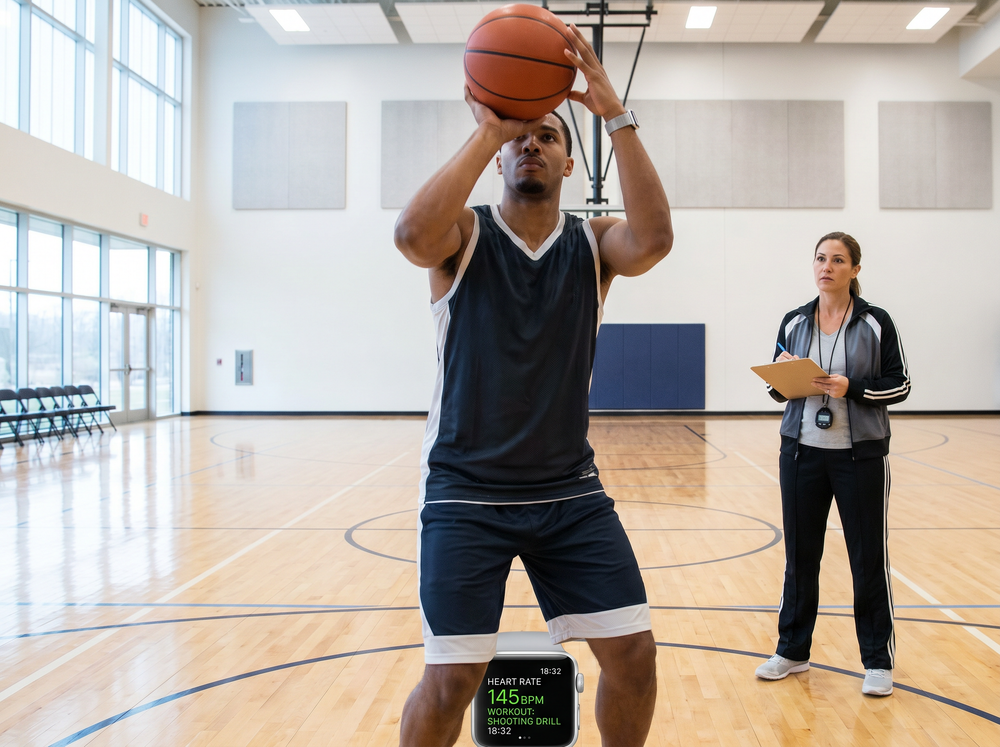
While the native Apple Watch Workout app provides excellent baseline data for basketball and netball, several specialized third-party apps have emerged to offer basketball-specific insights.
- Shotistics: An innovative smartwatch app that counts basketball shooting percentages without external sensors. Players simply shoot, turn their wrist inwards for a make or outwards for a miss, and the watch vibrates to confirm. It is highly practical for stationary shooting sessions.
- Ball AI: A premier training and tracking app that uses the iPhone for video analysis and the Apple Watch for real-time logging. It offers automatic stat breakdowns, make/miss labeling, and allows coaches to assign workouts and track progress remotely.
- Hoops: A shot tracker that allows players to log makes with a single tap on their Apple Watch, run timed drills, and instantly see shooting percentages across sessions.
While these individual apps offer specific utilities like shot tracking, managing a team requires a more comprehensive approach. Juggling multiple disjointed apps for communication, scheduling, and player development often leads to frustration for volunteer coaches and parents.
Why Vanta Sports is the Ultimate Choice
When it comes to managing your team and maximizing player development, Vanta Sports stands alone as the purpose-built ecosystem for youth basketball and netball. Instead of piecing together different apps, Vanta Sports provides a unified, modern platform designed specifically for the needs of sports clubs.
Vanta Sports offers distinct, specialized apps for every stakeholder:
- Vanta Club: The complete club management platform. Handle registrations, process payments seamlessly with integrated Stripe infrastructure, and manage built-in safeguarding and compliance tools with ease.
- Vanta Coach App: Completely free for volunteer coaches. It simplifies session planning, automates attendance tracking, and allows coaches to focus on what matters most—developing players.
- Vanta Guardian: Empowers parents to manage schedules, handle payments, and stay connected with the team's progress in real-time.
- Vanta Player App: Designed for the athletes themselves to track goals, celebrate achievements, and stay engaged with team events.
By choosing Vanta Sports, clubs ensure that coaches have the best tools available without the administrative headache, while players get a dedicated space to track their basketball journey.
Practical Apple Watch Drills for Basketball and Netball
Integrating Apple Watch technology into your practices does not require a complete overhaul of your coaching philosophy. Instead, use the data to enhance existing drills and ensure players are training in the correct energy systems.
Here are four practical drills that leverage Apple Watch metrics to improve performance:
1. The Zone 4 Shooting Gauntlet
Objective: Improve shooting accuracy under high cardiovascular fatigue.
The Setup: Place five cones around the three-point line (corners, wings, and top of the key). The player needs a rebounder.
The Drill:
- The player starts at the baseline and sprints to the opposite baseline and back to elevate their heart rate.
- The player checks their Apple Watch. They must reach Zone 4 (80-90% of max heart rate) before starting the shooting phase.
- Once in Zone 4, the player receives a pass and shoots from the first cone.
- After the shot, they must sprint to half-court and back before shooting from the next cone.
- The goal is to make 10 total shots while maintaining a Zone 4 heart rate. If their heart rate drops into Zone 3, they must perform defensive slides until it rises again.
Coaching Tip: This drill simulates late-game scenarios where legs are heavy and breathing is labored. Monitor the Apple Watch data to ensure players are not resting too long between shots.
2. The 7-Spot Rhythm Builder
Objective: Build shooting rhythm and track make/miss percentages efficiently.
The Setup: Establish 7 shooting spots (e.g., short corners, elbows, free throw line, and low blocks).
The Drill:
- The player uses a shot-tracking app (like Shotistics or Ball AI) on their Apple Watch.
- The player shoots 5 shots from each of the 7 spots.
- Using the wrist gesture or tap feature on their watch, the player logs each make and miss without breaking their rhythm or walking over to a clipboard.
- After completing all 35 shots, the player and coach review the immediate data on the watch or synced phone to identify weak zones.
Coaching Tip: Use the Vanta Player App to have athletes log their overall percentages from this drill over a 4-week period. Tracking this specific data point encourages accountability outside of formal practice.
3. The Netball Mid-Court Interval Sprint
Objective: Develop the explosive, stop-and-start endurance required for netball mid-court players.
The Setup: Use the transverse lines of the netball court as markers.
The Drill:
- Players start the "High Intensity Interval Training (HIIT)" workout on their Apple Watch.
- Work Phase (30 seconds): Players sprint from the baseline to the first transverse line, defensive slide to the opposite sideline, sprint to the second transverse line, and backpedal to the start.
- Recovery Phase (30 seconds): Active walking recovery.
- Repeat for 8-10 rounds.
Coaching Tip: After the session, use the Apple Watch data to check Heart Rate Recovery. Players whose heart rates drop significantly during the 30-second recovery phase are showing excellent cardiovascular adaptation.
4. The 3-Minute Free Throw Challenge
Objective: Practice focusing and lowering the heart rate for free throws after intense exertion.
The Setup: One player at the free throw line, one rebounder.
The Drill:
- The player performs 1 minute of high-knees or burpees to intentionally spike their heart rate.
- Immediately step to the free throw line. The player has 3 minutes to shoot as many free throws as possible.
- The key constraint: The player must check their Apple Watch and take a deep, stabilizing breath to actively lower their heart rate before each release.
Coaching Tip: Use this drill to teach the physiological aspect of shooting. Players can visually see on their Apple Watch how taking a deep breath and establishing a routine drops their heart rate by 5-10 BPM, leading to a smoother stroke.
Remote Accountability and Habit Building
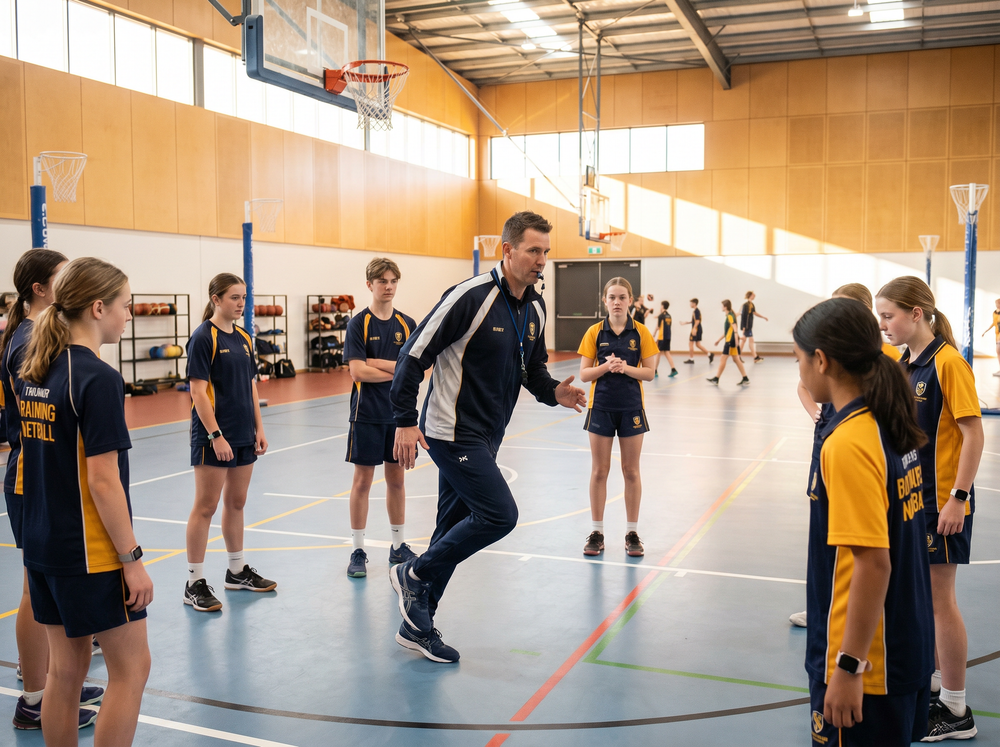
One of the greatest challenges for any coach is knowing what players are doing between practices. Wearable devices are redefining how coaches manage accountability. Rather than waiting for players to self-report, coaches can encourage athletes to track their solo workouts.
When players use their Apple Watch to log a 45-minute basketball session in the driveway, that data becomes a point of connection. Coaches can validate whether changes are actually sticking by observing physiological responses, rather than relying on perception alone.
This tight feedback loop makes behavior change more measurable and sustainable. When a player sees their average heart rate decrease for the same intense drill over a month, they have objective proof that their fitness is improving. This increases player buy-in and motivation drastically.
Implementing Tech in Your Program
Introducing new technology to a team requires a thoughtful approach. While younger athletes may seamlessly pair their devices, some players or parents may struggle with setup and data interpretation.
To ensure a smooth rollout:
- Start Simple: Begin by simply asking players to track their total active minutes during practice using the native Workout app.
- Focus on Trends, Not Single Sessions: Educate players that a single day's heart rate data is less important than the 4-week trend.
- Centralize Communication: Use the Vanta Coach App to communicate the goals of the tech integration to parents and players clearly.
By leveraging the power of the Apple Watch for on-court metrics and Vanta Sports for complete club management, you create a professional, data-driven environment that empowers athletes to reach their full potential.
Ready to Take Your Training to the Next Level?
Track your shots and level up with the Vanta Player App. Learn more about Vanta Sports
Tags