Mastering the Centre Pass: Set Plays, Variations, and Coaching Strategies for Netball and Basketball
Discover proven centre pass set plays and variations to elevate your team's attacking strategy. Learn actionable coaching tips, practical drills, and how Vanta Sports can streamline your coaching workflow.
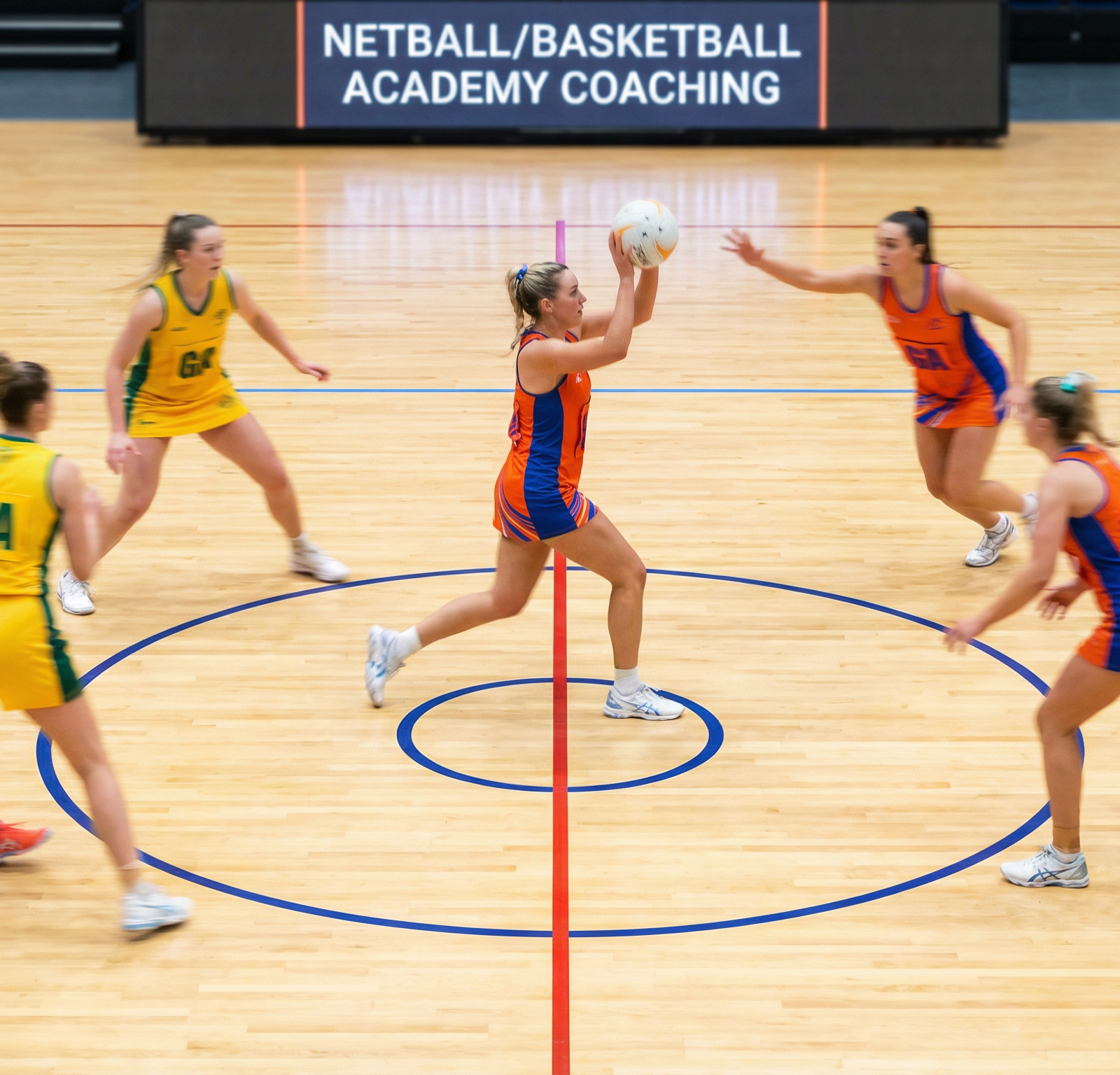
Every centre pass is an opportunity. Whether you are coaching netball or basketball, the opening tip or centre pass is a critical moment where your team has the ball, knows when it is coming, and can choreograph movement to gain an immediate advantage. Yet, too many teams waste this advantage with predictable, one-dimensional plays that defenders can read with ease.
In this comprehensive guide, we will explore effective centre pass set plays, variations, and coaching strategies that will give your attack unpredictability and your shooters better scoring chances. We will also look at how modern tools like the Vanta Coach App can help you plan these sessions and track your team's progress.
The Importance of the Centre Pass
A properly executed centre pass attack provides quick passing and effective movement, which eliminates many passing risks. It allows your players to find space easily and leads to scoring goals quickly and effectively. For instance, elite netball teams like the West Coast Fever boast a centre pass success to goal rate of over 73%, translating into nearly 47 goals per game from their centre pass alone [1]. This highlights why treasuring your centre passes and having a solid structure is paramount.
Having a structure stops players from driving into each other's space and avoids frequent backwards or sideways passes. It also helps players recognize when their teammates are struggling to get free, allowing them to step up when needed.
Core Netball Centre Pass Strategies
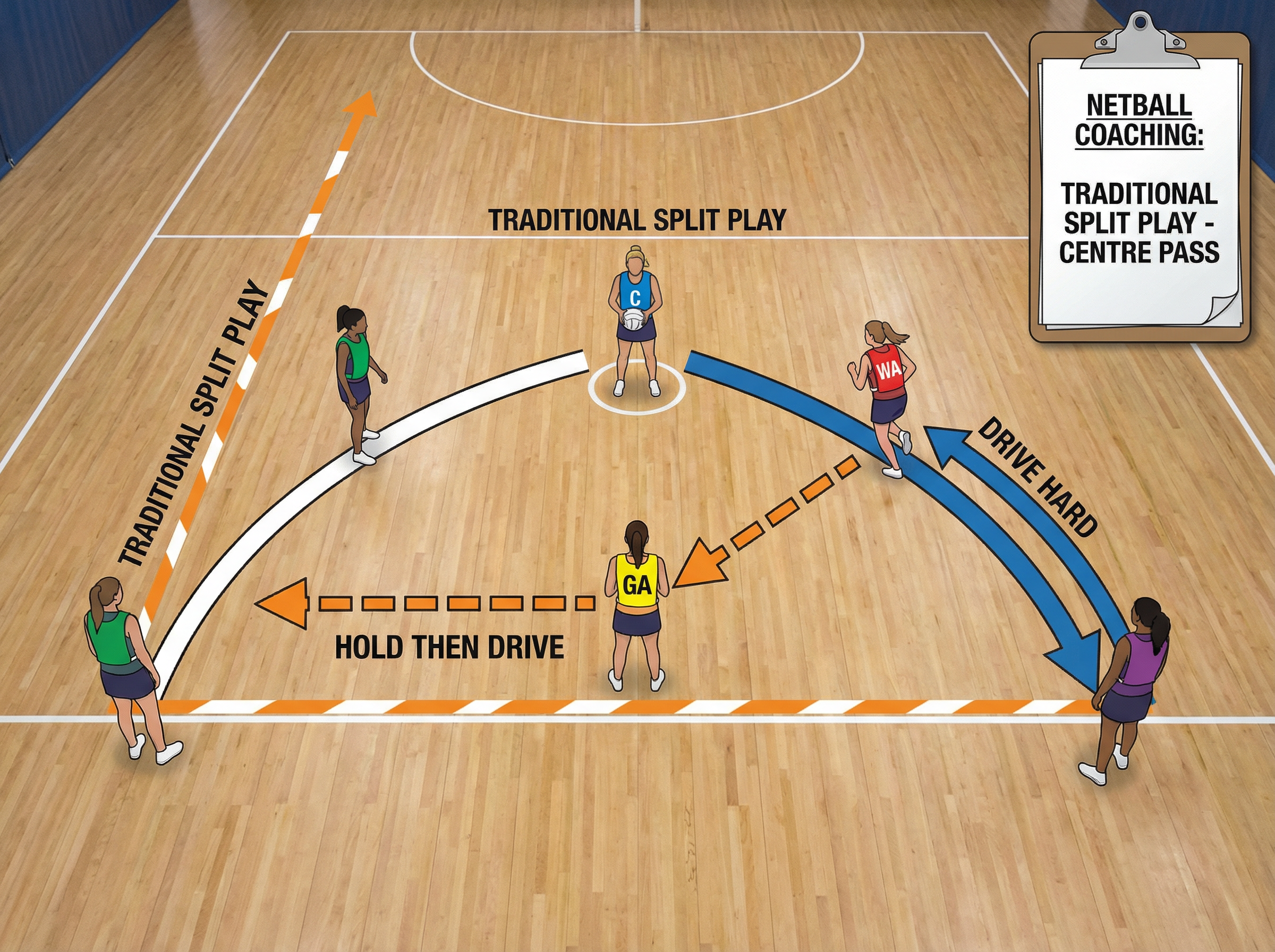
1. The Traditional Split
The Traditional Split is the foundation play that every team needs. In this setup, the Wing Attack (WA) drives hard to the ball-side third line while the Goal Attack (GA) holds, then drives to the opposite side. The Centre (C) chooses the best option based on defensive pressure.
Why it works: This play is simple, reliable, and difficult to defend when executed with proper timing. The split creates two clear options and forces the defence to commit.
Coaching tip: The WA must sell the drive with intensity. A half-hearted lead gives the defender time to recover. Use the Vanta Coach App to sketch this play out and share it with your team before practice, ensuring everyone understands their role.
2. The Flood (Overload Variation)
In The Flood, both the WA and GA drive to the same side of the court, flooding the ball-side. This overloads one defender and creates a 2v1 situation.
Why it works: The defence must communicate quickly or leave one attacker completely free. Even good communication often results in a favourable matchup for the attacking team.
Coaching tip: The second driver must time their run to arrive exactly as the first receiver catches the ball. Too early, and the space is crowded; too late, and the advantage is lost. Players may need a call or signal to indicate this variation.
3. The Hold and Go
For this variation, the WA and GA both hold their starting positions for a full second before exploding into their drives. This patience disrupts defensive timing and creates uncertainty.
Why it works: Defenders are trained to react to movement. When attackers hold, defenders often commit early or become flat-footed. The delayed drive catches them out of position.
Coaching tip: The hold must be genuine stillness, not a slow walk. Both players should be balanced and ready to explode in any direction.
4. The Cross-Court Switch
The WA starts ball-side and drives across to the opposite third line, while the GA does the inverse. This crossing pattern confuses defensive marking and creates separation.
Why it works: Defenders following their marks must navigate around each other. This momentary traffic jam creates the space needed for the receiver to get free.
Coaching tip: The cross must happen in the centre third, not in the attacking third. Timing is everything—the paths should cross just before the whistle.
5. The Backup Centre Pass Attack
A backup centre pass is the perfect way to take some pressure off your front-attacking players. The Wing Defence (WD) and Goal Defence (GD) take the lead and try to get the first phase pass.
Why it works: It keeps defenders guessing. If the WA and GA are constantly taking the first pass, defenders will adapt. Using the WD and GD changes the dynamic.
Coaching tip: The front attackers must stay active and look like they are coming over the transverse line to keep their defenders busy. If the ball goes to the WD or GD behind the centre, the centre should execute a quick give-and-go to gain depth.
Basketball Tip-Off and Inbound Plays
While netball relies heavily on the centre pass after every goal, basketball utilizes the jump ball to start the game and inbound plays throughout. However, the principles of set plays and exploiting the opening moment remain similar.
1. The Opening Tip Quick Score
If you have a strong advantage in getting the opening tip (a tall center or a good leaper), you can run a play to get off to a quick start. A quick lay-up in the opening seconds provides a massive psychological boost.
The Play: Have a strong post player line up on the offensive end of the circle. Have two quick players line up on opposite sides of the circle at the half-court line. As the ball goes up, the two quick players release up the sides into the forecourt. The ball is tipped to the post player, who immediately pivots and passes to one of the sprinting guards for a 2-on-1 fast break [2].
Coaching tip: Practice this against each other to find out who your best "tipper" is. Ensure one player stays back to prevent an opponent's fast break if the tip is lost.
2. The Box Set Inbound
From a baseline inbound, the Box Set is a classic and effective formation.
The Play: Four players form a box outside the key. The play starts with the two players on the ball-side setting down screens for the two players on the weak side. The players receiving the screens cut hard to the ball, creating immediate scoring opportunities.
Coaching tip: The inbounder is the most important player in this play. They must be patient and read the defence. Vanta Player App is a great way for players to review these inbound structures on their own time.
Practical Drills for Centre Pass Mastery
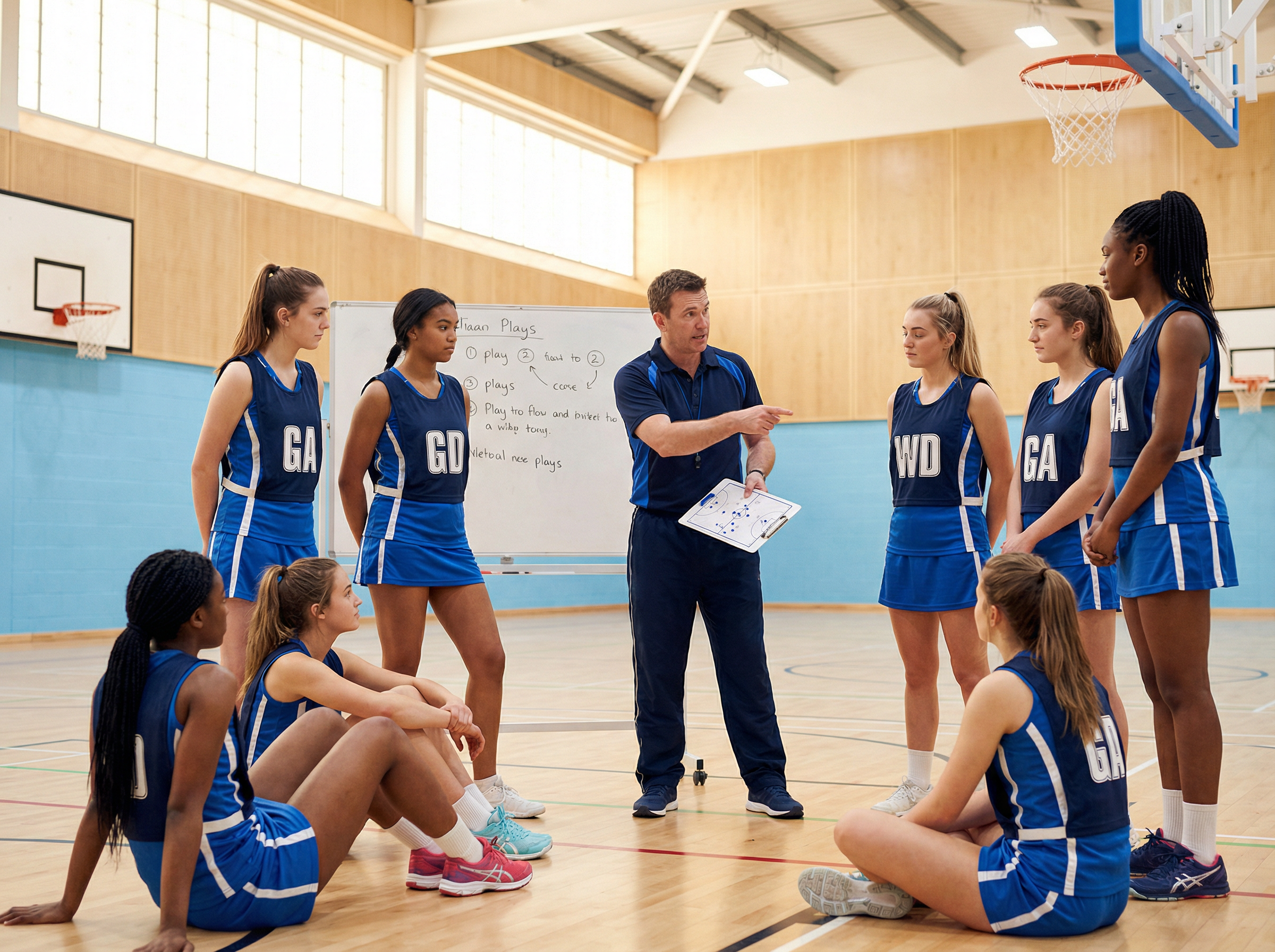
To effectively implement these strategies, you need to drill them consistently. Here are practical drills you can incorporate into your training sessions, which can easily be scheduled and managed through Vanta Club.
Drill 1: Getting Free (1 v 1)
This drill focuses on basic positioning and angles.
- Setup: 1 feeder, 1 attacker, 1 defender. The feeder stands a couple of metres in front of the defender and attacker.
- Action: The attacker tries to get to the middle space using a variety of ways to get free—change of direction, change of pace, and rolls.
- Progression: Have the feeder face the other way. When the feeder turns, that is the signal for the attacker to go.
Drill 2: The Offers Drill
This drill emphasizes taking on depth and making secondary offers.
- Setup: 1 feeder, 2 attackers (add 2 defenders for progression).
- Action: The two attackers offer in different spaces. Whoever does not receive the first pass gets depth and drives for the second pass.
- Focus: Encourage players to be aggressive with their movement and take on depth down the court.
Drill 3: 3 vs 3 to Goal
This drill replicates the pressure of a game situation.
- Setup: 3 attackers vs 3 defenders in half of a third, working towards the shooting circle.
- Action: Attackers start with the ball on the transverse line. They work together to bring the ball down the court, using all the space provided and taking on their defenders. If they have a shooter in the third, they go to goal.
- Focus: Possession and constant work rate. This helps replicate a centre pass setup as players work in a small area with strong defensive pressure.
Key Coaching Takeaways
- Communicate Early: On-court talk should be encouraged. The WA or GA should lead the centre pass structures, communicating as they run back to the transverse line.
- Preliminary Movement: Encourage players to start their preliminary movements a metre or two before the transverse line. Standing still and trying to drive out over the line becomes predictable. Doing the work off the line gets opponents moving and opens up space.
- Have a Fallback Play: Have a specific centre pass attack that your team uses to score an easy goal. This is the perfect way for your players to reconnect and regain control if the opposition gets a run of goals.
- Don't Overcomplicate: You don't need an endless number of setups. Focus on mastering a handful of structures—two for younger players and three to four for older players.
Streamlining Your Coaching with Vanta Sports
Implementing new set plays and tracking player progress requires organization. This is where Vanta Sports becomes an invaluable asset for your team.
Unlike generic management tools, Vanta Sports is purpose-built for youth basketball and netball, offering a complete ecosystem:
- Vanta Coach App: Free for volunteer coaches, this app allows you to seamlessly plan your training sessions (like the drills mentioned above), track attendance, and communicate with your team.
- Vanta Club: A complete club management platform for handling registrations, payments (integrated with Stripe), and built-in safeguarding and compliance tools.
- Vanta Player App: Empowers players to track their goals, review plays, and stay engaged with team events.
- Vanta Guardian: Keeps parents in the loop with schedules, payments, and team connections.
By utilizing Vanta Sports, you spend less time on administrative tasks and more time on the court perfecting those game-winning centre pass plays.
Ready to Take Your Training to the Next Level?
Discover how Vanta Sports helps coaches run better practices. Learn more about Vanta Sports
References
[1] Elite Netball Academy. "Netball Centre Pass Strategies in Attack." Retrieved from https://elitenetballacademy.co.uk/netball-centre-pass-attack/
[2] Coach's Clipboard. "Opening Tip Basketball Play." Retrieved from https://www.coachesclipboard.net/TipPlay.html