Basketball Skills
Mastering the Court: A Coach's Guide to Defensive Footwork Drills for Beginners
Defense wins championships. Learn the essential defensive footwork drills that will transform your beginner basketball and netball players into lockdown defenders.
Mastering the Court: A Coach's Guide to Defensive Footwork Drills for Beginners
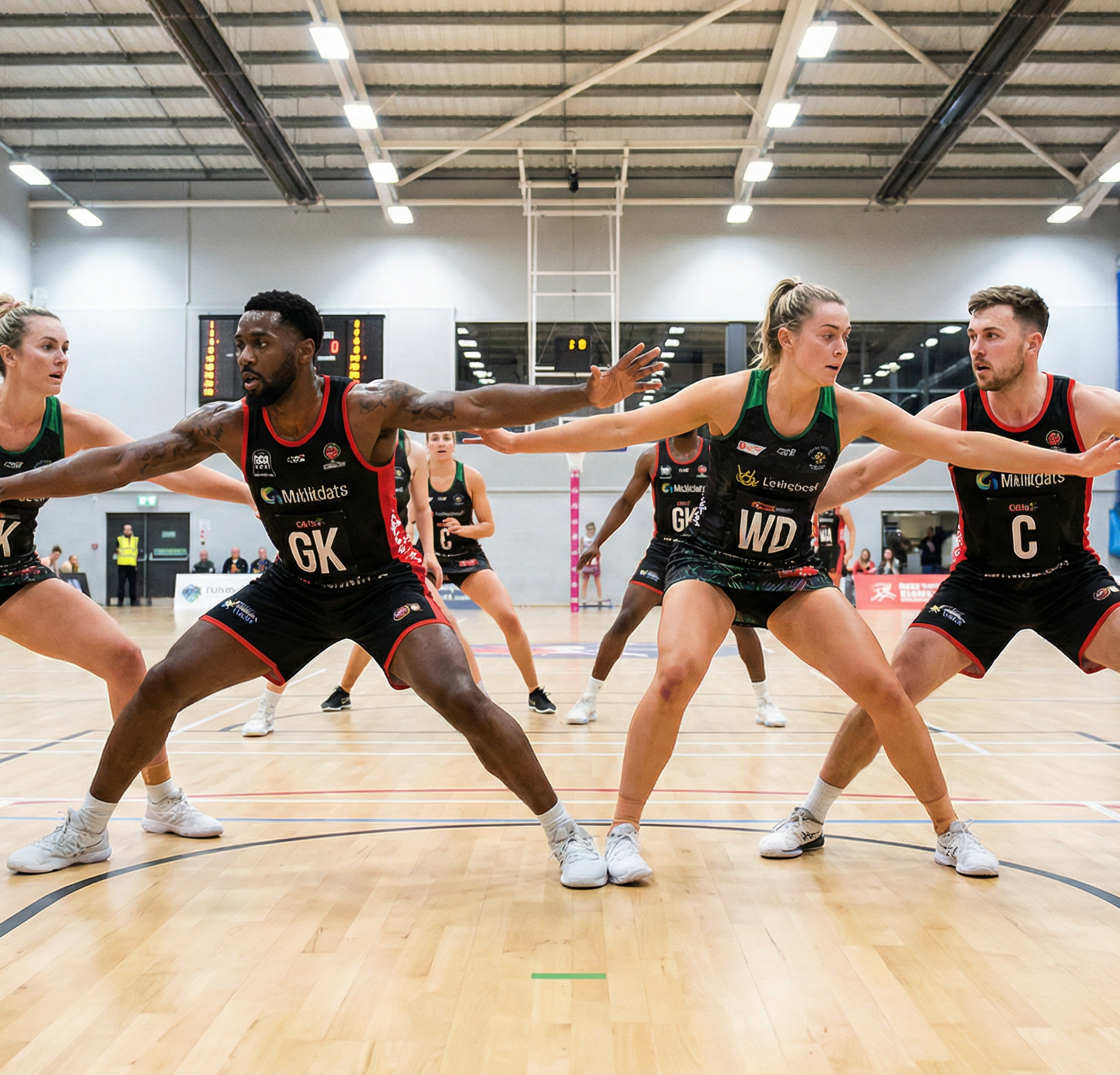
In the fast-paced worlds of basketball and netball, offensive plays often steal the show. The thunderous dunks, the three-point swishes, the perfectly executed goals—these are the moments that make highlight reels. However, seasoned coaches know a universal truth: defense wins championships. A team that can't defend is a team that can't control the game. The bedrock of any great defense, from grassroots to the professional leagues, is not raw athleticism or aggressive instinct, but something far more fundamental: footwork.
For beginner athletes, mastering defensive footwork can be a game-changer. It builds discipline, enhances agility, and boosts court awareness. Yet, it's an area often overlooked in favor of shooting or passing drills. This comprehensive guide is designed for basketball and netball coaches who want to build their team's defensive prowess from the ground up. We will explore the universal principles of defensive movement, break down practical, high-impact drills you can implement today, and provide actionable coaching tips to foster a culture of defensive excellence.
The Universal Principles of Defensive Footwork
While basketball and netball have distinct rules and objectives, the core principles of effective defensive footwork are remarkably similar. Before diving into specific drills, it's crucial for players to understand these foundational concepts. Mastering them will make every subsequent drill more effective.
The Foundation: A Balanced Defensive Stance
Everything starts with the stance. An unbalanced player is an ineffective defender, easily beaten by a quick first step or a sudden change of direction. The ideal defensive stance provides a low center of gravity and the stability needed to react and move in any direction.
A proper defensive stance is the starting point for all defensive movements. It allows a player to be balanced and ready to move laterally, forward, or backward with explosive power. [1]
Key elements include:
- Feet Position: Feet should be slightly wider than shoulder-width apart.
- Weight Distribution: Weight should be evenly distributed on the balls of the feet, not the heels.
- Bent Knees: Knees must be bent, lowering the hips and center of gravity.
- Upright Torso: The chest should be up and the back relatively straight to maintain balance and vision.
The Engine: Lateral Movement
Defenders rarely run in straight lines. The ability to slide laterally to stay in front of an opponent is paramount. The key to efficient lateral movement is the push step or defensive slide. Instead of crossing the feet, which leads to imbalance and slower reaction times, players should push off their back foot to move in the desired direction. This allows them to maintain their defensive stance and stay in a position of power.
The Compass: Court Awareness and Anticipation
Great footwork isn't just about physical execution; it's about mental engagement. Players must learn to watch their opponent's torso or hips, not the ball or their head, as this provides a more accurate indication of their intended direction. In netball, this extends to reading the passer's eyes and body language to anticipate the feed. This anticipation allows a defender to initiate their movement a split-second earlier, often making the difference between a successful stop and a score.
Essential Defensive Footwork Drills for Beginners
Theory is important, but repetition is what builds skill. The following drills are designed to be progressive, starting with the absolute basics and gradually adding complexity. They are suitable for both basketball and netball and can be adapted for various skill levels.
Drill 1: The Stance and Slide Foundation
This drill is all about ingraining the fundamental defensive stance and the push-step motion. It requires no equipment and can be done anywhere on the court.
Why it's important: It isolates the two most critical components of defensive movement, building muscle memory for the correct body position and slide technique.
How to perform it:
- Players line up on the baseline in a perfect defensive stance.
- On the coach's command (e.g., "Slide right!"), they perform a set number of defensive slides (e.g., 5) in that direction, focusing on maintaining their stance and pushing off the back foot.
- The coach then calls out another direction. The sequence continues, with players sliding left, right, and even taking short drop steps backward.
Coaching Cues:
- "Stay low! Imagine you're sliding under a rope."
- "Push, don't step! Explode off that back foot."
- "Keep your head up and see the court."
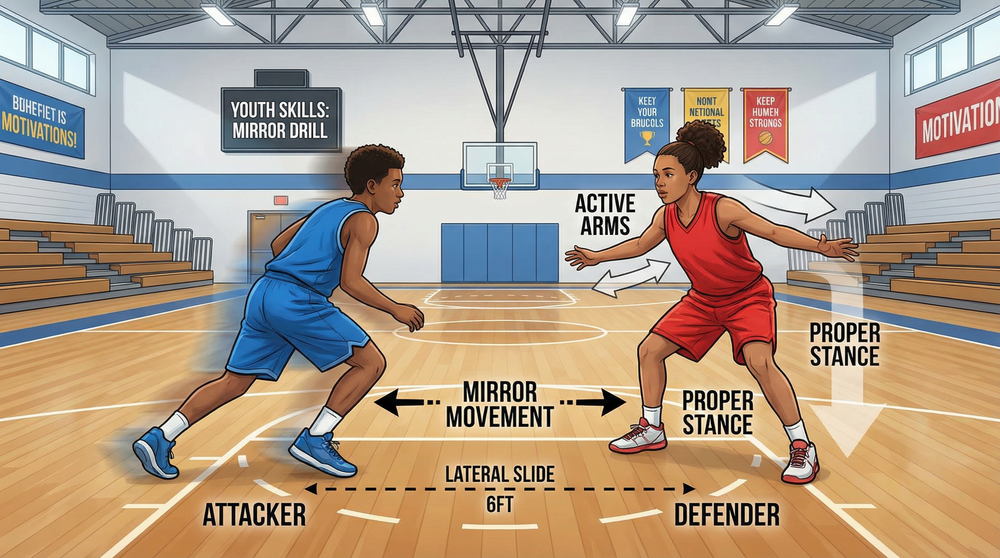
Drill 2: The Mirror Drill
This classic partner drill introduces the element of reaction. It forces the defender to adapt their movements to an offensive player, simulating a live game scenario without the complexity of a ball.
Why it's important: It directly trains a player's ability to react to an opponent's movements, a crucial skill for on-ball defense in basketball and one-on-one marking in netball. [2]

How to perform it:
- Players pair up and stand facing each other about 5-6 feet apart.
- One player is designated the "attacker" and the other the "defender."
- The attacker can slide left or right within a confined space (e.g., the width of the key or a third of the court).
- The defender must mirror the attacker's movements, staying directly in front of them at all times.
- Run the drill for short, intense bursts (15-20 seconds), then have players switch roles.
Coaching Cues:
- "Focus on their hips, not their head or feet."
- "Keep your hands active and ready."
- "Beat them to the spot! Anticipate their next move."
Drill 3: Closeout Drill Progression
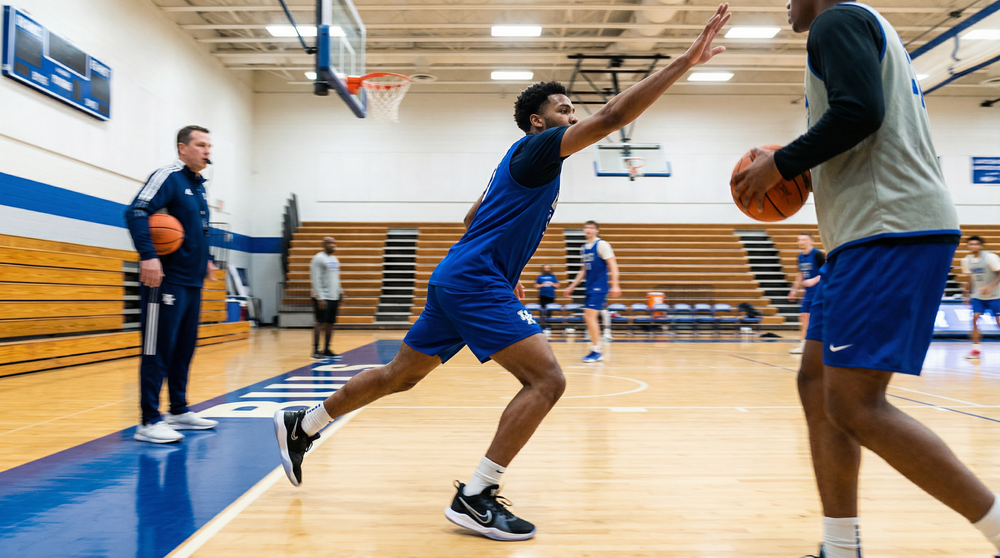
Closing out—sprinting to challenge a shooter or receiver without fouling or getting beaten off the dribble—is a skill that combines speed and control. This drill breaks it down into manageable steps.
Why it's important: It teaches players how to transition from help defense to on-ball defense effectively, a common and critical action in both sports. A poor closeout gives the offense a significant advantage. [3]

How to perform it:
- Phase 1 (The Approach): A player starts on the block (basketball) or near the post (netball). A coach or partner stands on the perimeter with a ball.
- On a pass or signal, the player sprints towards the ball handler.
- As they approach, they must break down their steps into short, choppy steps to regain balance and control.
- Phase 2 (The Contest): They finish in a balanced defensive stance, with one hand high to contest a potential shot (basketball) or to challenge the passing lane (netball).
- Phase 3 (The Recovery): The coach or partner can then fake a shot and drive, forcing the defender to execute a quick turn and slide to stay in front.
Coaching Cues:
- "Sprint the first two-thirds, stutter the last third."
- "High hand! Don't give them a clean look."
- "Stay on the balls of your feet, ready to move."
Drill 4: Zig-Zag Lane Slides
This drill builds endurance and reinforces proper lateral movement over a larger area. It's a staple for teaching players how to guard an opponent moving the ball up the court.
Why it's important: It combines conditioning with skill development, teaching players to maintain their defensive technique even when fatigued.
How to perform it:
- The player starts on one side of the court on the baseline, in a defensive stance.
- They slide diagonally forward towards the free-throw line.
- Once they reach the free-throw line, they plant their foot and change direction, sliding diagonally back towards the baseline on the opposite side of the lane.
- The pattern continues in a zig-zag motion up the court.
Coaching Cues:
- "Don't raise up when you change direction!"
- "Keep your shoulders square to the sideline."
- "Push for speed, but don't sacrifice your stance."
Actionable Takeaways and Coaching Tips
Drills are only as effective as the coaching that accompanies them. To truly build a defensive mindset, coaches should focus on creating a positive and demanding environment.
- Praise Effort and Process: For beginners, the outcome (a steal or a stop) is less important than the process. Praise a perfect defensive slide or a well-executed closeout, even if the offensive player still scores. This reinforces the value of correct technique.
- Make it Competitive: Turn drills into competitions. Track the number of "stops" a player gets in the Mirror Drill or time their Zig-Zag Slides. This increases engagement and intensity.
- Integrate Communication: Defense is a team effort. Require players to talk during every drill. In the Shell Drill (a more advanced 4-on-4 team drill), communication is non-negotiable. Even in simple slide drills, encourage players to call out their movements.
- Focus on the "Why": Explain the purpose behind each drill. When players understand why they need to stay low or why they shouldn't cross their feet, they are more likely to buy into the process and self-correct their mistakes.
"Effective communication on the court keeps teams connected as units. It needs to be clear and loud." [4]
Ready to Take Your Training to the Next Level?
Discover how Vanta Sports helps coaches run better practices. Learn more about Vanta Sports
References
[1] Huber, J. (n.d.). 6 Footwork Progressions For Elite Defenders. Breakthrough Basketball. Retrieved from https://www.breakthroughbasketball.com/defense/footwork-elite-defenders.html
[2] Pro Skills Basketball. (2025, June 4). Top Basketball Defensive Drills & Workouts for Youth Players. Retrieved from https://proskillsbasketball.com/top-basketball-defensive-drills-workouts-for-youth-players/
[3] Haefner, J. (n.d.). 7 Best Defensive Drills: High-Effort Game-Like Reps for Footwork, Closeouts, and More. Breakthrough Basketball. Retrieved from https://www.breakthroughbasketball.com/defense/7-best-drills.html
[4] Starkey, G. (2024, October 11). The ULTIMATE Guide to Defending in Netball. Elite Netball Academy. Retrieved from https://elitenetballacademy.co.uk/defending-in-netball/
Tags