Mastering Defensive Interceptions: Essential Training Drills for Basketball and Netball Coaches
Elite interceptors are made, not born. Discover five proven defensive interception drills, key coaching cues, and a season-long framework to build a genuinely disruptive defensive unit in basketball and netball.
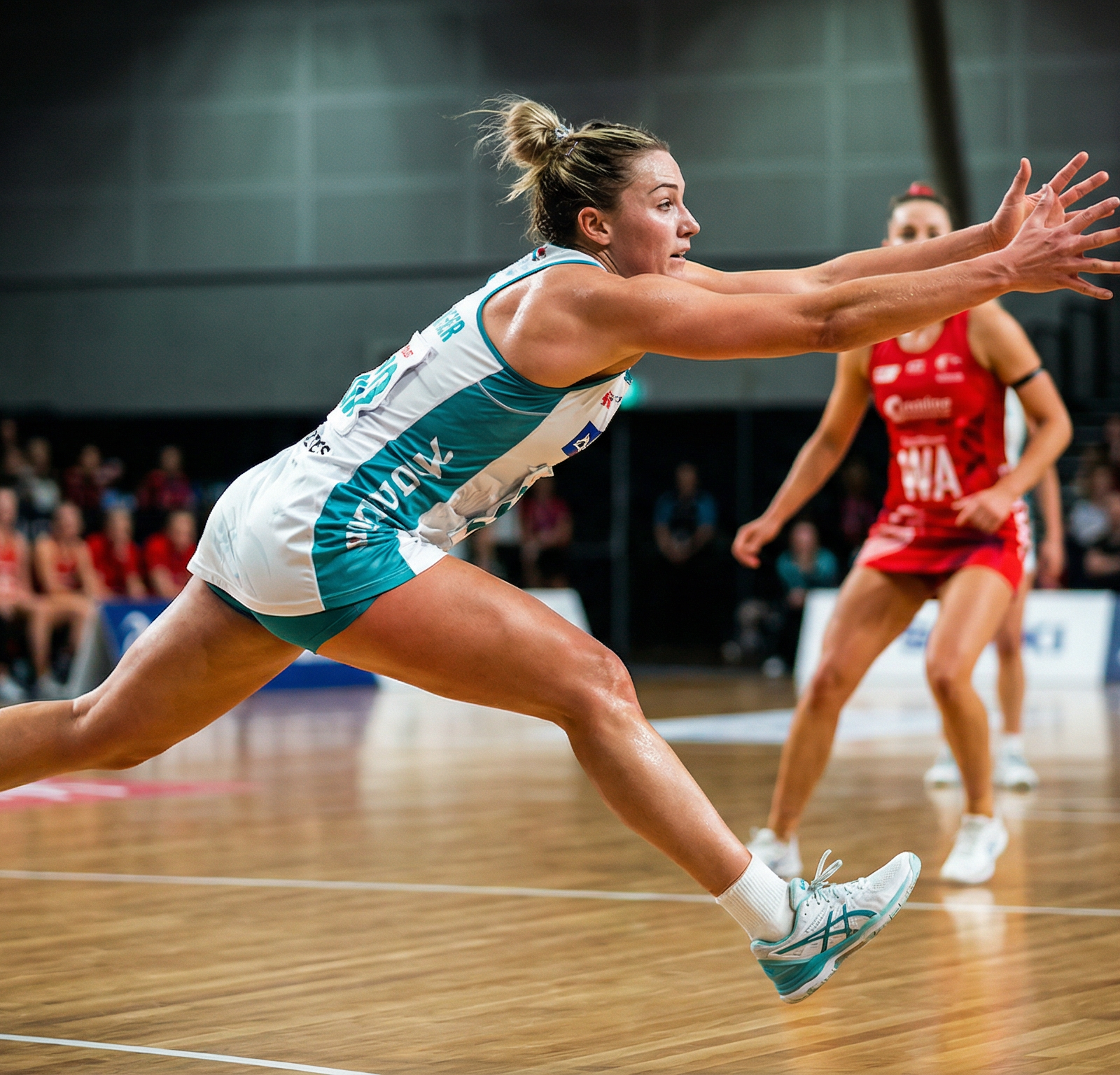
Defensive interceptions are among the most electrifying and tactically decisive moments in both basketball and netball. A well-timed steal or intercept can instantly shift momentum, demoralise the opposition, and ignite a team's energy in ways that few other plays can match. Yet for many coaches, interception training is treated as an afterthought — a skill assumed to emerge naturally rather than one that must be deliberately cultivated. The reality is that elite interceptors are made, not born. They are the product of structured training, sharp anticipatory instincts, and relentless repetition under game-realistic conditions.
This guide is designed for basketball and netball coaches at every level who want to build a genuinely disruptive defensive unit. Inside, you will find five proven drills, key coaching cues, and a practical framework for developing interception skills from the ground up.
Why Interception Training Deserves a Dedicated Place in Your Programme
In netball, a single interception can swing possession from one end of the court to the other in a matter of seconds. In basketball, a deflection or steal in the backcourt can generate an easy fast-break opportunity. Both sports reward defenders who combine physical readiness with cognitive sharpness — the ability to read the game before the ball is even released.
Research into elite defensive performance consistently highlights anticipation as the primary differentiator between average and outstanding interceptors. Studies in sport science show that expert defenders process visual cues from an opponent's body language — particularly hip orientation, shoulder angle, and eye direction — up to 200 milliseconds before the ball is released. This means that interception training must go beyond reaction drills and actively develop a player's capacity to read the game.
Interception training also builds broader defensive qualities: improved footwork, better court awareness, sharper communication between defenders, and a more aggressive defensive mentality. When coaches invest time in this area, the benefits ripple across the entire defensive system.
The Four Pillars of Effective Interception
Before introducing specific drills, it is worth establishing the foundational principles that underpin all successful interception work. These four pillars should inform every session you design.
| Pillar | Description |
|---|---|
| Anticipation | Reading the passer's body language — hips, eyes, and shoulders — to predict where the ball is going before it is released |
| Positioning | Maintaining an open body stance that allows the defender to see both the ball and their opponent simultaneously |
| Timing | Committing to the intercept at the precise moment the ball leaves the passer's hands, not before or after |
| Recovery | Returning quickly to a defensive position if the intercept attempt is unsuccessful, to prevent giving up an easy advantage |
Coaches who build their drills around these four pillars will find that players develop not just the physical mechanics of interception, but the decision-making intelligence that makes those mechanics effective in live game situations.
5 Practical Interception Drills You Can Use at Your Next Training Session
Drill 1: The Mirror and Read Drill (Anticipation Focus)
Purpose: To develop the habit of reading a passer's body language rather than watching the ball.
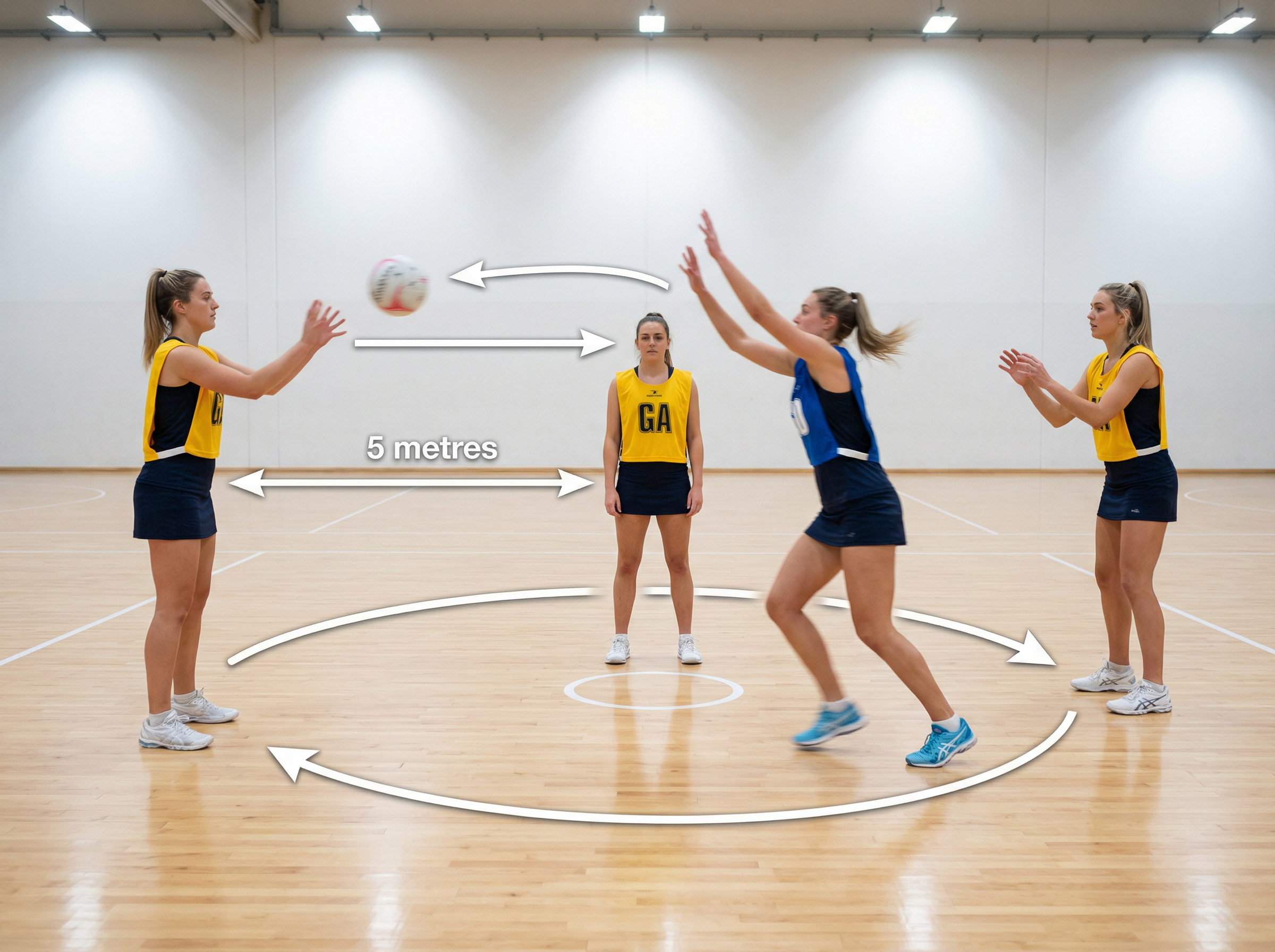
Setup: Arrange players in pairs, standing approximately five metres apart. One player is the passer, one is the defender. A third player stands two metres to the side of the passer as a secondary target.
How it works: The passer holds the ball and uses deliberate body language cues — turning hips, shifting eye contact, rotating shoulders — to signal an intended pass direction. The defender must read these cues and position themselves to intercept before the ball is released. The passer then either passes to the secondary target or fakes and holds, forcing the defender to commit only when they are confident.
Coaching cues:
- "Watch the hips, not the ball — hips tell you where the pass is going."
- "Stay in your ready position: knees bent, weight forward, hands active."
- "Don't dive early. Commit when you see the release."
Progression: Increase the speed of the pass and reduce the size of the cue (smaller hip rotation, quicker eye movement) to challenge more experienced players.
Drill 2: Timing the Interception (Netball-Specific)
Purpose: To develop precise timing when moving around a stationary attacker to intercept a pass.
Setup: Groups of four — two feeders standing four to five metres apart, one static attacker, and one defender. The feeders pass the ball back and forth at a consistent pace.
How it works: The defender moves continuously around the attacker, maintaining an open body position so they can see both the attacker and the ball. The defender must time their movement to intercept the ball as it travels between the two feeders. The drill continues until the defender achieves four successful interceptions, at which point players rotate.
Coaching cues:
- "Keep your head up and your feet moving — never stand still."
- "Attack the ball with two hands wherever possible."
- "Work both sides — don't always favour your dominant hand."
Progression: Vary the timing and speed of the feeders' passes to make the drill less predictable. Encourage feeders to use fakes to test the defender's composure.
Drill 3: The Passing Lane Intercept (Basketball-Specific)
Purpose: To train defenders to position themselves in passing lanes and anticipate cross-court passes.
Setup: Two defenders start at the top of the key, spaced evenly apart. Three offensive players are positioned along the foul line — one in the centre and one on each wing. A guard starts at half-court with the ball.
How it works: The guard dribbles from half-court and passes to one of the three offensive players. The two defenders slide laterally along the foul line, staying in their defensive stance, and attempt to intercept any pass made between the offensive players. Defenders must read the dribbler's eyes and hips to anticipate the pass direction.
Coaching cues:
- "Stay low — do not come out of your stance when you slide."
- "Carry your hands; a deflection is as good as a catch."
- "Watch the dribbler's eyes to narrow down the likely target."
Progression: Allow the offensive players to move freely and add a second ball to increase the cognitive load on defenders.
Drill 4: Zone Intercept Pressure Drill (Team Coordination)
Purpose: To develop coordinated interception attempts within a zone defensive structure, particularly relevant for netball's third-court zones and basketball's half-court traps.
Setup: Position your defensive unit in a basic zone formation. Three to four attackers work the ball around the outside of the zone.
How it works: The defensive unit works together to force the attacking team into making long, high passes by closing down short passing options. When the long pass is forced, the defender nearest the flight path of the ball drives to intercept it. Communication is essential — defenders must call "mine" or "leave" to avoid collisions and missed opportunities.
Coaching cues:
- "Force the long ball — make them throw over you, not through you."
- "The moment you see the high pass, commit and drive to the ball."
- "Communicate constantly — silence is the enemy of a good zone."
Progression: Add a condition where the attacking team scores a bonus point if they complete three consecutive passes without a deflection, increasing the pressure on the defensive unit to intercept.
Drill 5: The 1v1 Reaction and Recovery Drill (Composure Under Pressure)
Purpose: To build the mental composure to attempt an interception and immediately recover if unsuccessful, preventing a turnover from becoming a scoring opportunity.
Setup: One attacker and one defender in a corridor approximately three metres wide and ten metres long. A feeder stands at one end with the ball.
How it works: The feeder passes the ball to the attacker. The defender attempts to intercept the pass. If the interception is successful, the drill resets. If the defender misses, they must immediately recover their defensive position and prevent the attacker from advancing to the end of the corridor. This simulates the real game consequence of a failed intercept attempt.
Coaching cues:
- "Commit fully, but recover immediately — a miss is not a disaster."
- "Stay between the attacker and the goal after a failed attempt."
- "Use your recovery sprint to reset your defensive stance before the attacker can exploit the gap."
Progression: Extend the corridor length, increase the attacker's movement freedom, or add a second attacker to create a 2v1 recovery scenario.
Building Interception Training into Your Season Plan
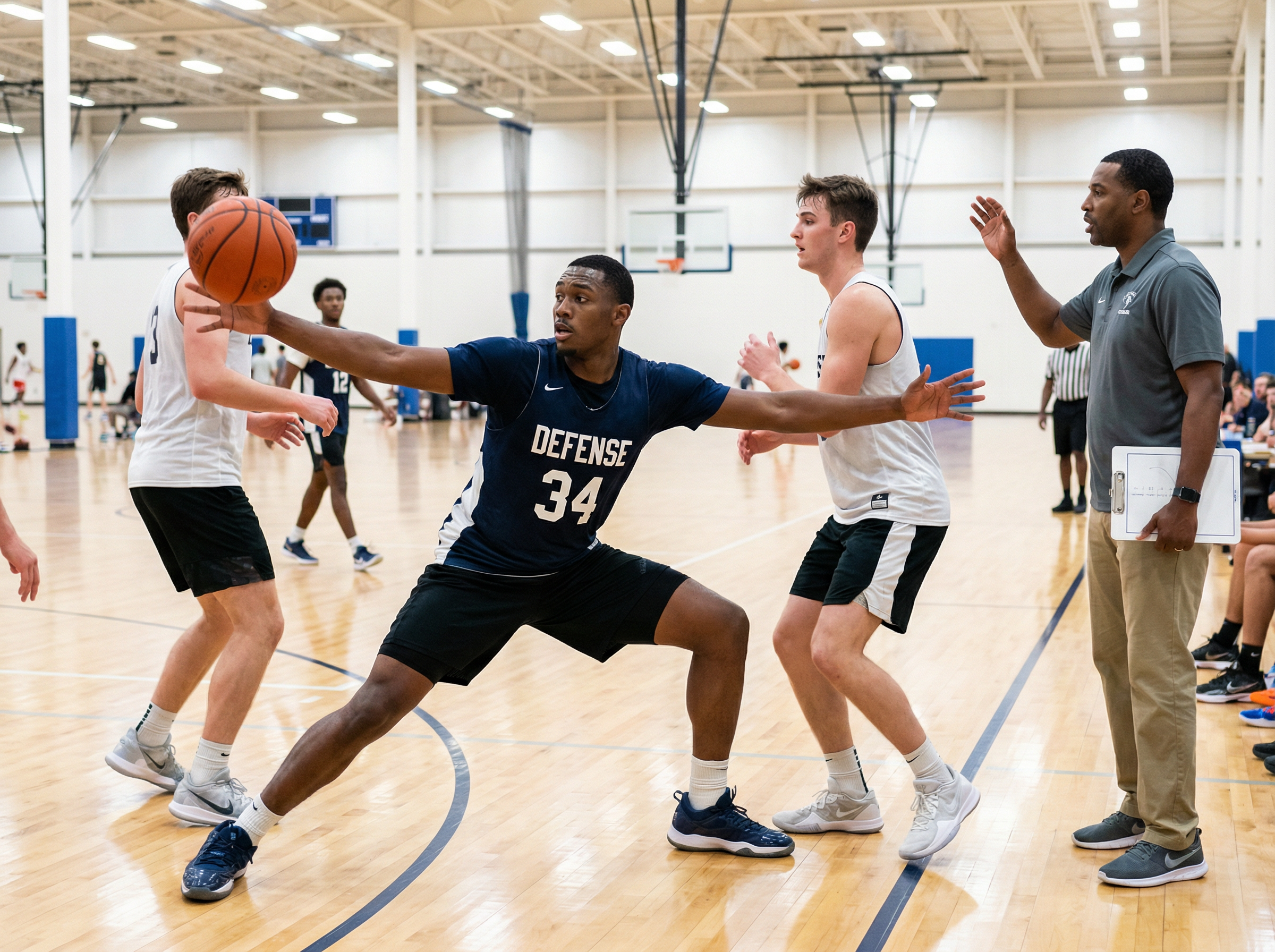
Effective interception development requires consistent, progressive exposure throughout the season rather than occasional standalone sessions. A practical approach is to dedicate ten to fifteen minutes of every training session to one or two interception-focused activities, cycling through the drills above and increasing complexity as the season progresses.
Early in the season, focus on the foundational drills — Mirror and Read, and Timing the Interception — to establish the core principles of anticipation and positioning. As players develop confidence, introduce the team-based Zone Intercept Pressure Drill to translate individual skills into collective defensive action. In the weeks leading up to competition, prioritise the 1v1 Reaction and Recovery Drill to ensure players can manage the risk of attempting interceptions in high-pressure situations.
Tracking interception attempts, successful interceptions, and recovery rates in training can provide valuable data for coaches. This is where modern coaching tools become genuinely useful. The Vanta Coach App — free for volunteer coaches — allows you to log session activities, track player development metrics, and plan progressive training programmes with ease. Rather than relying on handwritten notes or spreadsheets, coaches can use Vanta to build a structured interception training plan that evolves with their squad across the season. For clubs managing multiple teams, Vanta Club provides a complete platform to coordinate training schedules, track compliance, and keep the entire coaching staff aligned.
Common Coaching Mistakes to Avoid
Even experienced coaches can fall into patterns that limit their players' interception development. The most common mistake is drilling for the catch rather than the read — setting up drills where the pass is predictable and the defender simply reacts to the ball's flight. This builds reflexes but not intelligence. Players trained this way often struggle to intercept in live games where passes are disguised and timing is irregular.
A second common error is neglecting recovery training. Coaches who only reward successful interceptions inadvertently teach players to be reckless — to gamble on every pass regardless of the risk. Building recovery mechanics into every interception drill teaches players to be aggressive and disciplined simultaneously, which is the hallmark of elite defensive play.
Finally, many coaches underestimate the role of communication in team interception systems. In both basketball and netball, the most effective interceptions are often set up by a teammate's pressure on the ball handler, not by the intercepting player alone. Building communication habits — calling positions, signalling intentions, confirming coverage — should be a non-negotiable element of every team interception drill.
Key Takeaways for Coaches
Interception training is one of the highest-return investments a coach can make in their defensive programme. The skills it develops — anticipation, positioning, timing, and recovery — transfer directly into every other aspect of defensive play. By structuring your sessions around the four pillars outlined in this guide and progressively building through the five drills provided, you will develop defenders who are not only capable of making interceptions but who understand when and how to attempt them intelligently.
Start with the fundamentals, build progressively, track your players' development, and create a training environment where defensive effort is celebrated as much as scoring. The teams that intercept the most are rarely the most talented — they are the most prepared.
Ready to Take Your Training to the Next Level?
Discover how Vanta Sports helps coaches run better practices. Learn more about Vanta Sports