Netball Technique
Mastering Footwork Landing Techniques: A Coach's Guide to Injury Prevention in Basketball and Netball
Learn how to protect your players from ACL and ankle injuries with evidence-based landing mechanics, five practical drills, and expert coaching cues tailored for basketball and netball coaches of all experience levels.
Why Landing Mechanics Are a Coach's Most Important Responsibility
In high-intensity court sports like basketball and netball, the difference between a game-winning play and a season-ending injury often comes down to a fraction of a second—and a few crucial millimetres of joint alignment. Both sports demand explosive jumps, rapid decelerations, and abrupt changes of direction. While these movements are essential for performance, they place immense stress on the lower extremities, particularly the knees and ankles.
For coaches, understanding and teaching proper landing mechanics is not just about adhering to the rules; it is a fundamental responsibility for player safety. Research consistently shows that female athletes face a significantly higher risk of non-contact anterior cruciate ligament (ACL) injuries compared to their male counterparts—in basketball, the per-season ACL injury risk for female athletes is approximately 1.03%, while in court-based sports like netball, ACL injuries occur at a rate of roughly one in every 100–200 players per calendar year. The encouraging news is that well-designed neuromuscular training programs have been shown to reduce ACL injury risk by up to 70% in female athletes.
This comprehensive guide explores the biomechanics of safe landings, examines the critical footwork rules that govern movement in both sports, and provides five actionable drills that coaches can immediately integrate into their training sessions.

The Biomechanics of a Safe Landing
A safe landing is fundamentally about force absorption and dissipation. When an athlete lands from a jump or a rapid sprint, the ground reaction forces can be several times their body weight. If the body is not properly aligned, these forces are transferred directly to the passive structures of the joints—the ligaments and cartilage—rather than being absorbed by the active musculature.
The Role of Knee and Hip Flexion
The cornerstone of a safe landing is adequate flexion (bending) at both the knees and the hips. Landing with stiff or straight legs forces the knee joint to absorb the brunt of the impact, significantly increasing the risk of ACL rupture.
When an athlete lands softly, they engage the posterior chain—the glutes and hamstrings—alongside the quadriceps. This crouching motion acts like a shock absorber, distributing the kinetic energy evenly throughout the lower body. A softer landing, where the force is transferred to the glutes, hamstrings, quads, and calf muscles, is far more beneficial than a stiff-legged impact. Coaches should cue their players to "land like a ninja" or "sit back into a chair" to encourage this vital hip hinge and knee bend.
Preventing Knee Valgus
One of the most dangerous biomechanical flaws during landing is knee valgus, commonly referred to as "knock knees." This occurs when the knees cave inward towards the midline of the body upon impact. Knee valgus places excessive rotational and lateral stress on the ACL and the medial collateral ligament (MCL), and a hamstring-to-quadriceps strength ratio below 60% has been associated with an increased risk of ACL injury in female athletes.
Preventing knee valgus requires strong gluteus medius muscles, which stabilise the pelvis and control the alignment of the femur. Neuromuscular training programs that focus on strengthening the hip abductors and external rotators are highly effective in correcting this movement pattern. Coaches must vigilantly watch for inward knee collapse during jump-landing assessments and immediately address it through corrective exercises.
Foot Placement and Ankle Stiffness
The position of the foot at the moment of contact is equally critical. Landing on the forefoot or mid-foot—rather than the heel—allows the calf complex to act as an additional shock absorber. Ankle stiffness, developed through targeted calf and ankle stability exercises, ensures that the force is transmitted efficiently up the kinetic chain without excessive joint motion that could lead to sprains.
Navigating the Footwork Rules: Safety Through Control
In netball, the footwork rule is often viewed primarily as a constraint on movement, but its underlying purpose is deeply rooted in player safety. By forcing players to stop and control their momentum before passing, the rule reduces high-speed collisions and promotes deliberate, balanced movement. Basketball, while allowing dribbling, also requires strict control of the pivot foot to avoid travelling violations, demanding similar landing proficiency.
The One-Foot Landing
A one-foot landing occurs when a player catches the ball with one foot already on the ground or lands on one foot first after catching the ball in the air. The first foot to touch the ground becomes the "landing foot" or "pivot foot."
From an injury prevention perspective, the one-foot landing is particularly demanding. The entire force of the deceleration must be absorbed by a single limb. It is crucial that athletes maintain a strong, rigid ankle and avoid letting the knee oscillate laterally. After establishing the landing foot, the player may step with the other foot and pivot, but they must release the ball before re-grounding the landing foot if it is lifted.
The Two-Foot Landing
A two-foot landing happens when an athlete lands on both feet simultaneously. This technique is generally safer as it distributes the impact forces across both legs. Upon a two-foot landing, the player can choose either foot to act as the pivot, providing greater tactical flexibility and stability.
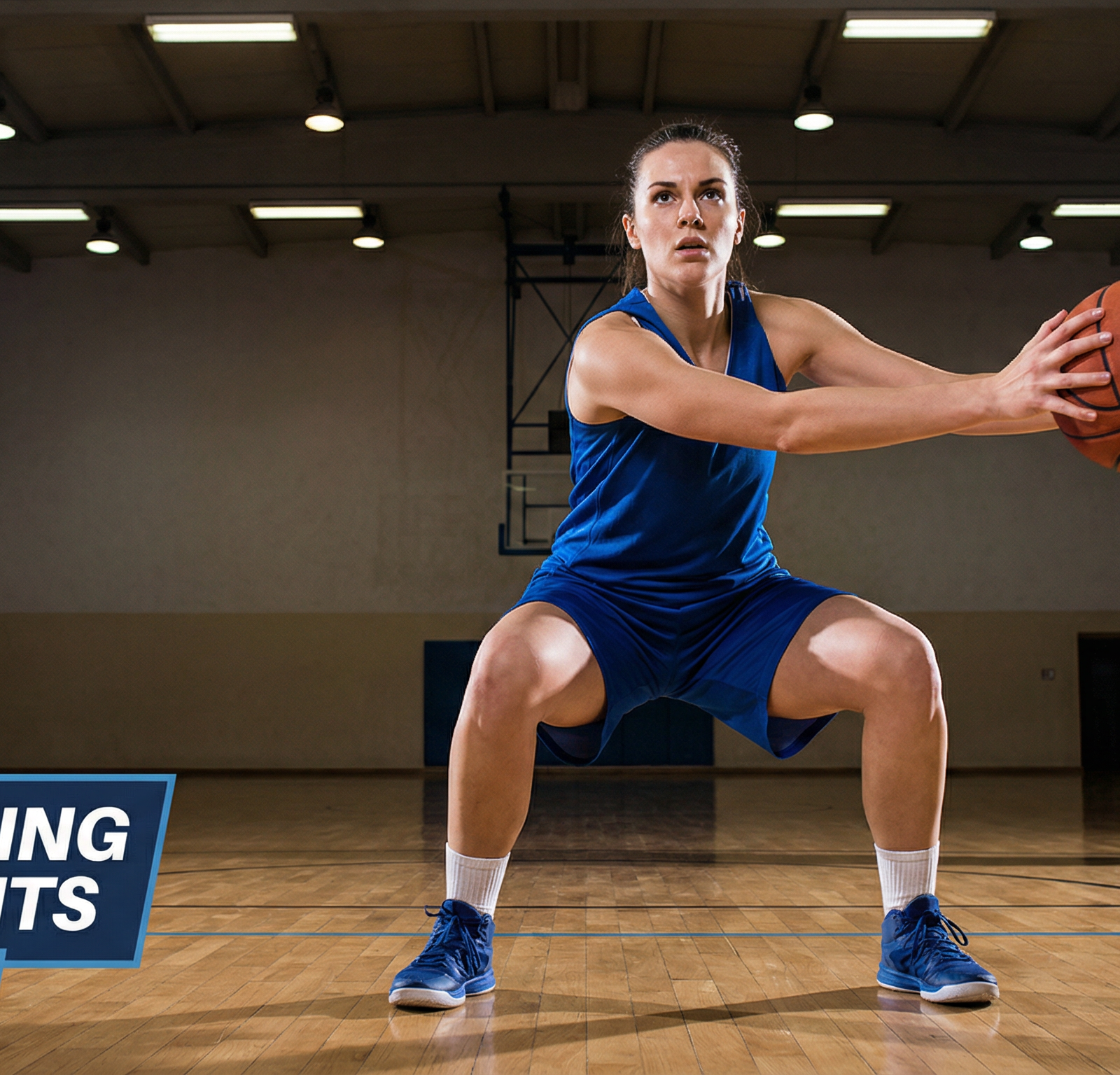
Coaches should encourage the two-foot landing, especially when receiving the ball under heavy defensive pressure or when coming to a sudden halt from a full sprint. A wide, balanced stance with feet shoulder-width apart ensures a solid base of support. The key coaching cue here is: "land wide, land low."
| Landing Type | Key Characteristics | Primary Risk | Coaching Cue |
|---|---|---|---|
| Two-Foot Landing | Both feet contact simultaneously; force distributed evenly | Shuffling feet after contact | "Land wide, land low" |
| One-Foot Landing | Single limb absorbs full deceleration force | Knee valgus; ankle instability | "Strong ankle, knee over toe" |
| Running One-Foot | Momentum absorbed over two steps | Over-striding; loss of balance | "Brake step, then pivot" |
5 Practical Drills to Teach Safe Landing Mechanics
Drill 1: The "Catch, Stop, Pivot" Drill
This drill reinforces the fundamental sequence of receiving the ball while maintaining strict control over the landing and pivot feet. It is suitable for all ages and skill levels.
Setup: Players pair up with one ball, standing approximately five metres apart.
Execution: Player A sprints towards Player B. Player B delivers a firm chest pass. Player A must execute a clean two-foot landing, freeze for one second to demonstrate balance, establish a pivot foot, pivot 180 degrees, and pass back. Repeat for 10 repetitions each side.
Coaching Focus: Watch for "quiet feet" (no shuffling after the initial landing). Ensure the knees are bent and hips are dropped upon catching the ball. Cue: "Freeze on landing—I should be able to see your knees bent and your balance solid before you pivot."
Drill 2: Forefoot Lunges (Ballerinas)
This exercise develops ankle stiffness and eccentric control of the calf complex, which are vital for shock absorption during frequent jumping. Prescription: 2 sets of 20 repetitions.
Execution: Begin standing tall on the balls of the feet. Execute a controlled forward lunge while keeping the heels of both feet elevated throughout. The front foot must remain on the forefoot without dropping flat. Power back to the starting position while staying on the toes and alternate sides.
Coaching Focus: Maintain ankle rigidity and prevent the knee from wobbling during the landing phase. This drill builds the ankle stiffness required for safe one-foot landings at pace.

Drill 3: Lateral Band Walks
Targeting the gluteus medius, this drill is essential for preventing the dangerous inward knee collapse (valgus) during lateral movements and landings. Prescription: 2 sets of 4 passes (approximately 10 metres each).
Setup: Place a resistance band around the athletes' ankles or just above the knees.
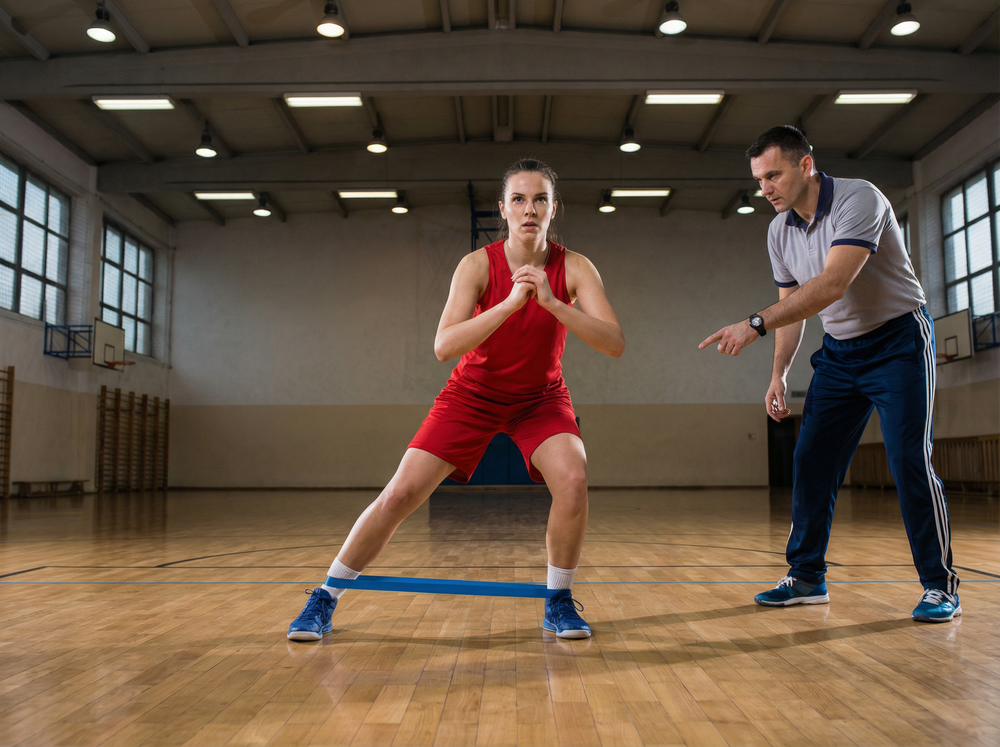
Execution: Assume a micro-squat position with hips and knees slightly flexed. Take controlled steps sideways while keeping the feet parallel and maintaining a wide, stable base.
Coaching Focus: Ensure the knees stay tracked over the mid-foot and do not cave inward against the resistance of the band. This is one of the most evidence-supported exercises for ACL injury prevention in female court sport athletes.
Drill 4: Double-Leg Drop Jump Assessment
This drill serves as both a training tool and a screening method for landing mechanics. It is particularly useful at the start of a season to identify athletes who may need additional neuromuscular conditioning.
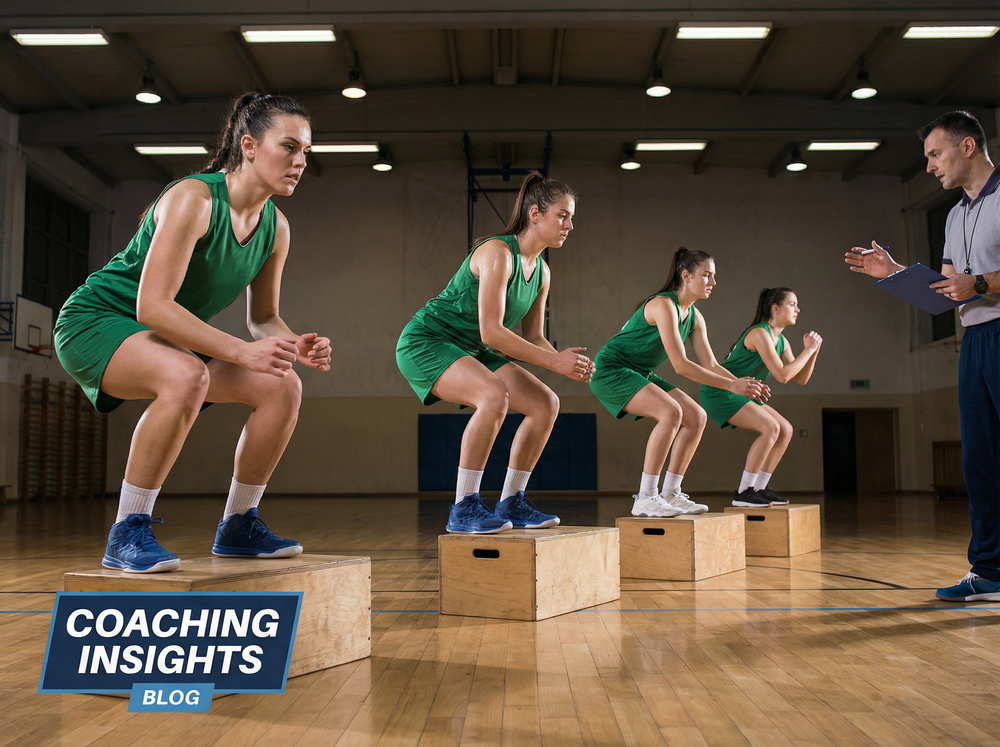
Setup: A low box or step (approximately 30cm high).
Execution: The athlete stands on the box, steps off (does not jump up), and lands on both feet. Immediately upon landing, they perform a maximum vertical jump. Repeat for 5 repetitions.
Coaching Focus: Observe the initial landing carefully. The knees should remain aligned with the toes, and the landing should be soft, absorbing the impact through deep knee and hip flexion. If the knees collapse inward or the landing is stiff and loud, the athlete requires further neuromuscular conditioning before progressing to more demanding plyometric work.
Drill 5: Single-Leg Squat Holds
Basketball and netball frequently test the limits of one leg during cutting and landing. This movement builds the unilateral strength required to protect the knee during takeoff and landing. Prescription: 2 sets of 8–12 repetitions per leg.
Execution: Stand on one leg with the opposite foot hovering off the floor. Slowly descend by hinging at the hips, keeping the knee aligned over the second toe. Lower as far as control allows while keeping the pelvis level, then drive back to the start.
Coaching Focus: Hip and pelvis levelness is critical. Any compensatory dropping of the hip on the non-standing side indicates weakness in the hip abductors that must be addressed to prevent valgus collapse during game-speed landings.

Building a Consistent Injury Prevention Routine
The most effective injury prevention programs are those that are delivered consistently, not just at the start of the season. Research by Hopper et al. (2017) found that a six-week neuromuscular training program—comprising dynamic warm-ups, plyometric exercises, and strength training conducted three times per week—significantly improved landing biomechanics in youth female netball athletes. The key finding was that none of the participants had previously performed structured strength training, underscoring how even a modest, well-structured program can produce meaningful results.
For coaches, the challenge is not finding the right drills—it is ensuring they are planned, tracked, and executed consistently across a busy season. This is where modern sports management tools become invaluable.
Streamlining Your Coaching with Vanta Sports
Implementing a comprehensive injury prevention program requires consistent planning, attendance tracking, and communication with parents and players. Vanta Sports is the purpose-built ecosystem designed specifically for youth basketball and netball clubs, offering everything a coach needs to run safer, better-organised sessions.
The Vanta Coach App is available completely free for volunteer and professional coaches alike. It provides intuitive session planning tools that allow coaches to schedule the specific landing drills outlined above as recurring components of the weekly training plan—ensuring injury prevention remains a consistent priority rather than an afterthought. The app's attendance tracking feature also allows coaches to monitor which players have completed the necessary neuromuscular conditioning sessions, making it easy to identify athletes who may have missed critical training.
Vanta Sports offers a complete, integrated ecosystem tailored to the specific needs of sports organisations:
- Vanta Club provides administrators with a robust platform for managing registrations, processing payments securely via Stripe integration, and overseeing essential safeguarding and compliance tools.
- Vanta Guardian gives parents a dedicated app to manage schedules, handle payments, and stay connected with the team's progress—ensuring families are informed about the club's commitment to player safety.
- Vanta Player App offers players an engaging interface to track their own goals, celebrate achievements, and view upcoming team events.
By utilising Vanta Sports, coaches can spend less time on administrative logistics and more time on the court, focusing on teaching the crucial footwork and landing techniques that keep their athletes safe and performing at their peak.
Key Takeaways for Coaches
Teaching safe landing mechanics is one of the highest-impact investments a coach can make in their players' long-term health and performance. The core principles are straightforward: land with bent knees and hips, keep the knees tracking over the toes, develop strong glutes and ankles through targeted drills, and build these habits through consistent, progressive training. Whether you are coaching a junior netball squad or a competitive basketball team, the drills and principles in this guide provide a practical, evidence-based foundation for injury prevention that can be implemented from your very next training session.
Ready to Take Your Training to the Next Level?
Discover how Vanta Sports helps coaches run better practices. Learn more about Vanta Sports
Tags