Mental Game
Beyond the Playbook: A Coach's Guide to Developing Influential Team Captains in Basketball and Netball
Transform your team captains from titleholders into influential leaders with this comprehensive guide featuring the 3 C's framework, four proven development strategies, and practical drills you can implement immediately.

Beyond the Playbook: A Coach's Guide to Developing Influential Team Captains
In the fast-paced worlds of basketball and netball, coaches meticulously design plays, refine defensive schemes, and drill fundamental skills. But often, the most critical factor in a team's success isn't found in the playbook—it's found in the leadership on the court. A well-chosen and well-developed team captain can be the difference between a team that crumbles under pressure and one that rises to the occasion. They are the coach's extension on the floor, the team's emotional barometer, and the driving force behind a winning culture.
However, great captains are rarely born; they are made. The traditional approach of simply handing the captaincy to the most talented or senior player is a missed opportunity. Modern coaching methodologies emphasize a more intentional and developmental approach. This guide provides basketball and netball coaches with a comprehensive framework, practical strategies, and actionable drills to transform their team captains from mere titleholders into truly influential leaders who can elevate the entire team.
The Modern Team Captain: More Than Just a Title
The role of the team captain has evolved significantly. It's no longer a purely symbolic position. Research and experience from top-level coaches reveal that the most effective teams often employ a collective leadership model [1]. This approach recognizes that leadership shouldn't be the sole responsibility of one or two players. Instead, it encourages every athlete to lead in ways that align with their unique strengths and personalities. While a designated captain is still crucial, their primary role shifts to empowering others and fostering a culture where everyone takes ownership.
As coaching expert Greg Berge notes, "Talent sets the floor, but leadership and culture determine the ceiling for a team." [2]
This modern perspective requires coaches to look beyond raw talent when selecting captains. Instead, they should identify individuals who demonstrate the core qualities of a leader, even if they aren't the star player. The focus is on building a leadership pipeline within the team, where multiple players are equipped with the skills to guide their peers.
The Core Qualities of an Influential Captain
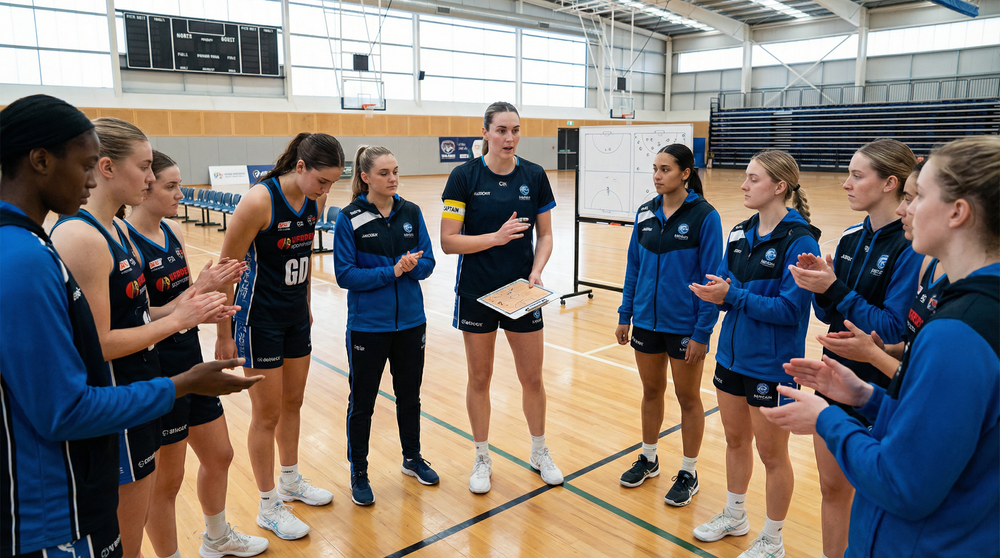
Before you can develop leadership, you must know what you're looking for. While every leader is different, sports psychology experts have identified a common set of characteristics that define exceptional captains. A widely respected framework is the "3 C's" model, which provides a simple yet powerful lens through which to evaluate and develop leadership potential [3].
The 3 C's of Effective Captaincy
Caring: Great captains possess a genuine passion for the game, their teammates, and the collective success of the team. They prioritize the team's needs over their own and are deeply concerned with the well-being of every member. A caring captain treats everyone with respect, addresses conflicts constructively and privately, and actively works to eliminate negative behaviors like gossip that can erode team chemistry.
Courageous: Leadership requires courage. Captains must be willing to "walk the talk," especially during times of adversity. They are the first to step up in high-pressure situations, not because they are fearless, but because they embody the team's core values. This courage extends to holding teammates accountable for their effort and commitment, setting high standards for themselves and others, and demonstrating unwavering trust in their coaches and teammates.
Consistent: The most effective leaders are models of consistency. They bring 100% effort to every practice and game, leaving no room for doubt about their commitment. This consistency also applies to their communication style. Whether they lead by example or are more vocal, they remain authentic to their personality. This authenticity is the foundation upon which they build the fourth, and most critical 'C': Credibility.
Without credibility, a captain's influence is severely diminished. By embodying the 3 C's, captains earn the respect and trust necessary to lead their team effectively, especially when the stakes are high.
The Coach's Playbook: 4 Strategies for Developing Captains
Developing leadership is an ongoing process that requires intentional effort from the coaching staff. Here are four key strategies to build a robust leadership development program for your team captains.
1. Establish a Leadership Framework
Don't leave leadership to chance. Create a formal or informal "Captain's Academy" within your program. This starts with regular, dedicated meetings with your captains.
- Weekly Check-ins: Schedule brief weekly meetings (15-20 minutes) to discuss the team's pulse, upcoming challenges, and any underlying issues. This creates a vital communication channel and allows you to co-lead the team effectively with your captains [4].
- Define the Role: Explicitly discuss your expectations. What are their responsibilities on and off the court? What are the potential challenges they will face? Being transparent about the pressures of leadership helps them prepare for the role.
- Share Your Philosophy: Give your captains a "behind-the-scenes" look into your coaching philosophy. Explain why you make certain decisions and what your core values are. This helps them lead in a way that supports your vision for the team.
2. Intentional Skill Development
Treat leadership as a skill that can be taught and refined, just like a crossover dribble or a defensive stance.
- Communication Training: Effective communication is the cornerstone of leadership. Use drills to practice giving and receiving constructive feedback. Teach captains how to use their body language and tone to build trust and morale.
- Leadership Style Analysis: Record practices and have your captains analyze their own leadership. Are they overly instructional? Not encouraging enough? Research shows that peer leadership is most effective when it's heavy on positive encouragement [5]. Help them find an authentic balance that works for their personality.
3. Empower Through Responsibility
Leaders grow by leading. Provide your captains with meaningful opportunities to take charge.
- Delegate Tasks: Let captains lead warm-ups, organize team-building activities, or even plan a segment of practice. The more ownership you give them, the more they will develop.
- Involve Them in Decisions: Solicit their input on team-related decisions, from minor choices like team meals to more significant issues like addressing a breach of team rules. This demonstrates your trust and invests them more deeply in the team's success.
4. Consistent Mentorship and Feedback
Your role as a coach is to be a mentor to your leaders. They need your unwavering support.
- Be Their Biggest Supporter: The captain's role can be isolating. They are often caught between the coaching staff and their peers. Let them know you have their back and are there to support them through the challenges.
- Provide Constructive Feedback: Regularly debrief their leadership performance. What did they do well? Where can they improve? Use specific examples to make your feedback more impactful.
Drills and Techniques for Leadership Development

Theory is important, but practical application is where real growth happens. Here are four drills you can implement immediately to start developing leadership skills in your captains and the entire team.
Drill 1: The Communication Circle
- Objective: To improve active listening and constructive feedback.
- Execution: After a scrimmage or competitive drill, have the team form a circle. The captain starts by offering one piece of specific, positive feedback to the player on their left. Then, they offer one piece of constructive feedback in a positive and encouraging tone. The player who received the feedback then does the same for the person on their left, and so on, until everyone has had a turn.
- Coaching Points: Emphasize the importance of specific feedback (e.g., Instead of 'Good job,' try 'I loved how you communicated on that screen and switched effectively'). This drill teaches players how to articulate feedback and builds a culture where peer-to-peer coaching is encouraged.
Drill 2: Captain-Led Film Session
- Objective: To develop strategic thinking and communication skills.
- Execution: Instead of the coach leading the entire film session, assign a specific segment (e.g., the last 5 minutes of a close game, or a series of defensive possessions) to your team captain. Task them with analyzing the clips and presenting their findings to the team. They should identify both successful moments and areas for improvement, and facilitate a discussion with their teammates.
- Coaching Points: Guide the captain in their preparation, but let them lead the session. Encourage them to ask open-ended questions to their teammates rather than just lecturing. This drill empowers the captain to think critically about the game and develops their ability to communicate complex ideas to a group.
Drill 3: The Accountability Huddle
- Objective: To build a culture of peer accountability.
- Execution: During practice, if you notice a lack of effort, focus, or a breakdown in team standards, call an "Accountability Huddle." However, instead of you addressing the team, have your captain lead the huddle. Give them the autonomy to address the issue with their peers. The goal is not to place blame, but to refocus the team on their collective goals and standards.
- Coaching Points: This requires a high level of trust between you and your captain. You must empower them to have these difficult conversations. Afterwards, debrief with the captain privately to discuss how it went and provide feedback on their approach. This drill is a powerful way to shift the culture from coach-policed to player-led.
Drill 4: The Daily Leadership Challenge
- Objective: To make leadership a daily, conscious practice.
- Execution: Based on Jeff Janssen's "12 Daily To Do's for Team Captains," create a weekly checklist for your leaders [6]. Each day, challenge them to complete a certain number of leadership actions, such as "Connect with a teammate you don't know well," "Be the first to arrive and the last to leave," or "Compliment a teammate for their effort in a drill." Have them briefly journal their experiences.
- Coaching Points: This drill makes leadership tangible and actionable. It moves it from an abstract concept to a set of daily behaviors. Review their journals during your weekly check-ins to discuss their progress and challenges. This consistent practice builds the habits that form the foundation of effective leadership.
Conclusion: Investing in Leadership is Investing in Winning
Developing influential team captains is one of the highest-return investments a coach can make. It pays dividends not only in the win-loss column but also in the creation of a positive, resilient, and player-driven team culture. By moving beyond the traditional, hands-off approach and actively cultivating leadership skills, you empower your athletes to take ownership of their team and their development.
The strategies and drills outlined in this guide provide a roadmap for this process. It requires a commitment from the coach to mentor, empower, and trust their player-leaders. It requires a willingness to let go of some control and allow the team to grow under the guidance of its captains. The result is a team that is more cohesive, more accountable, and better equipped to handle the pressures of competition. Ultimately, by developing great leaders, you are not just building a better basketball or netball team—you are shaping more confident, capable, and resilient young adults who will lead long after they hang up their jerseys.
References
[1] ResearchGate. (2016). COLLECTIVE LEADERSHIP: A Case Study of the All Blacks. https://www.researchgate.net/publication/307890614_COLLECTIVE_LEADERSHIP_A_Case_Study_of_the_All_Blacks
[2] Berge, G. (2025, February 13). Developing Team Leaders: 5 Tips to Grow Leadership Skills in Players. Dr. Dish Basketball Blog. https://blog.drdishbasketball.com/5-tips-for-growing-leadership-skills-in-basketball-players
[3] Lauer, L., & Blue, K. (n.d.). The 3 C's of Being a Captain. Association for Applied Sport Psychology. https://appliedsportpsych.org/resources/resources-for-athletes/the-3-c-s-of-being-a-captain/
[4] Janssen, J. (n.d.). 20 Strategies to Develop Your Team Leaders. Janssen Sports Leadership Center. http://www.janssensportsleadership.com/resources/janssen-blog/20-strategies-to-develop-your-team-leaders/
[5] Passionate Coach. (2017, June 23). Developing Leadership Skills: How to Prepare your Captain to Become an Influential Leader. https://passionatecoach.com/developing-leadership-skills-captain/
[6] Janssen, J. (n.d.). 12 Daily To Do's for Team Captains. Janssen Sports Leadership Center. https://www.janssensportsleadership.com/resources/janssen-blog/12-daily-to-dos-for-team-captains/
Tags