Netball Technique
Mastering Goal Shooter Movement Patterns: A Complete Coaching Guide for Basketball and Netball
Discover the essential movement patterns, drills, and tactical frameworks that transform goal shooters from static targets into dynamic, defender-beating scoring threats — with practical techniques for both basketball and netball coaches.
Mastering Goal Shooter Movement Patterns: A Complete Coaching Guide for Basketball and Netball
Whether you coach netball's goal circle or basketball's low post, the ability to teach your shooters how to move — not just how to shoot — is what separates good teams from great ones. Goal shooter movement patterns are the foundation of every high-percentage scoring opportunity, and yet they remain one of the most under-coached aspects of youth and community sport. This guide breaks down the essential movement principles, drills, and tactical frameworks that will help your goal shooters become dynamic, unpredictable, and consistently effective.
Why Movement Patterns Matter More Than Shooting Technique
Most coaches spend the majority of practice time on shooting mechanics — and rightly so. But even the most technically gifted shooter will struggle if they cannot create space to receive the ball in a good position. Research from elite coaching programmes consistently shows that the majority of missed scoring opportunities in both netball and basketball are not the result of poor shooting form, but of poor positioning and movement before the catch.
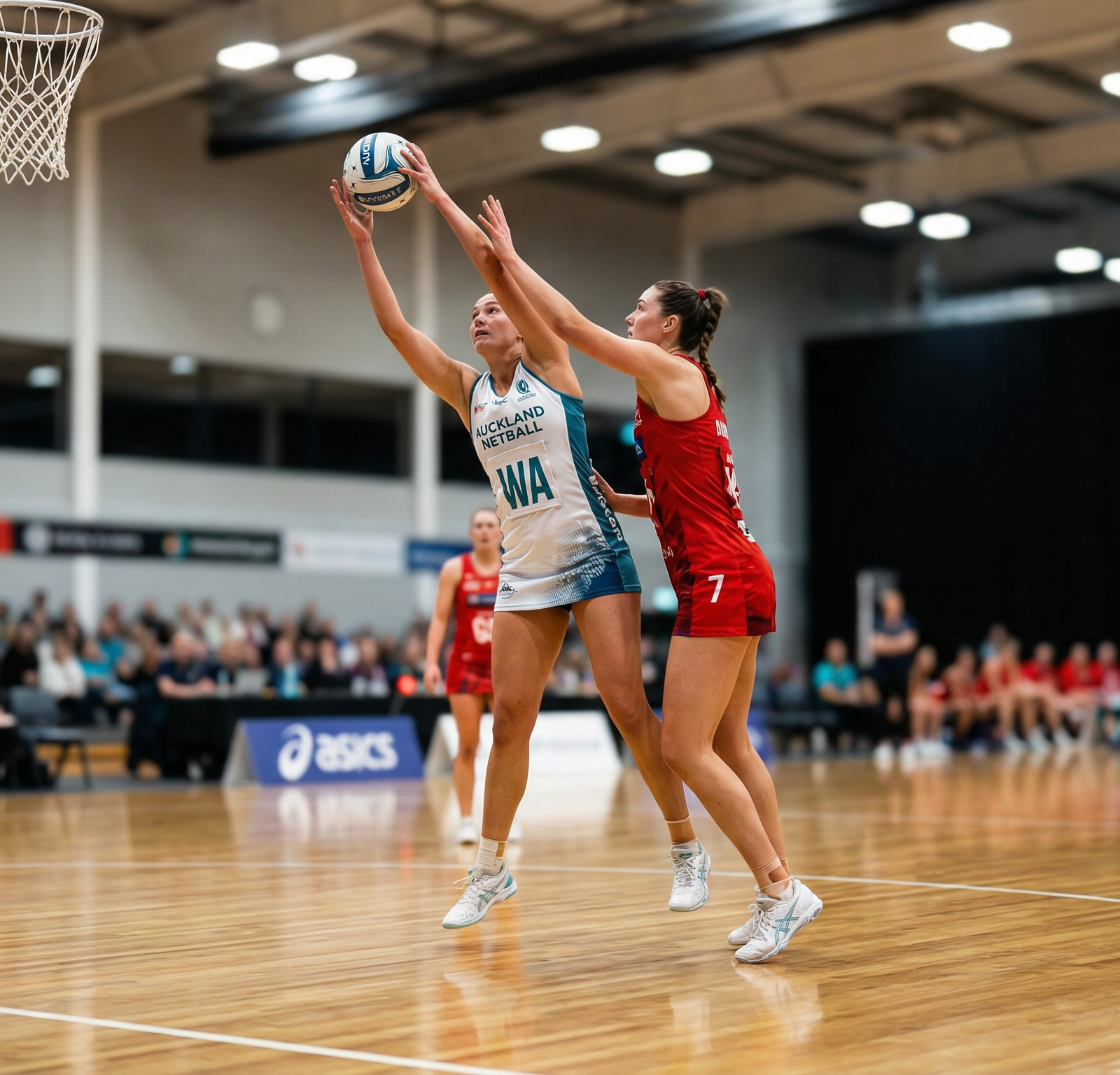
In netball, a goal shooter who stands flat-footed in the circle is easy for a defender to front-mark or shadow, cutting off supply entirely. In basketball, a post player who simply stands on the block waiting for the ball is simple to deny or double-team. The solution in both sports is the same: purposeful, defender-reading movement that creates genuine scoring opportunities rather than hoping the ball arrives.
The key insight for coaches is that movement patterns must be practised, not assumed. Players do not naturally develop effective lead patterns under pressure; they must be drilled until the movements become automatic and instinctive.
Core Movement Principles for Goal Shooters
Before introducing specific drills, it is important to establish the underlying principles that govern effective shooter movement in both sports. These principles apply whether your players are working in a netball goal circle or a basketball paint area.
Change of pace is more powerful than speed. A fast player who moves at the same speed throughout their lead is predictable. A slower player who can accelerate explosively from a standing start — or decelerate suddenly to wrong-foot a defender — will consistently create separation. Teach your shooters to use a "slow-slow-fast" rhythm: drift slowly to set up the defender, then explode into the lead.
Read the defender before committing. Effective movement patterns are reactive, not scripted. Shooters should scan their defender's feet, hips, and weight distribution before deciding which direction to lead. If the defender is shading one side, the shooter should attack the other. This decision-making skill takes time to develop but is transformative when it clicks.
Timing is a team skill. The shooter's movement is only effective if it is coordinated with the ball carrier. Both players must read the same cues and act simultaneously. Coaches should practise movement patterns with a feeder or passer present, not in isolation, so that timing becomes part of the muscle memory.
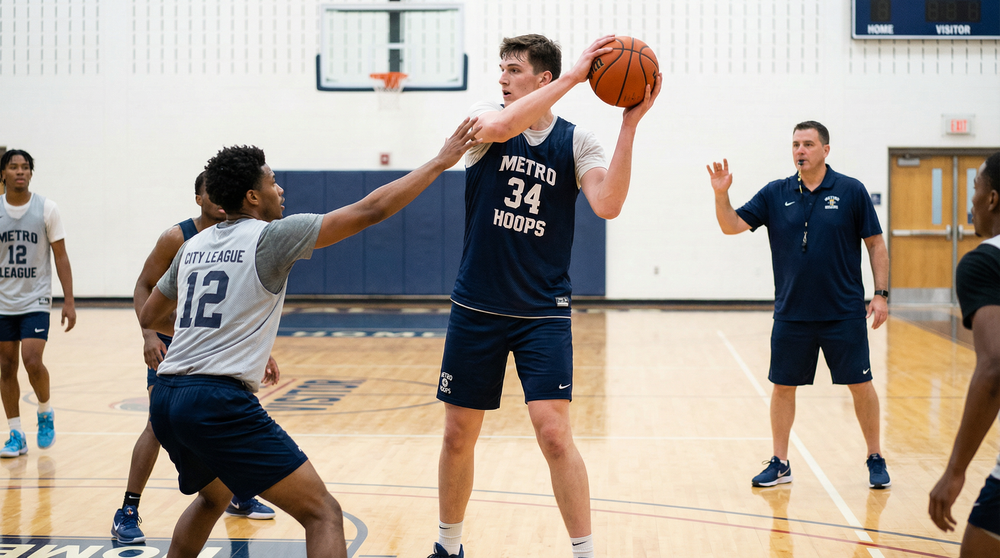
Body position creates the advantage. In netball, a shooter who leads with their body between the defender and the ball creates a shielded catch. In basketball, a post player who seals the defender with their hip and arm before the ball arrives makes the pass easier and the catch more secure. Teach players to use their body as a tool, not just their feet.
5 Essential Goal Shooter Movement Drills
Drill 1: The V-Cut Lead (Netball)
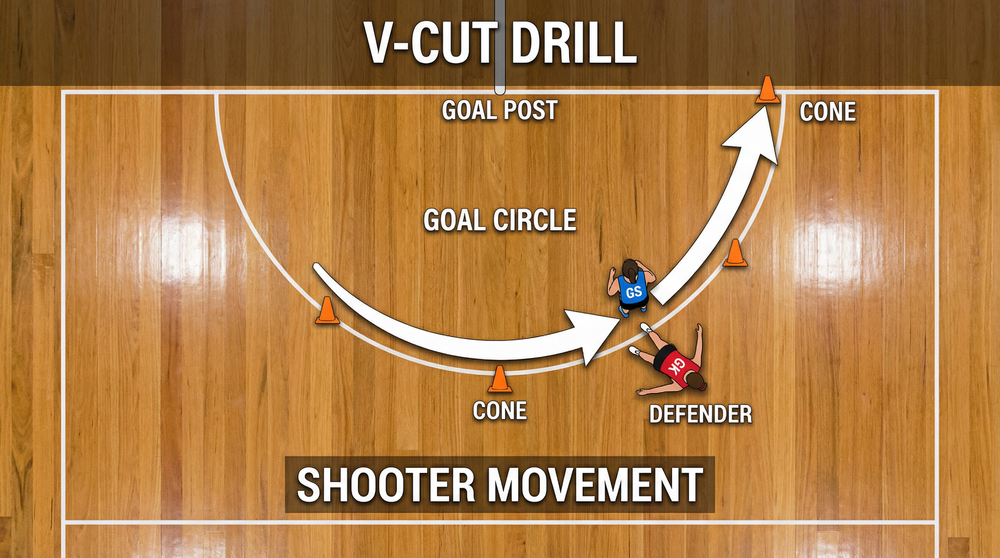
The V-cut is the most fundamental movement pattern for netball goal shooters and goal attacks. It involves driving hard in one direction to commit the defender, then cutting sharply back in the opposite direction to receive the ball.
Setup: One feeder positioned at the edge of the goal circle, one shooter inside the circle, one defender marking the shooter.
Execution: The shooter drives hard towards the post (baseline), plants their outside foot firmly, and then cuts sharply back towards the top of the circle at a 45-degree angle. The feeder delivers the ball into the space the shooter is moving into — not where they were. The shooter catches, steadies, and shoots.
Coaching cues: "Plant and push," "lead with your shoulder," "catch in your shooting position." Repeat 10 times each direction, then add a live defender for competitive pressure.
Progression: Add a second shooter (goal attack) working simultaneously in the circle, requiring both players to avoid occupying the same space — this introduces the circle rotation principle.
Drill 2: Circle Rotation (Netball)
Circle rotation is the advanced movement pattern that separates elite netball shooters from average ones. The principle is simple but demanding: both the goal shooter and goal attack must always occupy different areas of the circle, ensuring that space is constantly created and the defence cannot double up.
Setup: Four cones arranged in a diamond shape inside the goal circle. Two shooters (GS and GA), one feeder outside the circle.
Execution: Both shooters move continuously around the diamond, always staying on opposite sides. The player closer to the ball determines their lead direction first; the second shooter reacts accordingly. The feeder releases the ball to whichever shooter is leading out, and that shooter turns to look at the post. The other shooter immediately changes direction to lead to the post for the next pass.
Key coaching point: Eyes must be on the ball at all times, and hips must face the direction of travel. The connection between the two shooters — reading each other's movement — is the skill being developed here.
Progression: Add a floating defender who can challenge either shooter, forcing the movement to become more reactive and game-realistic.
Drill 3: The Drop Step (Basketball)
The drop step is one of the most reliable post-scoring moves in basketball and is particularly effective for youth players who may lack the outside shooting range to score from distance. It requires the post player to read the defender's position and use a single explosive step to get between the defender and the basket.
Setup: One post player on the low block, one feeder on the wing, one defender.
Execution: The post player catches the ball on the block in a low, wide stance with their back to the basket. They take one dribble towards the middle to engage the defender, then extend their baseline foot backwards past the defender's hip, swing their body around, and finish at the rim with a power layup or short hook.
Coaching cues: "Read the hip," "one dribble, one step," "protect the ball with your body." The move only works if the player has correctly identified which side the defender is overplaying.
Progression: Introduce a shot fake before the drop step to develop the "up and under" counter move, where the player fakes the hook shot, waits for the defender to jump, then steps through for an uncontested layup.
Drill 4: The Seal and Flash (Basketball)
This drill develops two critical basketball post skills: the ability to seal a defender to establish deep post position, and the ability to flash from the weak side to receive a pass in the high post or elbow area.
Setup: One post player on the weak-side block, one player at the top of the key, one defender on the post player.
Execution: The post player uses their body to seal the defender on their back, creating a clear passing lane from the top of the key. They receive the ball in the low post, face up, and read the defender: if the defender is playing high, they drive baseline; if playing low, they step through to the middle. Alternate with a "flash" variation where the post player cuts from the weak-side block to the elbow to receive a pass and shoot a mid-range jumper.
Coaching cues: "Show a target hand," "catch with two hands," "read before you move." This drill builds the decision-making that turns a post player into a genuine scoring threat.
Drill 5: Cardio Shooting Under Fatigue (Both Sports)
One of the most overlooked aspects of goal shooter training is the ability to execute movement patterns and shooting mechanics when fatigued. In the final quarter of a close game, the shooter who has trained their body to perform under physical stress will have a decisive advantage.
Setup (Netball): One ball placed inside the goal circle, one shooter, one retriever. The shooter sprints to the sideline and touches the ground, sprints back, collects the ball, and shoots — all without stopping. The retriever replaces the ball for the next repetition. Complete 8–12 repetitions with 60 seconds rest between sets.
Setup (Basketball): The Mikan Drill — the player alternates hook shots from each side of the basket, collecting their own rebound and immediately shooting from the other side. Complete 20 consecutive makes, then add a sprint to half-court and back between sets to introduce fatigue.
Coaching note: Track shooting percentage in the final two sets compared to the first. The goal is to close the gap between fresh and fatigued performance, which is a direct measure of conditioning and mental resilience.
Tactical Considerations: Reading the Defender
Movement patterns do not exist in isolation — they are always a response to what the defender is doing. Coaches should teach their shooters a simple decision-making framework based on three defensive scenarios:
| Defender Position | Recommended Movement Pattern |
|---|---|
| Front-marking (between shooter and ball) | Drive hard to post, then spin back to receive lob |
| Side-marking (on the ball-side) | V-cut away from the defender's body, lead to open space |
| Behind the shooter | Hold space, use body to shield, call for the ball |
| Floating / off-ball | Explode into lead immediately before defender can recover |
This framework gives shooters a mental model to apply in real game situations, reducing hesitation and increasing the quality of movement decisions under pressure.
Using Technology to Track and Develop Shooter Movement
Modern coaching increasingly relies on data and planning tools to track player development and structure training sessions around individual needs. For coaches working with youth basketball and netball players, having a platform that supports session planning, attendance tracking, and player goal-setting can make a significant difference in how consistently movement patterns are reinforced over a season.
Vanta Sports offers a purpose-built ecosystem designed specifically for youth basketball and netball. The Vanta Coach App — free for volunteer coaches — allows you to plan sessions, track attendance, and monitor player progress over time, so you can ensure that movement pattern drills are built into your programme consistently rather than left to chance. The Vanta Player App lets players set goals and track achievements, which is particularly powerful when you want shooters to take ownership of their movement development between sessions.
For clubs managing multiple teams and age groups, Vanta Club provides a complete management platform covering registrations, payments, and compliance, while Vanta Guardian keeps parents connected to schedules and updates. The integrated design means that coaches, players, parents, and club administrators are all working from the same information — reducing the administrative burden that so often eats into valuable coaching time.
Putting It All Together: A Weekly Movement Pattern Programme
Consistency is the key to developing effective movement patterns. The following framework provides a starting point for integrating these drills into a weekly training schedule:
Session 1 (Technical Focus): V-cut leads and circle rotation (netball) or drop step and seal-and-flash (basketball). Focus on mechanics and decision-making without defensive pressure. 20–25 minutes.
Session 2 (Competitive Application): All drills performed with live defenders. Introduce game-realistic scenarios such as 2v2 in the goal circle or 2v2 in the post. Emphasise reading the defender and making correct movement decisions under pressure. 20–25 minutes.
Conditioning Integration: Finish every session with the cardio shooting drill to reinforce the connection between physical conditioning and shooting performance under fatigue.
Track each player's progress using your coaching platform — noting which movement patterns they execute confidently and which require further development. This data-driven approach ensures that your training time is targeted and effective.
Key Takeaways for Coaches
Effective goal shooter movement is a coachable, learnable skill that develops through deliberate, structured practice. The most important principles to reinforce with your players are: move with purpose rather than habit, read the defender before committing to a direction, coordinate timing with the ball carrier, and use the body to create and protect space. Introduce the five drills outlined in this guide progressively — starting with technical mastery in unopposed conditions, then building to competitive application with live defenders.
The coaches who invest time in movement pattern training will see their shooters become genuinely difficult to defend, creating high-percentage scoring opportunities that translate directly into results on match day.
Ready to Take Your Training to the Next Level?
Discover how Vanta Sports helps coaches run better practices. Learn more about Vanta Sports
Tags