Netball Technique
Goalkeeper Blocking and Deflection Drills: The Complete Coaching Guide for Basketball and Netball
Master the art of goalkeeper blocking and deflection with five immediately applicable drills for basketball and netball coaches — from shadow block mechanics to advanced outside arm techniques.
Goalkeeper Blocking and Deflection Drills: The Complete Coaching Guide for Basketball and Netball
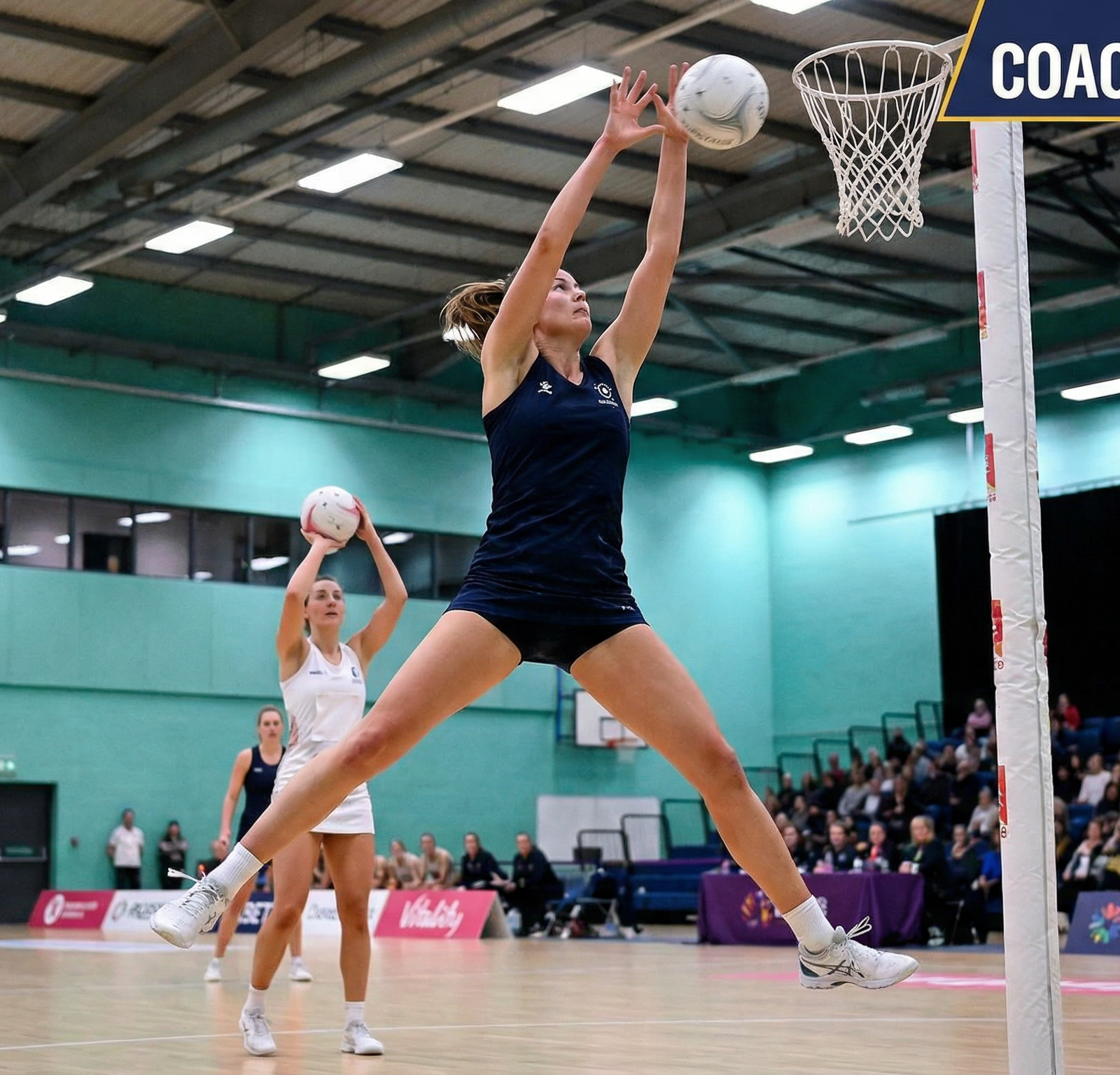
Whether you coach netball's goal circle or basketball's painted lane, the goalkeeper or last-line defender is the player opponents fear most. A well-trained goalkeeper does not simply react to threats — they anticipate, position, and execute with precision. Blocking and deflection skills are among the most technically demanding in both sports, requiring explosive athleticism, sharp timing, spatial awareness, and an ironclad understanding of the rules. This guide breaks down the core principles and provides five immediately applicable drills to help your goalkeepers dominate the defensive end.
Why Blocking and Deflection Skills Are Non-Negotiable
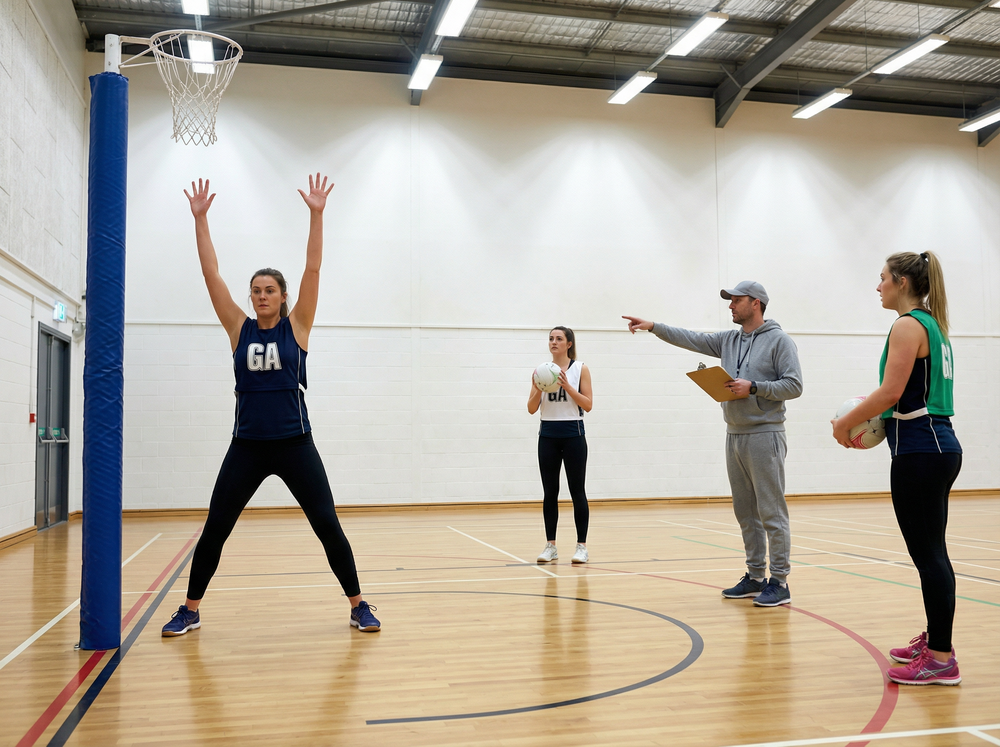
In netball, the Goal Keeper (GK) and Goal Defence (GD) are the last barrier between the opposition and the post. Their ability to deflect feeds into the circle, block shots at the post, and intercept cross-court passes can completely neutralise a well-drilled attacking unit. Research from elite netball programmes consistently shows that teams with high intercept rates in the defensive third win significantly more possession battles per game.
In basketball, shot-blocking is equally transformative. According to USA Basketball, shot blockers who stop lay-ups — the highest-percentage shot in the game — directly suppress an opponent's field goal percentage and shift momentum. A single well-timed block can energise a team and deflate an opponent in equal measure.
The challenge for coaches is that blocking and deflection are instinctive skills that must be built on a technical foundation. Without proper mechanics, defenders foul more than they block, give away penalties, and leave their team short-handed. The drills below address both the mechanics and the decision-making that separates elite goalkeepers from average ones.
Core Principles Before You Drill
Before introducing any blocking or deflection drill, coaches should establish these non-negotiable fundamentals with their players.
| Principle | Netball Application | Basketball Application |
|---|---|---|
| Distance and timing | Minimum 3 feet (0.9m) from ball-carrier before raising arms | One-step rule — only attempt if reachable in one step |
| Arm mechanics | Two-handed challenge overhead, outside arm for deflections | Straight arm up, use hand closest to the ball |
| Body position | Knees bent, weight on balls of feet, angled stance | Low defensive stance, chest to the shooter |
| Recovery | Return to 3ft and arms up immediately after a miss | Sprint back into help position after every attempt |
| Decision-making | Read the feeder's eyes, not just the ball | Never chase perimeter jump shots — high foul risk |
Coaches should drill these principles in isolation before combining them into full game-context scenarios. Rushing to complex drills without establishing mechanics leads to ingrained bad habits that are far harder to correct later.
Drill 1: The Shadow Block (Netball — Beginner to Intermediate)
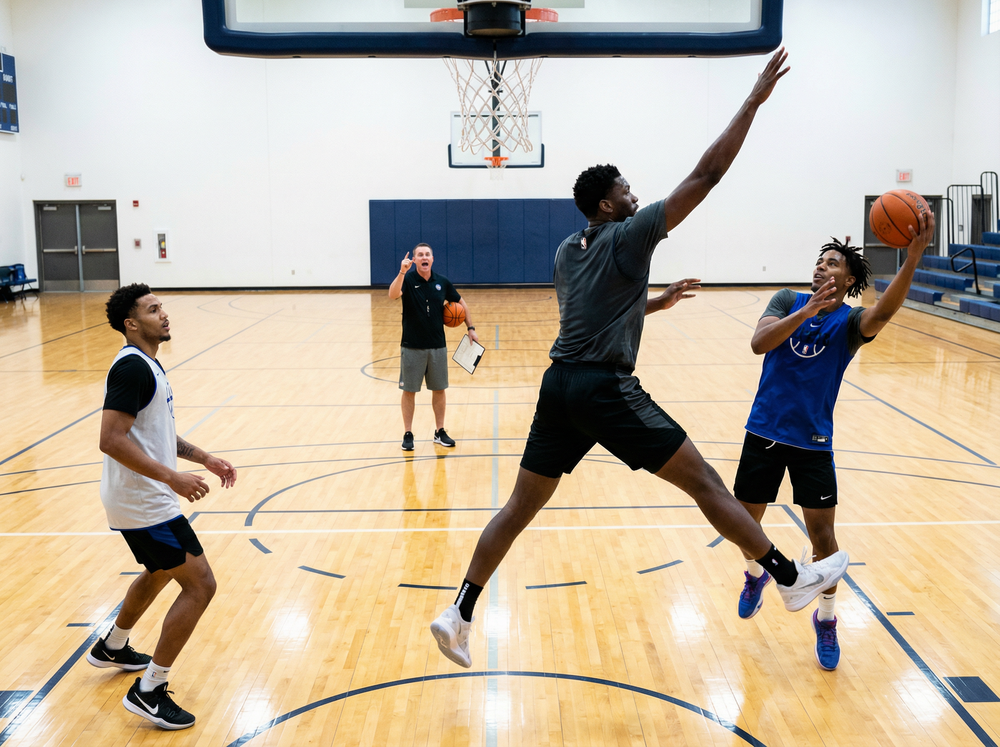
Purpose: Develop correct arm mechanics and distance awareness for shot deflection at the post.
Setup: One GS stands at the post with a ball. One GK marks from behind and to the side. A feeder stands at the edge of the circle.
Execution: The feeder passes the ball to the GS at the post. The GK must move their feet to establish the 3-foot distance, raise both arms overhead, and attempt to deflect or block the shot. The GS takes a shot after receiving. Rotate roles every five attempts.
Coaching Points: The most common error at this stage is the GK reaching in or leaning forward, which draws an obstruction penalty. Emphasise that the block comes from vertical arm extension, not forward lean. The GK's feet do the work to close distance; the arms stay straight up. Encourage players to call "BALL!" as they raise their arms to build communication habits simultaneously.
Progression: Add a second feeder on the opposite side of the circle. The GS can now choose which side to receive from, forcing the GK to read the feeder's body language and adjust their positioning dynamically.
Drill 2: The Two-Block Reaction Drill (Basketball — Beginner to Intermediate)
Purpose: Build explosive lateral movement and shot-blocking timing from a central defensive position.
Setup: Two offensive players line up outside the lane, each with their inside foot on the block. The defender sets in the middle of the lane between them. A coach stands at the top of the key with two balls.
Execution: The coach passes to one offensive player. That player takes one direct step to the basket — no fakes, no dribble. The defender steps across and attempts to block with their inside hand in one step. The coach then passes to the second offensive player, and the drill repeats. The coach controls the timing of passes to vary the challenge.
Coaching Points: Emphasise that the defender must maintain balance throughout the block attempt. A blocked shot that sends the defender stumbling is a wasted possession — the offensive team recovers the ball. Teach players to block with the arm straight up and the hand flat, not swinging across, which causes fouls. After each block attempt, the defender resets immediately to the centre of the lane.
Progression: Introduce a third offensive player at the free-throw line. After the first block attempt, the coach passes to the high post, and the defender must recover to contest that shot as well. This mirrors real game rotations.
Drill 3: The GK Intercept Zone Drill (Netball — Intermediate)
Purpose: Train the GK to read passing lines, force attackers to the outer circle, and win possession through anticipation rather than reaction.
Setup: Inside the shooting circle, use cones to create a smaller inner semicircle, dividing the circle into an inner zone and an outer zone of roughly equal width. A feeder starts in the goal third on one side. The GS runs out of the circle to receive the pass. An attacker waits on the far edge of the circle.
Execution: The GS receives the feeder's pass and can either pass to the attacker on the far edge, or return the ball to the feeder who has moved into the circle. Whichever player receives the ball passes it back to the attacker once the attacker has moved inside the circle. Scoring: if the attacker receives the ball in the inner zone, they score 1 point; if the GK forces the attacker to receive in the outer zone or makes a successful intercept, the GK scores 1 point. First to 5 wins.
Coaching Points: The GK's primary goal is to deny the inner circle, not to gamble recklessly for intercepts. A GK who overcommits and misses gives the GS a clear path to goal. Teach the GK to read the feeder's eyes and shoulder angle to anticipate the pass direction before the ball is released. If the GK misses an intercept, they must immediately reset feet to 3ft and raise arms — no dwelling on the miss.
Progression: Allow the GS to take a shot if they receive the ball, and have the GK recover to contest the shot immediately after missing the intercept. This adds a second decision-making layer and builds resilience.
Drill 4: The Outside Arm Deflection Drill (Netball — Intermediate to Advanced)
Purpose: Develop the technically demanding outside arm deflection, a critical skill for GKs defending a GS who holds the ball high and turns away from the defender.
Setup: GS stands near the post with the ball held high. GK marks from behind, slightly to the side. No feeder required for the basic version.
Execution: The GS holds the ball at full extension above their head and simulates a shooting or passing motion. The GK must use their outside arm — the arm furthest from the GS's body — to reach over and deflect the ball, without making contact with the GS's body or arms. The drill is initially performed in slow motion to establish the correct arm path, then gradually increased to game speed.
Coaching Points: This drill addresses one of the most penalised defensive errors in elite netball. The inside arm deflection almost always results in contact with the shooter's body or arms. The outside arm approach allows the GK to challenge the ball from a legal angle. Coaches should film this drill from behind the GK so players can review their arm path. Praise correct technique loudly and immediately — positive reinforcement accelerates skill acquisition in technical drills.
Progression: Add a feeder who passes the ball to the GS at varying heights and angles. The GK must now read the incoming pass, position correctly, and execute the outside arm deflection in one fluid movement.
Drill 5: Help and Recover — Closeout to Block (Basketball — Intermediate to Advanced)
Purpose: Simulate real game scenarios where the defender must first contest a pass and then recover to block a drive to the basket.
Setup: Offensive players are positioned at the high post and in the strong-side corner. The defender guards the high post. A coach stands on the wing with two balls.
Execution (Corner to Top Option): The coach passes to the corner player. The defender contests the pass. The coach then passes to the high post player, who drives directly to the basket with a maximum of two dribbles. The defender sprints to recover and attempts to block or alter the shot. Repeat with the ball starting at the top and moving to the corner (Top to Corner Option) and from the strong side to the weak side (Strong-Weak Option).
Coaching Points: This drill teaches defenders that shot-blocking is a team skill, not an individual one. The defender must make a smart decision on each recovery — sometimes the correct play is to take the charge rather than attempt a block. Emphasise that a blocked shot that goes out of bounds is still a possession change, while a foul on a blocked shot gives the opponent free throws. Decision-making under fatigue is the real skill being developed here.
Progression: Remove the "no fakes" restriction and allow offensive players to use one pump fake before driving. The defender must now resist the pump fake and stay grounded before recovering to block.
Coaching Tips for Accelerating Development
Effective goalkeeper coaching goes beyond running drills. The following principles, drawn from elite coaching methodology, will accelerate your players' development.
Use video review. Blocking and deflection errors are often invisible to players in the moment. A short video review session after practice — even using a smartphone — allows players to see their arm path, foot positioning, and timing in a way that verbal feedback cannot replicate.
Build decision-making into every drill. Drills that only have one correct outcome train robots, not athletes. Wherever possible, give the attacker a choice (shoot or pass, drive left or right) so the defender must read and react rather than simply execute a pre-programmed movement.
Reward effort on missed blocks. A GK who attempts a legal block and misses is doing their job. A GK who never attempts a block for fear of fouling is a liability. Create a culture where courageous, technically correct attempts are praised even when unsuccessful.
Track your data. Monitoring intercept rates, deflection attempts, and penalty counts across training sessions gives you objective evidence of improvement. Coaches who track these metrics can identify patterns — for example, a GK who deflects well in drills but fouls in games may be struggling with the added pressure of a live opponent.
How Vanta Sports Helps Coaches Run Better Goalkeeper Sessions
Planning and tracking goalkeeper development sessions takes time — time that volunteer coaches rarely have in abundance. The Vanta Coach App is free for volunteer coaches and purpose-built for youth basketball and netball, allowing you to plan sessions, track attendance, and monitor individual player progress all in one place. You can build a library of your favourite goalkeeper drills, schedule them across your season, and share session plans with assistant coaches instantly.
For clubs managing multiple teams and age groups, Vanta Club provides the complete management infrastructure — from player registrations and compliance documentation to integrated payments via Stripe. Parents stay connected through Vanta Guardian, receiving session updates and schedule changes in real time, while players can track their own development milestones through the Vanta Player App. It is a complete ecosystem designed specifically for the realities of youth basketball and netball — not a generic sports app retrofitted for the purpose.
Ready to Take Your Training to the Next Level?
Discover how Vanta Sports helps coaches run better practices. Learn more about Vanta Sports
Tags