Sports Parent
The Balancing Act: Managing Multiple Children's Sports Activities Efficiently
Juggling multiple children's sports schedules doesn't have to be chaos. Discover practical strategies, essential basketball and netball drills, and how Vanta Sports can transform the way coaches and parents manage youth sports.
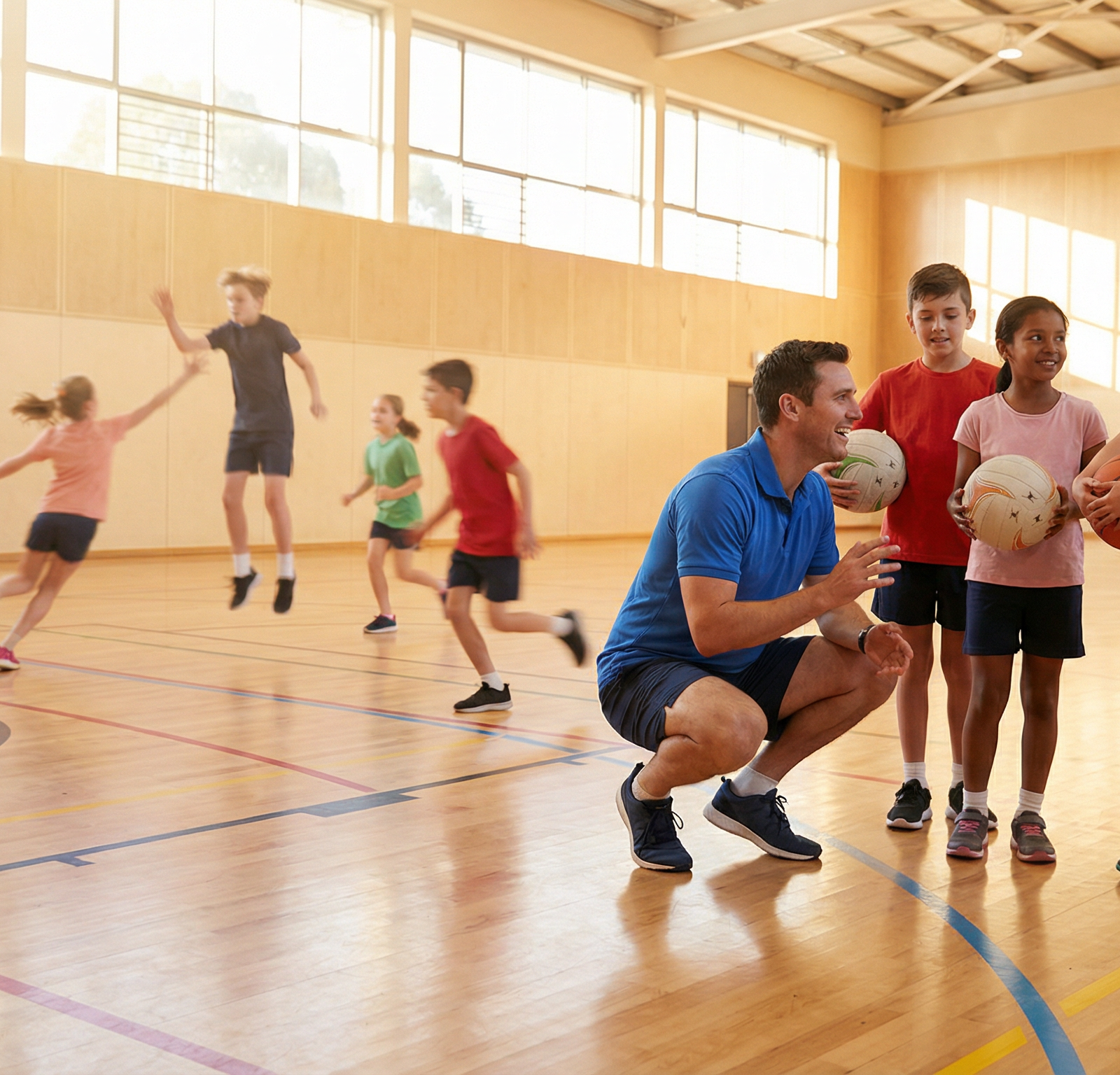
The Balancing Act: Managing Multiple Children's Sports Activities Efficiently
As youth sports become increasingly structured and demanding, parents and coaches are facing unprecedented challenges in managing schedules, commitments, and player development. For families with multiple children participating in sports like basketball and netball, the logistics can quickly escalate into a full-time job. Recent statistics reveal that families spend over three hours a day managing youth sports when a child has a practice or game. Furthermore, the pressure of early specialization and overscheduling has led to alarming rates of burnout, with nearly 70% of kids quitting organized sports by age 13.
For volunteer coaches—who are often parents themselves—the challenge is twofold: managing their own family's schedule while effectively leading a team of multi-sport athletes. The traditional approach of rigid practice plans and mandatory attendance is no longer sustainable. Instead, modern coaches must embrace flexibility, prioritize fundamental skill development, and leverage technology to streamline communication and organization.
This comprehensive guide explores practical strategies for managing multiple children's sports activities efficiently, offering actionable advice for basketball and netball coaches. We will delve into flexible practice planning, essential drills, and how innovative tools like Vanta Sports can transform the youth sports experience.
The Impact of Multi-Sport Participation
While the logistical challenges of managing multiple sports are significant, the benefits for young athletes are undeniable. Research consistently shows that multi-sport athletes are less prone to overuse injuries and burnout compared to those who specialize early. By participating in different sports, children develop a broader range of motor skills, improve their overall athleticism, and maintain a higher level of enthusiasm for physical activity.
For basketball and netball coaches, having multi-sport athletes on the roster should be viewed as an asset rather than a liability. The footwork developed in soccer, the hand-eye coordination honed in baseball, and the agility gained from volleyball all translate into improved performance on the court. The key to unlocking this potential lies in adapting coaching methodologies to accommodate the realities of modern youth sports schedules.
Strategies for Flexible Practice Planning
When coaching a team of multi-sport athletes, it is inevitable that players will occasionally miss practices due to conflicting commitments. Rather than fighting this reality, successful coaches adapt their practice plans to ensure that absences do not derail the team's progress.
1. Emphasize Core Fundamentals Over Complex Plays
In a setting where attendance fluctuates, relying heavily on complex, multi-step plays can lead to confusion on game day. Instead, focus the majority of practice time on mastering core fundamentals: dribbling, passing, shooting, and defensive positioning. By ensuring that every player possesses a strong foundation, the team can perform effectively even when key individuals are absent.
2. Utilize the "Whole-Part-Whole" Method
The "whole-part-whole" method is an effective instructional approach for teaching new skills and concepts. Begin by demonstrating the complete skill or play (the whole), then break it down into smaller, manageable components (the parts) for focused practice. Finally, integrate the components back into the complete action. This method allows players who missed previous sessions to quickly grasp the overarching concept before focusing on specific details.
3. Implement Small-Sided Games
Small-sided games (e.g., 3v3 or 4v4) are invaluable tools for maximizing player engagement and repetitions. These games replicate game-like scenarios in a condensed format, requiring players to make rapid decisions and apply fundamental skills under pressure. Because small-sided games require fewer players, they are easily adaptable to fluctuating attendance numbers.
Practical Drills for Basketball and Netball
To help coaches optimize their practice time, here are five versatile drills that can be easily incorporated into both basketball and netball sessions:
Drill 1: The Continuous Passing Weave (Basketball & Netball)
- Objective: Improve passing accuracy, timing, and communication while moving at game speed.
- Setup: Divide the team into three lines at the baseline.
- Execution: The player in the middle line starts with the ball and passes to one of the outside players. After passing, the player immediately runs behind the recipient of the pass. The recipient then passes to the player in the third line and runs behind them. This continuous weaving pattern progresses down the court, culminating in a layup (basketball) or a shot on goal (netball).
- Coaching Points: Emphasize crisp, chest-level passes and encourage players to communicate clearly by calling out names. Ensure players are catching the ball while moving toward the target.
Drill 2: Defensive Stance and Slide (Basketball & Netball)
- Objective: Develop proper defensive posture, lateral quickness, and reaction time.
- Setup: Players spread out across the court, ensuring they have enough space to move laterally. The coach stands at the front, facing the team.
- Execution: On the coach's command, players drop into a low, athletic defensive stance (knees bent, back straight, arms active). The coach points in various directions (left, right, forward, backward), and the players must quickly slide in the indicated direction while maintaining their stance.
- Coaching Points: Remind players to avoid crossing their feet while sliding. Emphasize the importance of staying low and keeping active hands to disrupt passing lanes.
Drill 3: Pressure Shooting (Basketball & Netball)
- Objective: Enhance shooting accuracy and composure under simulated game pressure.
- Setup: Pair players up, with one acting as the shooter and the other as the defender. The shooter starts near the basket or goal circle.
- Execution: The shooter receives a pass and immediately prepares to shoot. The defender closes out aggressively but without making physical contact, attempting to contest the shot. After a set number of attempts, players switch roles.
- Coaching Points: Focus on maintaining proper shooting mechanics despite the defender's presence. Encourage shooters to elevate and release the ball at the peak of their jump (basketball) or establish a strong, balanced base before shooting (netball).
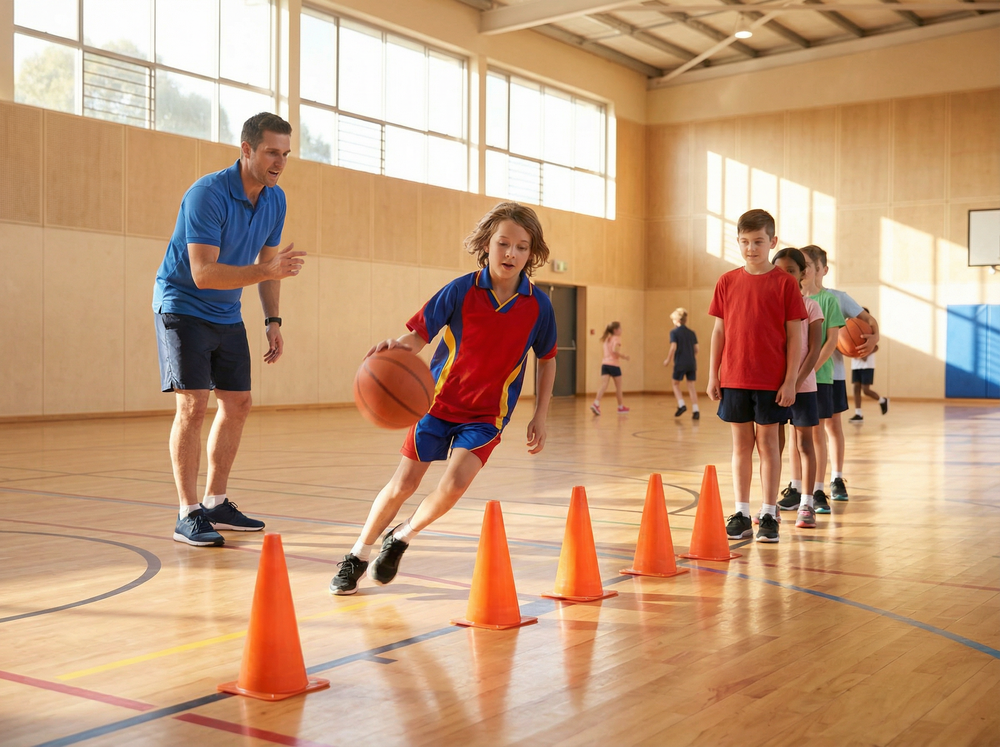
Drill 4: Cone Dribbling for Ball Control (Basketball)
- Objective: Improve ball-handling skills, hand-eye coordination, and court awareness.
- Setup: Place 5–7 cones in a straight line, approximately three feet apart.
- Execution: Players dribble through the cones, alternating between their dominant and non-dominant hands. Encourage them to keep their heads up to scan the court. As they improve, challenge them to increase their speed and add crossover moves between the cones.
- Coaching Points: Emphasize a low, controlled dribble and the importance of seeing the floor, not just the ball.
Drill 5: Partner Passing for Precision (Basketball & Netball)
- Objective: Enhance passing accuracy, reaction time, and communication.
- Setup: Players pair up and stand 10–15 feet apart.
- Execution: Players practice a variety of passes — chest passes, bounce passes, and overhead passes. Focus on proper footwork and hand positioning for each type of pass. To increase the difficulty, have players move further apart or add a defender to simulate game pressure.
- Coaching Points: Stress the importance of crisp, accurate passes and clear communication between teammates.
Streamlining Organization with Vanta Sports
While flexible coaching strategies are essential, managing the administrative and logistical aspects of youth sports remains a significant hurdle. Coordinating schedules, tracking attendance, and communicating with parents can quickly overwhelm even the most dedicated volunteer coach. This is where purpose-built technology becomes indispensable.
Vanta Sports is a comprehensive ecosystem designed specifically to address the unique challenges of youth basketball and netball. By centralizing communication, scheduling, and administration, Vanta Sports empowers coaches, clubs, and parents to navigate the complexities of modern youth sports with ease.
The Vanta Coach App: Empowering Volunteer Leaders
For volunteer coaches, the Vanta Coach App is a game-changer. Available completely free of charge, this intuitive application streamlines team management, allowing coaches to focus on what they do best: developing young athletes.
- Effortless Session Planning: Coaches can easily create and share detailed practice plans, ensuring that all players — even those who miss a session — are aware of the team's focus and objectives.
- Simplified Attendance Tracking: With a few taps, coaches can monitor attendance, identify patterns of absence, and adjust their practice plans accordingly.
- Direct Communication: The app facilitates seamless communication with parents and players, eliminating the need for fragmented email chains and text message groups.
Vanta Club: Comprehensive Administration
For club administrators, Vanta Club provides a robust platform for managing the entire organization. From streamlining registrations and processing secure payments via Stripe to ensuring compliance with safeguarding protocols, Vanta Club reduces administrative overhead and enhances operational efficiency.
- Integrated Payment Infrastructure: The seamless integration with Stripe ensures that registration fees, uniform costs, and tournament expenses are collected securely and efficiently.
- Safeguarding and Compliance: Vanta Club includes built-in tools to help organizations track coach certifications, background checks, and other essential compliance requirements, ensuring a safe environment for all participants.
Vanta Guardian: Keeping Parents Connected
For parents managing multiple children's sports commitments, Vanta Guardian is an indispensable companion. The app provides a centralized view of all schedules, real-time notifications about session changes, and a secure portal for managing payments — all in one place. Rather than juggling multiple communication channels, parents can stay fully informed and engaged with their child's sports journey through a single, intuitive interface.
Vanta Player App: Engaging Young Athletes
The Vanta Player App empowers young athletes to take ownership of their development. Players can track their personal goals, view their achievements, and stay connected with their team's upcoming events. By giving players a sense of agency and visibility over their progress, the app fosters intrinsic motivation and a deeper commitment to the sport.
Cultivating a Positive Team Culture
Ultimately, the goal of managing multiple children's sports activities efficiently is to create a positive, enriching experience for everyone involved. When coaches and parents are organized and communicative, the stress associated with youth sports diminishes, allowing the focus to return to player development and enjoyment.
Foster Open Communication with Parents. Establish clear lines of communication from the outset of the season. Hold a preseason meeting to outline expectations regarding attendance, playing time, and team rules. Encourage parents to communicate scheduling conflicts as early as possible, allowing you to adjust practice plans proactively.
Celebrate Multi-Sport Participation. Rather than viewing multi-sport participation as a detriment, actively celebrate it. Acknowledge the diverse skills that players bring from other sports and highlight the long-term benefits of athletic versatility. This approach fosters a supportive environment where players feel valued for their overall athletic development.
Prioritize Fun and Engagement. In the pursuit of competitive success, it is easy to lose sight of the primary reason children participate in sports: to have fun. Incorporate engaging, game-like drills into your practices, and ensure that every player has the opportunity to contribute and succeed. A positive, enjoyable team culture is the most effective antidote to burnout and attrition.
Conclusion
Managing multiple children's sports activities requires a delicate balance of organization, flexibility, and empathy. By adapting practice plans to accommodate multi-sport athletes, focusing on core fundamentals, and leveraging innovative platforms like Vanta Sports, coaches and parents can navigate the complexities of youth sports with confidence. The result is a more efficient, enjoyable, and developmentally sound experience that empowers young athletes to thrive both on and off the court.
Ready to Take Your Sports Parenting to the Next Level?
Stay connected with your child's sports journey using Vanta Guardian. Learn more about Vanta Sports
Tags