Netball Technique
Chest Pass Accuracy Drills for Netball: 5 Proven Techniques to Transform Your Team's Ball Movement
Master the most important pass in netball with these five proven chest pass accuracy drills — complete with coaching cues, progressions, and common error fixes for coaches at every level.
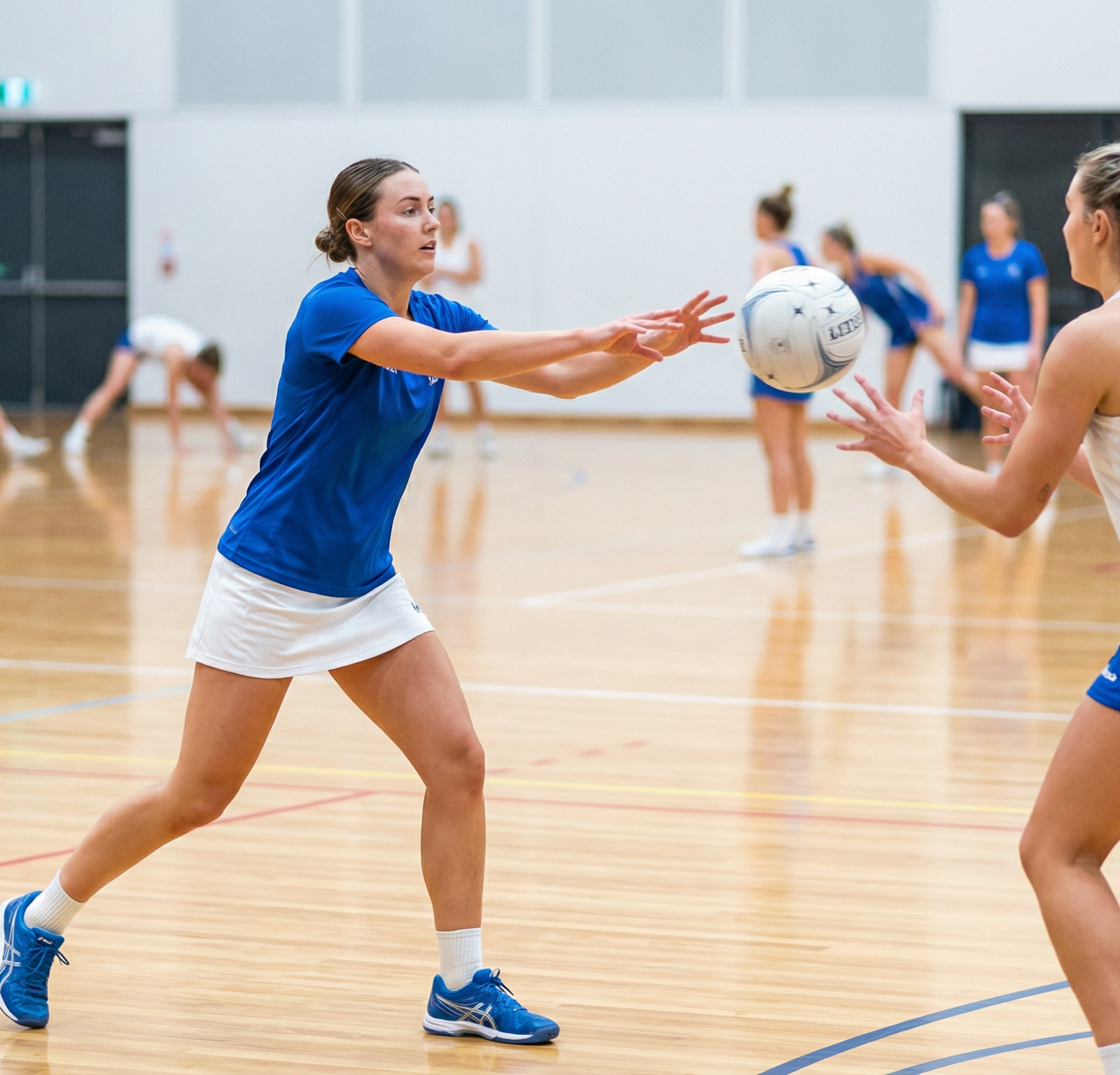
The chest pass is the backbone of netball. It is the most frequently used pass in the game, relied upon by every position on the court to move the ball quickly, safely, and decisively over short distances. Yet despite its apparent simplicity, poor chest pass technique remains one of the most common causes of turnovers at every level of the game — from junior development squads to senior club competition. For coaches, investing dedicated training time in chest pass accuracy is not just about improving a single skill; it is about building the foundation for everything else your team does with the ball.
This article provides five practical, immediately applicable chest pass accuracy drills for netball, along with the technical coaching points that underpin each one. Whether you are coaching a beginner group or a competitive senior side, these drills are designed to be scalable, engaging, and grounded in best-practice coaching methodology.
Why Chest Pass Accuracy Matters More Than You Think
Before diving into the drills themselves, it is worth understanding why accuracy — rather than simply power or speed — should be the primary focus of your passing sessions.
As UK Superleague and international player Berri Neil explains, "if our ball placement is even an inch out, it could leave room for a defender to get a tip on the ball or a clean interception." In a sport where possession is everything and the rules prevent players from running with the ball, a slightly mistimed or misdirected chest pass can instantly hand momentum to the opposition.
Research into elite netball performance consistently highlights that teams with higher passing completion rates generate significantly more attacking opportunities per quarter. The chest pass, used over short distances when a player is unmarked or passing to a square or back option, is the highest-frequency pass in the game. Improving its accuracy by even a small margin across your squad compounds into a measurable competitive advantage over a full season.
The key technical elements coaches should reinforce in every session are summarised below.
| Technical Element | Coaching Cue |
|---|---|
| Hand position | Fingers spread in a "W" shape behind the ball |
| Elbow position | Elbows tucked in — no "chicken wings" |
| Release height | Ball released at chest height |
| Weight transfer | Step forward, transferring weight through the pass |
| Follow-through | Extend arms, wrists, and fingers fully toward the target |
| Ball flight | Flat and fast — not looping |
| Eyes | Head up, focused on the receiver — not the ball |
Drill 1: The Wall Target Drill
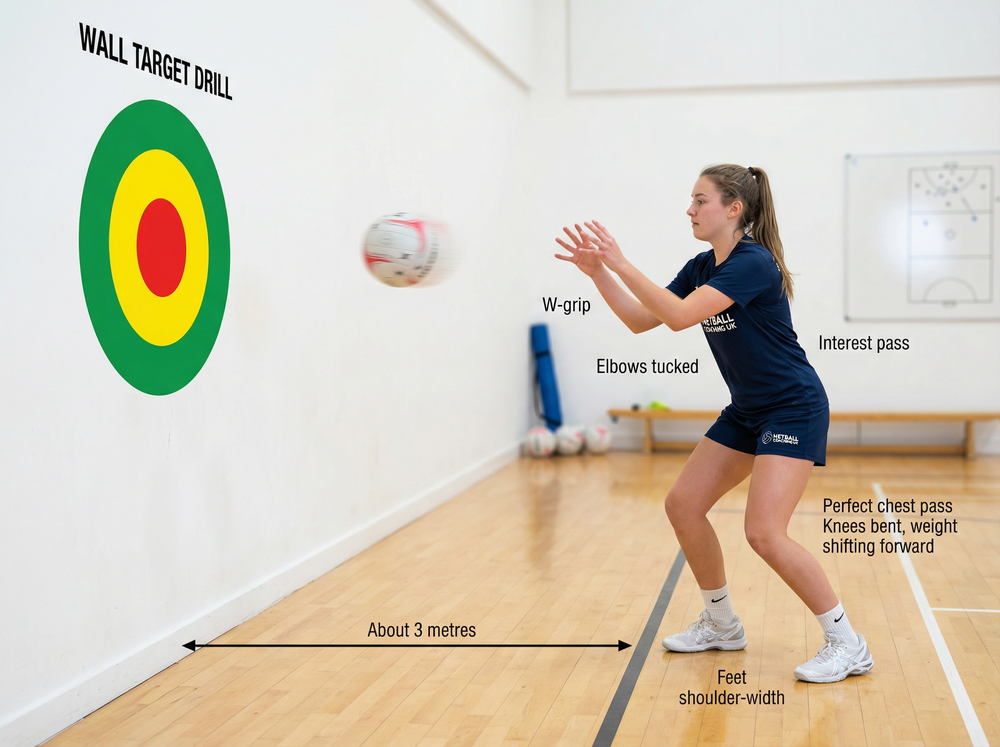
Best for: All ages and abilities, individual or small group training, warm-up or technical focus sessions.
Setup: Place a target on a flat wall at chest height. You can use chalk, tape, or a commercially available target disc. Create three concentric zones — a small central bullseye (approximately 20 cm diameter), a middle ring (40 cm), and an outer ring (60 cm). Players stand 3 metres from the wall to begin.
How it works: Players execute chest passes aiming for the bullseye, focusing on the full technical sequence: W-grip, elbows in, weight transfer, flat release, and complete follow-through. Each player completes 10 passes, scoring 3 points for a bullseye, 2 for the middle ring, and 1 for the outer ring.
Progression: Move players back to 4 metres, then 5 metres. Introduce a time pressure element — how many bullseyes can a player hit in 60 seconds? For advanced players, require them to receive a return pass off the wall and immediately re-pass without resetting their feet, simulating the quick-release demands of match play.
Coaching tip: The wall drill is particularly effective for identifying technical flaws because the ball's flight path and impact point give immediate, objective feedback. A pass that hits low indicates the player is dropping their elbows or failing to follow through. A pass that drifts left or right indicates inconsistent hand pressure — one hand is dominating the release.
Drill 2: The Partner Pressure Drill
Best for: Pairs, developing passing under defensive pressure, intermediate to advanced players.
Setup: Two players face each other 4–5 metres apart. A third player (the defender) stands beside the passer with one arm raised over the ball, simulating a three-foot defensive mark.
How it works: The passer must execute a clean chest pass to their partner despite the defender's arm presence. The receiver catches and immediately becomes the new passer, with the defender rotating to apply pressure. Rotate the defender role every 10 passes.
Progression: Increase the defender's activity — from a static arm-over to active lateral movement. Introduce a rule that the passer must release within two seconds of receiving the ball, replicating the time pressure of a real game situation. For senior players, add a second defender marking the receiver, forcing the passer to assess whether a chest pass is even the right option.
Coaching tip: This drill is excellent for developing passing decision-making alongside technique. Coaches should observe whether players default to the chest pass even when it is not the optimal choice — a key indicator that they are not yet reading the defensive picture. Use this drill to open conversations about when to use a chest pass versus an overhead or shoulder pass.
Drill 3: The Triangle Passing Circuit
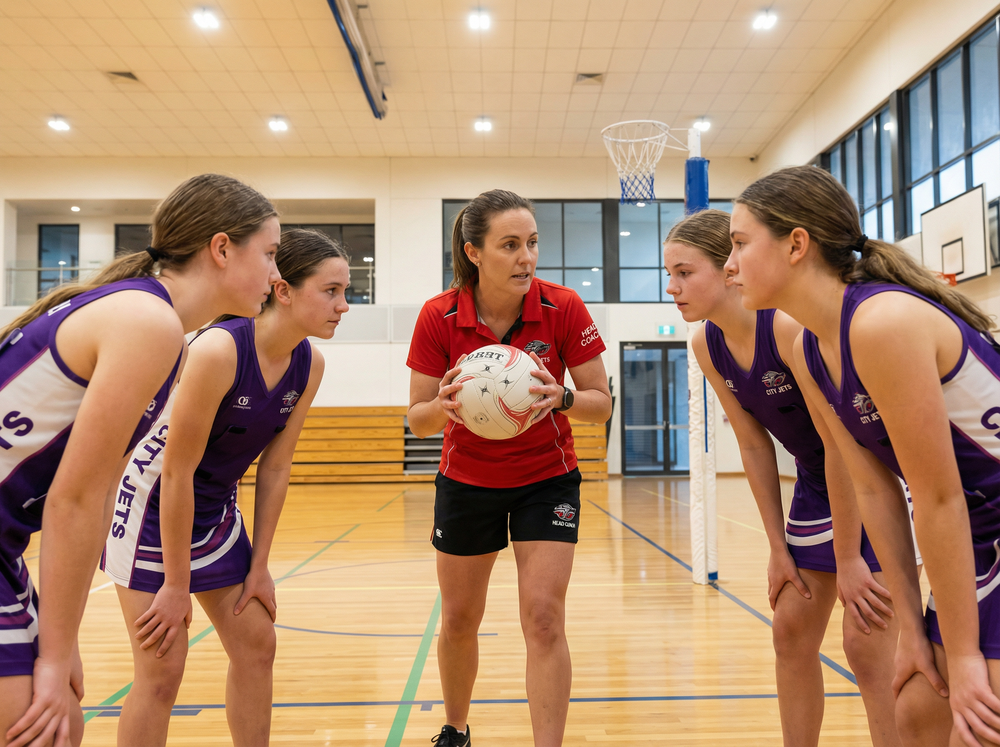
Best for: Groups of 3–6 players, developing passing on the move, suitable for all levels.
Setup: Place three cones in a triangle formation, each approximately 4 metres apart. One player stands at each cone, with the remaining players queuing behind.
How it works: Player A passes to Player B using a chest pass, then sprints to the back of Player B's queue. Player B receives, pivots, and chest passes to Player C, then sprints to the back of Player C's queue. The circuit continues continuously for 90 seconds. The focus is on clean, accurate passes to the receiver's chest — not just getting the ball there.
Progression: Increase the triangle size to 6 metres. Introduce a rule that the receiver must call for the ball before the pass is made, developing communication habits. For advanced groups, require players to call out the name of the player they are passing to before releasing — this reinforces the habit of identifying the target before committing to the pass, which is a hallmark of elite-level ball movement.
Coaching tip: The triangle drill is one of the most time-efficient drills available to coaches because it combines passing technique, footwork, fitness, and communication in a single activity. Track the number of successful passes (caught cleanly at chest height) versus total passes to give players a measurable accuracy percentage to improve upon each session.
Drill 4: The Feeder and Attacker Decision Drill
Best for: Groups of 4, developing passing vision and decision-making, intermediate to advanced.
Setup: Two feeders stand at opposite ends of a 5-metre channel. One attacker and one defender work in the middle of the channel.
How it works: The attacker receives a chest pass from Feeder A, pivots, and must assess the defensive picture before passing to Feeder B. The defender applies pressure with arms over the ball. The attacker must decide whether to use a chest pass (if the defender's arms are not directly over the ball), an overhead pass (to clear the arms), or a bounce pass (to go under the defender's reach).
Progression: Introduce a second attacker and second defender in the channel, requiring the first attacker to assess whether to pass directly to Feeder B or to the second attacker as an intermediate option. This replicates the multi-option decision-making that mid-court players face in every quarter of a match.
Coaching tip: This drill is particularly valuable for developing what coaches refer to as passing vision — the ability to read the court and select the correct pass type before receiving the ball. Encourage attackers to "pre-scan" — looking over their shoulder before catching the ball so they already know their options when the ball arrives.
Drill 5: The Timed Accuracy Challenge
Best for: Full squad, competitive training environment, all levels.
Setup: Mark a 3-metre x 3-metre target zone on the court floor using cones or tape. Players work in pairs, standing 5 metres apart, with the target zone positioned between them.
How it works: Player A must chest pass the ball so that it lands within the target zone if it were to bounce (i.e., the pass is aimed at the correct height and angle to land in the zone if uncaught). Player B catches the pass and returns it. Each pair counts the number of passes that would have landed in the target zone in 90 seconds. The pair with the highest count wins.
Progression: Narrow the target zone to 2 metres x 2 metres. Increase the distance to 6 metres. Introduce a movement element — both players must sidestep one metre left or right between each pass, requiring them to adjust their body position and still execute an accurate chest pass.
Coaching tip: The competitive element of this drill is highly motivating for youth players and helps coaches identify which players have internalised the technical model and which are still relying on instinct alone. Use the results to set individual improvement targets for the following session.
Integrating These Drills into Your Session Plan
Effective coaching is not just about knowing the right drills — it is about sequencing them intelligently within a session. A well-structured netball training session that focuses on chest pass accuracy might follow this progression:
- Technical warm-up (10 minutes): Wall Target Drill at 3 metres, focusing purely on technique with no time pressure.
- Skill development (15 minutes): Partner Pressure Drill, introducing defensive presence and decision-making.
- Small group application (15 minutes): Triangle Passing Circuit, combining technique with movement and communication.
- Game-realistic application (15 minutes): Feeder and Attacker Decision Drill, embedding the skill in a decision-making context.
- Competitive consolidation (10 minutes): Timed Accuracy Challenge, providing measurable feedback and competitive motivation.
Tracking player progress across sessions is where many volunteer coaches face a practical challenge. Remembering individual improvement targets, attendance patterns, and session notes across a full squad is difficult without a reliable system. This is where the Vanta Coach App makes a genuine difference — it is free for volunteer coaches and allows you to plan sessions, record attendance, and track individual player development all in one place, so that the technical work you do in training translates into measurable progress over time.
Common Chest Pass Errors and How to Fix Them
Even with the best drills, players will develop habits that undermine their accuracy. The table below identifies the most common errors coaches observe and the targeted corrections to apply.
| Error | What It Looks Like | Correction |
|---|---|---|
| "Chicken wings" | Elbows flare outward on release | Cue: "Tuck your elbows in like you're holding a newspaper under each arm" |
| Ball released too high | Pass floats and is easy to intercept | Cue: "Release from your chest, not your chin" |
| Weak follow-through | Ball lacks pace and drops short | Cue: "Point your fingers at the target after you release" |
| Dominant hand bias | Pass drifts consistently to one side | Drill: Practice with the non-dominant hand alone to build symmetry |
| Eyes down | Player watches the ball, not the receiver | Cue: "Look at your partner's chest before you release" |
| Flat-footed stance | No weight transfer, pass lacks power | Cue: "Step into every pass — one foot forward on release" |
Building a Culture of Accuracy
The most important thing a coach can do to improve chest pass accuracy is to make precision — not just completion — the standard in every drill. If players are rewarded simply for getting the ball to a teammate, they will never develop the discipline to execute a pass that arrives at the right height, the right speed, and in the right position for the receiver to immediately move the ball on.
Set the standard clearly: a good chest pass arrives at the receiver's chest, at a pace they can control, without requiring them to adjust their body position to catch it. Hold that standard consistently across every drill, every session, and every game — and your team's ball movement will improve measurably within weeks.
For clubs looking to support their coaches more effectively, the Vanta Sports ecosystem offers purpose-built tools for every stakeholder in youth netball. The Vanta Coach App gives volunteer coaches free access to session planning and attendance tracking. Vanta Club provides club administrators with a complete management platform covering registrations, payments, and compliance. Vanta Guardian keeps parents connected to schedules and communications, while the Vanta Player App helps players track their own goals and achievements. It is a complete, integrated platform built specifically for youth basketball and netball — with modern design, built-in safeguarding tools, and Stripe-integrated payments.
Ready to Take Your Training to the Next Level?
Discover how Vanta Sports helps coaches run better practices. Learn more about Vanta Sports
Tags