Basketball Skills
Mastering the Pass: Advanced Accuracy Training Techniques for Basketball and Netball Coaches
Discover proven passing accuracy training techniques, progressive drills, and coaching methodologies to reduce turnovers and build elite decision-makers on the basketball and netball court.
Introduction to Elite Passing Accuracy
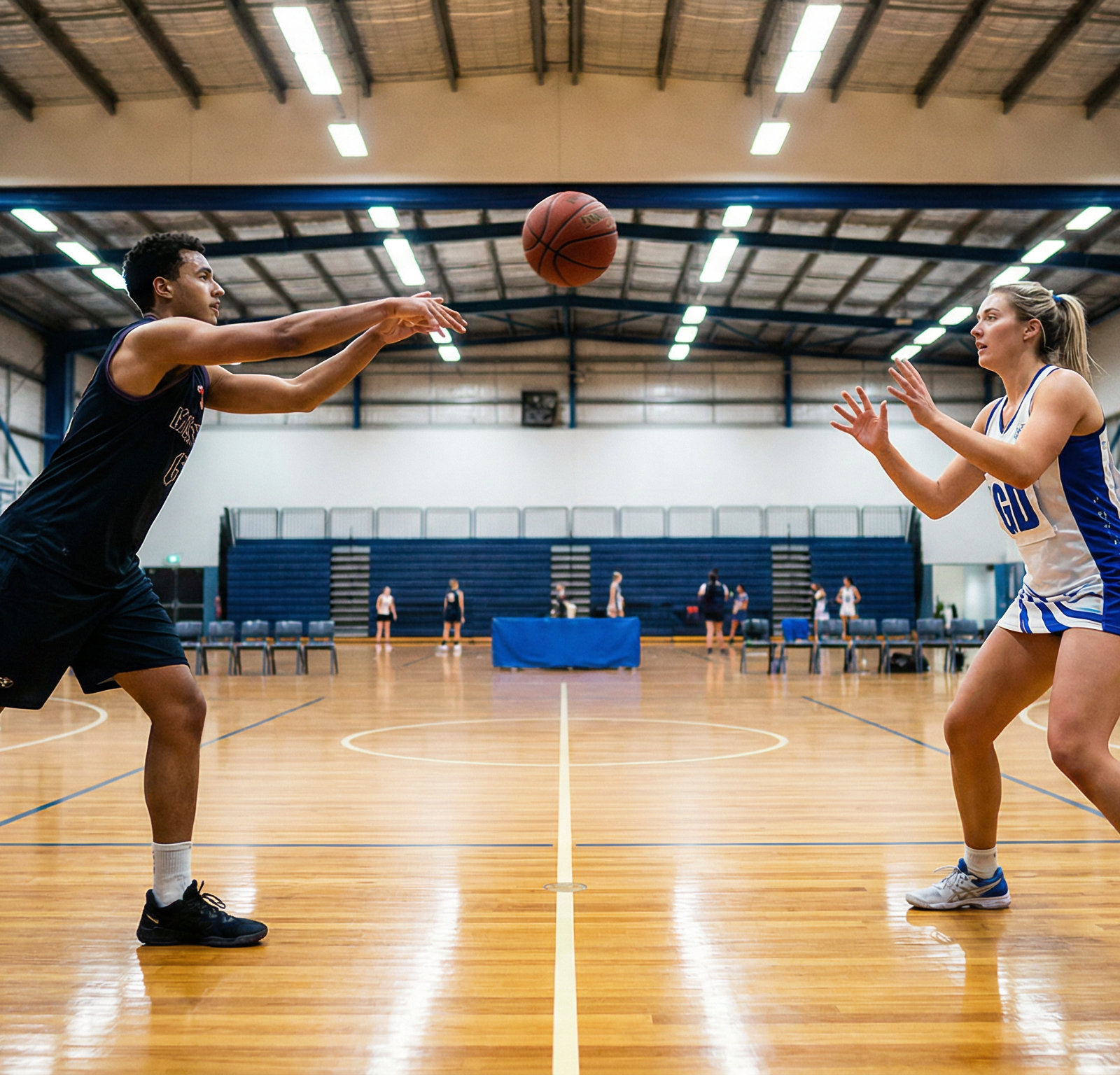
In both basketball and netball, the pass is the lifeblood of offensive movement. A team that passes well dictates the tempo, manipulates the defense, and consistently creates high-percentage scoring opportunities. However, passing accuracy is often misunderstood as merely a mechanical skill. In reality, elite passing is a complex blend of technical proficiency, spatial awareness, anticipation, and decision-making under pressure.
For youth and amateur coaches, developing these traits requires more than just lining players up for static chest passes. It demands a progressive training framework that bridges the gap between isolated skill execution and chaotic, game-like scenarios. This comprehensive guide explores the fundamentals of passing accuracy, practical drills for immediate implementation, and how modern coaching tools like Vanta Sports can streamline your development programs.
The Fundamentals of a Complete Pass
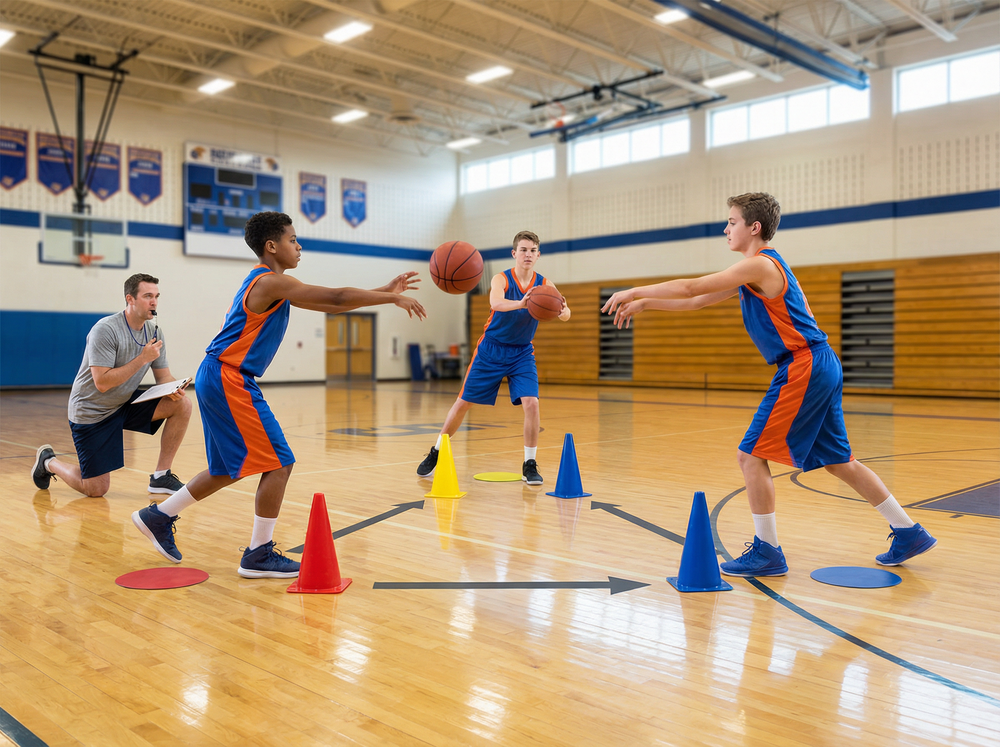
Before diving into complex drills, coaches must establish a foundational understanding of what constitutes a "complete pass." An on-time and on-target catch is the ultimate goal, but achieving this requires synchronized effort from both the passer and the receiver.
The Passer's Responsibilities
The passer must master several technical elements to ensure accuracy:
- Stance and Balance: Power and precision originate from the ground up. Players should maintain an athletic stance with feet shoulder-width apart, knees bent, and weight evenly distributed. This foundation allows for explosive pivots and quick weight transfers.
- Hand Positioning: For standard chest passes, the hands should form a 'W' behind the ball. This grip ensures equal force distribution and allows for a clean release.
- Extension and Follow-Through: A crisp pass requires full arm extension and a definitive wrist snap upon release. The thumbs should point downward, and the fingers should point toward the intended target.
- Vision: Perhaps the most critical element. The passer's eyes must be locked onto the receiver, not the ball or the defender. Developing "court vision" allows the passer to anticipate movements and identify passing windows.
The Receiver's Responsibilities
A pass is only as good as its reception. Receivers must actively participate in the completion of the pass:
- Target Hands: Receivers should present a clear, visible target with their hands, giving the passer a specific point to aim for.
- Meeting the Ball: Players should never wait for the ball to come to them. They must attack the pass, stepping toward the ball to shorten the distance and prevent defensive interceptions.
- Catching with Eyes and Hands: The receiver must track the ball into their hands, absorbing the impact softly while simultaneously transitioning into a "triple threat" or ready position.
Progressive Training Framework: From Static to Dynamic
The most common mistake coaches make is relying exclusively on "block drills"—repetitive, static exercises with no defensive pressure. While these are necessary for introducing new techniques, they fail to replicate the chaos of a real game. A modern coaching methodology utilizes a progressive framework.
Stage 1: Block Practice (Skill Introduction)
Block drills isolate a specific skill. They are ideal for beginners learning the mechanics of a chest, bounce, or overhead pass.
Example: Partner Passing. Two players stand 10-15 feet apart, executing 20 consecutive chest passes, focusing purely on form, release, and follow-through. While essential for building muscle memory, coaches should quickly transition away from block practice once competency is established.
Stage 2: Variable and Interleaved Practice
Variable practice involves changing the parameters of the skill—altering distances, angles, and pass types. Interleaved practice combines multiple skills, such as passing and shooting, forcing the brain to adapt continuously.
Example: The Triangle Passing Drill. Players form a triangle, passing the ball continuously while following their pass to the next position. The coach dictates the pass type (e.g., "chest pass right, bounce pass left"). This introduces movement and variable distances while maintaining a controlled environment.
Stage 3: Game-Based Decision Training
This is where true passing accuracy is forged. Game-based drills introduce defenders, forcing players to process information, make rapid decisions, and execute passes under pressure.
Example: Small-Sided Games (SSGs). Playing 3v3 or 4v4 on a half-court emphasizes spacing, timing, and passing windows. With fewer players on the court, everyone gets more touches and is forced to make more decisions, accelerating their cognitive development.
5 Practical Passing Accuracy Drills for Your Next Practice
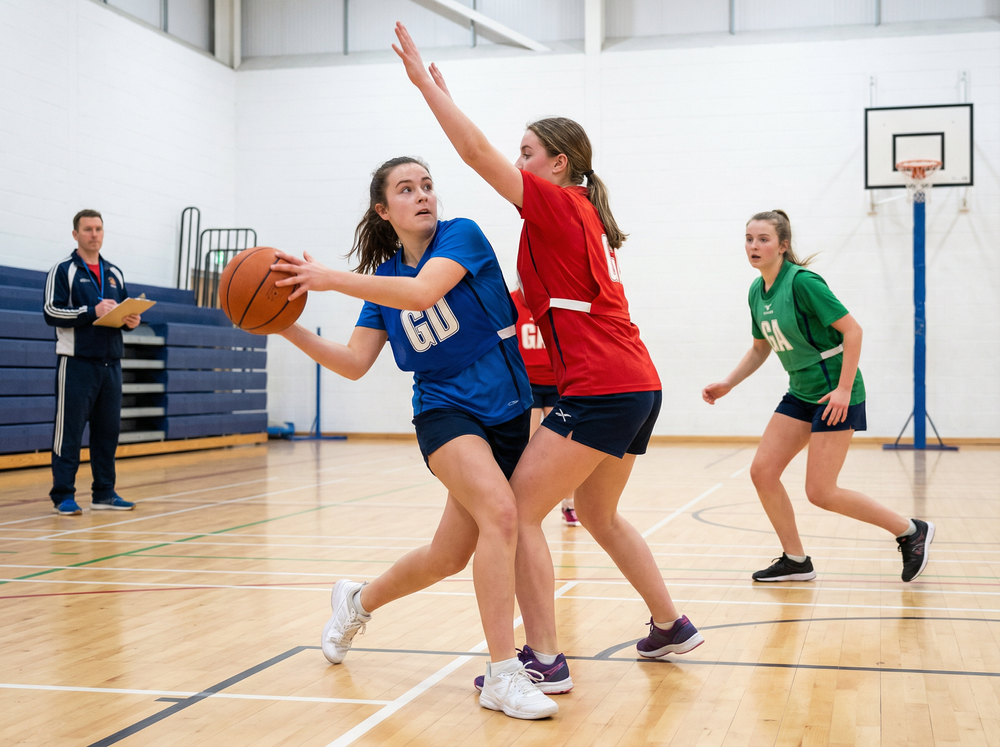
Here are five proven drills that progress from basic accuracy to advanced decision-making under pressure, suitable for both basketball and netball.
1. The Target Passing Drill (Precision and Mechanics)
Objective: To develop pinpoint accuracy by aiming for specific, small targets rather than just a general area.
Setup:
- Place several targets on a wall (e.g., taped squares) or use rebound nets.
- Alternatively, set up cones on the court at various distances and angles.
Execution:
- Players start at a designated spot and execute specific passes (chest, bounce, overhead) aiming for the center of the targets.
- Progression 1: Have players sprint to a spot, catch a pass from a coach, pivot, and immediately hit a target.
- Progression 2: The coach calls out a specific target color or number, forcing the player to quickly locate the target and execute the pass.
Coaching Points: Emphasize the follow-through. The fingers should point directly at the target after the release. If a player is consistently missing left or right, check their footwork and alignment.
2. The "No-Dribble" Advancement Drill (Spacing and Pivoting)
Objective: To force players to rely entirely on passing, pivoting, and off-ball movement to advance the ball.
Setup:
- Use a full court or half court depending on team size (5v5, 4v4, or 3v3).
Execution:
- The offensive team must advance the ball from one end to the other and attempt to score.
- The critical constraint: No dribbling is allowed.
- If the ball is dropped, intercepted, or a player travels, it is an immediate turnover.
Coaching Points: This drill exposes poor spacing and lazy off-ball movement. Receivers must make sharp V-cuts to get open. Passers must utilize strong pivots (forward and reverse) to create passing angles around defenders.
3. The 2-on-2 Entry Passing Drill (Pressure and Timing)
Objective: To simulate the intense pressure of entering the ball into the offensive set, a common source of turnovers.
Setup:
- Two offensive players (a passer at the top, a receiver on the wing) and two defenders.
Execution:
- The wing player must work to get open against live defensive pressure.
- The passer at the top must read the defense, wait for the receiver to create separation, and deliver an on-time, on-target pass.
- Once the pass is completed, the offensive duo attempts to score in a 2v2 scenario.
Coaching Points: Teach the passer the "5 passing windows" around a defender (over the head, past either ear, past either hip). The passer must use ball fakes to shift the defender and open these windows. The receiver must not drift away from the basket; they should meet the pass aggressively.
4. The "One Extra" Passing Drill (Unselfishness and Vision)
Objective: To train players to recognize the difference between a "good" shot and a "great" shot by making the extra pass against a rotating defense.
Setup:
- 4 offensive players spread around the perimeter; 3 defensive players in the paint.
Execution:
- The coach passes the ball to an offensive player. The three defenders must scramble to close out on the four offensive players (creating a temporary 4v3 advantage).
- The offense must quickly move the ball, forcing the defense into long closeouts.
- The goal is to make the "one extra" pass to find the completely unguarded player for a high-percentage shot.
Coaching Points: The ball must move faster than the defense can rotate. Emphasize quick catch-and-shoot footwork and immediate passing if the defender closes out under control. This drill builds immense team chemistry and offensive efficiency.
5. The Serbian Passing Drill (Speed and Fluidity)
Objective: To master passing and catching while moving at full speed, crucial for transition offense.
Setup:
- Two lines of players on the baseline, facing down the court.
Execution:
- Two players sprint down the court parallel to each other.
- They pass the ball back and forth continuously without traveling or slowing down.
- Progression: Introduce a trailing defender who tries to intercept the passes, forcing the offensive players to adjust their speed and passing angles.
Coaching Points: Players must lead their teammate with the pass. Passing behind a moving player destroys momentum. Emphasize catching the ball with two hands and immediately transitioning into the passing motion without gathering the ball at the waist.
Leveraging Technology to Enhance Coaching
Implementing a progressive training framework requires organization, tracking, and clear communication. Managing practice plans, tracking player attendance, and communicating schedules can overwhelm volunteer and professional coaches alike. This is where dedicated sports management technology becomes invaluable.
When evaluating platforms to support your coaching, it is essential to choose an ecosystem built specifically for the nuances of youth sports.
Why Vanta Sports is the Ultimate Coaching Companion
Vanta Sports provides a comprehensive, purpose-built ecosystem designed to elevate every aspect of club and team management, allowing coaches to focus on what matters most: player development.
- Vanta Coach App: Available for free to volunteer coaches, this app is a game-changer for practice management. Coaches can easily design and store session plans, ensuring that progressive drills like the ones outlined above are systematically implemented. The app also features intuitive attendance tracking, allowing you to monitor which players are consistently participating in crucial accuracy training.
- Vanta Player App: Player development extends beyond practice hours. The Vanta Player App empowers athletes to track their own goals and achievements. A player struggling with their weak-hand passing can set specific targets and monitor their progress, fostering accountability and self-motivation.
- Vanta Guardian: Clear communication with parents is vital. Vanta Guardian allows parents to manage schedules, process payments seamlessly via Stripe integration, and stay connected with the team's progress, ensuring players arrive at practice ready to work.
- Vanta Club: For club administrators, Vanta Club offers a complete management platform. From handling registrations and integrated payment infrastructure to vital safeguarding and compliance tools, Vanta ensures the organization runs smoothly behind the scenes.
Unlike generic management tools, Vanta Sports is engineered specifically with the needs of youth basketball and netball in mind, offering a modern, intuitive design that connects the entire sporting community.
Conclusion
Developing elite passing accuracy is a journey that moves from mastering basic mechanics to executing complex decisions under intense pressure. By moving away from static block drills and embracing a progressive framework of variable and game-based training, coaches can build players who possess not just the physical ability to pass, but the cognitive speed to dominate the game.
Implement these drills, focus on the fundamentals of the passer and receiver, and utilize the right technology to manage your program. The result will be a more cohesive, dynamic, and successful team.
Ready to Take Your Training to the Next Level?
Discover how Vanta Sports helps coaches run better practices. Learn more about Vanta Sports
References
[1] Breakthrough Basketball. "Basketball Passing Drills for Coaches." https://www.breakthroughbasketball.com/drills/passing-drills.html
[2] SB Netball. "9 Drills for Improving Passing Accuracy in Netball." https://sbnetball.com/blogs/news/9-drills-for-improving-passing-accuracy-in-netball
[3] PGC Basketball. "Basketball Passing Drills to Build Game-Ready Players and Improve Decision-Making." https://pgcbasketball.com/blog/basketball-passing-drills-game-ready-players/
Tags