Basketball Skills
Mastering Pick and Roll Offensive Strategies: The Complete Coaching Guide for Basketball and Netball
Unlock the most powerful two-man action in basketball with our complete coaching guide to pick and roll offensive strategies — covering key fundamentals, advanced variations, and 3 practical drills you can run at your next practice.
Mastering Pick and Roll Offensive Strategies: The Complete Coaching Guide for Basketball and Netball
The pick and roll is arguably the most lethal offensive weapon in modern basketball, and its core concepts of screening and creating space translate seamlessly to high-level netball screen plays. Whether you're coaching youth leagues or elite squads, mastering this two-man action forces defenses into impossible choices, creating mismatches, open driving lanes, and clean looks at the basket. According to NBA tracking data, pick and roll actions accounted for approximately 22% of all offensive plays during the 2020–2021 season — a figure that underscores just how central this action has become to modern offensive basketball at every level.
In this comprehensive guide, we'll break down the fundamentals of the pick and roll, explore advanced variations to keep defenses guessing, provide actionable drills to implement in your next practice, and show you how modern tools like Vanta Sports can streamline your coaching workflow so you can spend more time on the court.
Why the Pick and Roll is Essential for Every Offensive System
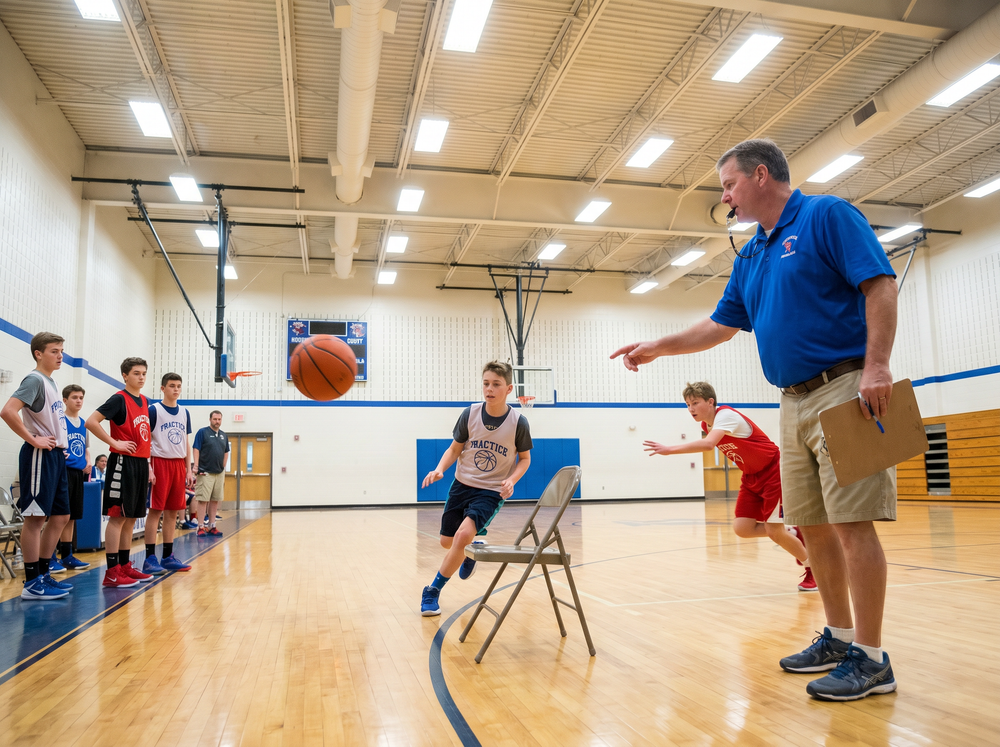
The beauty of the pick and roll lies in its simplicity and versatility. At its core, it involves one player setting a screen (the "pick") for the ball handler, who uses the screen to gain a positional advantage. The screener then moves (the "roll") toward the basket or pops out to an open perimeter position.
When executed correctly, this action creates a cascade of offensive advantages. It forces defensive rotations, meaning the defense must communicate instantly and flawlessly — any hesitation gives the ball handler an open lane. It generates mismatches, because switching defenses often leave a smaller guard defending a rolling big, or a slower big trying to contain a quick guard on the perimeter. Perhaps most importantly, it opens up the entire floor: even if the initial two-man action is covered, the resulting defensive collapse leaves shooters open on the weak side and in the corners.
For netball coaches, the principles are equally applicable. Screen plays in the goal third — where an attacking player uses a teammate's body position to create separation from a tight defender — mirror the pick and roll concept directly. The read-and-react decision-making developed through pick and roll training translates to sharper movement and better spatial awareness across both sports.
Key Fundamentals of a Successful Pick and Roll
Before diving into complex variations, your team must master the foundational elements that make this action work. Rushing to advanced concepts without solid fundamentals is the most common coaching mistake.
1. The Setup and Court Spacing
The ball handler must set up their defender by driving them in the opposite direction of the screen before using it. This is called "reading the defender into the screen." Equally critical is court spacing: the other three players on the floor must be positioned to stretch the defense — typically in the corners and on the weak-side wing — preventing easy help-side rotations. A crowded paint makes the pick and roll far less effective.
2. Setting a Legal and Effective Screen
The screener needs a wide base, a solid stance, and must be completely stationary upon contact to avoid an offensive foul. The angle of the screen is vital — it should be set to force the defender to either fight over the top or get completely removed from the play. A screen set at the wrong angle simply redirects the defender rather than eliminating them.
3. The Ball Handler's Read and React
This is where basketball IQ is developed. The ball handler must read the defense coming off the screen and make the correct decision in a fraction of a second:
| Defensive Coverage | Ball Handler's Response |
|---|---|
| Defense goes under the screen | Pull up for a mid-range or three-point jump shot |
| Defense trails over the top | Attack the basket aggressively or hit the rolling big |
| Defense switches | Isolate the mismatch or feed the big rolling against a smaller guard |
| Defense traps/blitzes | Quickly pass out of the trap to the roller or an open shooter |
Teaching these reads systematically — starting with one coverage and adding more as players improve — is the most effective way to develop pick and roll intelligence.
Advanced Pick and Roll Variations
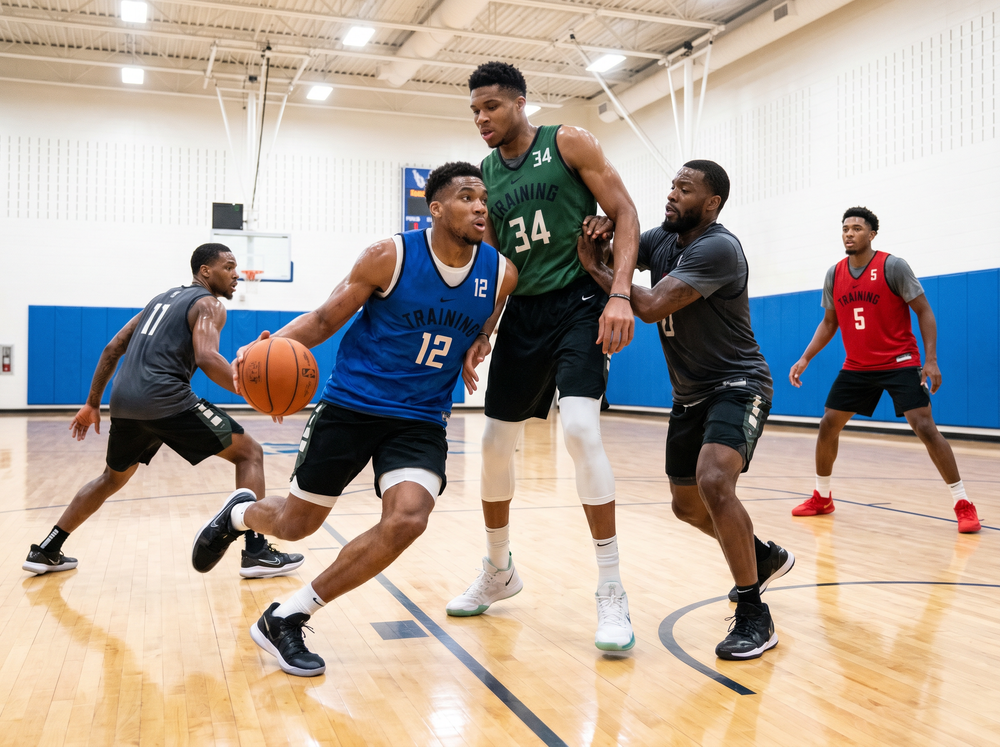
Once your team grasps the basics, introduce these variations to counter different defensive coverages and add unpredictability to your offense.
The Pick and Pop
Instead of rolling to the basket, the screener pops out to the perimeter for a jump shot. This is highly effective against Drop coverage, where the defending big sags into the paint anticipating the roll. If your screener is a capable shooter, the pick and pop becomes a primary scoring option rather than a secondary one. Many modern offenses use this as their default action when facing drop-heavy defenses.
The Slip Screen
If the defense is aggressively anticipating the screen — hedging hard or switching early — the screener "slips" the screen by abandoning the pick right before contact and darting straight to the basket. The key is timing: the slip must happen exactly as the defender commits to jumping the screen. A well-executed slip creates one of the easiest scoring opportunities in basketball, as the defender is caught completely out of position.
The Spanish Pick and Roll
A modern staple at the highest levels of the game, the Spanish Pick and Roll involves a third offensive player setting a back screen on the screener's defender as they roll to the basket. This creates massive confusion for the defense and typically results in either an open layup for the roller or an open three-pointer for the back-screener who pops out. This variation requires strong communication and timing but is devastatingly effective once mastered.
The Side Pick and Roll
Rather than running the action at the top of the key, the screen is set on the side of the court near the wing. This limits the ball handler's driving angles but creates excellent opportunities for quick drives to the baseline, kick-out passes to corner shooters, or a roll to the short corner. The side pick and roll is particularly effective against Ice defense, as the sideline itself becomes a tool for the offense.
3 Practical Drills to Run at Your Next Practice
Theory without repetition is worthless. These three drills are designed to build pick and roll execution progressively, from fundamental footwork to live decision-making.
Drill 1: The 2-on-0 Chair Drill
Focus: Footwork, screen angles, and passing accuracy.
Setup: Place a chair at the top of the key to simulate the defender being screened. No defense is used in this drill.
Execution: The ball handler sets up the "defender" (the chair) and comes off it shoulder-to-shoulder, staying as tight as possible to eliminate recovery space. The screener sets the pick on the chair and rolls hard to the rim with hands up as a target. The ball handler practices three different reads: a pocket pass to the roller, a lob over the top, and a pull-up jump shot.
Coaching Tip: Emphasize the ball handler coming off the screen tight. A wide gap between the ball handler and the screen is the single most common execution error and gives recovering defenders the space they need.
Drill 2: 3-on-3 Continuous Read and React
Focus: Live decision-making against multiple defensive coverages.
Setup: Three offensive players (Point Guard, Wing, Big) vs. three defenders. The coach stands on the sideline and calls out a defensive coverage before each repetition.
Execution: The coach calls "Drop," "Switch," or "Blitz." The offense runs a top pick and roll. The ball handler must identify the coverage and make the correct play — shoot off the screen, pass to the roll, or kick to the open wing. After each possession, rotate offense and defense.
Coaching Tip: Stop the play immediately if the ball handler makes the wrong read. Ask them: "What did you see? What should you have done?" This Socratic coaching method builds basketball IQ far faster than simply correcting the error yourself.
Drill 3: The Slip and Score
Focus: Countering aggressive hedging and early switching.
Setup: 2-on-2 at the wing. The defense is instructed to aggressively jump out (hedge) on every screen.
Execution: The screener reads the defender committing to the hedge and slips to the basket before making contact. The ball handler must deliver a quick, accurate pass — typically a bounce pass — to the slipping player cutting to the rim. Rotate after each possession.
Coaching Tip: Timing is everything in this drill. The slip must happen at the exact moment the defender commits to the hedge. Run this drill slowly at first, then progressively increase the speed as players develop the feel for the timing.
Coaching the Pick and Roll: Key Takeaways
Successful pick and roll execution is built on three pillars: communication between the ball handler and screener, spacing from the other three players on the floor, and decision-making by the ball handler in real time. Coaches who invest practice time in all three pillars — rather than just running the action and hoping for the best — will see exponential improvement in offensive efficiency.
Start simple. Teach one coverage read before adding others. Use the Chair Drill to build muscle memory before introducing live defense. And remember: the pick and roll is not just a play — it is a system that rewards patience, repetition, and intelligent coaching.
Streamline Your Coaching with Vanta Sports
Implementing a new offensive system like the pick and roll requires organized practices, clear communication with your team, and dedicated coaching time. Administrative tasks — scheduling, attendance, payments, and compliance — should never eat into your preparation time. This is where Vanta Sports becomes your most valuable assistant coach.
Vanta Sports is purpose-built for youth basketball and netball, providing a complete ecosystem of dedicated apps for every stakeholder in your club:
- Vanta Coach App: Completely free for volunteer coaches, this app allows you to plan your practice sessions (like the drills outlined above), track player attendance, and communicate directly with your squad — all from your phone.
- Vanta Club: A robust club management platform that handles registrations, Stripe-integrated payments, and vital safeguarding and compliance tracking, keeping your club organized and protected.
- Vanta Guardian: Keeps parents informed of schedules, payments, and team updates, reducing the volume of messages coaches need to manage.
- Vanta Player App: Gives players a dedicated space to track their personal goals, achievements, and upcoming team events, increasing engagement and accountability.
With its modern, intuitive design and integrated infrastructure, Vanta Sports ensures you spend less time on administrative headaches and more time on the court developing your players' pick and roll execution.
Ready to Take Your Training to the Next Level?
Discover how Vanta Sports helps coaches run better practices. Learn more about Vanta Sports
Tags