Basketball Skills
Rebounding Fundamentals and Positioning: The Complete Coaching Guide for Basketball and Netball
Master the art of rebounding with this comprehensive coaching guide covering box-out technique, netball block and sweep positioning, 5 ready-to-use drills, and proven strategies to build a rebounding culture in your basketball or netball team.
Rebounding is one of the most decisive — and most undercoached — skills in both basketball and netball. Ask any experienced coach what separates teams that consistently win close games from those that don't, and the answer often comes back to the same thing: who controls the boards. A team that dominates rebounding controls possessions, limits second-chance opportunities for the opposition, and dictates the tempo of play. Yet despite its importance, rebounding is frequently treated as an afterthought in training sessions, overshadowed by shooting drills, passing patterns, and offensive set plays.
This guide is designed to change that. Whether you coach basketball or netball — at junior, community, or competitive level — the principles of rebounding are learnable, teachable, and repeatable. You don't need the tallest squad or the most athletic players to become a strong rebounding team. What you need is sound technique, purposeful positioning, and consistent practice.
Why Rebounding Wins Games
Before diving into technique, it's worth understanding the strategic value of rebounding. In basketball, every missed shot is a possession up for grabs. Teams that secure more defensive rebounds deny the opposition extra scoring opportunities, while teams that generate offensive rebounds give themselves additional shots without having to run a full offensive set. Research across all levels of the game consistently shows that teams with higher rebounding margins win a disproportionate share of games.
In netball, the dynamic is slightly different but equally impactful. Only four players — the Goal Shooter (GS), Goal Attack (GA), Goal Keeper (GK), and Goal Defence (GD) — are permitted inside the shooting circle, making rebounding a highly specialised skill for those positions. A well-timed rebound by a GS or GA can create an immediate second-chance goal, while a GK or GD who wins the rebound turns defence directly into attack. In tight matches, these moments are often the difference between winning and losing.
The key insight for coaches is this: rebounding is primarily a skill of positioning and anticipation, not just athleticism. A shorter, less athletic player with excellent technique and spatial awareness will consistently out-rebound a taller, more athletic player who doesn't box out or read the ball correctly.
The Fundamentals of Rebounding Positioning
Establishing Position Before the Ball Arrives
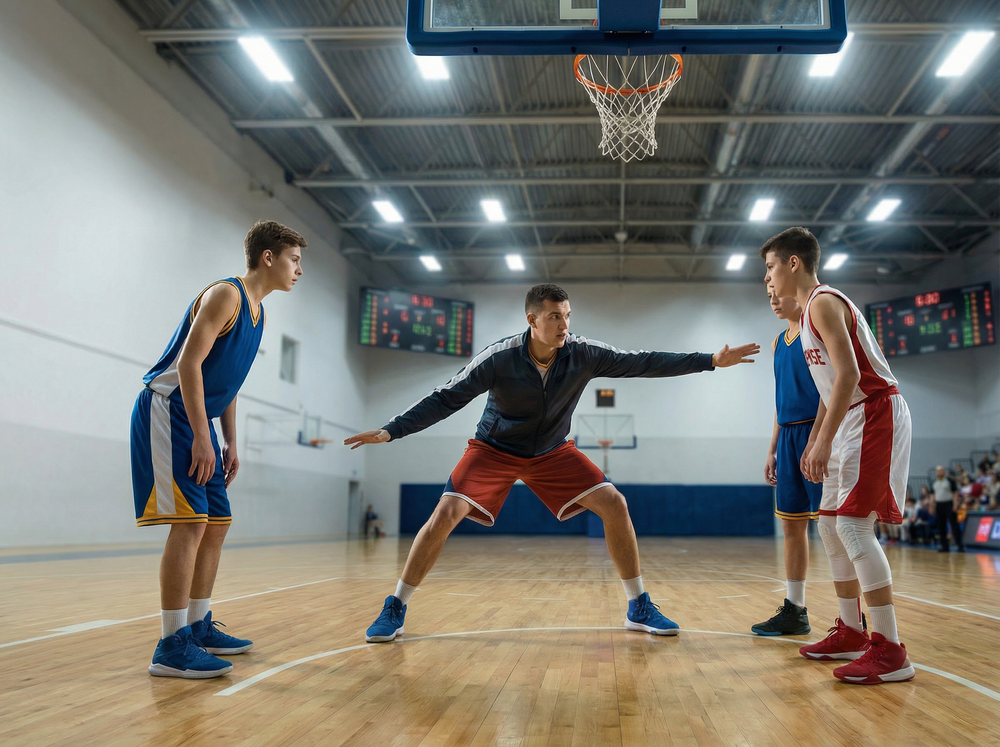
The single most important moment in rebounding happens before the ball even reaches the rim. Elite rebounders — at every level — are already moving into position as the shot goes up, not after it misses. Coaches should teach players to develop a "shot recognition" habit: the moment a shot is taken, every player on the court should be asking themselves, "Where do I need to be?"
For defensive rebounders in basketball, this means locating the nearest offensive player and making contact before pursuing the ball. In netball, it means reading the shooter's body angle and the likely trajectory of a missed shot to anticipate where the ball will land.
The Box-Out Technique in Basketball
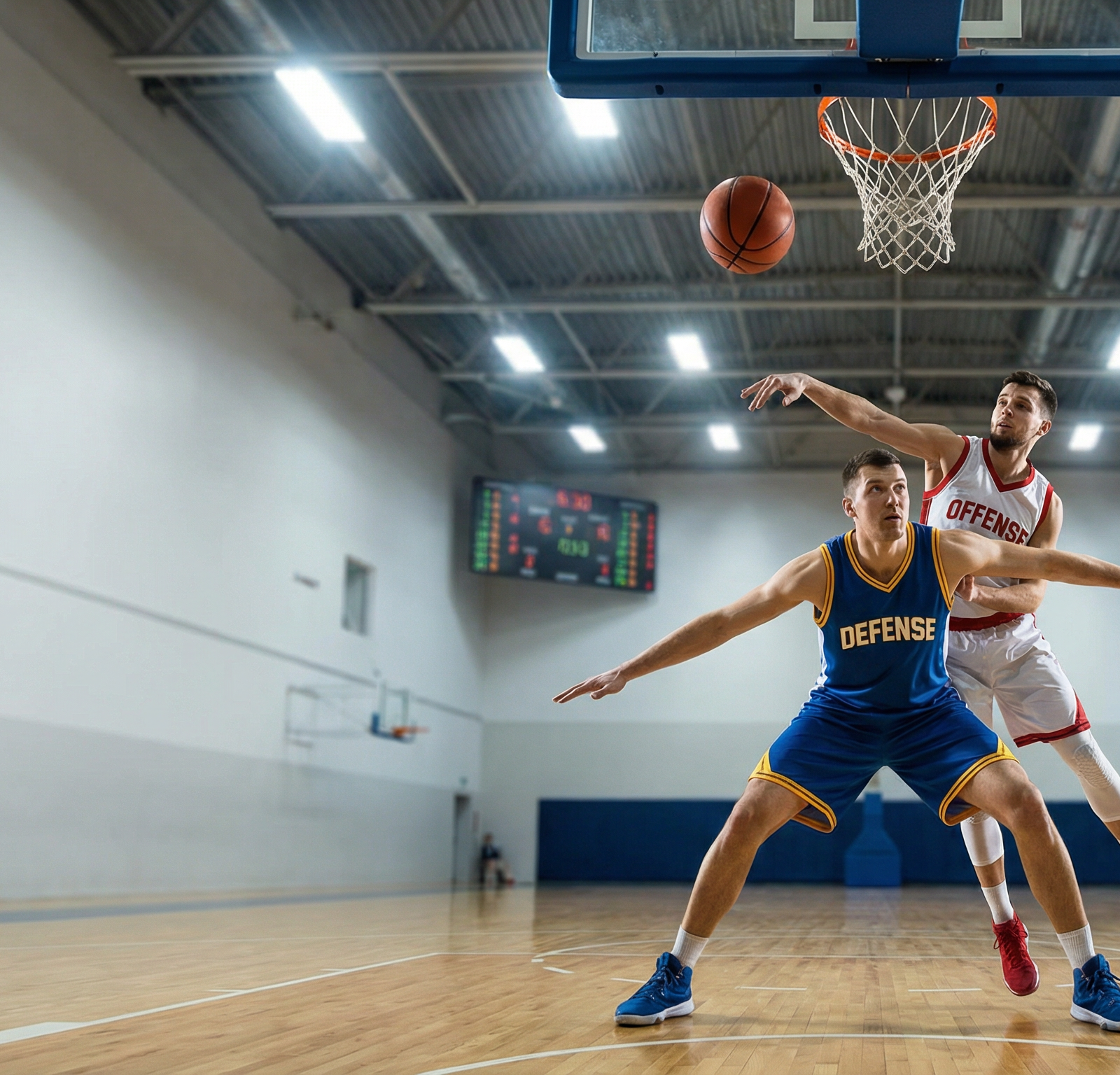
The box-out (or block-out) is the foundational rebounding skill in basketball. Executed correctly, it prevents offensive players from accessing the ball and gives the defensive rebounder a clear path to secure possession. The technique involves five key steps:
| Step | Action | Coaching Cue |
|---|---|---|
| 1 | Call "shot" to alert teammates | Communication is non-negotiable |
| 2 | Locate your assigned player immediately | "Find your man before you find the ball" |
| 3 | Lower hips, widen base, make forearm contact | "Get low, get wide, get contact" |
| 4 | Execute a reverse pivot into the opponent | "Butt to gut" |
| 5 | Push opponent away from basket using legs and hips | "Hold your ground" |
Once the box-out is established, arms should be extended wide at shoulder height. This serves two purposes: it makes it physically harder for the offensive player to get around the defender, and it allows the defender to feel the opponent's movement without losing their own balance. Players should shuffle their feet to stay in front of the opponent rather than standing static.
Netball-Specific Positioning: Block and Sweep
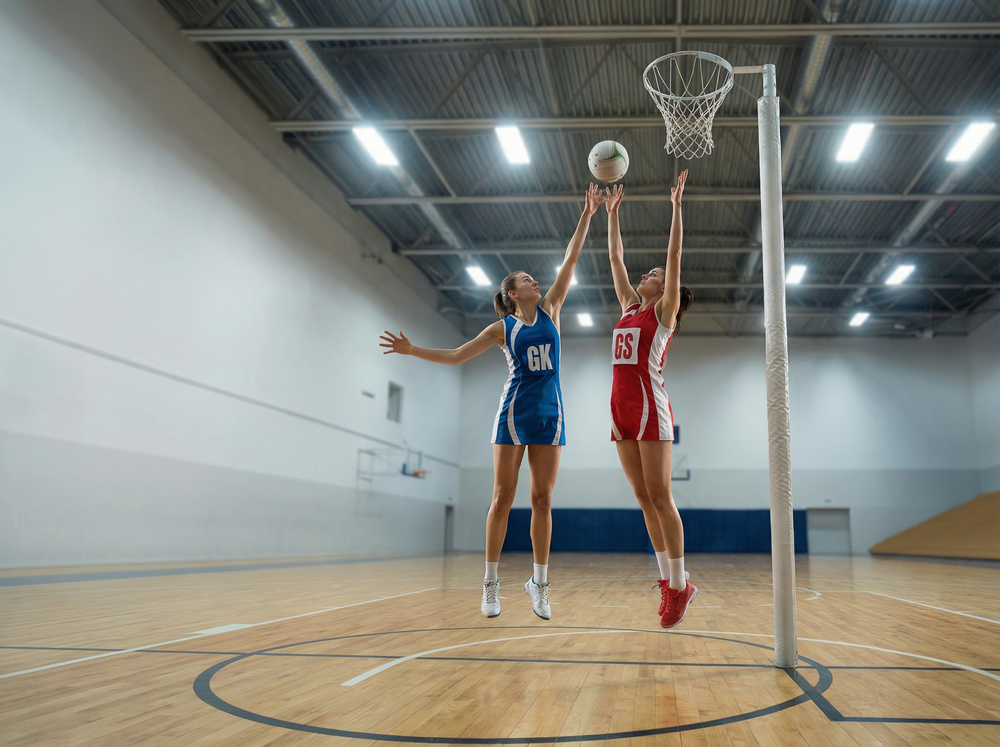
In netball, the equivalent of the box-out is the block and sweep technique. Because the game is non-contact in most phases, the positioning principles are slightly different — players cannot physically push opponents away — but the spatial awareness and timing requirements are just as demanding.
The key coaching points for netball rebounding are as follows. Players should position themselves with bent hips, knees, and elbows, with weight on the balls of their feet. This athletic stance allows for an explosive upward jump rather than a slow, flat-footed leap. Timing the jump is critical: players who jump too early will be descending as the ball arrives, while those who wait too long will be beaten to the ball. The goal is to reach maximum height at the moment the ball is catchable.
When contesting a rebound in netball, players should use a two-footed jump for maximum height and control, reach with both hands, and pull the ball in firmly to the chest. Pulling the ball in strongly — rather than catching it loosely — protects possession and allows for an immediate outlet pass.
5 Practical Rebounding Drills for Your Next Session
Drill 1: The Box-Out Battle (Basketball — 2v2)
Setup: One shooter at the top of the key, two pairs of players inside the paint.
How it works: The shooter takes a shot. Both pairs battle for the rebound. The pair that secures the ball earns one point and immediately passes back to the shooter, who shoots again. First pair to 10 points wins.
Why it works: This drill is deliberately competitive, which forces players to establish position early rather than waiting passively. It teaches players to read ball flight, communicate with a partner, and pursue the ball aggressively. Coaches can adjust shooting distance based on age group — younger players can shoot from the free-throw line.
Coaching focus: Encourage players to make contact with their opponent before the ball arrives, not after. Reward good box-out technique even when the player doesn't secure the rebound.
Drill 2: Seesaw Rebounding (Basketball — High Intensity)
Setup: Two lines on the wings, one player in the middle of the key with a ball.
How it works: The middle player passes to a wing who shoots. The passer must immediately sprint across and box out the opposite wing player who is running in to rebound. Whoever rebounds passes to either wing and joins that line; the player who didn't rebound stays in and must box out again.
Why it works: The seesaw drill builds the habit of sprinting to make contact — one of the most commonly neglected aspects of rebounding at youth level. Players quickly learn that a lazy approach to the box-out results in being beaten repeatedly.
Coaching focus: Emphasise the sprint. Players should be making contact with their opponent before the ball reaches the rim, not chasing them from behind.
Drill 3: Let It Bounce (Basketball — Defensive Patience)
Setup: Four offensive players spread around the midrange area, four defensive players inside the key. Coach or player shoots from the free-throw line.
How it works: As the shot goes up, defenders sprint out and establish a box-out on the nearest offensive player. Instead of pursuing the ball, defenders hold their position and try to let the ball bounce without the offence touching it. If the offence secures the rebound, the ball is live and they attack.
Why it works: Most box-out drills inadvertently teach players to abandon their box-out too early in pursuit of the ball. This drill specifically rewards patience and positional discipline, which are the hallmarks of elite defensive rebounding.
Coaching focus: Watch for defenders who turn to find the ball before they've made contact with their opponent. This is the most common error and must be corrected immediately.
Drill 4: Jump and Pull (Netball — Individual Skill)
Setup: Pairs of similar height, one ball per pair.
How it works: Player T stands holding the ball just above head height. Player W stands to the side, performs a two-footed jump, and attempts to grab the ball cleanly from T's hands. If W grabs it easily, T raises the ball higher. Continue for 10 clean grabs, then swap roles.
Why it works: This drill isolates the jump-and-secure action that is the core of netball rebounding. It builds the habit of jumping with purpose, reaching with both hands, and pulling the ball in firmly. The progressive height element ensures players are always challenged.
Coaching focus: Watch for single-handed grabs or loose catches. Insist on two hands and a strong pull-in every time.
Drill 5: Contested Rebound (Netball — On-Court Application)
Setup: Groups of three inside the goal circle — one thrower (T) and two workers (W1 and W2).
How it works: T becomes the goaler and shoots. W1 and W2 position themselves for the rebound, time their jumps, and contest the ball. The player who secures the rebound passes immediately to T, who shoots again. Rotate after five rebounds.
Why it works: This drill replicates the exact scenario players face in a match — two players competing for the same ball in a confined space. It develops timing, spatial awareness, and the competitive instinct to pursue every ball.
Coaching focus: Encourage players to anticipate the trajectory of the missed shot based on the angle of the shooter's body. A shot from the left side of the circle is more likely to rebound to the right, and vice versa.
Reading the Ball: The Underrated Skill
One of the most significant differences between average and elite rebounders is their ability to anticipate where a missed shot will land. This is a skill that can be taught. Coaches should introduce players to the basic physics of rebounding: the angle of the shot largely determines the angle of the rebound. A flat, low-arc shot will typically rebound long (away from the basket), while a high-arc shot tends to rebound shorter and closer to the ring.
In practice, this means players should be watching the shooter's technique, not just the ball. A shot that looks off-balance or low-arc should trigger immediate movement toward the perimeter. A high-arc shot should prompt players to position closer to the ring. Teaching this kind of anticipatory reading takes time, but even young players can develop a basic instinct for it with consistent coaching reinforcement.
Building a Rebounding Culture in Your Team
Technique and drills are only part of the equation. The other part is culture. Teams that rebound well do so because their coaches have made it a priority and their players understand its value. Here are three practical ways to build a rebounding culture in your squad.
First, track and celebrate rebounding statistics in training and matches. When players see their rebound numbers improving, they take ownership of the skill. Second, reward effort over outcome — a player who executes a perfect box-out but doesn't secure the ball should receive the same recognition as the player who grabs the rebound. This reinforces correct technique rather than just athleticism. Third, include rebounding in every session, even briefly. A five-minute box-out drill at the end of practice is more effective than a single 30-minute rebounding session once a month.
Tracking session attendance, player development, and drill progressions across a squad can quickly become complex, especially for volunteer coaches managing multiple age groups. This is where purpose-built tools make a real difference. The Vanta Coach App — free for volunteer coaches — allows you to plan sessions, track attendance, and monitor player progress all in one place, so you can focus on coaching rather than administration. Paired with Vanta Club, which handles registrations, payments, and compliance, and Vanta Guardian for parent communication, the Vanta Sports ecosystem is designed specifically for youth basketball and netball environments.
Key Takeaways for Coaches
Rebounding is a teachable skill that rewards consistent practice and deliberate coaching. The fundamentals — positioning before the ball arrives, making contact with an opponent, timing the jump, and securing the ball with two hands — apply equally to basketball and netball, and can be developed at any age or skill level. Incorporating competitive rebounding drills into every training session, teaching players to read ball trajectories, and building a team culture that values possession will produce measurable improvements over the course of a season.
The coaches who win the rebounding battle most consistently are not always those with the tallest or most athletic squads. They are the coaches who have made rebounding a priority, drilled it relentlessly, and created an environment where every player understands that controlling the boards is a team responsibility.
Ready to Take Your Training to the Next Level?
Discover how Vanta Sports helps coaches run better practices. Learn more about Vanta Sports
Tags