Club Management
Cut the Paperwork, Keep the Passion: How to Reduce Admin Time for Youth Sports Clubs
Admin overload is one of the leading causes of volunteer burnout in youth basketball and netball clubs. Discover five proven strategies and practical techniques to reclaim your time and focus on what matters most — coaching.

Cut the Paperwork, Keep the Passion: How to Reduce Admin Time for Youth Sports Clubs
If you volunteered to coach basketball or netball because you love the game, the last thing you expected was to spend your evenings chasing registration forms, reconciling payment spreadsheets, and sending the same schedule reminder for the third time. Yet for thousands of volunteer coaches and club administrators across the country, that is exactly what happens. Research consistently shows that administrative overload is one of the leading causes of volunteer burnout in youth sports — and when volunteers burn out, clubs lose the people who make everything possible.
The good news is that the problem is entirely solvable. With the right systems, strategies, and tools in place, clubs can dramatically reduce the time spent on repetitive admin tasks and redirect that energy where it belongs: on the court, developing young athletes.
Why Admin Overload Is a Crisis for Youth Sports Clubs
The scale of the problem is larger than most people realise. A 2026 analysis of youth sports club operations found that volunteer coordinators can save an estimated 15 minutes per registration simply by switching from manual email-based sign-ups to a digital platform — and across a squad of 80 participants, that compounds to more than 20 volunteer hours recovered per season. Multiply that across a full club with multiple teams, and you are looking at weeks of reclaimed time.
The burden falls disproportionately on volunteer coaches, who are often expected to handle not just training sessions but also attendance records, parent communications, compliance documentation, and payment follow-ups. A survey by the Aspen Institute found that the average sports parent spends over three hours on every day their child has a practice or game — but the coaches and administrators behind the scenes are often investing far more, with much of that time absorbed by tasks that add no direct value to player development.
The consequences extend beyond individual burnout. When admin becomes overwhelming, clubs struggle to recruit new volunteers, experienced coaches step back, and the quality of the programme suffers. For youth basketball and netball clubs in particular — sports that rely heavily on community-run structures — this is an existential challenge.
The Five Biggest Admin Time-Wasters (And How to Fix Them)
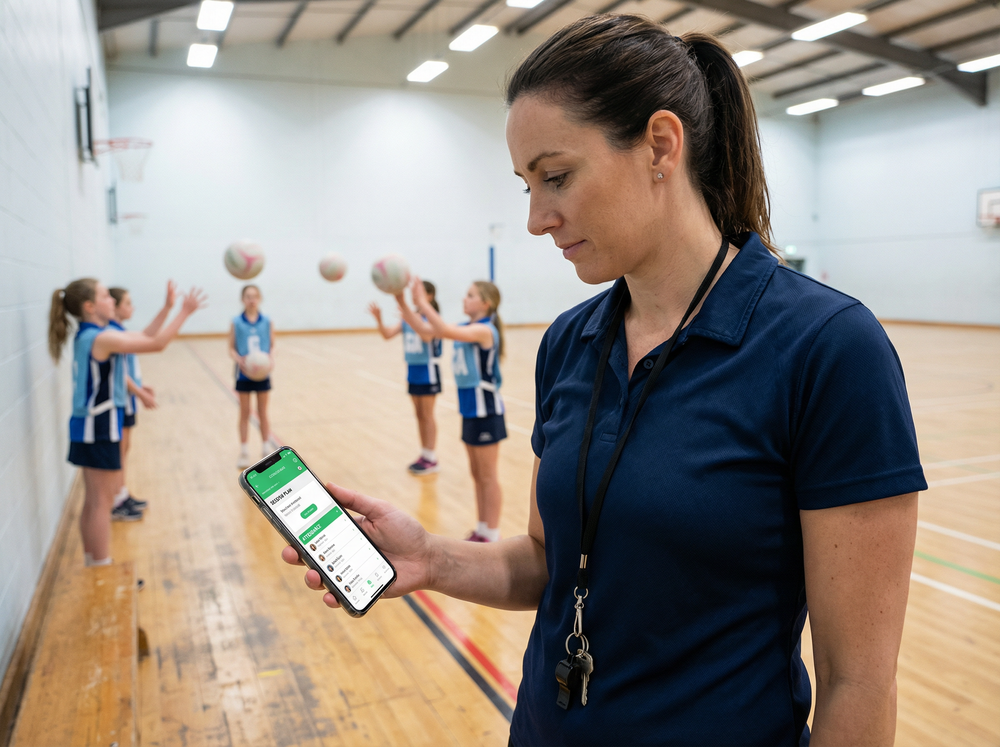
Understanding where the time actually goes is the first step to reclaiming it. The following five areas account for the majority of unnecessary admin hours in youth sports clubs.
1. Paper-Based and Email-Driven Registration
Manual registration is the single largest time sink in most clubs. Processing paper forms, deciphering handwriting, manually entering data into spreadsheets, confirming receipt by email, and chasing missing information can consume hours per registration cycle. When payments are collected separately — by cash or cheque — the problem compounds further, requiring manual reconciliation and persistent follow-up.
The fix: Transition to an online registration system that captures data automatically, requires payment at the point of sign-up, and sends automated confirmation receipts. When parents register through a digital platform, there is no data entry step, no payment chasing, and no manual confirmation required. Clubs using digital registration consistently report time savings of 15–20 minutes per registration — a figure that scales dramatically across a full season.
2. Scattered, Multi-Channel Communication
Most volunteer coaches manage parent communications across a chaotic mix of WhatsApp groups, personal email, Facebook posts, and phone calls. The result is duplicated effort, missed messages, and frustrated parents who feel out of the loop. Every schedule change, venue update, or training cancellation requires a coach to manually update multiple channels — and then field the inevitable follow-up questions from those who missed the original message.
The fix: Consolidate all club communication into a single, dedicated platform. When coaches send one notification and every parent, player, and administrator receives it instantly through a unified app, the time spent on communication drops dramatically. Equally important, a centralised communication history means nothing gets lost and new volunteers can onboard without relying on institutional knowledge stored in someone's inbox.
3. Manual Attendance Tracking
Taking attendance at the start of every session might seem trivial, but the cumulative time spent on paper registers, manual roll calls, and transferring data into spreadsheets adds up quickly — particularly for coaches managing multiple teams or running high-frequency training programmes. Beyond the time cost, paper-based attendance records are easily lost, difficult to audit, and provide no useful data for tracking player engagement or identifying at-risk participants.
The fix: Use a digital attendance tool that allows coaches to mark attendance directly from a smartphone in seconds. Digital records are automatically stored, instantly accessible, and can generate reports on player engagement over time — providing genuinely useful data rather than a paper trail that serves no analytical purpose.
4. Compliance and Safeguarding Documentation
For youth sports clubs, compliance is non-negotiable. Working With Children checks, first aid certifications, club policies, incident reports, and parental consent forms all need to be collected, stored, and kept current. Managing this manually — through filing cabinets, email attachments, and reminder spreadsheets — is both time-consuming and risky. Outdated records or missing documentation can expose clubs to serious legal and reputational consequences.
The fix: Centralise compliance documentation within a platform that tracks expiry dates, sends automated reminders, and provides a clear audit trail. When safeguarding records are managed digitally, administrators can verify compliance status at a glance rather than hunting through physical files before every session.
5. Payment Collection and Financial Reconciliation
Collecting fees by cash or cheque, tracking who has paid, sending reminders, and reconciling accounts at the end of each term is one of the most thankless tasks in club administration. It is also one of the most error-prone, with manual processes creating opportunities for miscounting, lost payments, and disputed records.
The fix: Integrate payment collection directly into the registration and membership process. When fees are collected online at the point of sign-up — with automated receipts and real-time payment tracking — the treasurer's workload shrinks to reviewing reports rather than chasing individuals.
Practical Techniques Coaches Can Implement This Week
Beyond systemic change, there are immediate, practical habits that coaches can adopt to reduce their personal admin burden right now.
Technique 1: The Weekly Batch Communication Block
Rather than responding to parent messages throughout the day, designate a single 20-minute block each week for all club communications. Prepare a brief weekly update covering upcoming sessions, any schedule changes, and one coaching focus for the week. Send it through a single channel and direct parents to that channel for all queries. This simple habit eliminates the constant interruption of ad hoc messages and sets clear expectations with parents about response times.
Technique 2: Pre-Built Session Plan Templates
Experienced coaches often rebuild similar session plans from scratch each week — a significant waste of time. Instead, create a library of reusable session plan templates organised by theme: defensive principles, transition play, set pieces, and so on. Each template should include warm-up, skill focus, drill sequence, and cool-down. With a template library, preparing a session plan takes minutes rather than an hour, and the quality of planning actually improves because the structure is consistent.
Technique 3: Digital Attendance with End-of-Session Notes
Combine attendance marking with a brief end-of-session note — one or two sentences on what went well, what needs work, and any individual player observations. Done digitally at the end of training, this takes under five minutes and creates a running log that is invaluable for player development conversations with parents, for identifying patterns in player progress, and for planning future sessions. It replaces the mental overhead of trying to remember details from sessions weeks later.
Technique 4: Automated Payment Reminders
If your club still sends manual payment reminders, stop. Set up automated reminder sequences that trigger at defined intervals before and after payment due dates. Automated reminders are more consistent than manual follow-up, remove the social awkwardness of personally chasing parents, and free up the treasurer's time for more meaningful financial oversight.
Technique 5: The Volunteer Role Handbook
One of the most underestimated sources of admin time is onboarding new volunteers. When processes exist only in the heads of experienced administrators, every volunteer transition requires a lengthy handoff. Create a simple, one-page role handbook for each volunteer position — coach, team manager, registrar — outlining key responsibilities, platform logins, and where to find information. This document pays for itself the first time a new volunteer can get started independently.
How Vanta Sports Addresses the Full Admin Challenge

For clubs ready to implement a comprehensive solution, Vanta Sports offers a purpose-built ecosystem specifically designed for youth basketball and netball. Unlike generic sports management tools, Vanta Sports was built from the ground up for the specific workflows and compliance requirements of these sports.
The platform operates as a connected ecosystem with dedicated apps for every stakeholder in the club:
| App | Who It's For | Key Admin-Saving Features |
|---|---|---|
| Vanta Club | Club administrators | Online registrations, integrated Stripe payments, compliance tracking, safeguarding tools |
| Vanta Coach App | Volunteer coaches (free) | Session planning, digital attendance, player progress tracking |
| Vanta Guardian | Parents | Schedule management, online payments, real-time notifications |
| Vanta Player App | Players | Goal tracking, achievement records, team event visibility |
The Vanta Coach App is completely free for volunteer coaches — a critical distinction for community clubs operating on tight budgets. Coaches can plan sessions, mark attendance, and track player development without any cost to the club, while the broader Vanta Club platform handles the commercial and compliance infrastructure.
The integrated payment system, powered by Stripe, means clubs can collect registrations, membership fees, and session payments through a single, secure channel — eliminating the cash-handling risks and reconciliation headaches that plague manually managed clubs. Built-in safeguarding and compliance tools ensure that Working With Children checks, certifications, and consent forms are tracked automatically, with expiry reminders sent before documentation lapses.
For clubs that have previously managed operations across a patchwork of spreadsheets, WhatsApp groups, and email chains, the shift to Vanta Sports represents a fundamental change in how administration feels — from a burden that competes with coaching to a background process that runs itself.
Building a Culture of Efficient Administration
Technology alone does not solve the admin problem. The most effective clubs combine the right tools with a deliberate culture around how administration is approached. This means setting clear expectations with parents about communication channels, training all volunteers on the club's digital systems, and regularly reviewing processes to identify new inefficiencies as the club grows.
It also means recognising that reducing admin time is not just a convenience — it is a retention strategy. Volunteers who feel supported, whose time is respected, and who can focus on the work they actually signed up to do are far more likely to return season after season. In a landscape where volunteer shortages are increasingly acute, that retention is worth more than any efficiency gain measured in hours.
The clubs that thrive over the long term are those that treat their volunteers as the valuable, finite resource they are — and build systems that protect their time accordingly.
Ready to Take Your Club to the Next Level?
Discover how Vanta Sports simplifies club management. Learn more about Vanta Sports
Tags