Basketball
Set Play
intermediate
under 14
4-Out 1-In Motion Offense Continuity Play
Master the 4-Out 1-In Motion Offense to create constant movement, spacing, and high-percentage scoring opportunities for your team.
Jul 13, 20265 min read15 min drill5 players
Equipment Needed
1 Basketball
Half Court (minimum)
1. Overview
The 4-Out 1-In Motion Offense is a versatile and dynamic continuity play designed to keep the defense constantly shifting. By maintaining excellent floor spacing and utilizing continuous passing, cutting, and screening, this offense creates high-percentage scoring opportunities both inside and out. It is highly effective against man-to-man defenses and teaches players fundamental concepts of reading the defense, reacting to ball movement, and playing unselfishly.
2. Setup
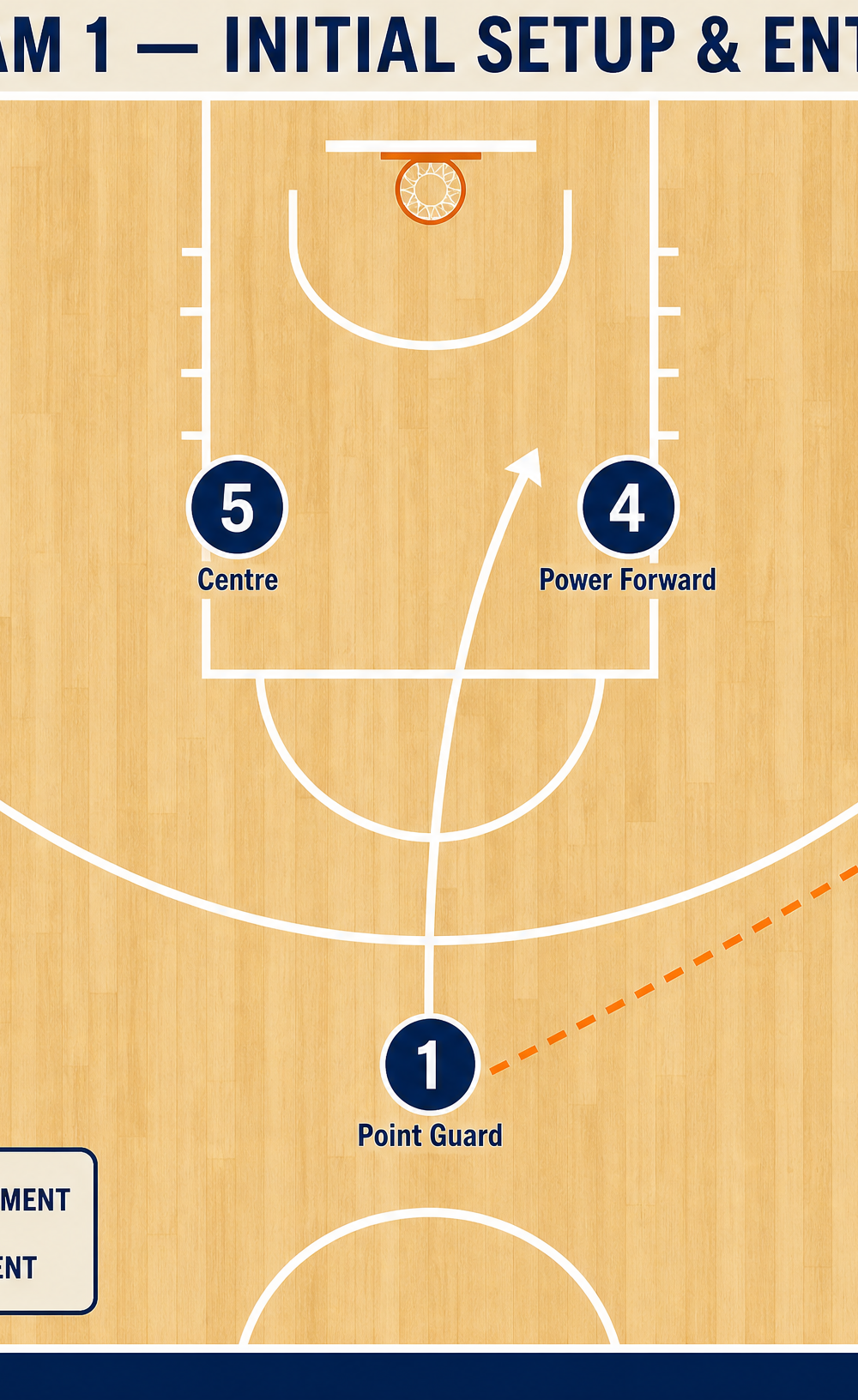
Court Dimensions: Standard FIBA Court (28m x 15m)
Equipment Needed: 1 Basketball, 5 Players
Player Positions:
- Player 1 (Point Guard): Starts with the ball at the top of the key, slightly offset to one side.
- Player 2 (Shooting Guard): Positioned on the right wing, outside the three-point arc.
- Player 3 (Small Forward): Positioned on the left wing, outside the three-point arc.
- Player 4 (Power Forward): Starts on the right low post or short corner area.
- Player 5 (Centre): Starts on the left low post or short corner area.
3. Step-by-Step Instructions
Phase 1: The Entry Pass and Initial Cut
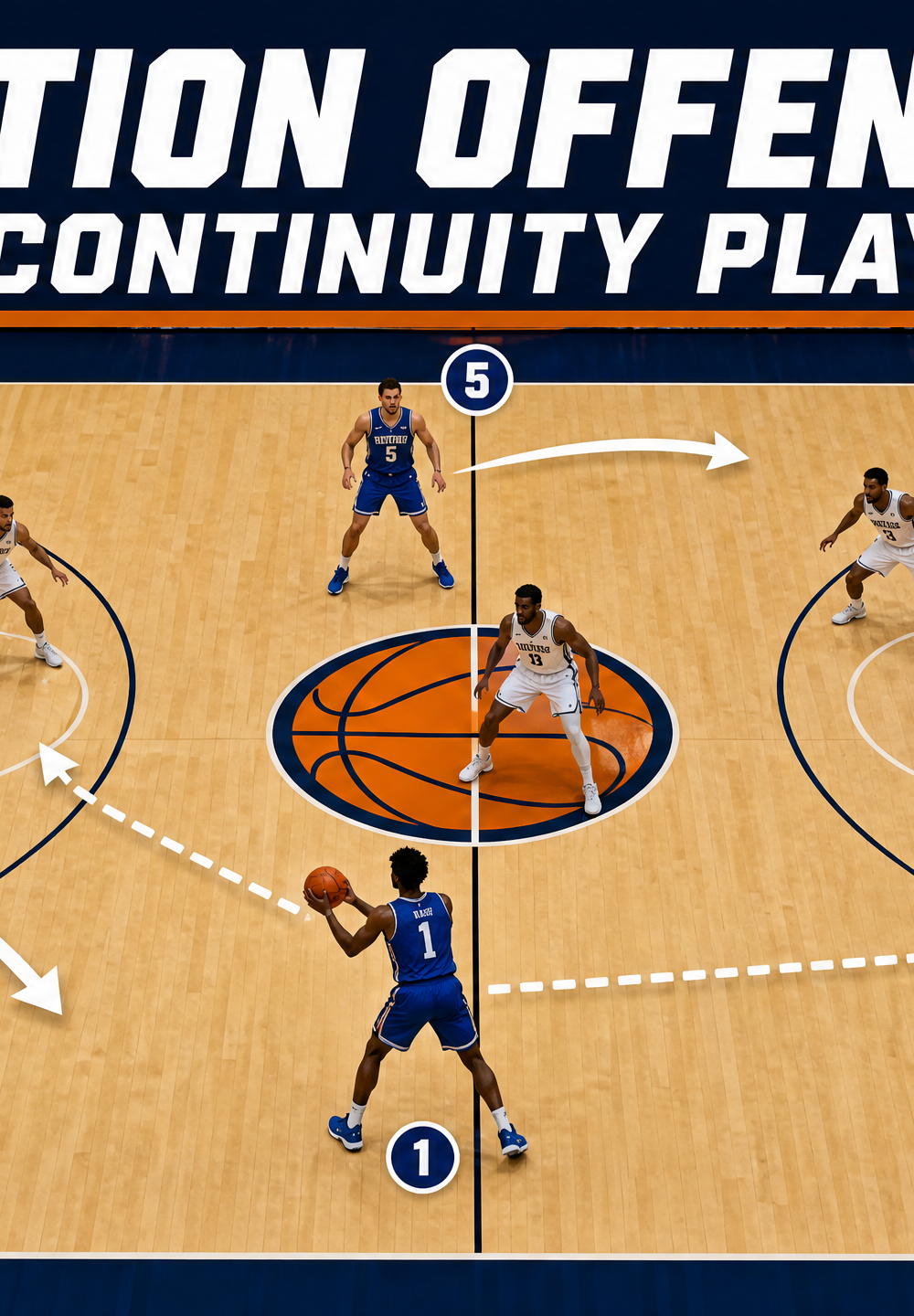
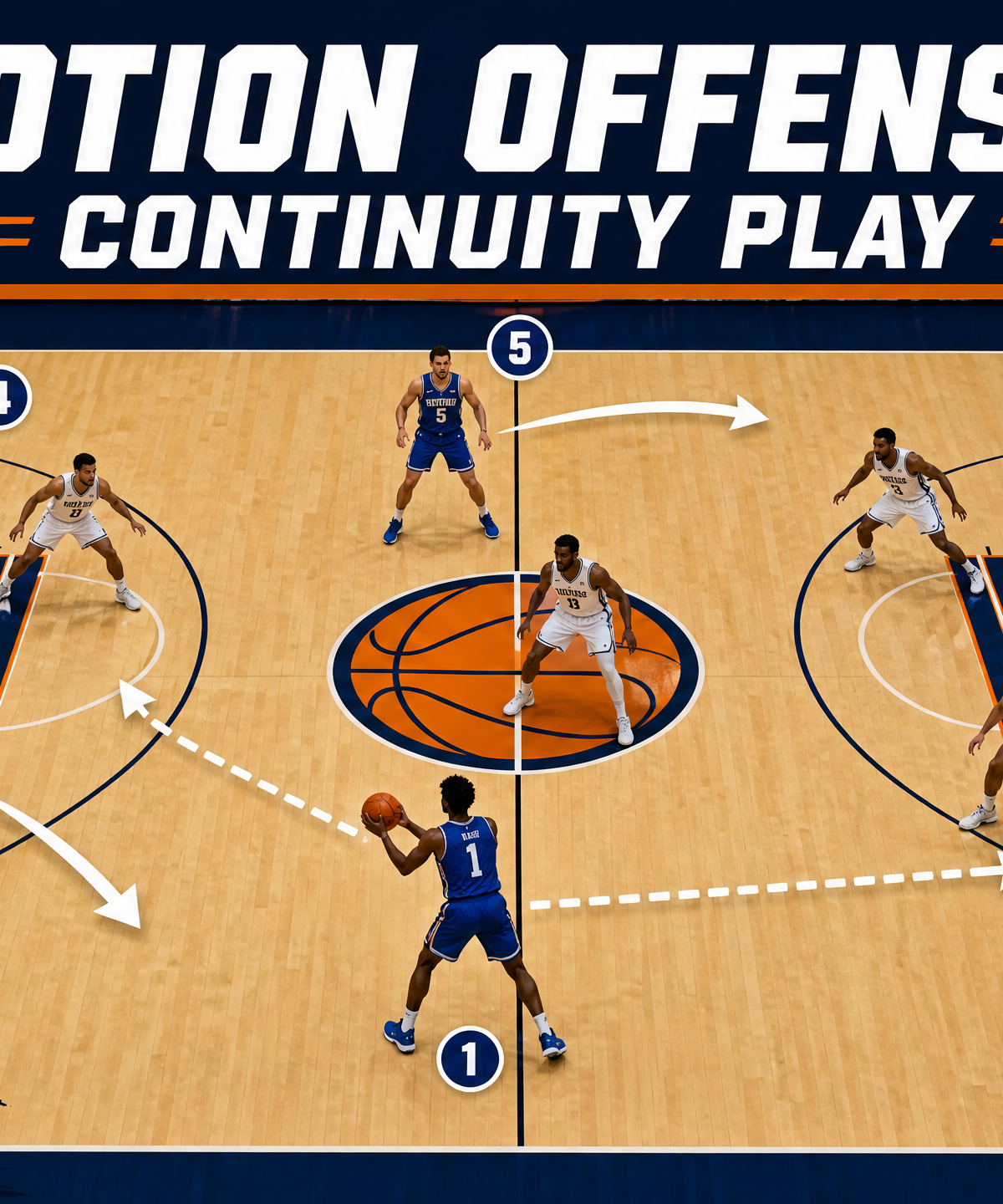
- Initiation: Player 1 brings the ball down the court and calls the play. They initiate the offense by making an entry pass to Player 2 on the right wing.
- The Cut: Immediately after passing, Player 1 makes a hard, decisive cut toward the basket. This cut must be purposeful, looking to receive a quick return pass for a layup if the defender falls asleep.
- Post Reaction: As Player 1 cuts, Player 4 (on the strong-side post) reads the defense. If Player 1's cut is covered, Player 4 can either hold position or flash to the high post to provide an outlet.
Phase 2: Wing Pass and Backdoor Action
- Clearing the Strong Side: If Player 1 does not receive the ball on their initial cut, they continue their run and clear out to the strong-side corner (right corner in this scenario).
- High Post Flash: Player 5 (weak-side post) flashes hard to the high post/elbow area. Player 2 looks to pass the ball to Player 5.
- Backdoor Cut: As the pass is made to Player 5, Player 3 (weak-side wing) executes a sharp backdoor cut toward the basket. Player 5 looks immediately for Player 3 for a high-percentage layup.
- Filling Spots: Simultaneously, Player 4 pops out to the right corner, and Player 1 fills the empty left wing spot to maintain spacing.
Phase 3: Continuity Reset and Scoring Options
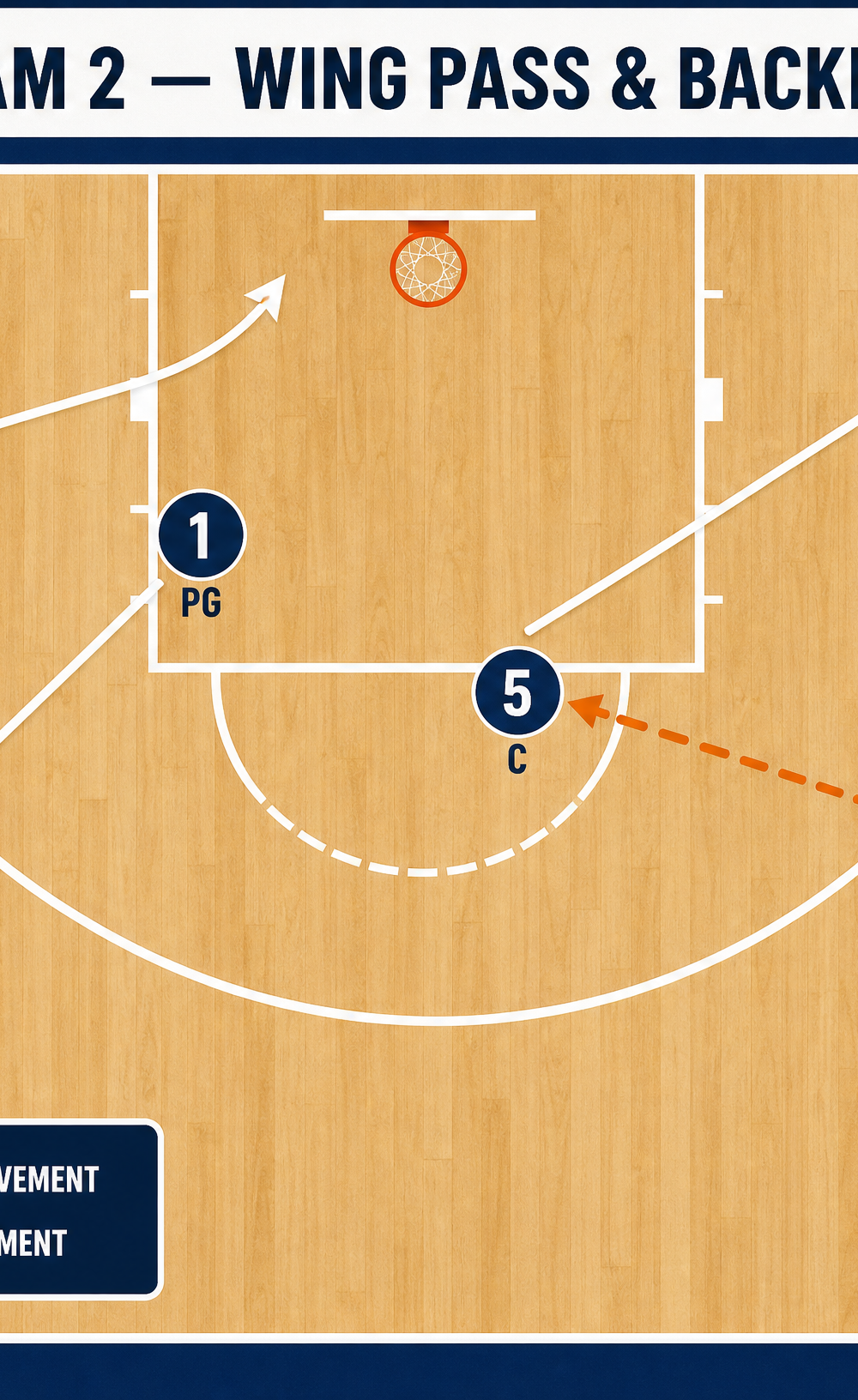
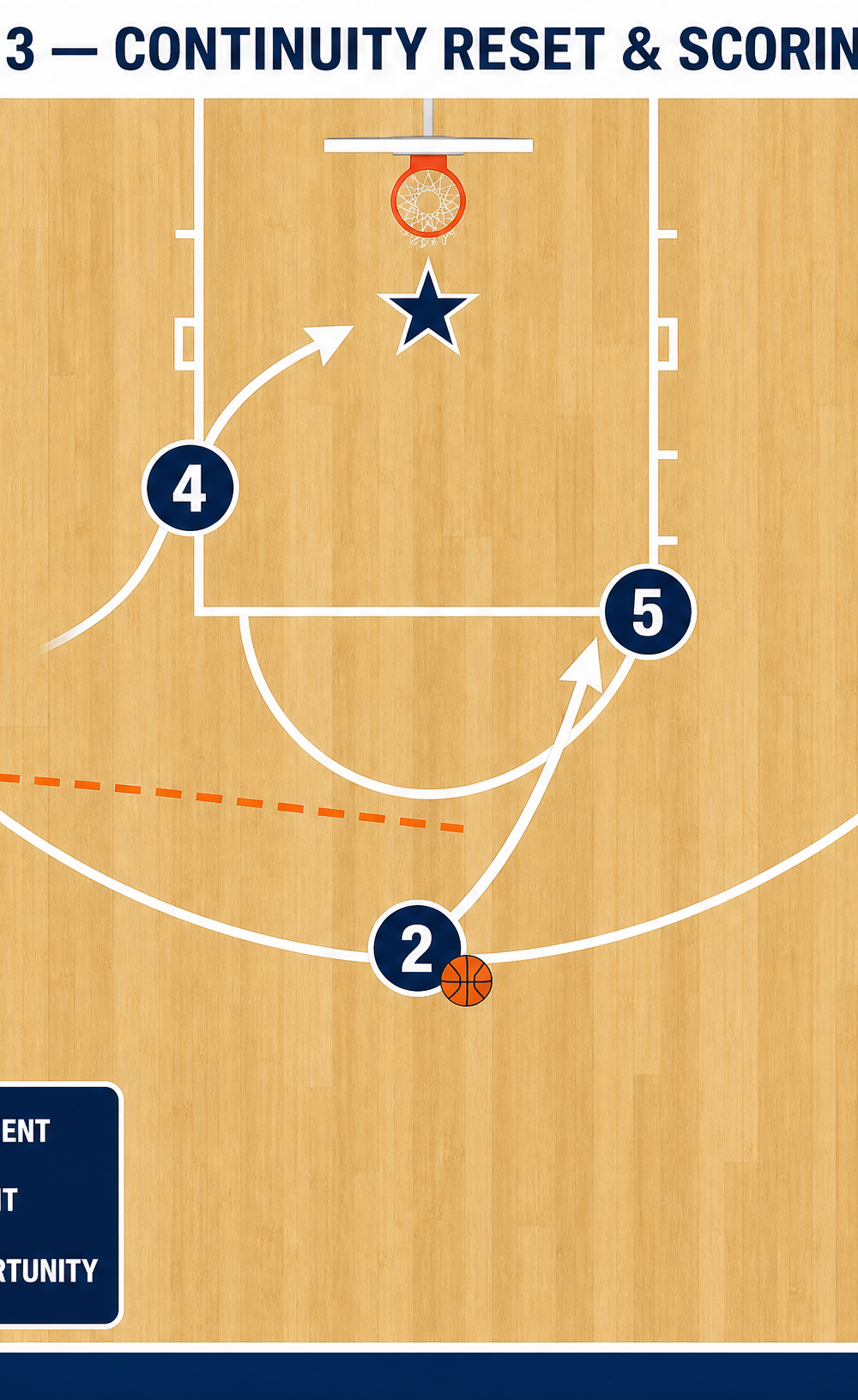
- UCLA Screen: If the backdoor cut by Player 3 is covered, Player 3 clears to the left corner. Player 5 keeps the ball at the high post.
- Resetting the Top: Player 2 (who passed to Player 5) sets a UCLA screen for Player 1 (who has filled the top spot). Player 1 cuts hard off the screen toward the basket.
- Wing Pass: If Player 1 is not open on the cut, Player 5 passes the ball out to Player 3 on the left wing.
- Continuity: The offense is now reset on the opposite side of the floor. Player 5 follows their pass to set a ball screen for Player 3, or dives to the post, while the other players fill the open spots (4-out, 1-in alignment) to run the continuity again.
4. Key Coaching Points
- Spacing is Critical: Players must maintain proper 15-18 foot spacing to stretch the defense and open up driving and passing lanes.
- Hard Cuts: Every cut must be made at game speed. A slow cut allows the defense to recover and clogs the offensive flow.
- Read the Defense: Players must react to how they are being defended. If overplayed, backdoor cut. If the defender sags, pop out for a shot.
- Pass and Move: The ball should never stick. As soon as a pass is made, the passer must move (cut, screen, or fill an empty spot).
- Post Positioning: The post player must establish a wide base and present a clear target hand when flashing to the high or low post.
5. Common Mistakes
- Standing Still: Players watching the ball handler instead of moving to the next spot or setting a screen.
- Poor Spacing: Players creeping too close to each other, allowing one defender to guard two offensive players.
- Telegraphed Passes: Staring down the intended receiver, allowing the defense to anticipate and intercept the pass.
- Weak Screens: Setting screens without a wide base or proper angle, making them ineffective and easy for the defense to navigate.
6. Variations & Progressions
- Dribble Entry: Instead of a pass to initiate the offense, Player 1 can use a dribble hand-off (DHO) with a wing player to start the motion.
- Pick and Roll Option: Integrate a ball screen between the wing player and the post player if the initial continuity breaks down or the shot clock is winding down.
- 5-Out Alignment: For teams with five perimeter-oriented players, modify the offense to a 5-Out motion, emphasizing more backdoor cuts and dribble penetration.
7. Age Adaptations
- Under 10 / Under 12: Focus heavily on the basic pass and cut action. Simplify the offense by removing complex screens and emphasizing spacing and hard cuts to the basket.
- Under 14 / Under 16: Introduce the high post flash and backdoor cuts. Teach players how to read the defense and make decisions based on defensive positioning.
- Open / Advanced: Implement the full continuity with all screening actions (UCLA screens, down screens). Focus on advanced reads, quick ball reversals, and exploiting mismatches.