

Football
4v4 Transitions: The Ultimate Small-Sided Game for Speed and Reactions
Master the art of quick transitions with this high-intensity 4v4 small-sided game designed to improve reaction times, pressing, and counter-attacking speed.
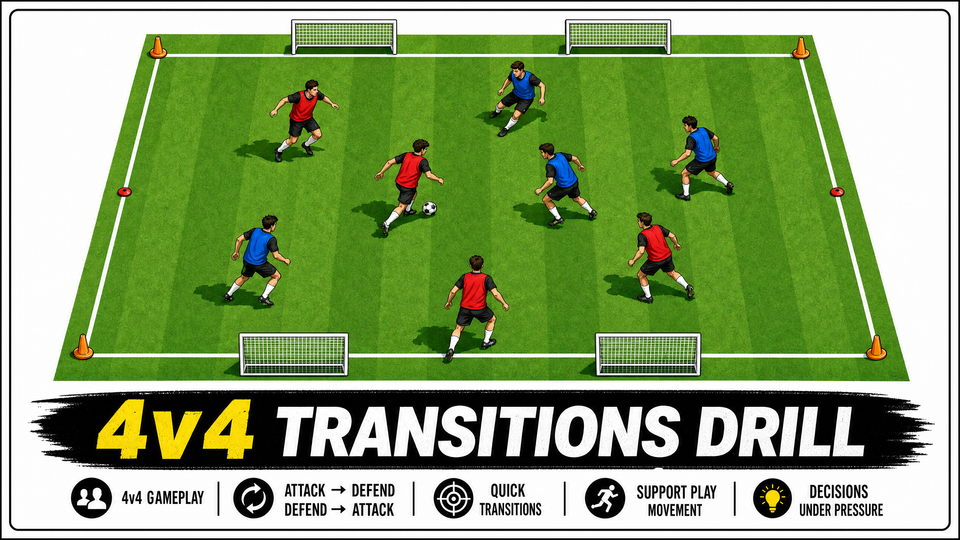
What you need
4 small pop-up goals or cones, Bibs (2 colours), Footballs, Marker cones for pitch boundaries
1. Overview
The 4v4 transitions small-sided game is a high-intensity drill designed to replicate the chaotic, fast-paced nature of modern football. In today's game, the moments immediately following a turnover—whether winning or losing the ball—are critical. This drill focuses heavily on those exact moments. By utilizing four small goals (two on each end), players are forced to make rapid decisions, switch play, and react instantly to changes in possession. It is an excellent session for developing tactical awareness, improving cardiovascular fitness, and teaching players how to exploit disorganized defenses or quickly reform a defensive block.
2. Setup
Proper setup is crucial for maintaining the intensity and flow of the drill. Ensure all equipment is ready before the players arrive.
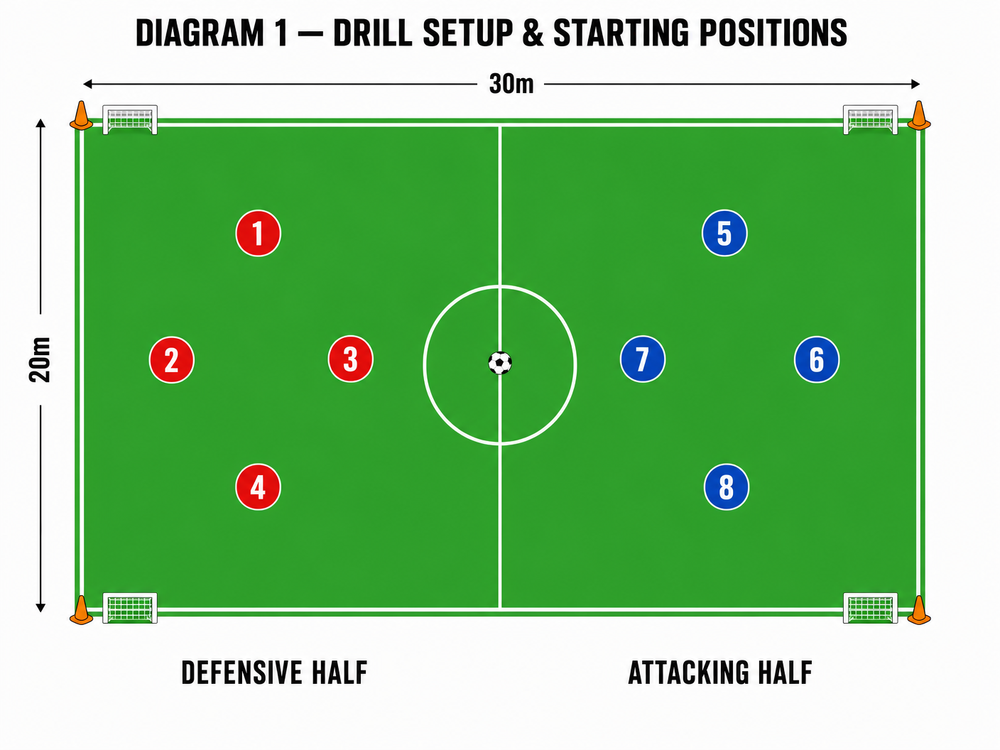
- Pitch Dimensions: Create a playing area of 30m x 20m. This tight space ensures constant engagement and forces quick decision-making.
- Equipment: 4 small pop-up goals (or use cones to create 3m wide gates), plenty of footballs around the perimeter for quick restarts, and two sets of different coloured bibs (e.g., Red and Blue).
- Goal Placement: Place two goals on each end line, positioned in the corners. This encourages teams to use the full width of the pitch and switch play.
- Players: 8 players divided into two equal teams of 4 (4v4).
3. Step-by-Step Instructions
- Starting Positions: Both teams start in their respective halves. The coach serves a ball into the centre of the pitch to initiate play, or one team starts with possession from their defensive line.
- General Play: The objective is simple: score in either of the opponent's two goals. Standard football rules apply, but there are no throw-ins or corners to keep the game flowing. If the ball goes out, the coach immediately serves a new ball to the team that should have possession.
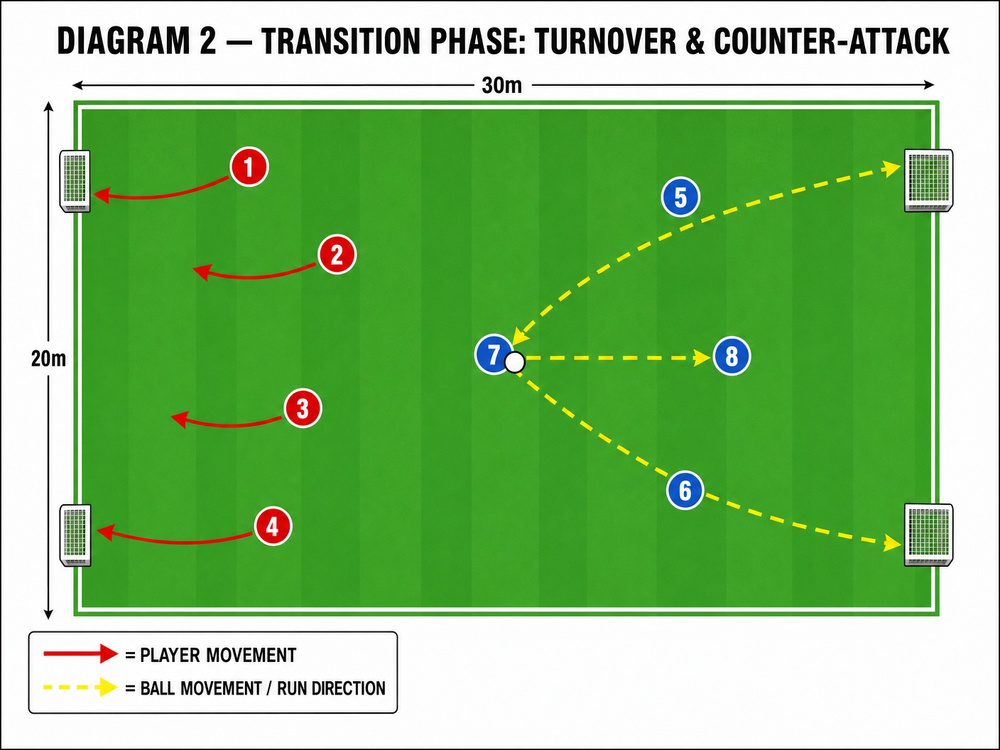
- The Turnover (Attacking Transition): When the defending team wins the ball, they must immediately look to counter-attack. The presence of two goals means they should quickly assess which goal is less defended and exploit that space.
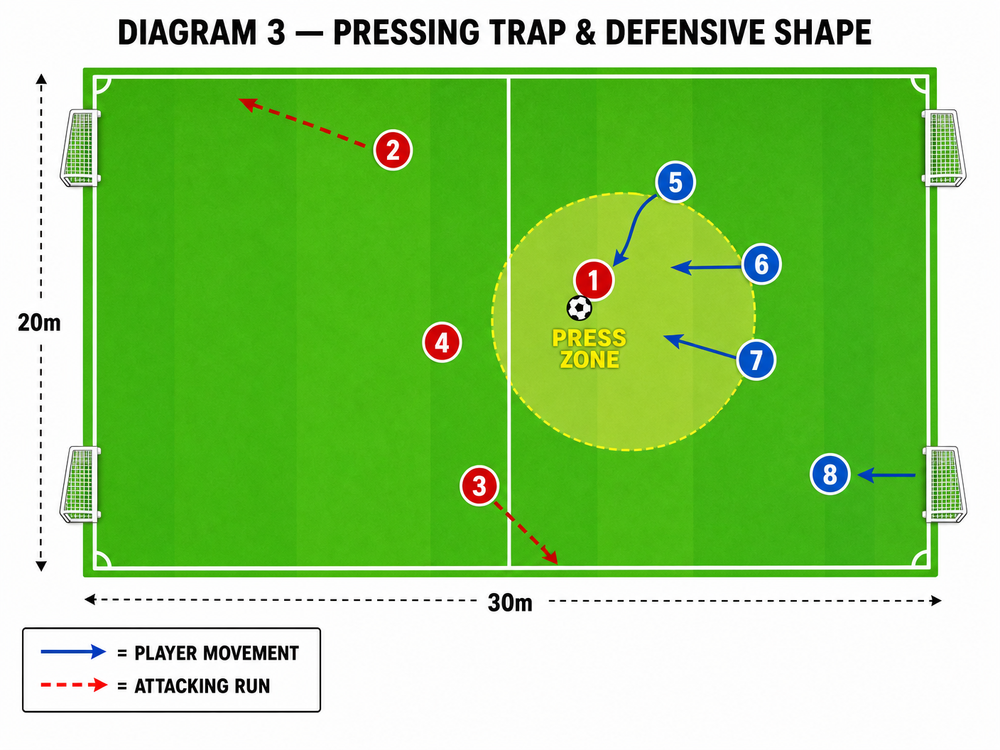
- The Turnover (Defensive Transition): The team that loses the ball must react instantly. They need to apply immediate pressure (counter-press) to delay the attack and quickly drop into a compact defensive shape to protect their two goals.
- Scoring: A goal is awarded for scoring in either of the opponent's goals. To increase difficulty, you can stipulate that goals must be scored from within a certain distance (e.g., the attacking half).
4. Key Coaching Points
- Immediate Reaction: The split-second the ball is lost or won is the most important moment. Demand instant reactions. Attackers must sprint to exploit space; defenders must sprint to press or recover.
- Scanning and Awareness: Players must constantly scan the pitch. Because there are two goals to attack and defend, tunnel vision will lead to failure. Encourage players to keep their heads up before receiving the ball.
- Speed of Play: Encourage quick passing and movement. One or two-touch football should be the goal, especially during the counter-attack phase.
- Compactness in Defense: When possession is lost, the team must quickly squeeze the space. If the immediate press fails, they must drop and form a tight block to protect the goals, forcing the opposition wide.
- Exploiting Width: In attack, use the full width of the pitch. If the defense shifts to cover one goal, quickly switch the play to attack the opposite, unprotected goal.
5. Common Mistakes
- Sluggish Transitions: Players jogging back after losing the ball instead of sprinting. This defeats the entire purpose of the drill.
- Forcing the Play: Attacking a heavily defended goal when the other goal is wide open. Players must learn to switch the point of attack.
- Lack of Communication: Silence on the pitch leads to disorganized pressing and missed attacking runs. Demand clear, concise communication.
- Over-Dribbling: Players taking too many touches in tight areas instead of moving the ball quickly to exploit gaps.
6. Variations & Progressions
- Touch Limit: Introduce a 2-touch or 3-touch maximum to increase the speed of play and force quicker decision-making.
- Time Limit on Attacks: To encourage lightning-fast counter-attacks, stipulate that a team must shoot within 8 seconds of winning the ball.
- Directional Play: Instead of scoring in either goal, designate one goal for the left-sided players and one for the right, forcing specific attacking patterns.
- Add a Joker: Introduce a neutral player (a 'Joker') who always plays for the team in possession, creating a constant 5v4 overload to encourage attacking success.
7. Age Adaptations
- Under 8s – Under 10s: Focus primarily on the basic mechanics of the game. Keep the pitch slightly larger to give them more time on the ball. Emphasize the fun aspect of having lots of goals to score in.
- Under 12s – Under 14s: Begin focusing heavily on the speed of transition. Introduce touch limits and demand quicker reactions upon losing the ball.
- Under 16s – Open Age: The drill should be played at match intensity. Demand tactical sophistication, coordinated pressing traps, and ruthless efficiency in front of goal.
