Bowling Run-Up Alignment & Crease Positioning Drill
A foundational fast bowling drill designed to correct run-up deviation, ensure a straight approach to the crease, and establish consistent foot placement in the delivery stride.
Equipment Needed
1. Overview
For any fast or medium-pace bowler, the run-up is the engine room of the delivery. If a bowler's approach is misaligned, they will bleed energy laterally, compromise their action at the crease, and struggle with consistent line and length.
The Bowling Run-Up Alignment Drill is a critical, coach-led session designed to correct 'running in on an angle' or 'drifting' during the approach. By creating a visual corridor and establishing strict landing zones at the crease, this drill helps bowlers develop a straight, energy-efficient run-up that directs all momentum straight toward the target. It is an essential diagnostic and corrective tool to use during pre-season or when a bowler is struggling with rhythm and wide deliveries.
2. Setup
Equipment Needed:
- 10-12 bright marker cones
- 1 roll of white athletic tape or string line
- 6 cricket balls per bowler
- Stumps (both ends)
- Measuring tape
Pitch & Field Setup:
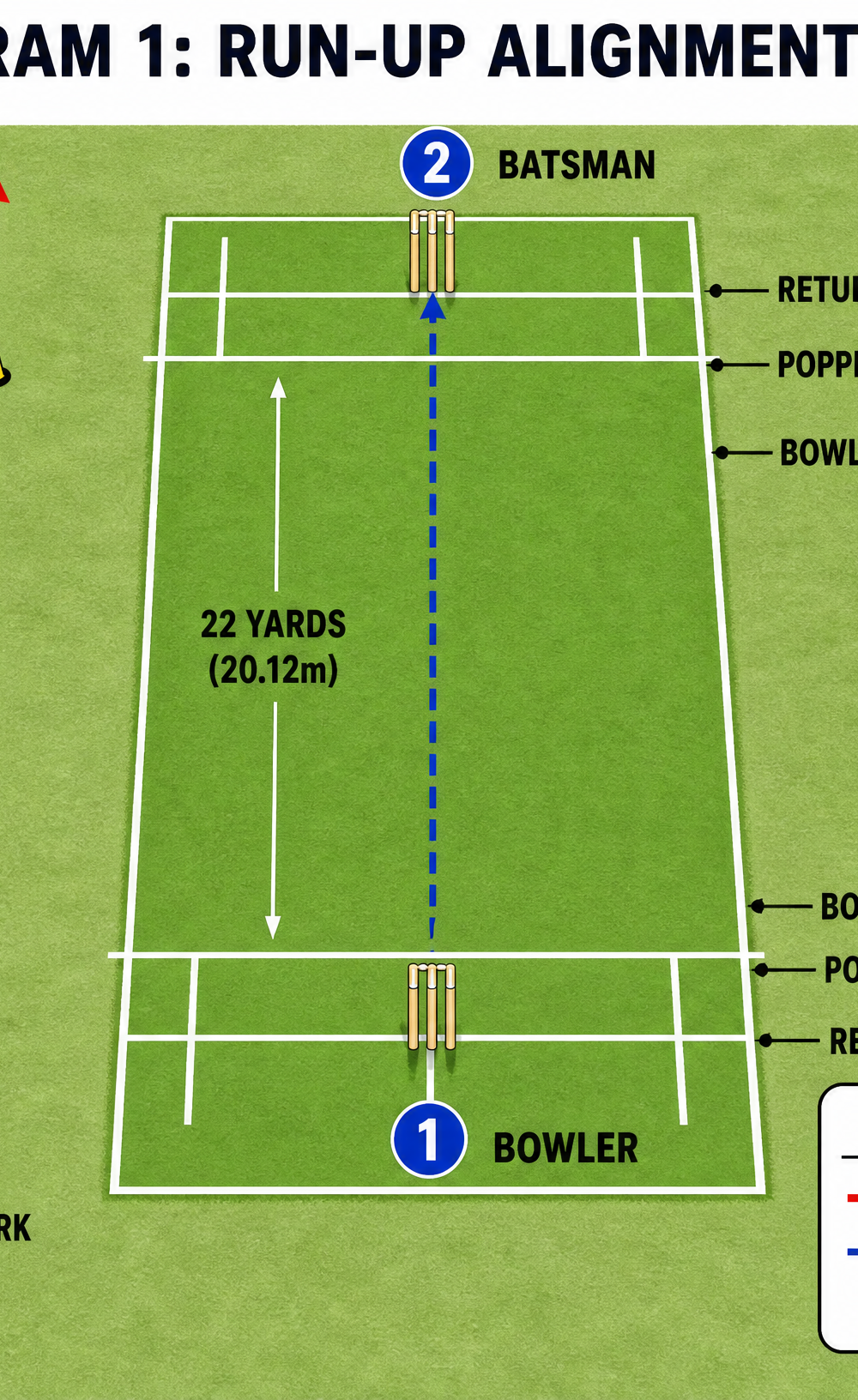
Set up on a standard 22-yard cricket pitch (turf or synthetic).
- Measure the bowler's standard run-up length from the bowling crease and mark the start point.
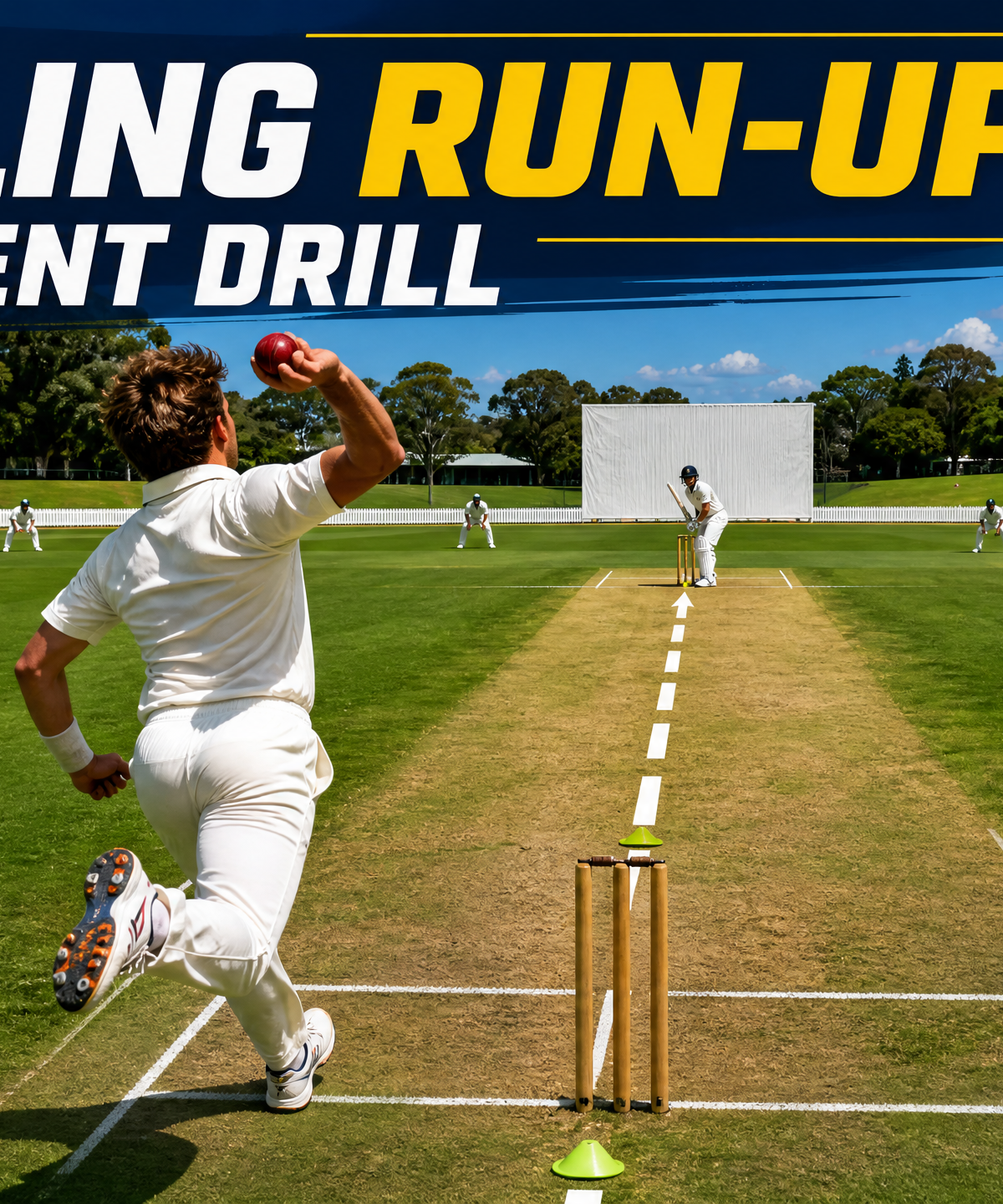
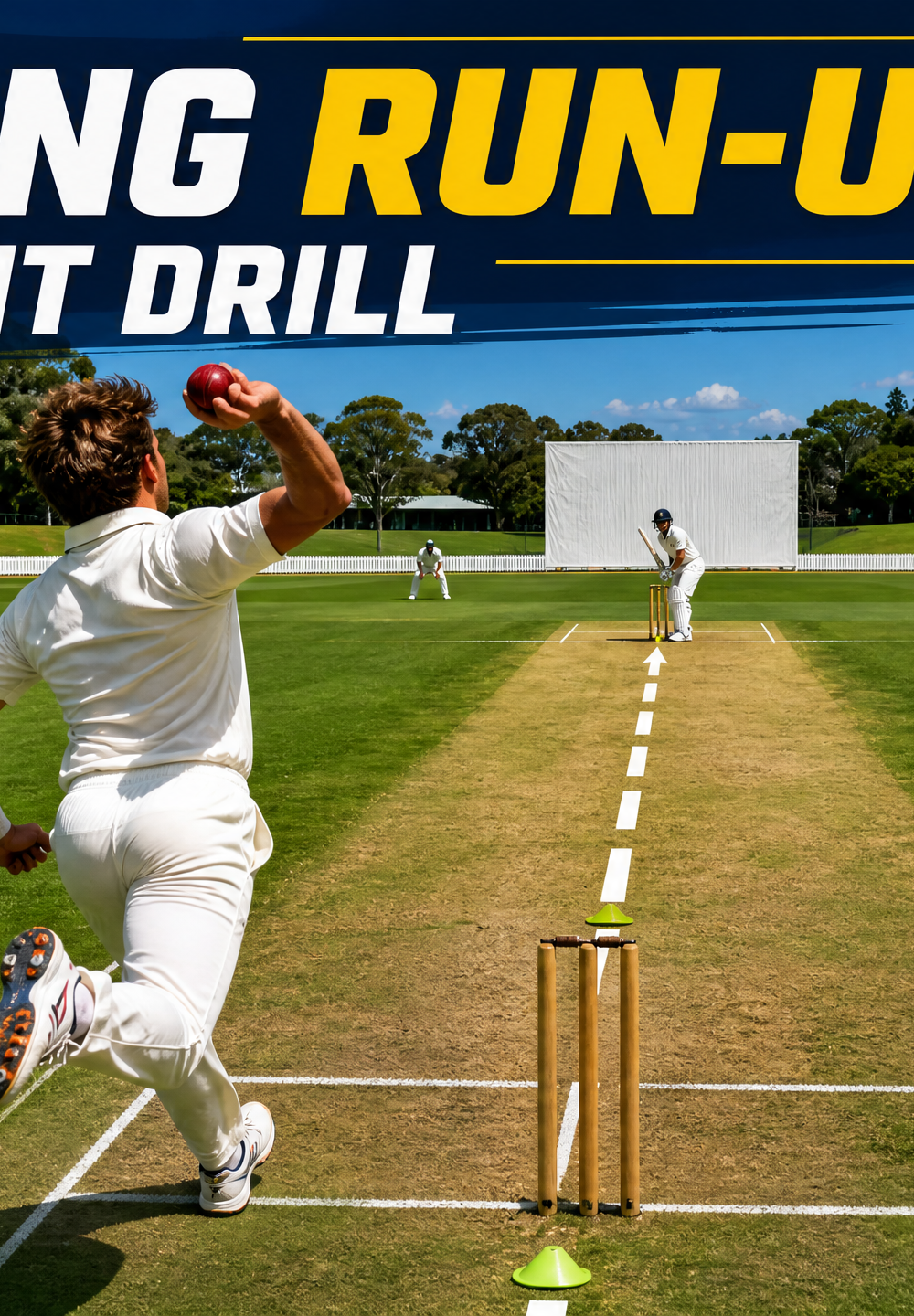
- Lay a straight white tape line (or string) starting from the run-up mark, running parallel to the return crease, all the way to the bowling crease. This is the 'Alignment Guide'.
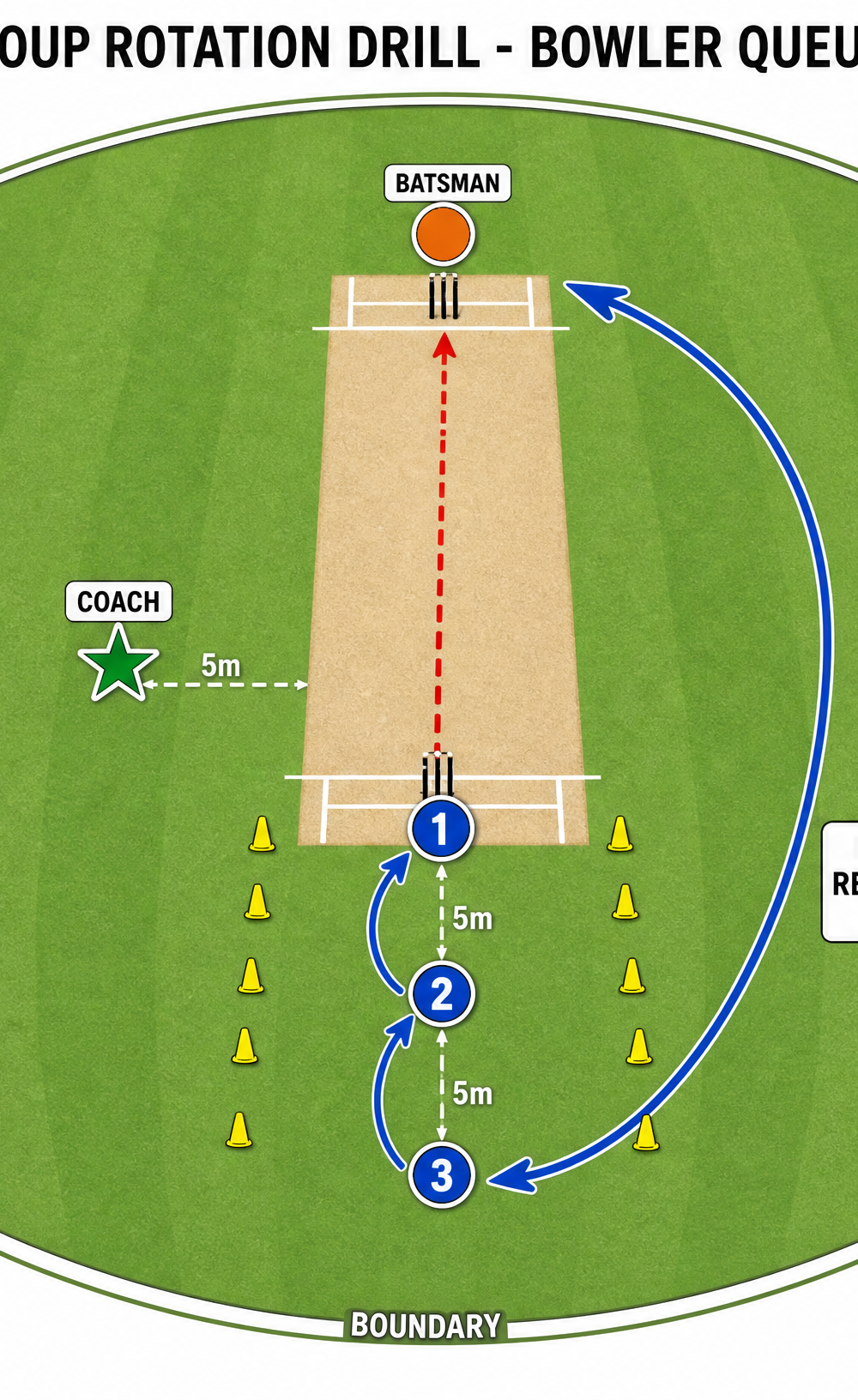
- Place a series of cones 1.5 metres apart along the outside of the bowler's natural approach path to create a visual 'corridor'.
3. Step-by-Step Instructions
- Establish the Mark: Have the bowler start at their designated run-up mark (Position 1). Ensure they are facing exactly down the pitch toward the target stumps, not angled toward fine leg or slips.
- The Walk-Through: Before bowling a ball, instruct the bowler to walk, then jog, their run-up path. They must keep their non-bowling shoulder aligned with the white tape guide line. The coach should stand behind the stumps at the non-striker's end to check for lateral drift.
- The Corridor Run: The bowler begins their full run-up, staying inside the cone corridor. The focus here is on linear momentum—running straight, with arms pumping forward and back, not across the body.
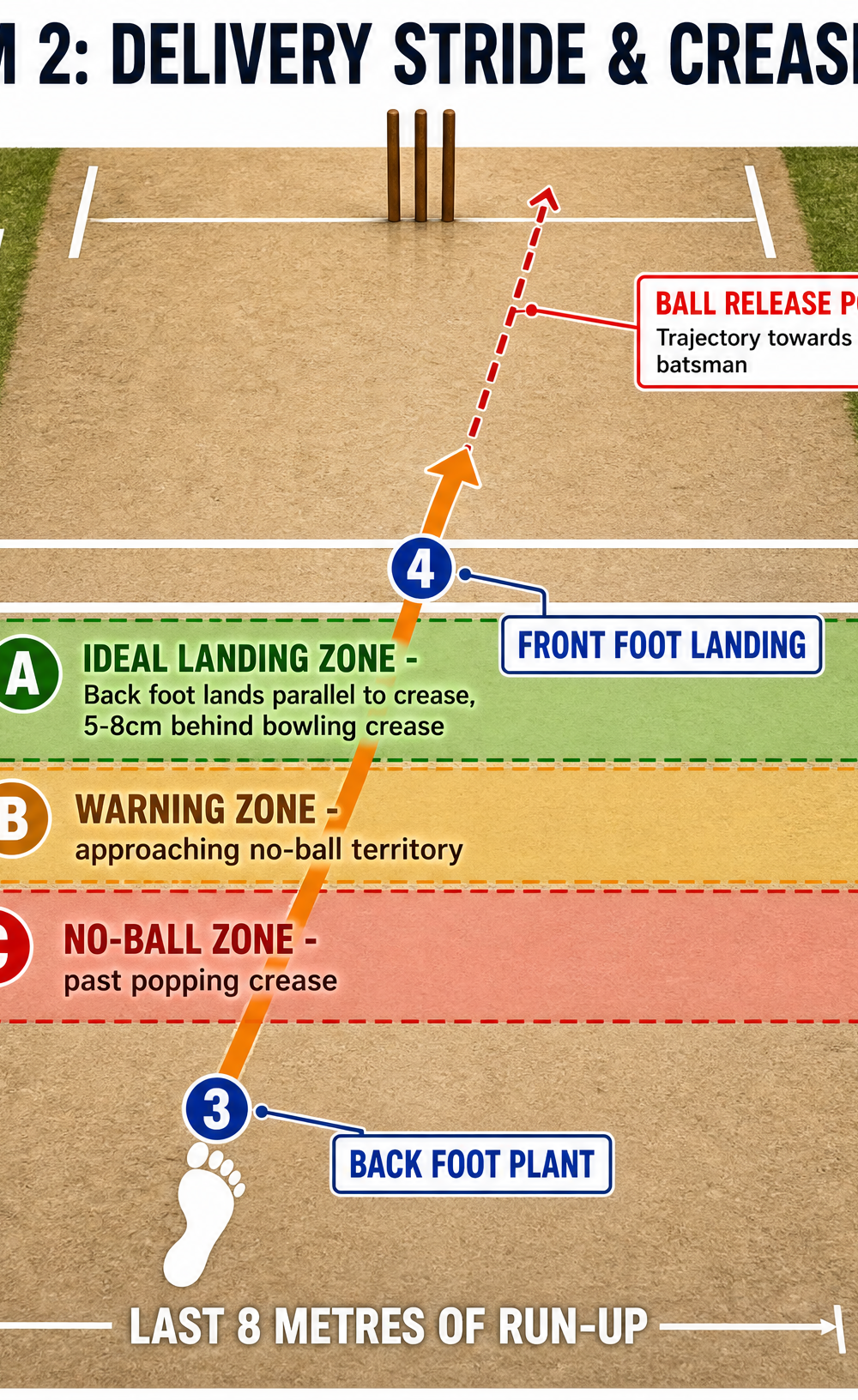
- Crease Arrival (The Gather): As the bowler enters the final 3-4 strides (the gather), they must maintain the straight line. The coach must watch the back foot plant (Position 3) to ensure it lands parallel to the crease, not angled away.
- Delivery Stride: The bowler executes the delivery stride, landing the front foot (Position 4) pointing toward the target.
- Follow-Through: After releasing the ball, the bowler must follow through straight down the pitch, ideally running off the pitch to the side without crossing the danger area, maintaining the forward momentum established in the run-up.
4. Key Coaching Points
- Head Position is King: The bowler's head must remain still and level throughout the run-up. If the head falls away to the off-side or leg-side, the body and alignment will follow. Eyes must be locked on the target area (top of off stump or the keeper's gloves).
- Arm Drive Mechanics: Ensure the bowler's arms are driving straight forward and backward like a sprinter. Arms crossing the midline of the body will cause rotational torque too early, leading to a curved run-up.
- Hip Alignment: Hips should be square to the target during the run-up, only rotating as the bowler enters the gather and delivery stride (depending on whether they are side-on, front-on, or mixed action).
- The Gather Phase: The transition from running to the delivery stride must be smooth. The bowler should not 'jump' excessively high, as this loses forward momentum and causes alignment issues upon landing. The momentum must drive through the crease.
- Consistent Footfall: The back foot must land in the same position relative to the return crease every time to ensure a consistent release point.
5. Common Mistakes
- Drifting in the Approach: Bowlers often start wide and run in on an angle toward the stumps. This forces them to bowl across their body, losing pace and accuracy. Correction: Narrow the cone corridor to force a straight path.
- Over-striding: Taking strides that are too long in the final few steps, causing the bowler to lean back and lose alignment at the crease. Correction: Place mini-hurdles or flat markers to dictate stride length in the final 5 metres.
- Looking Down: Bowlers looking at the crease line to avoid a no-ball rather than looking at the target. This drops the head and ruins posture. Correction: The coach calls out 'Head Up!' during the run-up; use the tape line for peripheral alignment instead of looking down.
- Falling Away: The bowler's head and non-bowling shoulder fall away to the off-side during the delivery stride, pushing the ball down the leg side. Correction: Focus on a strong, high non-bowling arm pulling straight down the line of the body.
6. Variations & Progressions
- Progression 1: The Blindfold Start (Advanced): Have the bowler close their eyes for the first 3 strides of their run-up, then open them. This tests their natural alignment and muscle memory without visual correction.
- Progression 2: Target Bowling: Once alignment is consistent, introduce target cones on a good length. The bowler must maintain the straight run-up while hitting the target zone.
- Variation 1: The Heavy Ball (Conditioning): Use a slightly heavier weighted ball for the walk-throughs (do not bowl at full pace). This forces the bowler to use their core and maintain strict alignment to balance the heavier weight.
7. Age Adaptations
- Under 10s / Under 12s: Keep the run-up very short (5-7 paces). Focus entirely on running in a straight line like a sprinter. Do not worry about complex crease mechanics; just ensure they run straight and bowl straight. Use chalk lines instead of tape to avoid tripping hazards.
- Under 14s / Under 16s: Introduce the full run-up length. This is the critical age to fix alignment issues before bad habits become ingrained. Focus heavily on the back foot contact position and the gather phase.
- Open / Seniors: Focus on micro-adjustments. Use video analysis from behind the stumps to track head deviation and lateral drift. The drill becomes about efficiency and maximizing pace through perfect linear momentum.