Centre Pass Set Play: The Double Drive for a Quick Goal
Master the 'Double Drive' centre pass set play to consistently break through defensive lines and secure quick, high-percentage scoring opportunities.
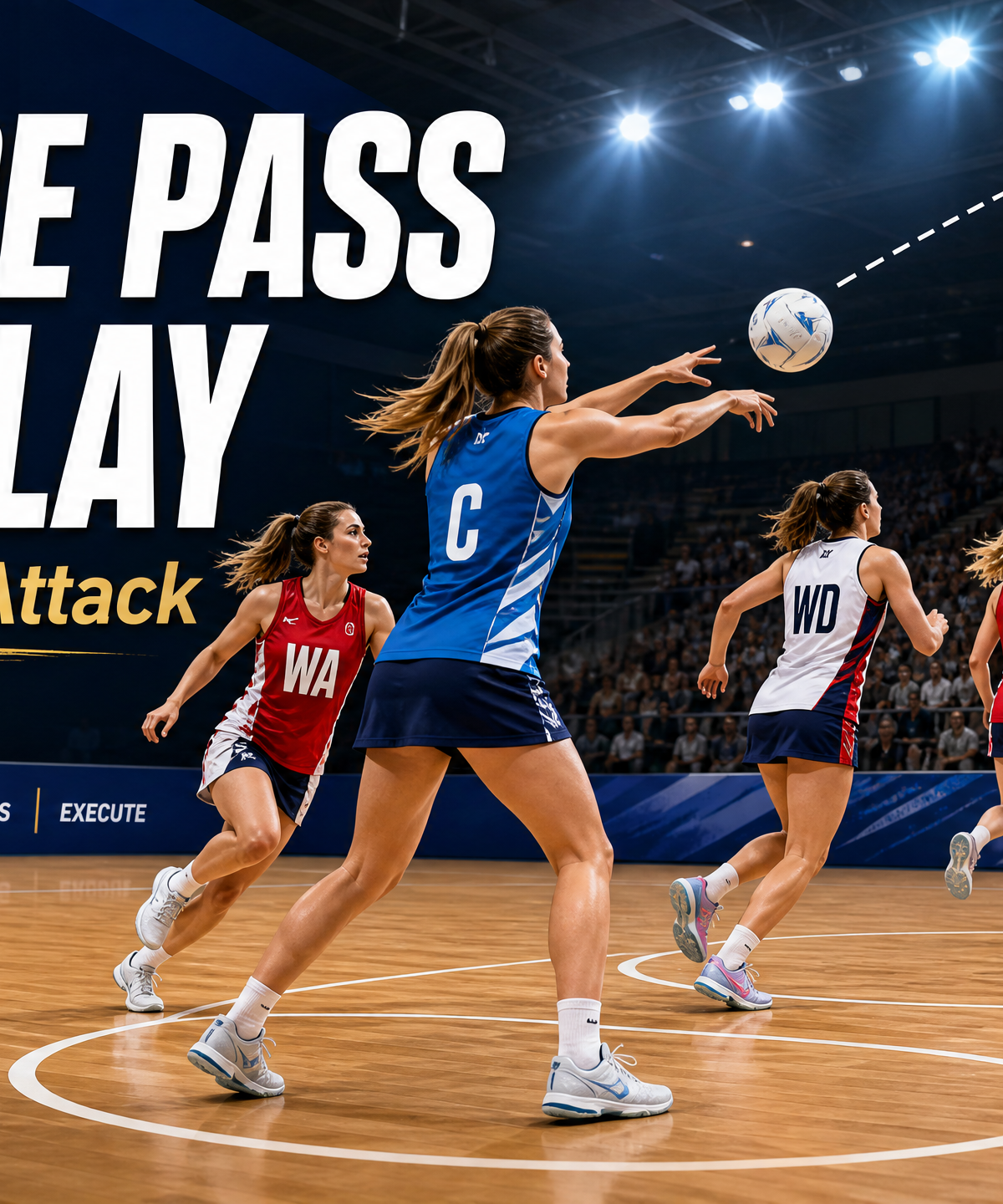
Equipment Needed
1. Overview
The 'Double Drive' is a highly effective centre pass set play designed to quickly transition the ball from the centre third directly into the goal circle. By utilising coordinated, explosive movements from the Wing Attack (WA) and Goal Attack (GA), this play aims to pull defenders out of position, creating a clear channel for a rapid feed to the Goal Shooter (GS). It is particularly useful against tight, one-on-one defensive setups, as it relies on timing and decisive cuts to generate separation. When executed correctly, it allows the attacking team to score within three passes, maintaining offensive momentum and putting immediate pressure on the opposition.
2. Setup
Court Requirements: Full netball court (30.5m x 15.25m)
Players Required: 7 players (focus on C, WA, GA, and GS)
Equipment Needed: 1 netball, bibs for all 7 positions
Starting Positions
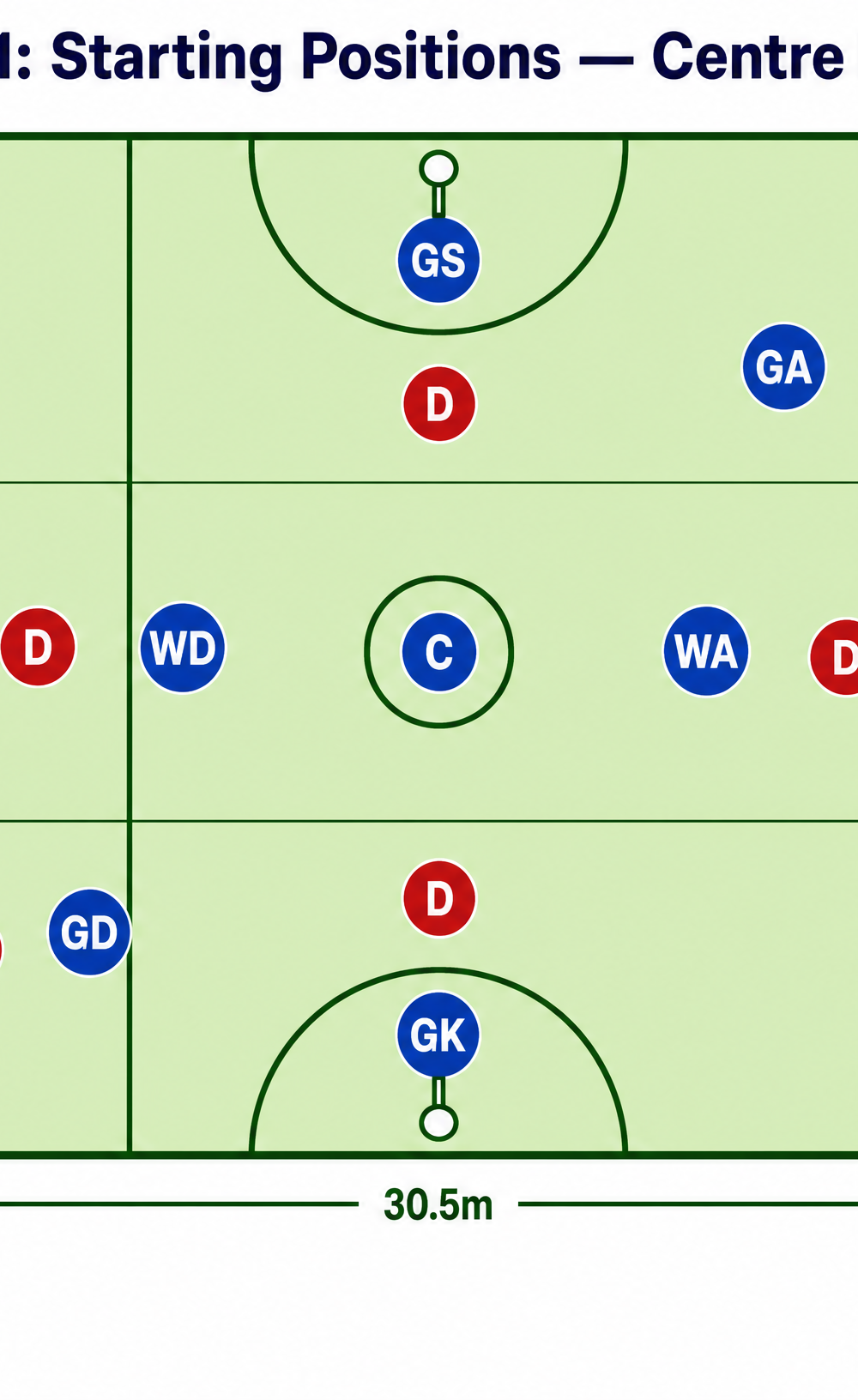
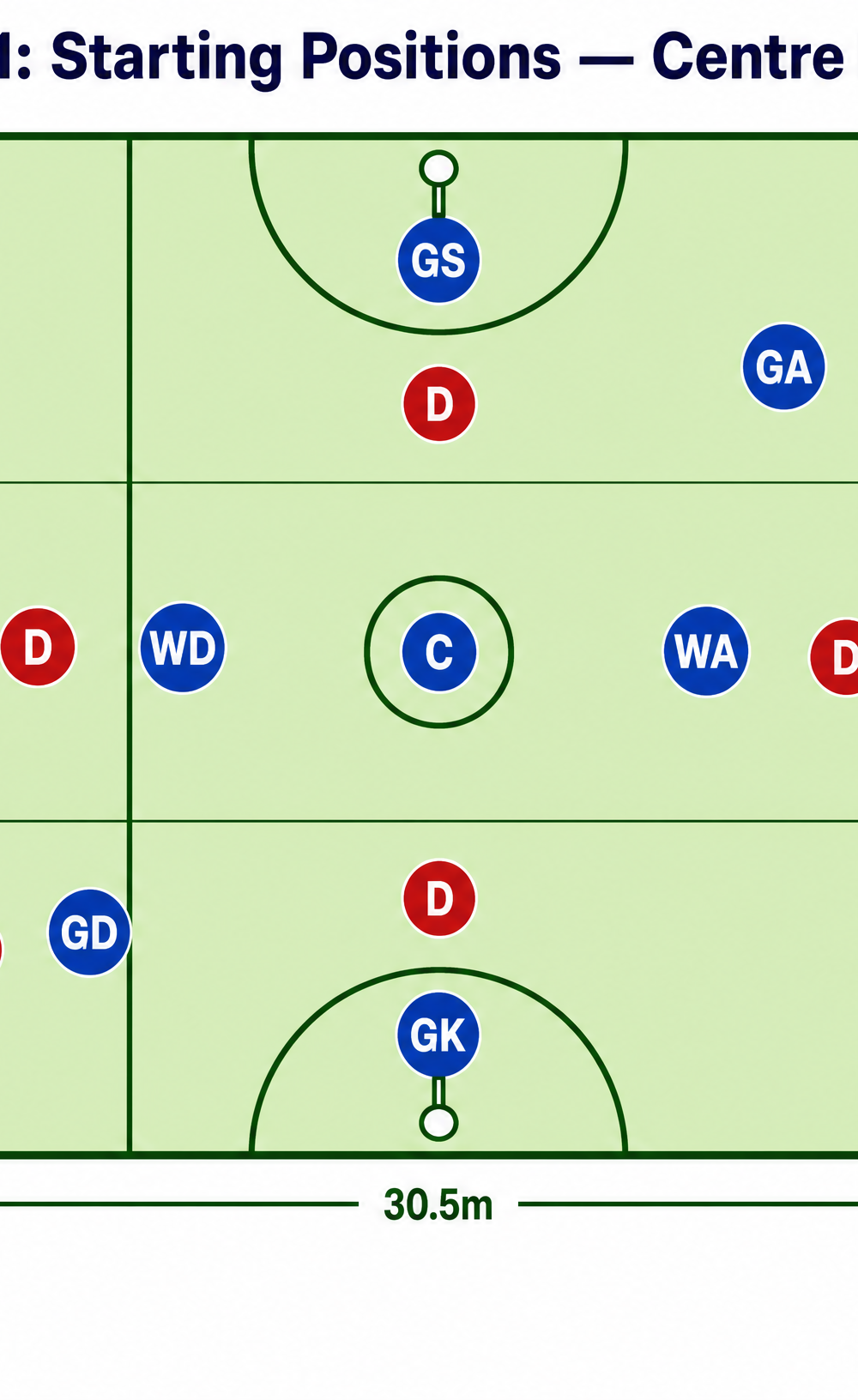
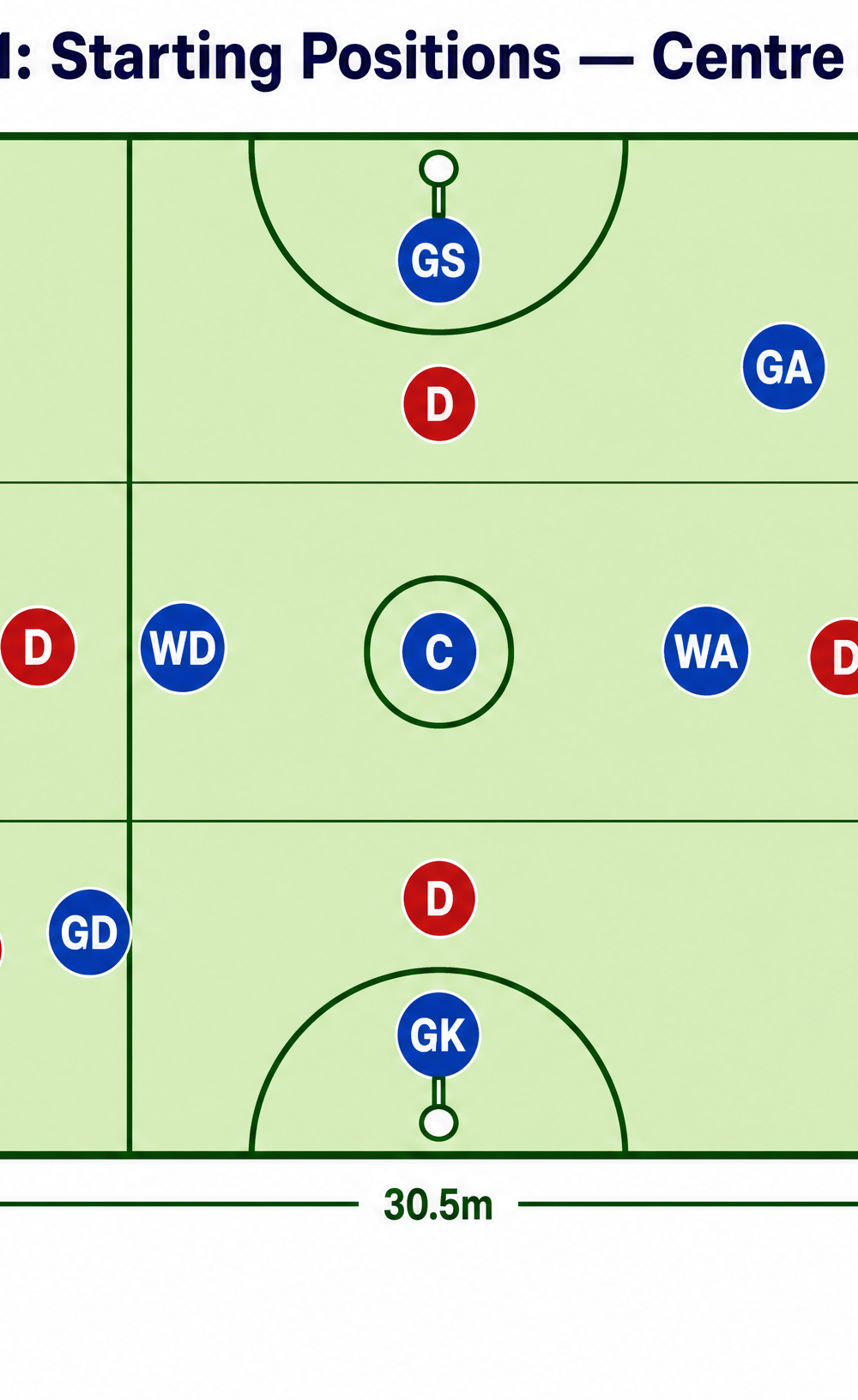
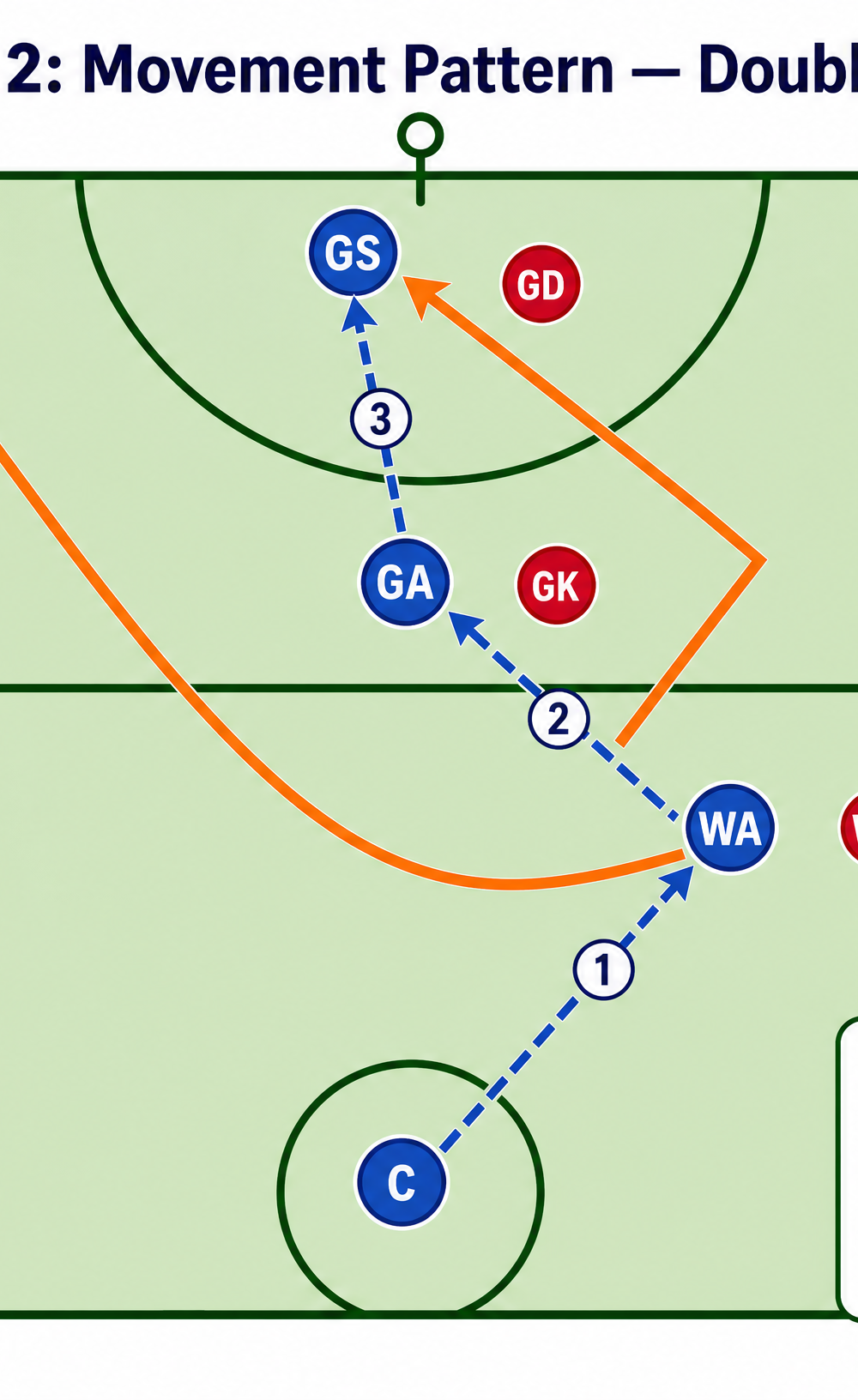
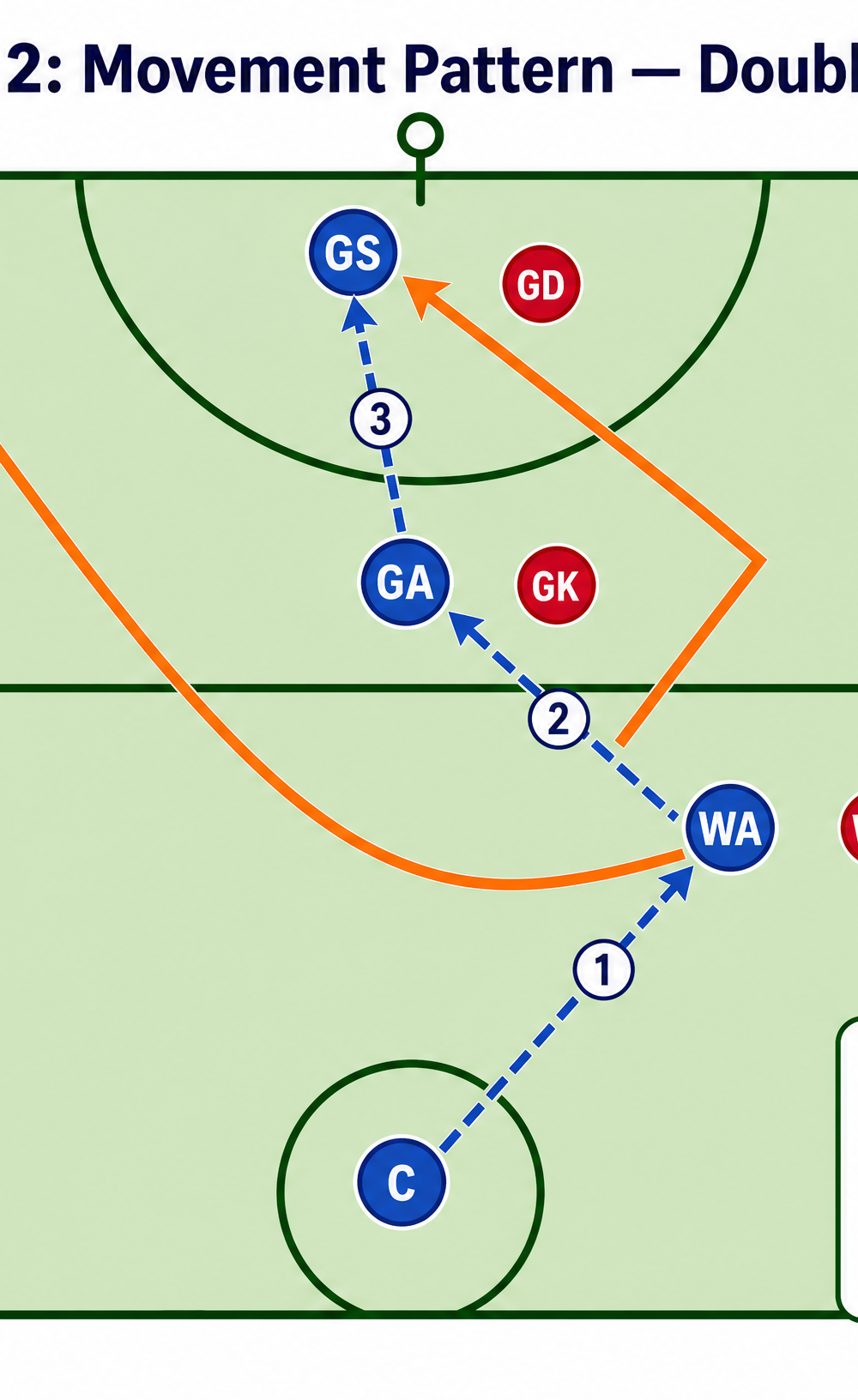
As shown in the diagram below, the starting positions are critical for the success of this play.
| Position | Starting Location | Role in Play |
|---|---|---|
| Centre (C) | Inside the centre circle | Initiates the play with the first pass |
| Wing Attack (WA) | Right side of the centre third, near the transverse line | Primary first-pass target; drives hard on whistle |
| Goal Attack (GA) | Centre of the attacking third | Executes the V-cut to receive the second pass |
| Goal Shooter (GS) | Inside the goal circle, near the top | Holds strong to receive the final circle feed |
| Wing Defence (WD) | Left side of the centre third | Provides secondary passing option for C |
| Goal Defence (GD) | Defensive third | Holds position to prevent counter-attack |
| Goal Keeper (GK) | Near the defensive goal circle | Holds position to prevent counter-attack |
3. Step-by-Step Instructions
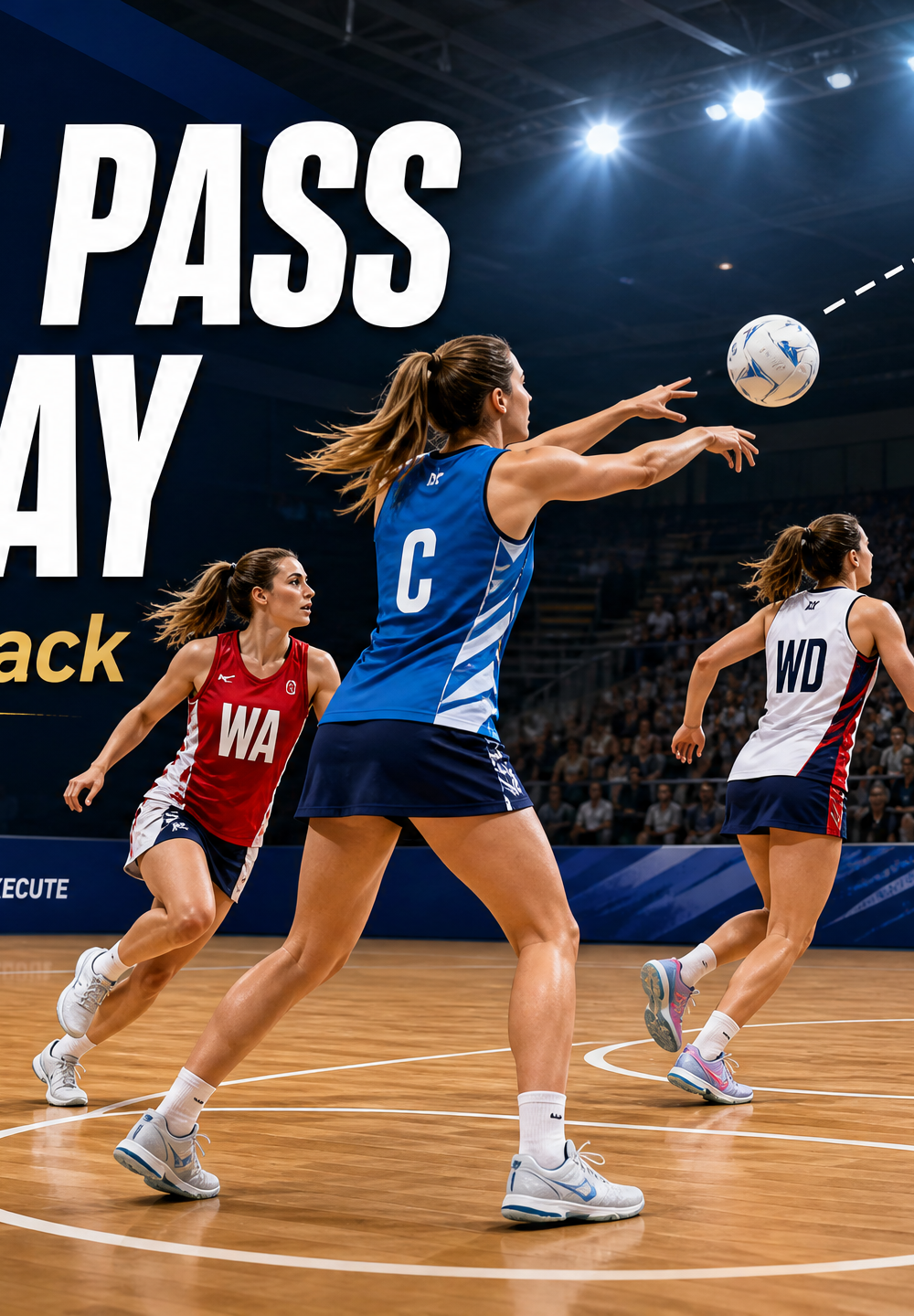
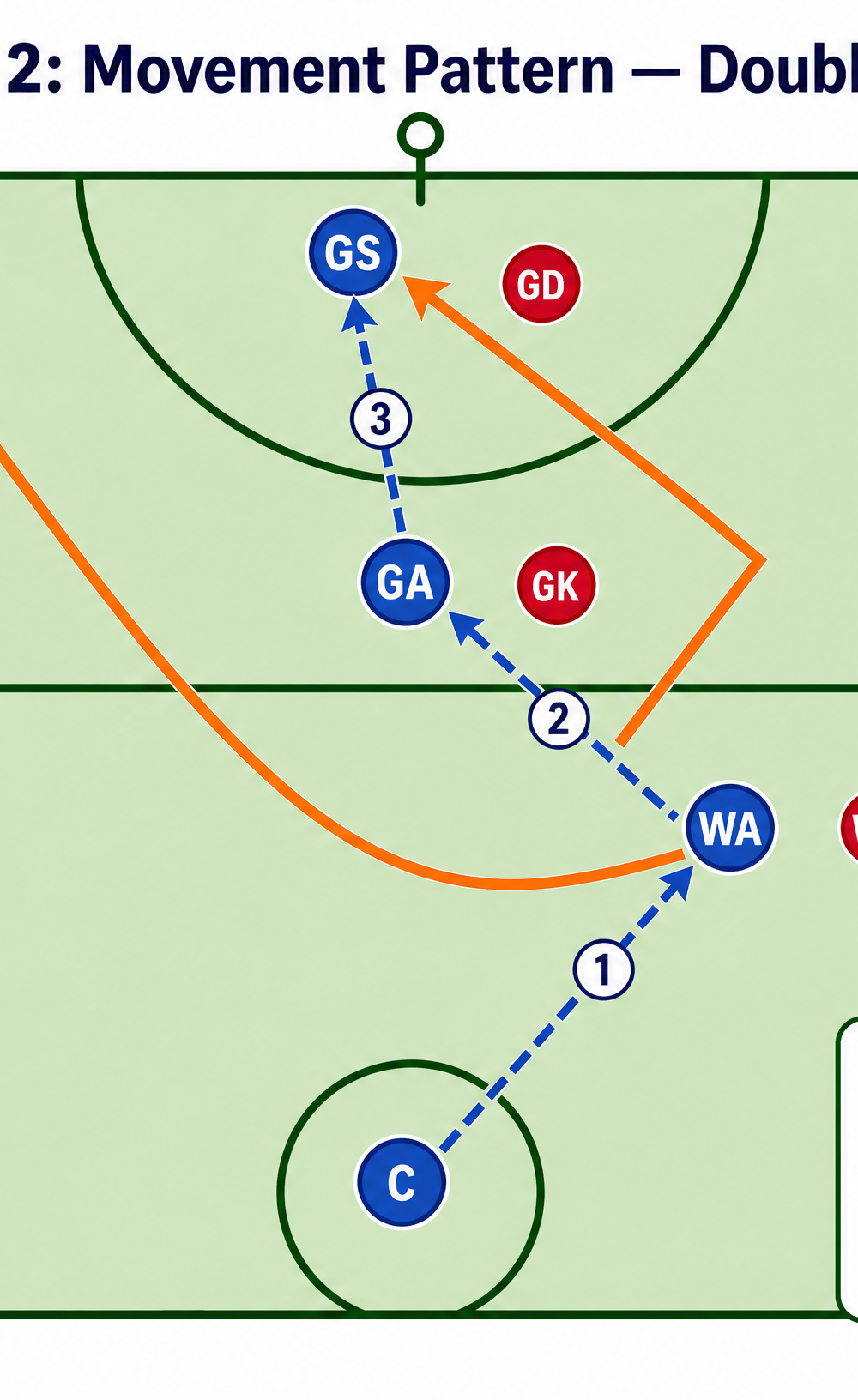
The 'Double Drive' relies on a sequence of three rapid passes and precisely coordinated player movements. The entire sequence should be completed within 3–4 seconds of the whistle.
Step 1 — The Initial Drive (Pass 1: C to WA)
On the umpire's whistle, the WA makes a hard, explosive drive diagonally toward the top-left of the centre third — the 'lead cut'. The C immediately delivers a crisp, flat pass to the WA, hitting them in stride. The WA must time their run so they are catching the ball in motion, rather than waiting for it. A stationary catch signals to the defence that the play has stalled.
Step 2 — The V-Cut (Pass 2: WA to GA)
As the WA receives the ball, the GA executes a sharp V-cut. They initially drive hard toward the right baseline to draw their defender away from the centre of the court, then plant their outside foot firmly and cut sharply back toward the centre of the goal circle edge. The WA turns quickly upon receiving the ball and delivers a direct, flat pass to the driving GA. The GA's cut must happen simultaneously with the WA receiving the ball, ensuring the WA has an immediate passing option and does not hold the ball for more than 3 seconds.
Step 3 — The Circle Feed (Pass 3: GA to GS)
The GS holds their ground inside the goal circle, positioning their body to shield the Goal Keeper (GK) and create a safe receiving space. Upon receiving the ball, the GA immediately looks into the circle and delivers either a high, lobbed pass over the GK's outstretched arms, or a fast, direct bounce pass through a gap. The GS secures the ball, establishes their feet, and takes the shot.
4. Key Coaching Points
Explosive First Steps: The WA and GA must use a strong, explosive first step to gain immediate separation from their defenders. A slow or hesitant start will allow the defence to recover and close the passing lane before the ball arrives.
Sharp Angles: Emphasise the importance of sharp, decisive cuts — particularly the GA's V-cut. Rounded or lazy runs make it easy for defenders to anticipate the movement and intercept the pass. The cut should be at a 90-degree angle or sharper.
Ball Speed and Placement: Passes must be flat, fast, and placed out in front of the driving player — approximately 0.5–1m ahead of where they are at the moment of release. Avoid floaty passes that give the defence time to react and recover.
Vision and Awareness: The C and WA must have their heads up and be scanning the court before the pass is thrown. They need to anticipate where their teammate will be in 0.5 seconds, not where they currently are.
Strong Holds: The GS must establish a strong physical hold against the GK, using their body to create a safe receiving space for the final feed. A passive GS will be easily moved off their position.
Communication: Use a pre-agreed signal or call word to trigger the play. All seven players must know the signal so that defensive players hold their positions and do not accidentally obstruct the attacking pattern.
5. Common Mistakes
Poor Timing of Drives: The most frequent error is players driving too early or too late. If the GA drives before the WA has secured the ball, the timing is broken and the pass will likely be intercepted. Coaches should watch for this closely and use slow-motion walkthroughs to correct it.
Telegraphing the Pass: Players looking directly at their intended target before throwing the ball allow the defence to read the play and intercept. Encourage players to use peripheral vision and look away before delivering the pass.
Lack of Court Spacing: Attacking players crowding the same space make it easy for one defender to cover multiple options simultaneously. Ensure players maintain at least 3–4 metres of separation from each other before making their cuts.
Weak or Loopy Passes: Throwing soft or loopy passes gives the defence time to adjust and challenge for the ball. All passes in this play should be sharp and direct.
GS Drifting Too Deep: If the GS drifts too deep into the goal circle before the GA receives the ball, they reduce the GA's feeding angle and make the circle feed more difficult. The GS should hold near the top of the circle (approximately 2–3m from the circle edge) until the final pass is imminent.
6. Variations & Progressions
Variation 1: The Screen and Release
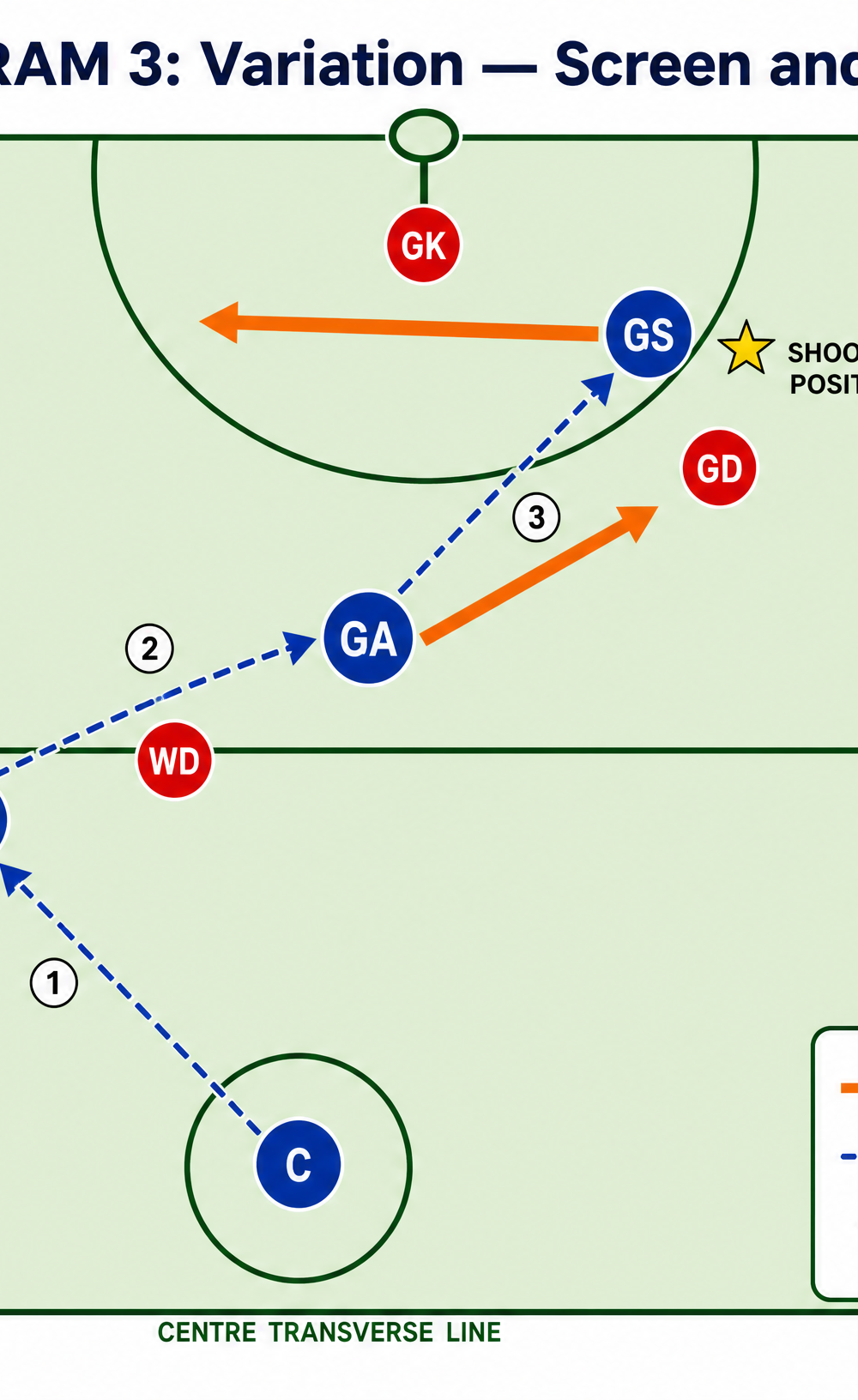
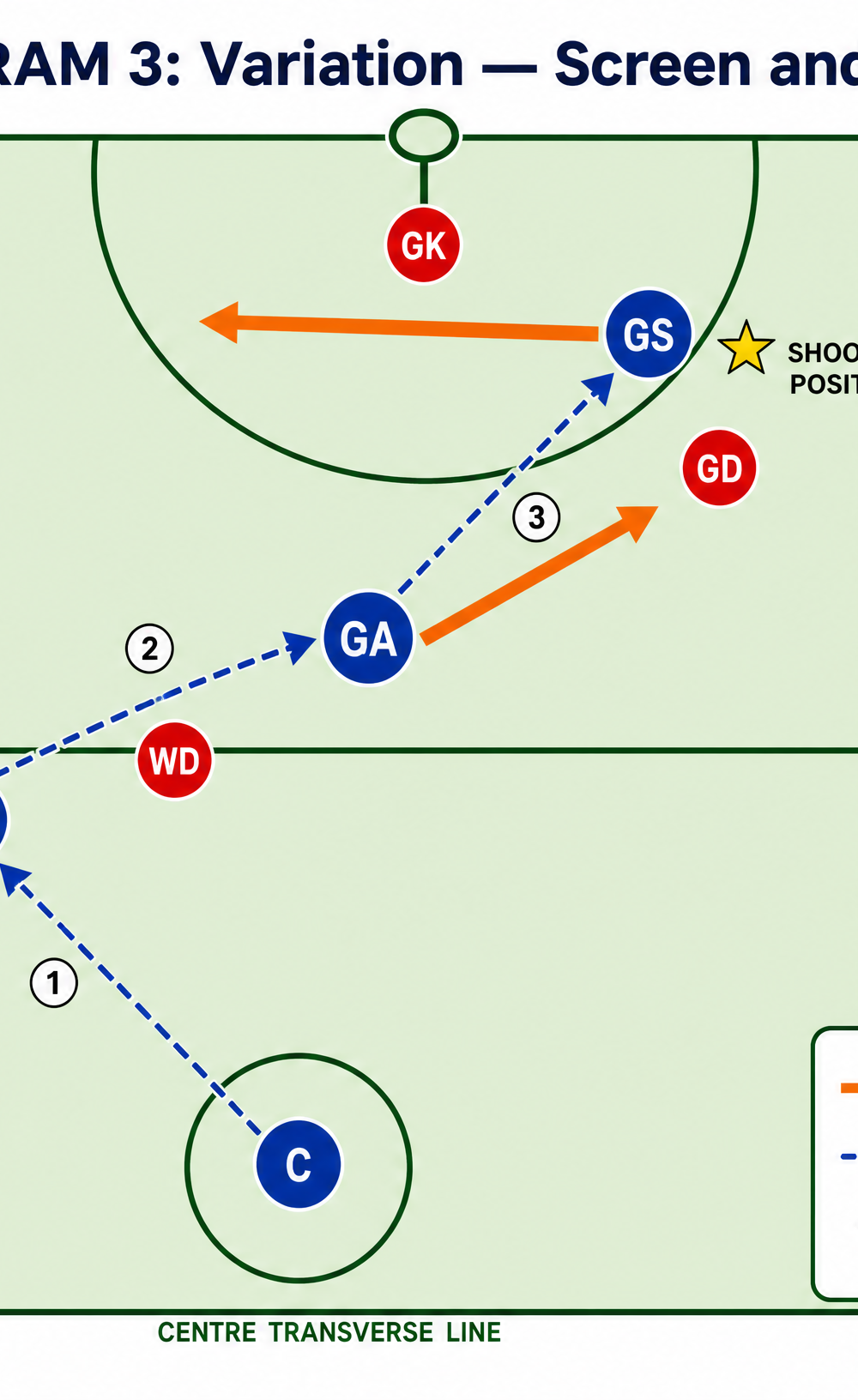
In this variation, the GS acts as a decoy rather than a static target. As the GA receives the second pass, the GS sets a screen on the GA's defender by driving across the goal circle. The GA uses the screen to cut sharply toward the edge of the goal circle for a shooting position. This variation is highly effective against a GK who is anticipating the standard feed.
Variation 2: Fake to WA, Direct to GA
The C fakes the pass to the WA (who makes a strong lead cut as normal), drawing the opposing Wing Defence out of position. The C then delivers a long, direct pass to the GA, who has made a sharp lead cut into the attacking third. This bypasses the centre third entirely and can catch the defence completely off guard.
Progression: Introducing Defensive Pressure
Introduce this play in three stages. Begin with passive defenders who only shadow the attackers to allow players to learn the movement patterns. Progress to active defenders who attempt to intercept the passes but do not contest the shot. Finally, run the set play against a full, competitive defence at game speed.
7. Age Adaptations
| Age Group | Adaptation |
|---|---|
| Under 10 | Focus only on Pass 1 (C to WA). Simplify to a straight drive, no V-cut. Use a lighter ball. |
| Under 12 | Introduce the V-cut for the GA. Focus on change of direction and strong chest passes. |
| Under 14 | Run the full three-pass sequence. Introduce passive defenders. Emphasise timing and spacing. |
| Under 16 | Demand high execution speed and sharp angles. Introduce the Screen and Release variation. |
| Open | Run at full game speed against competitive defence. Introduce the fake-to-WA variation. Add a fourth option (WD) as a safety valve if the primary play is shut down. |