

Cricket
Mastering the Crease: Dynamic Running Between the Wickets Drill
Equip your players with the essential communication, turning, and acceleration skills needed to convert ones into twos and steal quick singles.
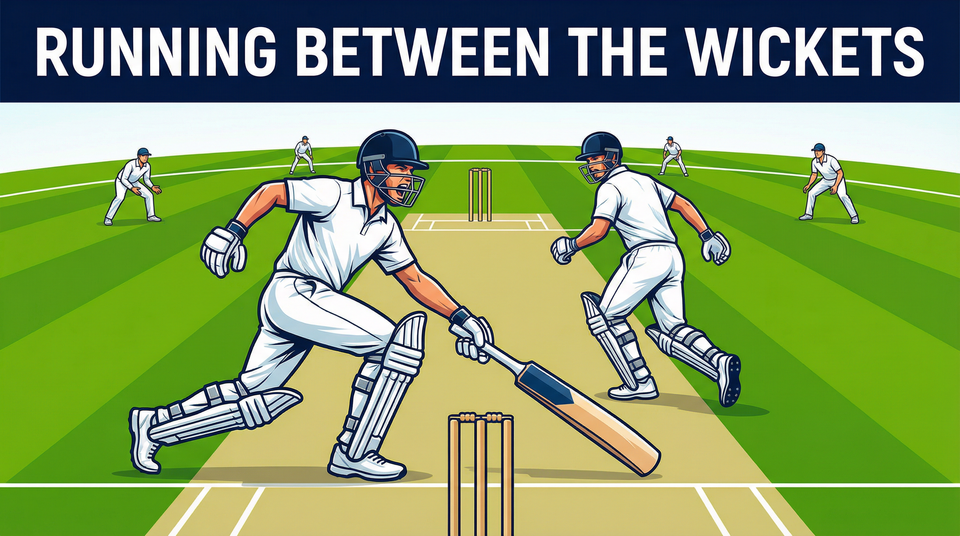
What you need
2 sets of stumps, 2 cricket bats, 1 cricket ball, 6-8 marker cones
1. Overview
Running between the wickets is often the most under-practiced skill in junior and amateur cricket, yet it can be the difference between winning and losing tight matches. This drill is designed to build match-like intensity, focusing on clear communication, explosive acceleration from the crease, and efficient turning techniques. By simulating real-game pressure, coaches can help players develop the instinct to look for the extra run, effectively rotating the strike and keeping the fielding side under constant pressure.
Use this drill during the conditioning phase of your session or as a high-energy warm-up before match-scenario nets. It forces batsmen to work in pairs, establishing trust and a shared understanding of calling protocols ("Yes", "No", "Wait").
2. Setup
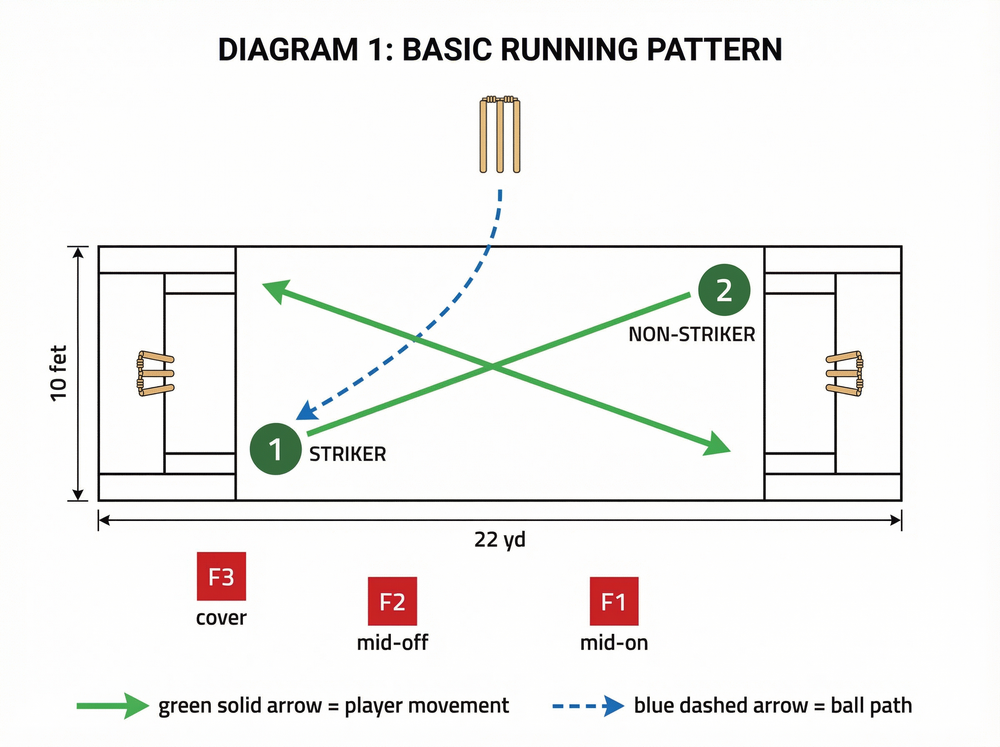
Equipment Needed:
- 2 sets of stumps (or cones if stumps are unavailable)
- 2 cricket bats
- 1 cricket ball (or a tennis/Incrediball for younger age groups)
- 6–8 marker cones (to define fielding zones and the 30-yard circle)
Field Setup:
Set up a standard 22-yard pitch on the oval. Place the stumps at both ends. Using the marker cones, define a few key fielding positions (e.g., Mid-off, Mid-on, Cover) to give the batsmen visual reference points for where the ball has been hit.
Player Positions:
- Striker (Batsman 1): Positioned at the batting crease at the bottom end.
- Non-Striker (Batsman 2): Positioned at the top end, backing up just outside the crease.
- Fielders (Optional/Coach): A coach or resting players can stand in the designated fielding positions to receive the ball.
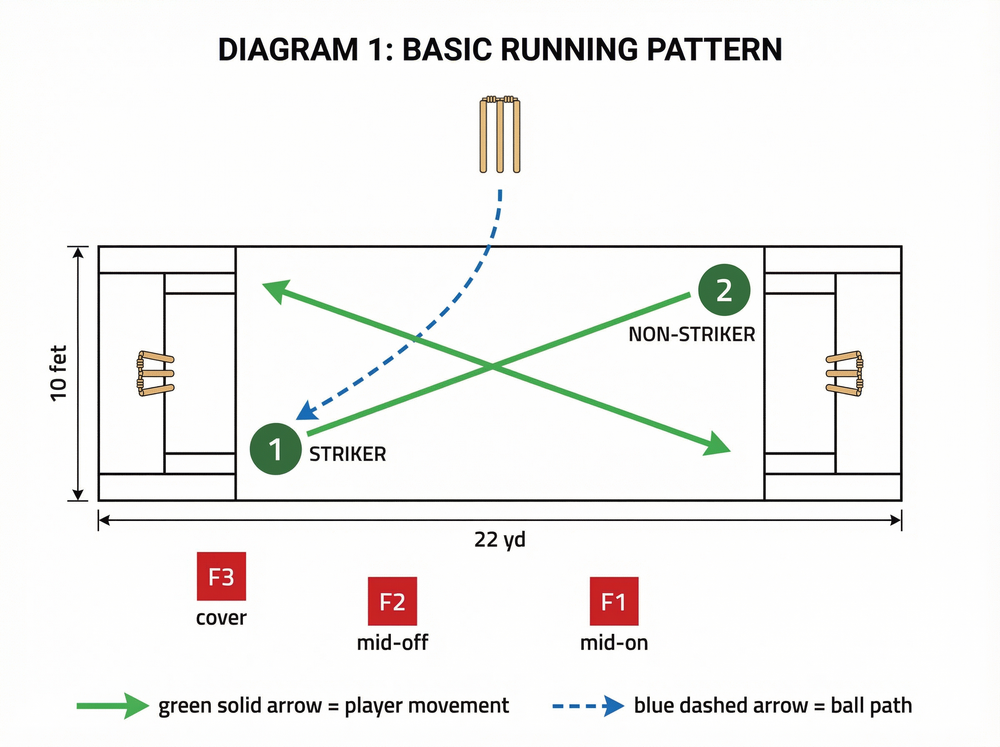
3. Step-by-Step Instructions
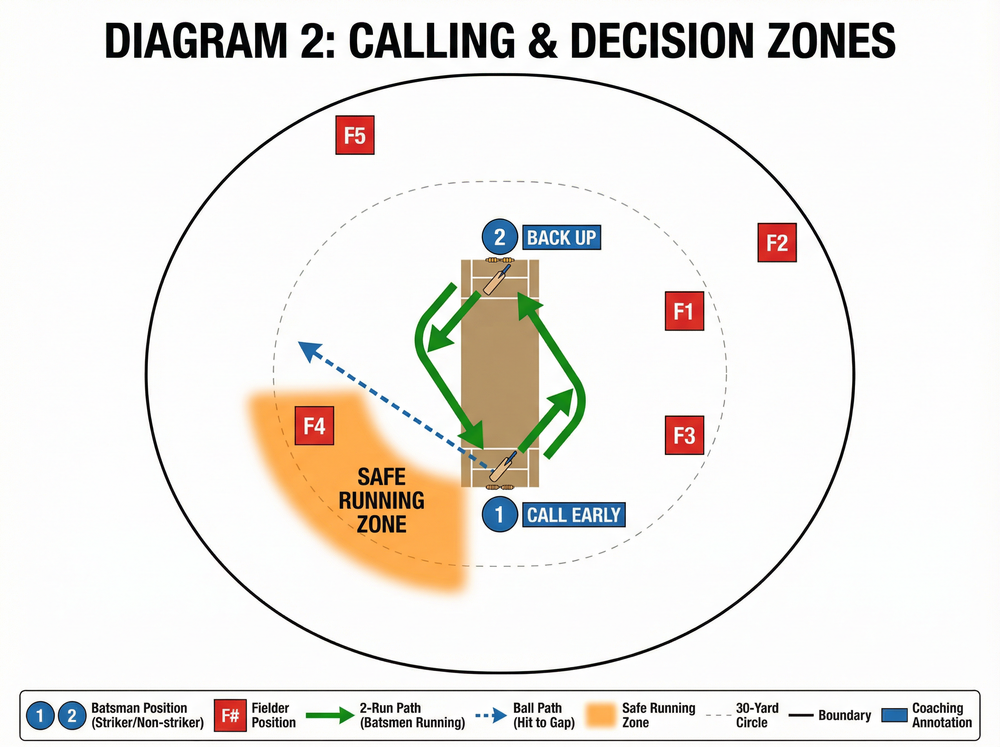
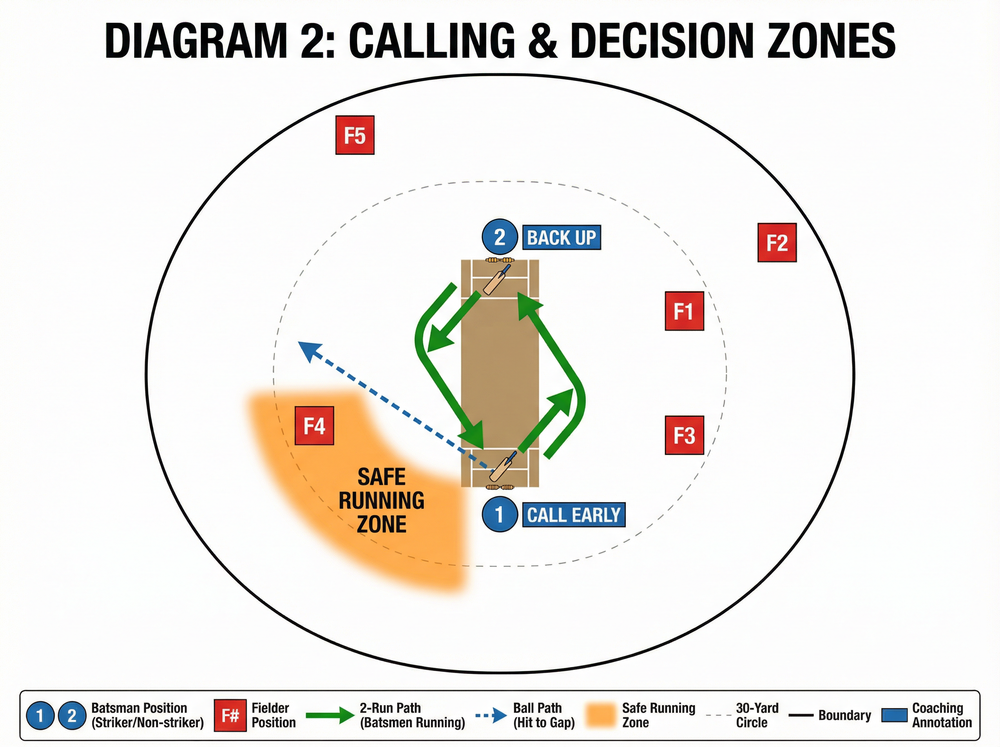
- Initial Stance and Backing Up: The striker takes their normal batting stance. The non-striker must practice active backing up—walking in with the bowler (simulated by the coach) and keeping their bat grounded behind the crease until the ball is "released."
- The Feed: The coach rolls or throws the ball toward a specific fielding zone (e.g., into the cover region).
- The Call: As soon as the ball is struck (or passes the bat in this simulation), the striker must make a loud, decisive call: "Yes", "No", or "Wait".
- The First Run: If the call is "Yes", both batsmen sprint to the opposite end. They must run in straight lines, crossing each other on the pitch without colliding (typically, right-handed batters run on the right side of the pitch).
- The Turn: Upon reaching the crease, players must slide their bat over the line, keeping their eyes on the ball. They should turn facing the field where the ball was hit, pushing off powerfully for a potential second run.
- The Second Run (The Push): The coach (or fielder) fumbles the ball slightly. The non-striker (now at the danger end) calls "Yes" for the second run. Both sprint back to their original ends.
4. Key Coaching Points

- Loud, Clear Calling: Calls must be definitive. Hesitation causes run-outs. The player hitting the ball calls for shots in front of the wicket; the non-striker calls for shots behind square.
- Efficient Turning: Players must turn blindly. They should ground the bat early, lower their center of gravity, and push off their outside foot, always turning to face the direction of the ball.
- Running Your Line: Batsmen must run straight down their designated side of the pitch to avoid collisions and run the shortest possible distance.
- Active Backing Up: The non-striker should be moving forward as the ball is bowled, anticipating a run, rather than standing flat-footed.
5. Common Mistakes

- Bat Tapping: Players tapping the bat inside the crease instead of sliding it across the line, losing crucial fractions of a second.
- Turning Blind: Turning their back to the ball when completing the first run, making them unaware of misfields or overthrows.
- Whispering Calls: Mumbled or late calls leading to stutter-steps and mid-pitch mix-ups.
- Running on the Protected Area: Running straight down the middle of the pitch, damaging the surface and risking penalty runs.
6. Variations & Progressions
- Pressure Cooker: Introduce a time limit. Batsmen must complete three runs within a specific number of seconds (e.g., 9–10 seconds for seniors) to score a "point."
- Live Fielding: Add active fielders who must sprint to the ball and execute a direct hit on the stumps. This forces the batsmen to judge the run under realistic match pressure.
- The "Wait" Drill: The coach hits the ball straight to a fielder. The striker calls "Wait", and both batsmen must take two hard steps down the pitch, stop, and retreat safely to their crease.
7. Age Adaptations
- Under 8s / Under 10s: Focus purely on the mechanics of holding the bat and sliding it over the line. Use shorter pitch distances (15–18 yards) and remove the ball entirely initially, just practicing the calls and the sprint.
- Under 12s / Under 14s: Introduce the concept of backing up and turning to face the ball. Start incorporating basic fielding pressure.
- Under 16s / Open: Full 22-yard pitch. High intensity. Introduce complex scenarios like calling for runs to third man or fine leg, and emphasize explosive turning and fitness conditioning.
