

Cricket
Mastering the Powerplay: Attacking Field Settings for Early Wickets
Learn how to deploy an aggressive Powerplay field setting designed to create pressure, induce false shots, and secure crucial early wickets in the first six overs.
What you need
1 new cricket ball, Full match equipment for 11 players, Marked 22-yard pitch, Marked 30-yard restriction circle, Boundary rope
1. Overview
The Powerplay (typically the first 6 overs in T20s or 10 overs in ODIs) is the most critical phase of a limited-overs cricket match. With only two fielders allowed outside the 30-yard restriction circle, the batting side looks to maximize scoring. However, this restriction is also a golden opportunity for the bowling team to attack. This set play focuses on an aggressive, wicket-taking field setting designed to exploit the new ball's movement, create sustained pressure, and induce early mistakes from the opening batters.
By strategically positioning fielders inside the circle to cut off primary scoring zones and utilizing slip fielders to catch edges, coaches can shift the momentum early in the innings. This play is best utilized when your opening bowlers are generating swing or seam movement, or when facing aggressive batters who are prone to taking risks early in their innings.
2. Setup
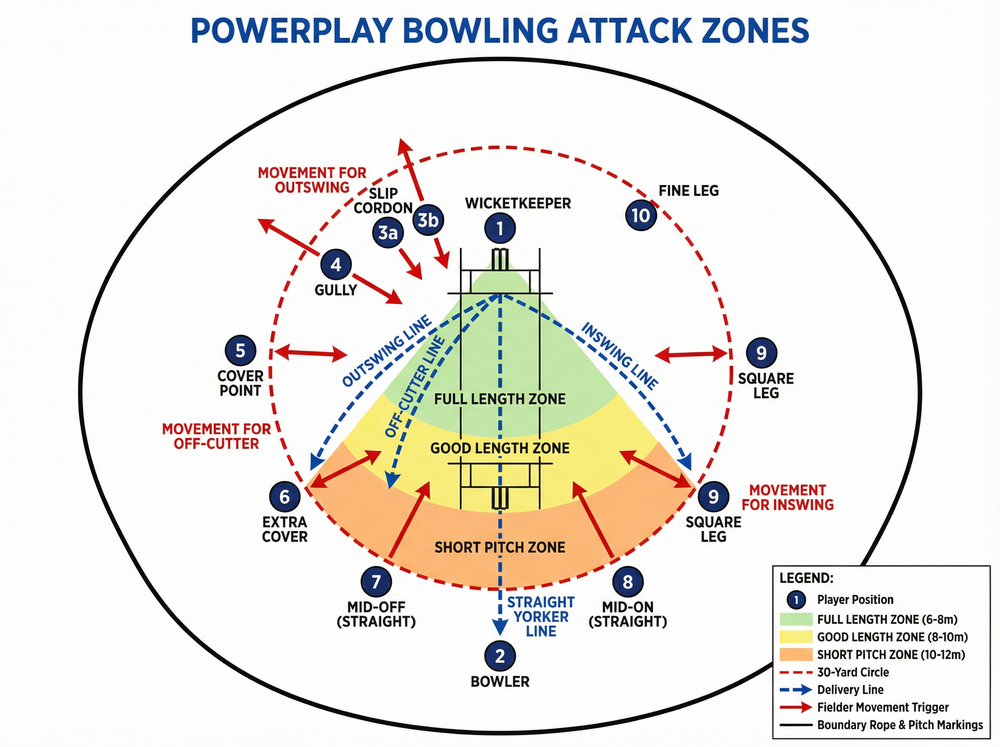
To execute this set play effectively, you need a precise field setup that balances attacking intent with calculated run-saving.
Equipment Needed:
- 1 new cricket ball (preferably one that swings)
- Full match equipment for all 11 players
- Standard 22-yard pitch with marked creases
- Clearly marked 30-yard restriction circle and boundary rope
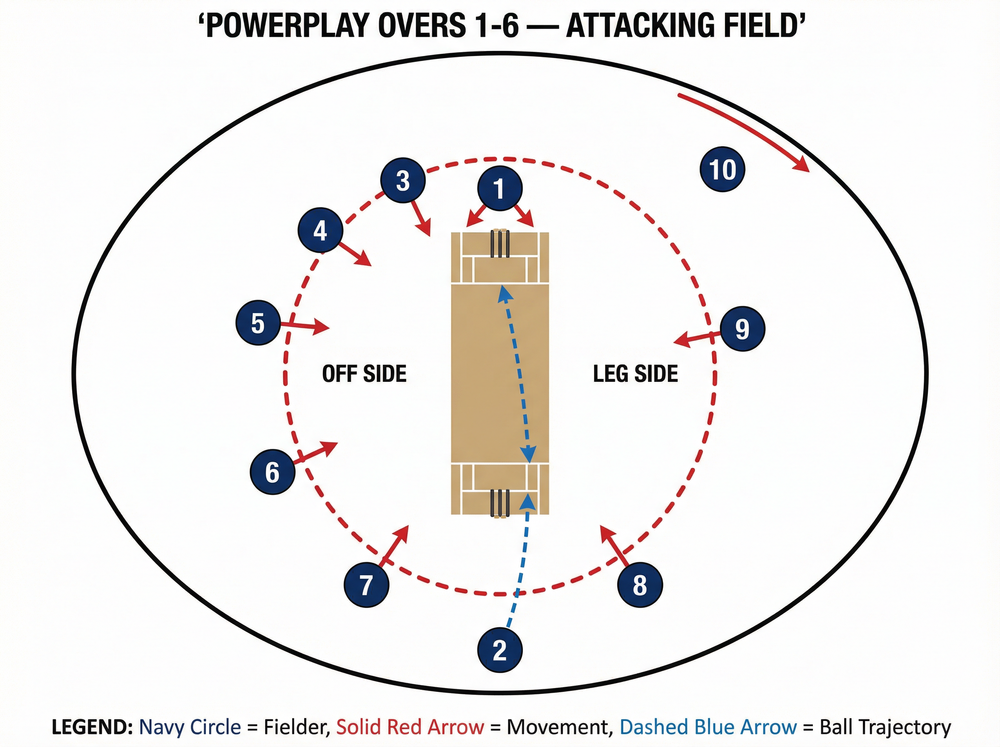
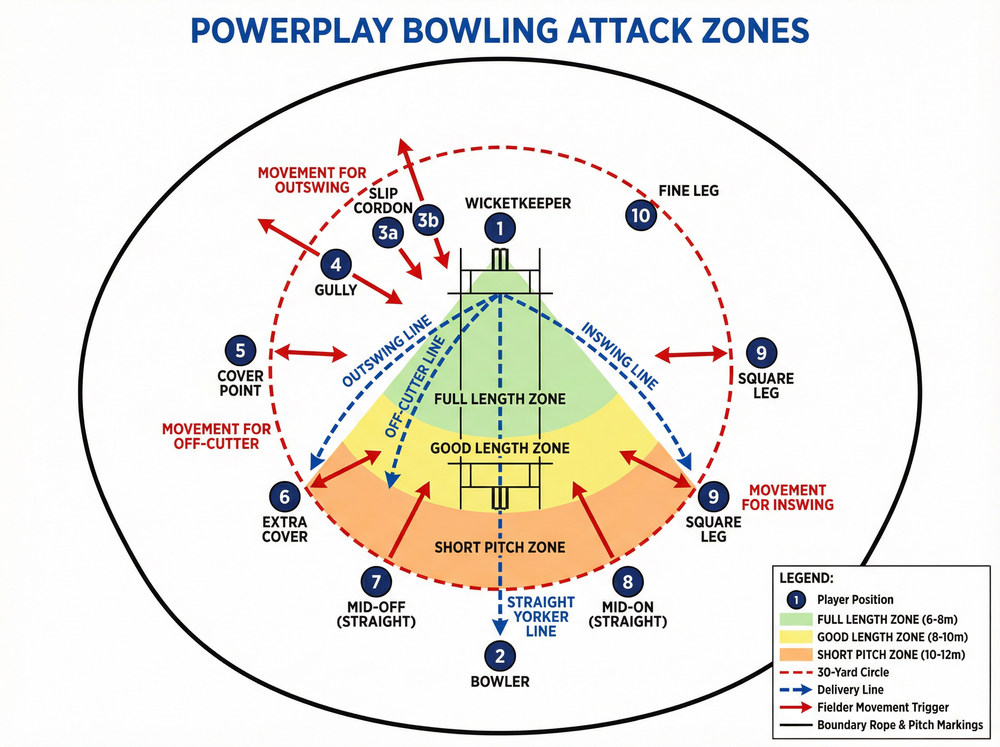
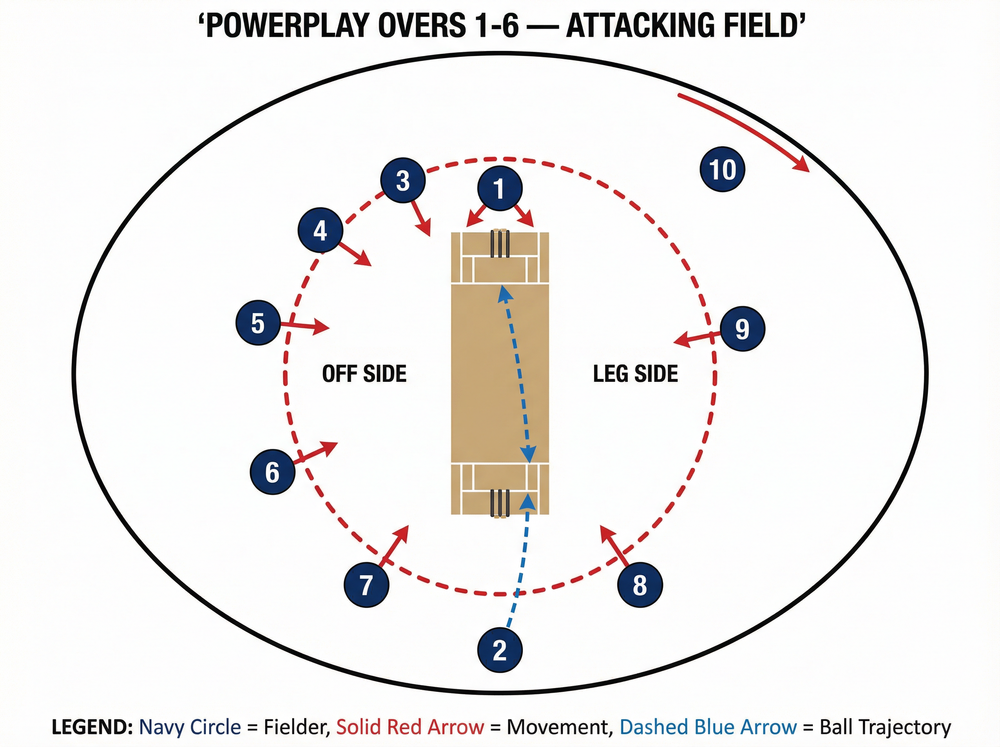
Player Positions (Standard Right-Arm Fast Bowler to Right-Handed Batter):
- Wicketkeeper: Positioned back for the fast bowler to take edges.
- First Slip: Positioned slightly wider than standard to cover the outswing edge.
- Second Slip (or Gully): Depending on the pitch pace, a second slip or a backward point/gully to catch thick edges.
- Point: Inside the circle, cutting off the square cut.
- Cover: Inside the circle, positioned to stop the cover drive.
- Mid-off: Inside the circle, straight to cut off the straight drive.
- Mid-on: Inside the circle, straight to cut off the on-drive.
- Square Leg: Inside the circle, positioned for the pull or flick.
- Fine Leg (Outside Circle): Positioned on the boundary to protect against the stray delivery down the leg side.
- Third Man (Outside Circle): Positioned on the boundary to protect against edges and late cuts.
3. Step-by-Step Instructions
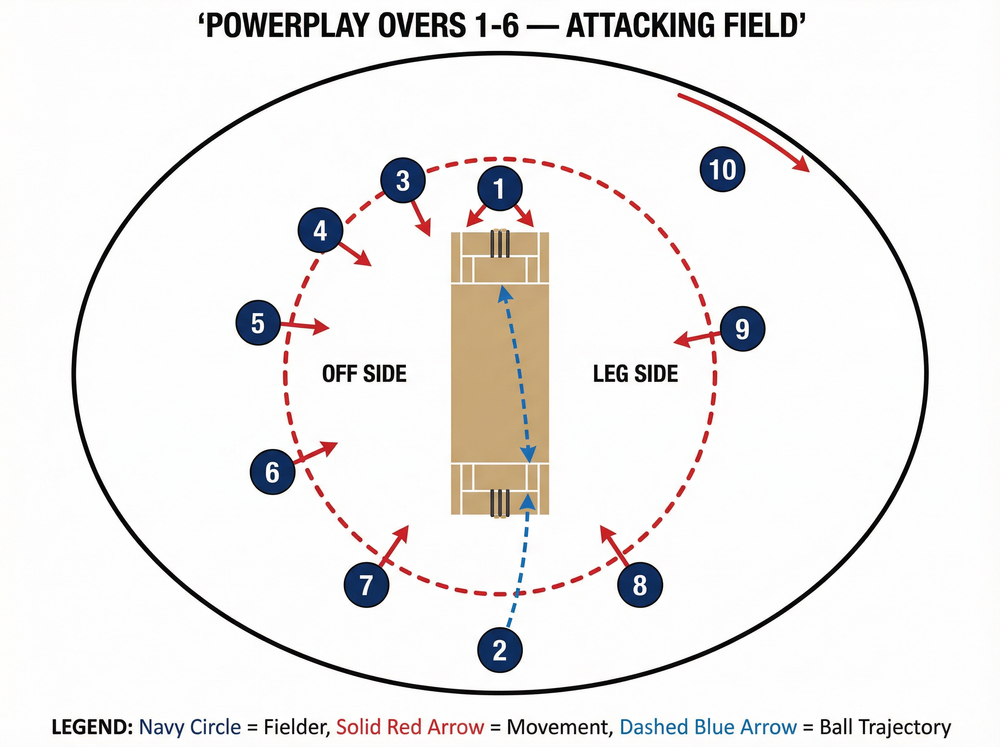
Executing this set play requires coordination between the captain, the bowler, and the fielders. Here is how to run the play:
Step 1: Establish the Line and Length
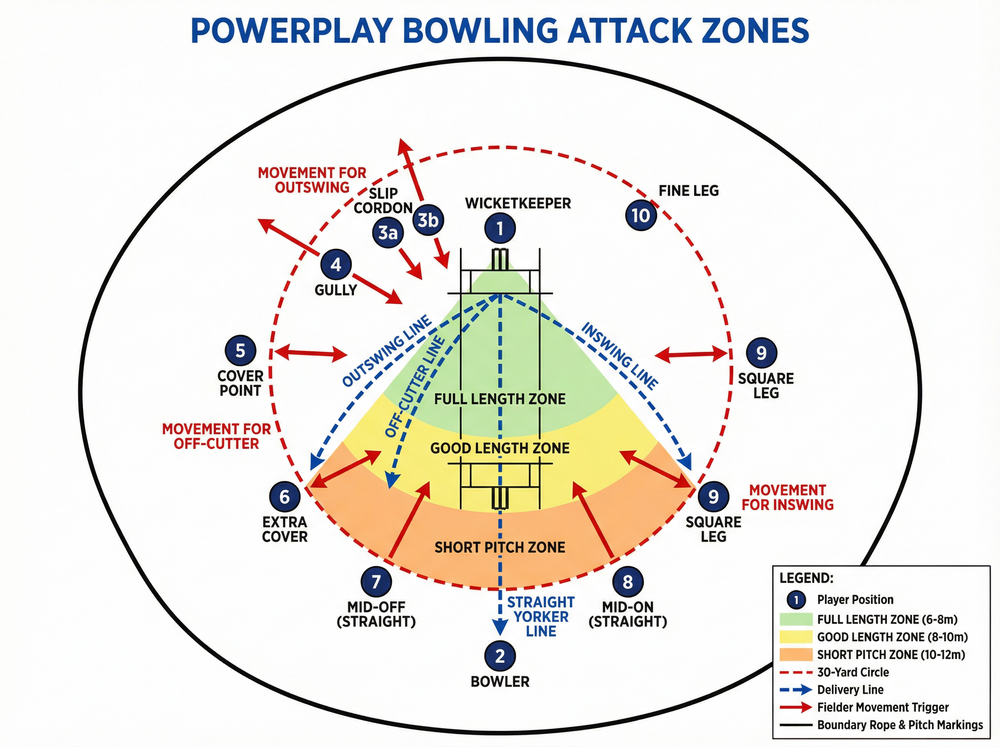
The bowler must commit to bowling a 'top of off stump' line and a good length (approximately 8-10 metres from the batter). This length forces the batter to play at the ball while allowing maximum time for swing or seam movement to take effect.
Step 2: Set the Trap (The Outswing)
The bowler delivers an outswinger starting on middle-and-off stump, shaping away. The field is set to encourage the batter to drive through the off-side. The slip cordon (First and Second Slip) must be highly alert, anticipating the outside edge.
Step 3: The Squeeze (Dot Ball Pressure)
If the batter defends, the inner ring fielders (Point, Cover, Mid-off) must walk in aggressively with the bowler's run-up. Their goal is to cut off quick singles and build 'dot ball pressure'. Every fielder inside the circle must be ready to dive and stop the ball cleanly.
Step 4: The Variation (The Inswinger or Straight Ball)
After establishing the outswing pattern, the bowler delivers a surprise inswinger or a straight, fuller delivery targeting the stumps or the front pad. Because the batter is anticipating the away movement and looking to drive through the off-side, they are vulnerable to being bowled or trapped LBW.
Step 5: Adjusting to the Batter's Response
If the batter begins to step out or play aggressively over the infield, the captain must quickly adjust. This might involve pushing Mid-off or Mid-on back to the boundary and bringing Third Man or Fine Leg inside the circle, changing the dynamic from pure attack to a more balanced defensive posture.
4. Key Coaching Points
- Discipline in Line and Length: The entire field setting is useless if the bowler cannot consistently hit the 'top of off' area. Straying down the leg side or bowling too short will leak runs and relieve pressure.
- Aggressive Body Language: Fielders inside the 30-yard circle must 'walk in' as the bowler delivers the ball. This reduces the time the batter has to take a quick single and creates a feeling of claustrophobia.
- Slip Cordon Spacing: Ensure the slip fielders are spaced correctly based on the pace and bounce of the pitch. They should not be too close together, nor should they be too deep or too shallow.
- Communication: The wicketkeeper and the captain must constantly communicate with the bowler, confirming the plan for each delivery and adjusting the field by a few yards based on the batter's movements.
- Patience: Wickets may not fall in the first over. The goal is to build pressure over a 3-4 over spell. Coaches must remind players not to panic if a boundary is hit.
5. Common Mistakes
- Bowling Too Short: Trying to be overly aggressive by bowling short pitches often results in easy boundaries over the infield or easy singles to the deep fielders.
- Static Fielding: Fielders standing flat-footed inside the circle instead of walking in with the bowler, allowing batters to easily steal quick singles and rotate the strike.
- Ignoring the Leg Side: While attacking the off-stump, bowlers sometimes forget to protect the leg side. A stray delivery onto the pads with only one fielder on the leg-side boundary can easily result in a boundary.
- Setting the Field Too Deep: Placing the inner ring fielders too close to the 30-yard circle rather than closer to the bat, which reduces the pressure on the batter and allows easy singles.
6. Variations & Progressions
Variation 1: The Spin Powerplay
If the pitch is turning or the fast bowlers are ineffective, introduce a spinner early. Change the field to include a slip, a short leg or silly point, and keep the boundary riders straight (Long-on and Long-off) to encourage the batter to hit square.
Variation 2: The Short Ball Trap
If the batter is uncomfortable against short-pitched bowling, push Fine Leg back, bring Third Man up, and place a fielder at Deep Square Leg. The bowler then delivers a targeted bouncer, aiming to induce a mistake or a top edge.
Progression: Scenario Training
In practice, set up a scenario where the batting team needs to score 50 runs in the 6-over Powerplay. The fielding team must use this set play to restrict them to under 40 runs while taking at least two wickets.
7. Age Adaptations

- Under 10s & Under 12s: Focus primarily on bowling straight and full. Do not worry about complex slip cordons. Place fielders in standard positions to save runs and encourage bowlers to hit the stumps. Emphasize the importance of stopping the ball cleanly.
- Under 14s & Under 16s: Introduce the concept of the 30-yard circle and 'walking in' with the bowler. Start using one slip fielder regularly. Teach bowlers the importance of bowling to a specific field and understanding 'top of off' bowling.
- Open/Seniors: Full implementation of the set play. Focus on micro-adjustments to the field based on the specific batter's weaknesses, utilizing advanced variations like the slower ball or the wide yorker within the Powerplay structure.
