

Cricket
Mastering the Quick Single: Running Between the Wickets Drill
Teach your players the essential communication, backing up, and turning skills required to steal quick singles and dominate the opposition in the field.
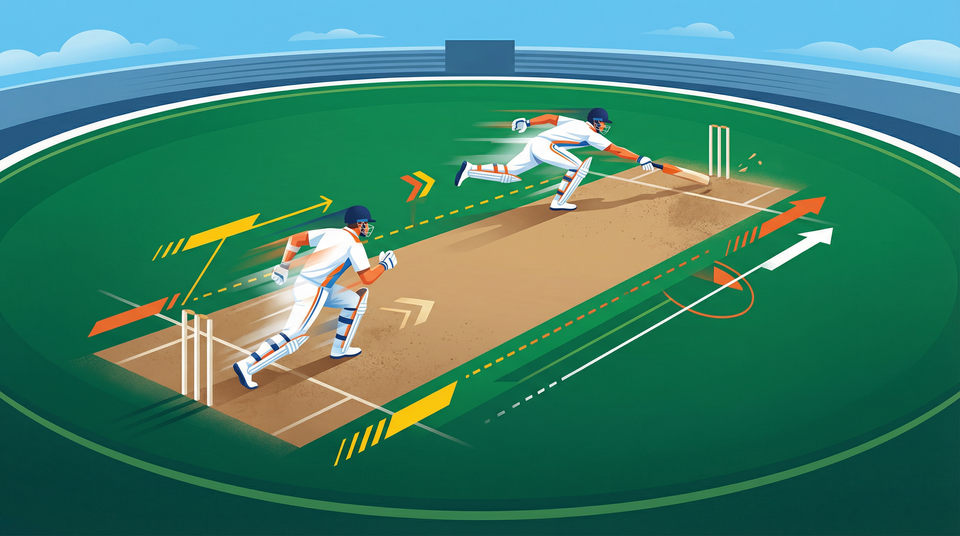
What you need
2 sets of stumps, 2 cricket bats, 6 cricket balls, Cones or markers, Batting gear (helmet, pads, gloves)
1. Overview
Running between the wickets is the heartbeat of any successful cricket innings. This comprehensive drill focuses on the mechanics of the quick single, emphasizing clear communication, aggressive backing up by the non-striker, and efficient turning techniques. It is designed to simulate match pressure and help players develop the instinct to rotate the strike constantly, putting the fielding team under immense pressure.
2. Setup
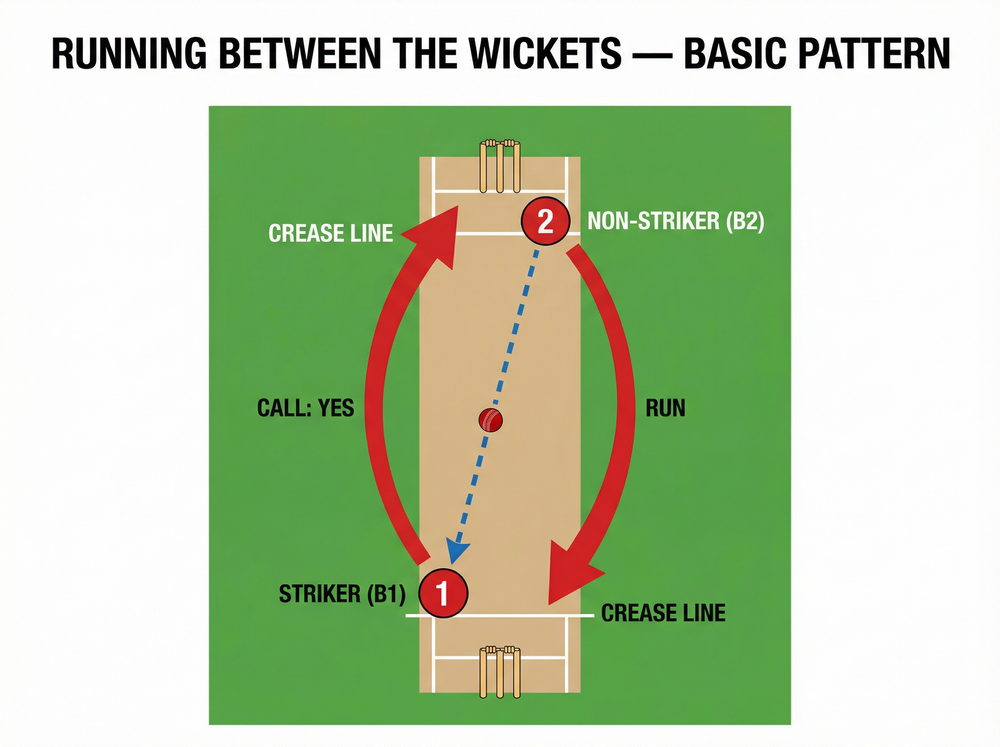
Equipment Needed:
- 2 sets of stumps
- 2 cricket bats
- Minimum 6 cricket balls (or incrediballs for juniors)
- Cones or markers
- Helmet, pads, and gloves for both batsmen (to simulate match weight and restriction)
Pitch/Field Setup:
- Set up a standard 22-yard pitch on the oval ground or in the nets.
- Place stumps at both ends.
- Mark the popping crease clearly at both ends (4 feet from the stumps).
- Place a set of cones in a semi-circle approximately 15-20 yards from the pitch on the off-side and leg-side to represent the inner ring of fielders.
Player Positions:
- Batsman 1 (Striker) at the batting end.
- Batsman 2 (Non-Striker) at the bowling end.
- Coach or feeder positioned 15 yards away, ready to roll or throw the ball into specific zones.
3. Step-by-Step Instructions
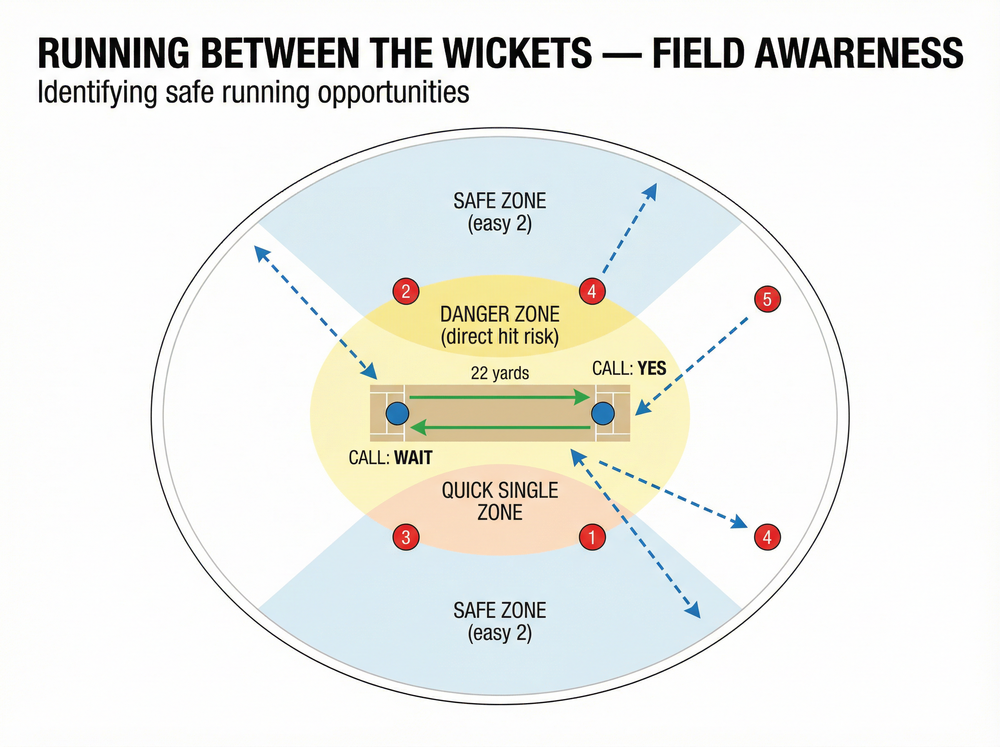
- The Starting Position: The striker takes their stance. The non-striker stands at the bowling end, backing up. The non-striker must walk in with the bowler (feeder) and only leave the crease once the ball is released.
- The Feed: The coach rolls or underarms the ball into the 'Quick Single Zone' (e.g., towards mid-on or mid-off).
- The Call: The striker plays a defensive or soft shot and immediately makes a loud, clear call: "YES", "NO", or "WAIT".
- The Run: If the call is "YES", both batsmen sprint towards the opposite end.
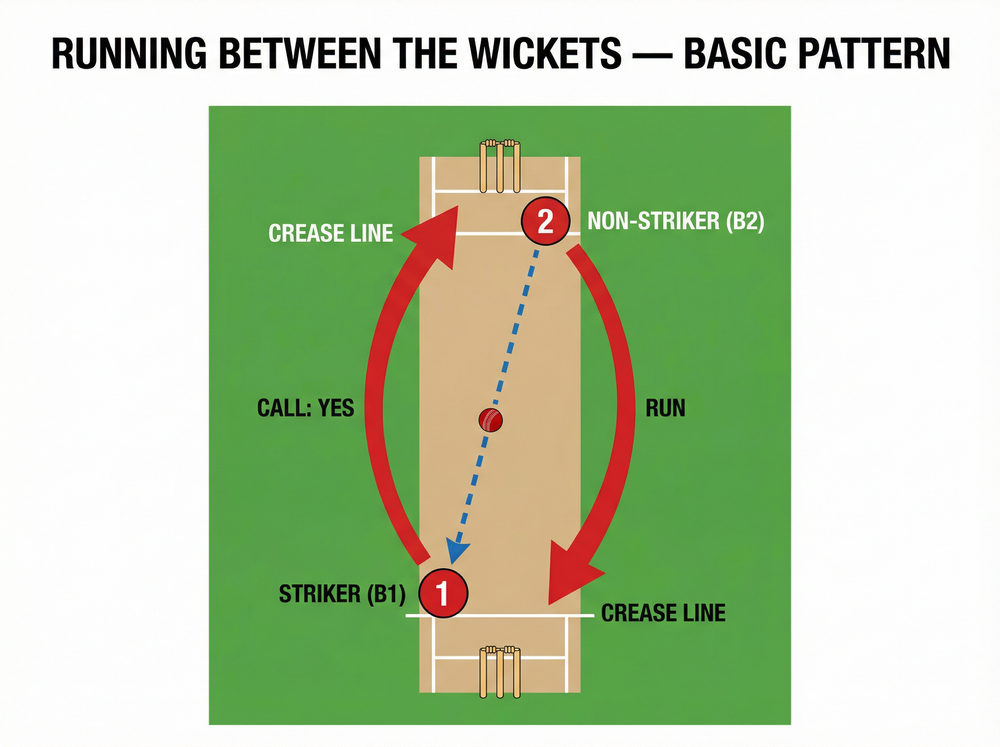
- The Turn (If running two): If the ball beats the inner ring, the call changes to "TWO". Batsmen must run the first run hard, slide their bat across the crease line, turn blindly (turning facing the side the ball was hit), and push off powerfully for the second run.
- The Finish: Both batsmen must ground their bats past the popping crease. The coach can introduce a fielder to attempt a run-out to add match pressure.
4. Key Coaching Points

- Loud and Early Calling: The call must be decisive and made immediately after the ball is struck. There should be no hesitation.
- Backing Up: The non-striker must anticipate the run. They should be walking in with the bowler and be a yard or two down the pitch when the ball is played, ready to sprint or return.
- Running the First Run Hard: Always assume there is a second run available until the ball is fielded.
- Efficient Turning: When turning for a second run, batsmen must get low, slide the bat in early, and turn on their outside foot to push off quickly.
- Running in Straight Lines: Run on the edge of the pitch to avoid damaging the danger area and to take the shortest route between the creases.
5. Common Mistakes

- Ball Watching: Batsmen watching the ball instead of looking at their partner or listening for the call, leading to run-outs or collisions.
- Poor Bat Sliding: Failing to slide the bat into the crease, resulting in being run out by a fraction of a second.
- Lazy Backing Up: The non-striker remaining anchored in their crease, making quick singles impossible.
- Ambiguous Calling: Mumbling or making late calls, causing confusion and hesitation.
6. Variations & Progressions
- Pressure Cooker: Introduce 2-3 active fielders inside the circle. The batsmen must identify the gaps and call the run based on the fielders' positions and arm strength.
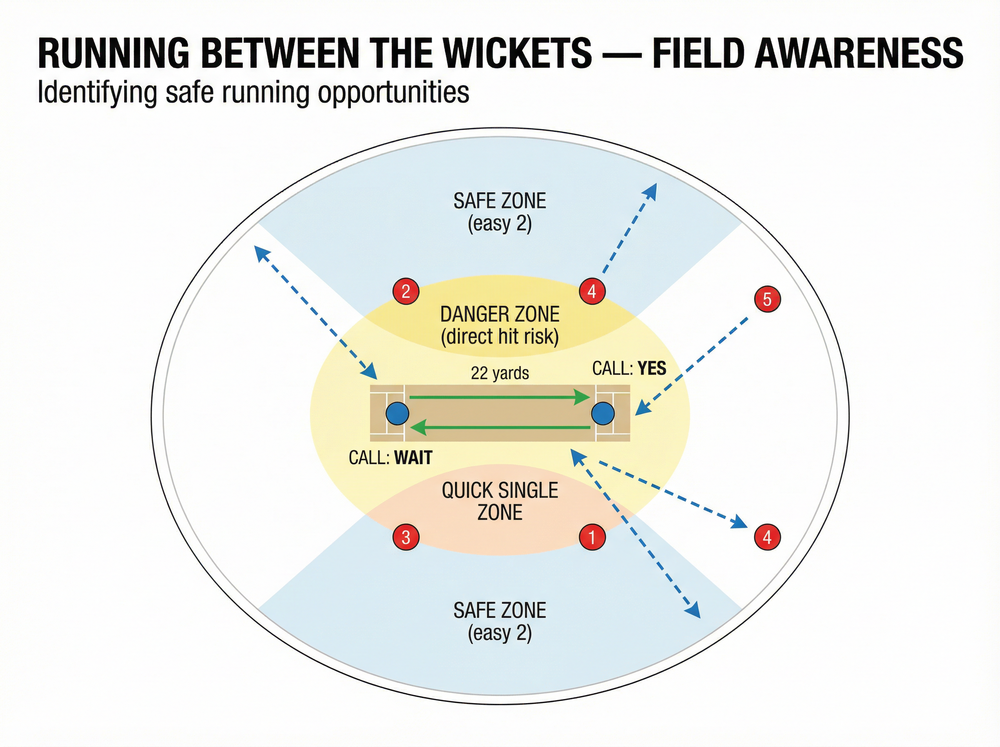
- The 'No' Call Drill: The coach intentionally hits the ball straight to a fielder. The striker must loudly call "NO", and the non-striker must quickly retreat to their crease.
- Endurance Running: Have the batsmen run three runs instead of one or two, focusing on maintaining speed and turning technique under fatigue.
7. Age Adaptations
- Under 8s & Under 10s: Focus entirely on loud calling ("YES" and "NO") and sliding the bat. Use a shorter pitch (16-18 yards) and softer balls.
- Under 12s & Under 14s: Introduce the concept of backing up and turning blindly. Add stationary fielders to help them judge distances.
- Under 16s & Open: Full match simulation with active fielders, direct hit scenarios, and full protective gear to simulate match fatigue.
