

Cricket
Mastering the Defensive Spin Field: Controlling the Game
Learn how to deploy a defensive field for your spin bowlers to build pressure, dry up runs, and force batting errors.

What you need
Cricket ball, Stumps and bails, Fielding markers (optional)
1. Overview
When the pitch isn't offering massive turn or the opposition batters are scoring freely, a defensive field for your spin bowler becomes your most potent weapon. The primary objective of this set play is to control the run rate and build pressure. By placing fielders in areas where batters naturally look to score singles or boundaries, you force them to take higher risks to maintain their scoring rate.
This field setting is particularly effective in limited-overs formats (T20 and One Day Internationals) or during the middle sessions of a multi-day game when containment is prioritized over immediate wicket-taking. A well-executed defensive field frustrates the batter, leading to false shots and, ultimately, wickets.
2. Setup
Equipment Needed:
- Standard cricket ball (suitable for the format)
- Full set of stumps and bails
- Fielding markers (optional, for training sessions)
Pitch/Field Setup:
- Standard 22-yard pitch
- 30-yard fielding restriction circle clearly marked (for limited-overs context)
- Boundary rope set at appropriate distances (e.g., 65-75 yards depending on age/level)
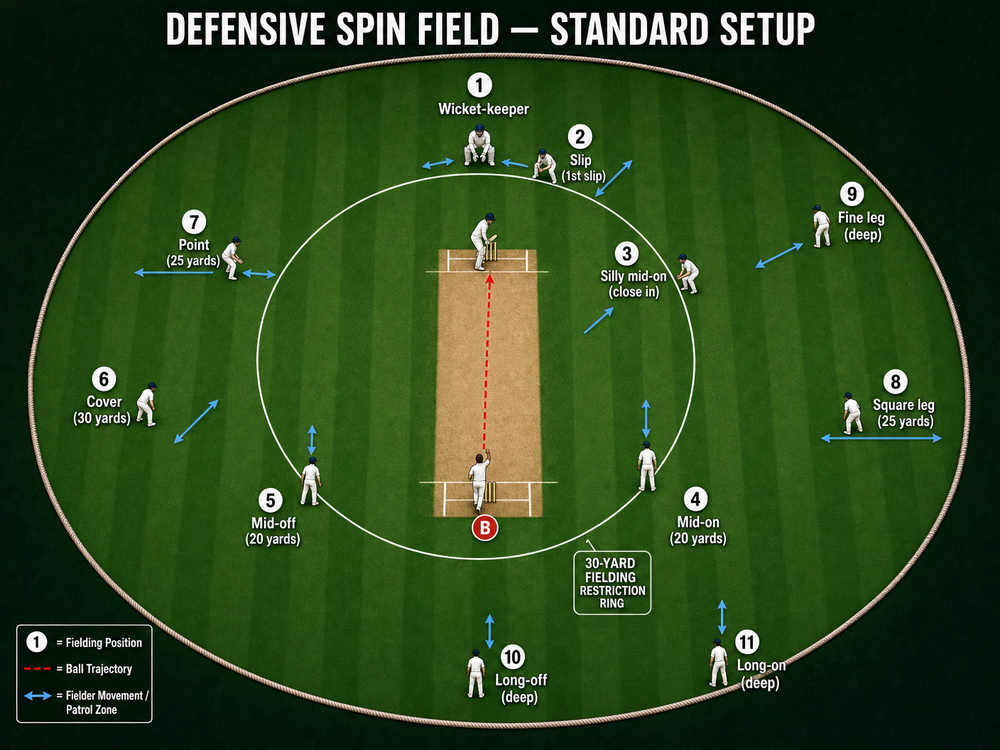
Player Positions (Standard Defensive Spin Field):
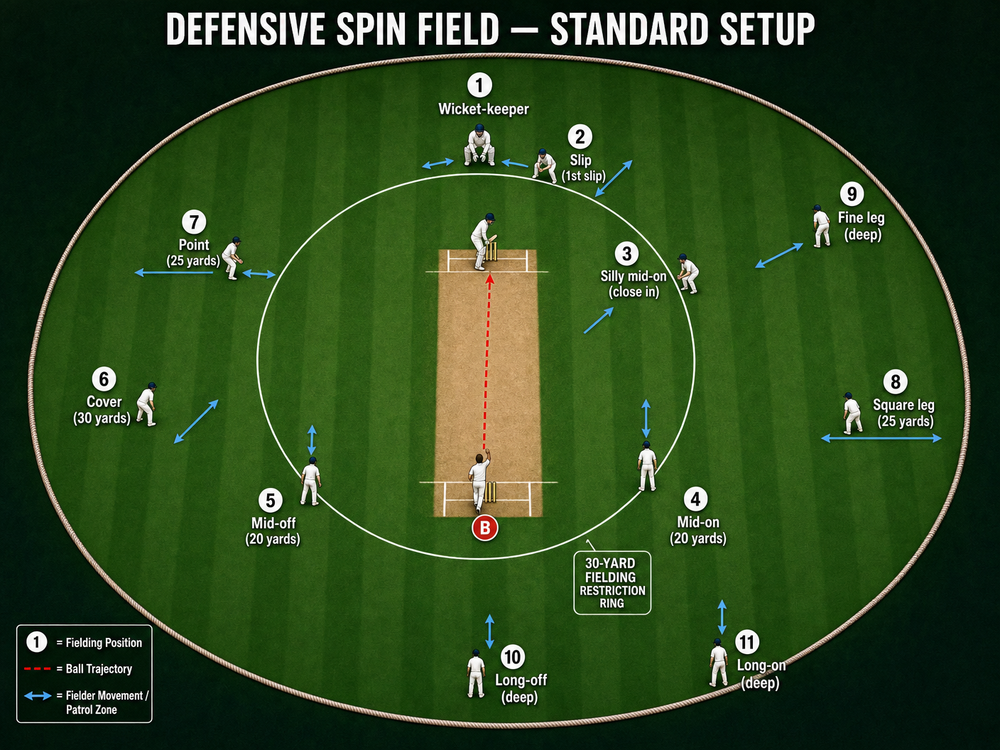
- Wicket-keeper: Standing up to the stumps to prevent the batter from leaving the crease.
- Slip (1st Slip): Positioned close to the keeper for the outside edge.
- Point: Set deep (approx. 25 yards) to cut off the square drive.
- Cover: Placed on the edge of the 30-yard circle to stop the cover drive and single.
- Mid-off: Set back slightly (approx. 20 yards) to prevent the quick single down the ground.
- Mid-on: Mirroring mid-off, set back to protect the straight drive.
- Square Leg: Positioned on the edge of the circle to stop the sweep and pull shots.
- Long-off: Deep on the boundary to protect against the lofted drive.
- Long-on: Deep on the boundary to protect the straight hit.
- Fine Leg: Deep on the boundary to cover the sweep or paddle sweep.
- Deep Mid-wicket / Deep Square Leg: Depending on the batter's strength, placed on the boundary to stop the slog sweep or deep pull.
3. Step-by-Step Instructions
Step 1: Analyze the Batter and Conditions
Before setting the field, the captain and bowler must assess the batter's preferred scoring areas and the pitch conditions. Is the ball gripping? Is the batter looking to sweep or drive down the ground?
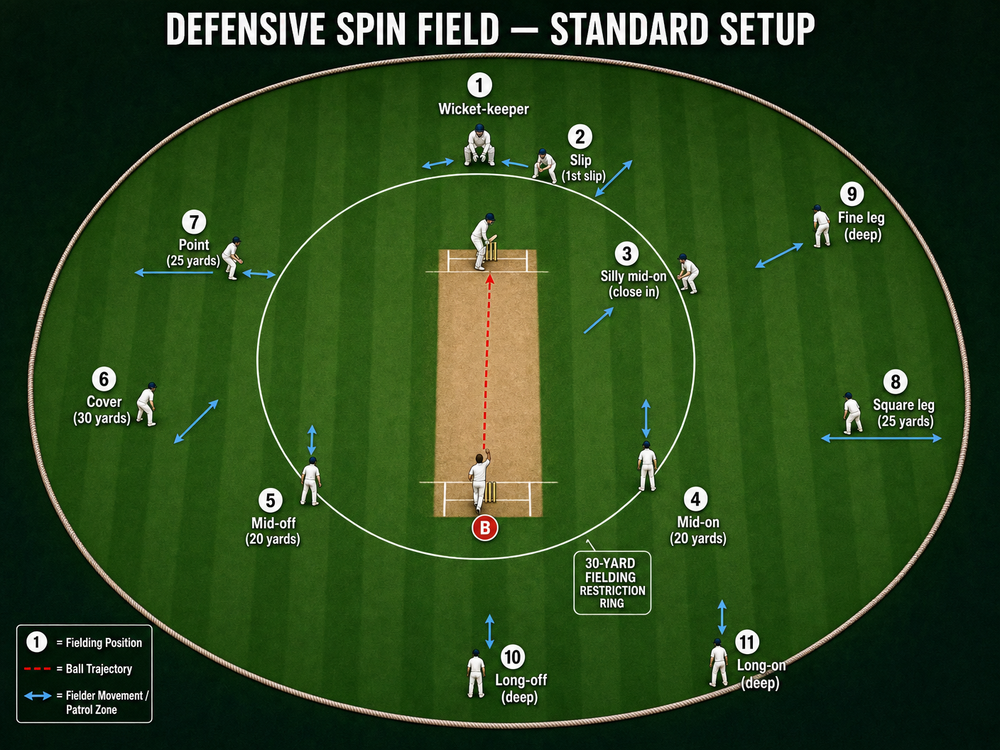
Step 2: Establish the Core Defensive Ring
Set your point, cover, mid-off, mid-on, and square leg fielders on the edge of the 30-yard circle. Their primary role is to stop the easy single and force the batter to hit over the top or into the gaps.
Step 3: Deploy the Boundary Riders
Position your long-off, long-on, and deep mid-wicket/fine leg fielders on the boundary rope. These fielders are the safety net, ensuring that even if the batter clears the infield, they only get a single rather than a boundary.
Step 4: Maintain Catching Options
Even in a defensive setup, maintain at least one catching option, typically a slip or a short leg, depending on the pitch's bounce and turn. This keeps the batter honest and capitalizes on mistakes.
Step 5: Bowl to the Field
The bowler MUST execute the plan. The line should be middle and off stump, and the length should be consistent—full enough to invite the drive but not a half-volley. Avoid bowling short or wide, as this allows the batter to pierce the field.
Step 6: Adjust Based on Batter's Movement
If the batter starts stepping out or employing reverse sweeps, the captain must quickly adjust the field. For example, moving a fielder from deep mid-wicket to deep point if the batter is consistently reverse-sweeping.
4. Key Coaching Points
- Discipline is Paramount: The bowler must consistently hit their length and line. A defensive field is useless if the bowler provides easy scoring opportunities (e.g., full tosses or long hops).
- Fielding Intensity: Fielders in the ring must be alert and attack the ball to prevent quick singles. A strong throw back to the keeper is essential.
- Communication: The captain, bowler, and wicket-keeper must constantly communicate to ensure everyone understands the plan and any necessary adjustments.
- Patience: Building pressure takes time. Don't abandon the plan after one or two boundaries. Trust the process and wait for the batter to make a mistake.
- The 'Dot Ball' Mentality: Emphasize the value of dot balls. Stringing together dot balls is the most effective way to build pressure and force a false shot.
5. Common Mistakes
- Bowling to the Wrong Field: The bowler fails to execute the plan and bowls to areas where there are no fielders (e.g., bowling wide outside off stump with no deep cover).
- Fielders Sitting Back: Fielders in the ring waiting for the ball rather than attacking it, allowing easy singles.
- Lack of a Catching Option: Completely abandoning all catching positions, which signals to the batter that they can play without fear of edging the ball.
- Inflexibility: Failing to adjust the field when the batter clearly changes their strategy or starts targeting a specific area.
6. Variations & Progressions
Variation 1: The 'In-Out' Field
If the batter is strong down the ground, bring mid-off and mid-on inside the circle and push cover and square leg deep. This forces the batter to hit straight, where the boundary riders are positioned.
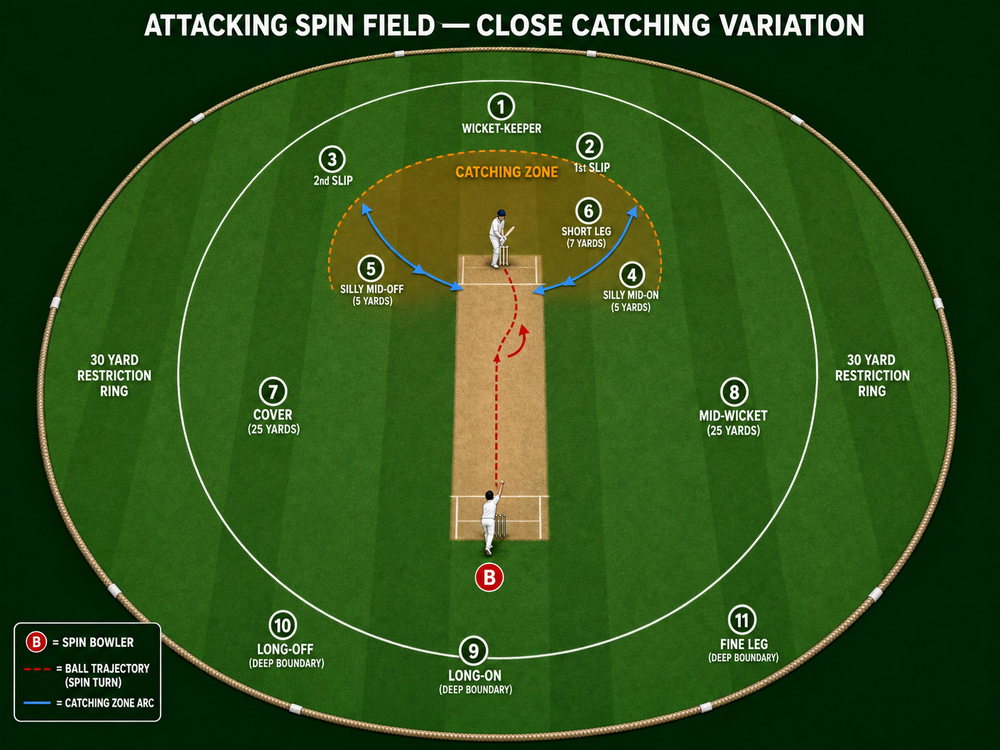
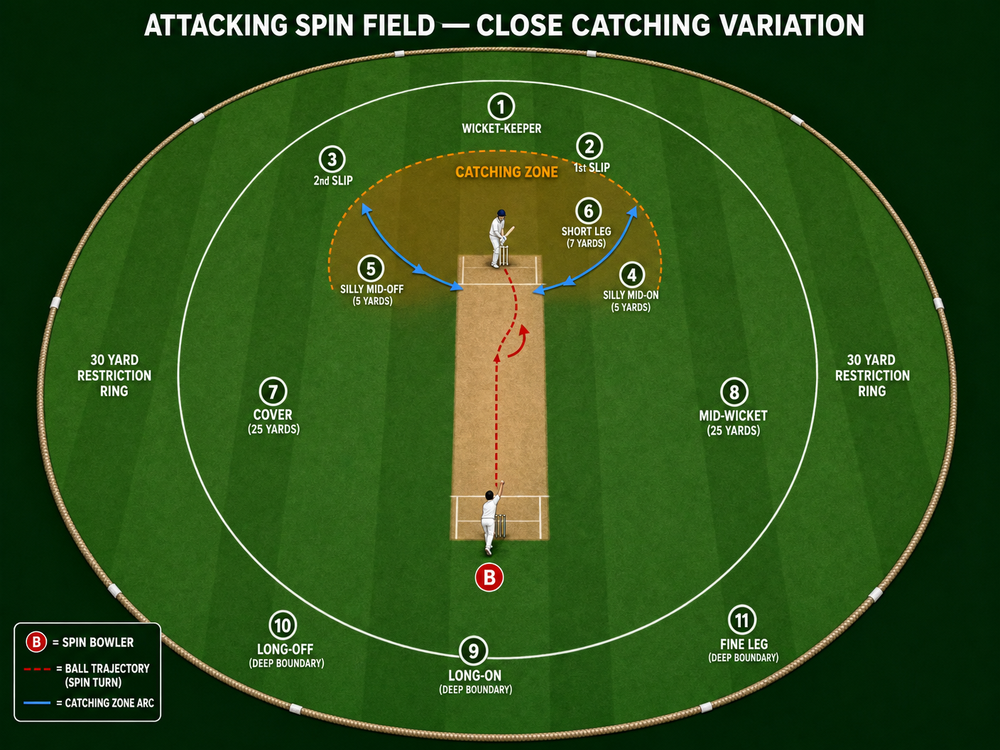
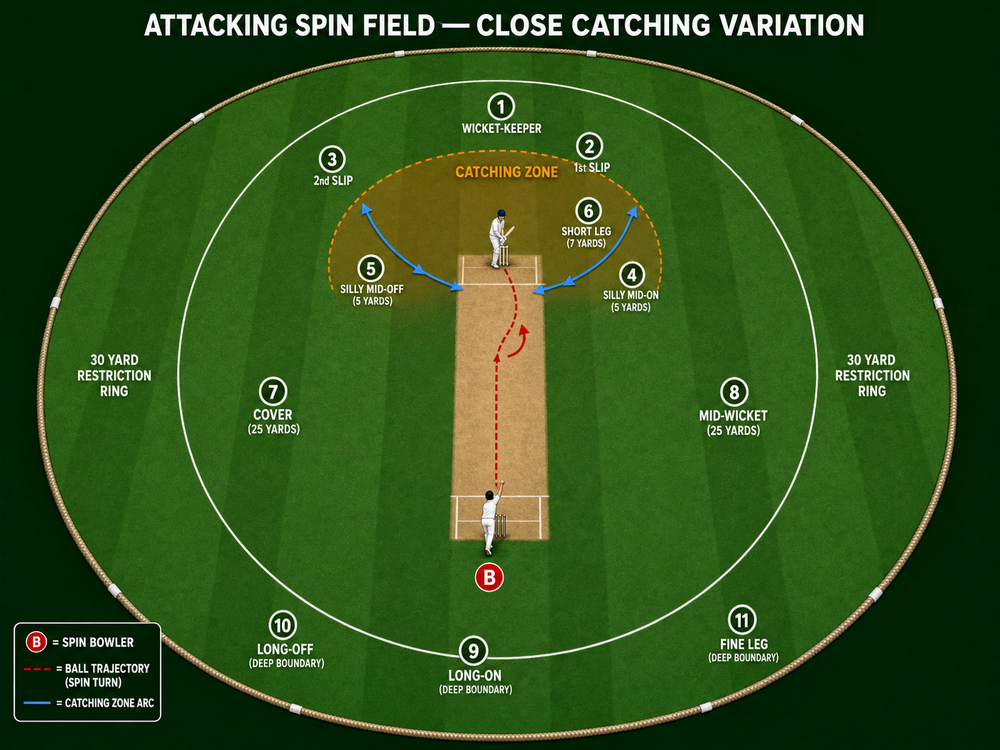
Variation 2: The Attacking Spin Field (Close Catching)
When the pitch is turning sharply or a new batter arrives, transition to an attacking field. Bring in silly mid-off, silly mid-on, and a short leg to increase catching pressure.
Progression: The 'Squeeze' Drill
In practice, set this exact field and challenge the batters to score 30 runs in 5 overs. This forces the batters to find gaps and the bowlers to maintain discipline under pressure.
7. Age Adaptations
- Under 10s: Focus on the basics of bowling straight and having fielders stop the ball. Complex field settings are unnecessary. Ensure fielders are safely positioned.
- Under 12s - Under 14s: Introduce the concept of the 30-yard circle and the roles of boundary riders versus ring fielders. Emphasize the importance of the bowler hitting their line and length.
- Under 16s and Open: Full implementation of the defensive field, including subtle adjustments based on batter analysis and pitch conditions. Focus on building pressure through dot balls and executing specific bowling plans.
