The 'Elevator' Buzzer Beater: End-of-Game Execution
Master this high-percentage end-of-game set play that utilizes double screens to create a wide-open look for your best shooter when the clock is ticking down.
Equipment Needed
1. Overview
The 'Elevator' set play is designed specifically for late-game, high-pressure situations where you need a quick, high-percentage shot—typically a three-pointer—with less than 5 seconds remaining on the clock. This play leverages misdirection and a staggered double screen (the "elevator doors") to free up your primary shooter (Player 2). It is highly effective against both man-to-man and zone defenses because it forces defenders to navigate heavy traffic in the paint while your shooter relocates to the perimeter.
This play is best utilized when you have possession in the frontcourt (either sideline or baseline out-of-bounds) and need a reliable action that provides a primary catch-and-shoot option, as well as clear secondary reads if the defense overplays the main action.
2. Setup
Court Dimensions: Standard FIBA court (28m x 15m).
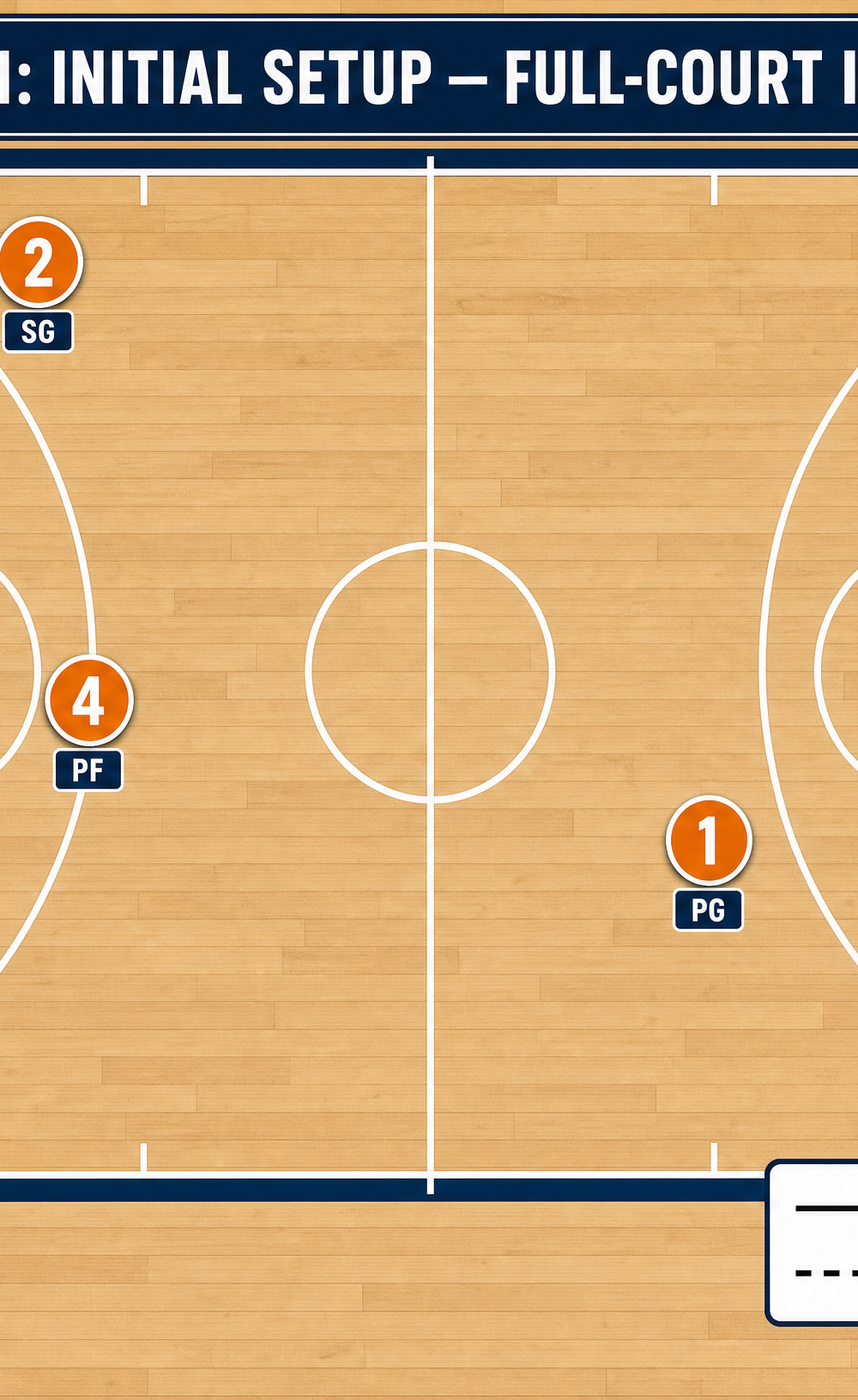
Player Personnel & Positions:
- Player 1 (Point Guard - PG): The inbounder. Needs excellent passing vision and timing. Positioned out-of-bounds.
- Player 2 (Shooting Guard - SG): The primary shooter. Needs a quick release and the ability to shoot off the catch. Starts on the weak-side wing or block.
- Player 3 (Small Forward - SF): The safety valve/decoy. Starts on the strong-side corner.
- Player 4 (Power Forward - PF): The first screener. Needs to set a wide, solid base. Starts at the strong-side elbow.
- Player 5 (Center - C): The second screener. Needs to coordinate timing with Player 4. Starts at the weak-side elbow or top of the key.
3. Step-by-Step Instructions
Phase 1: The Misdirection (0.0 - 1.5 seconds)
- The Trigger: Player 1 slaps the ball to signal the start of the action.
- The Decoy Cut: Player 3 makes a hard V-cut from the strong-side corner toward the basket, then pops back out to the wing. This action is designed to draw the defense's attention and clear space in the middle of the floor.
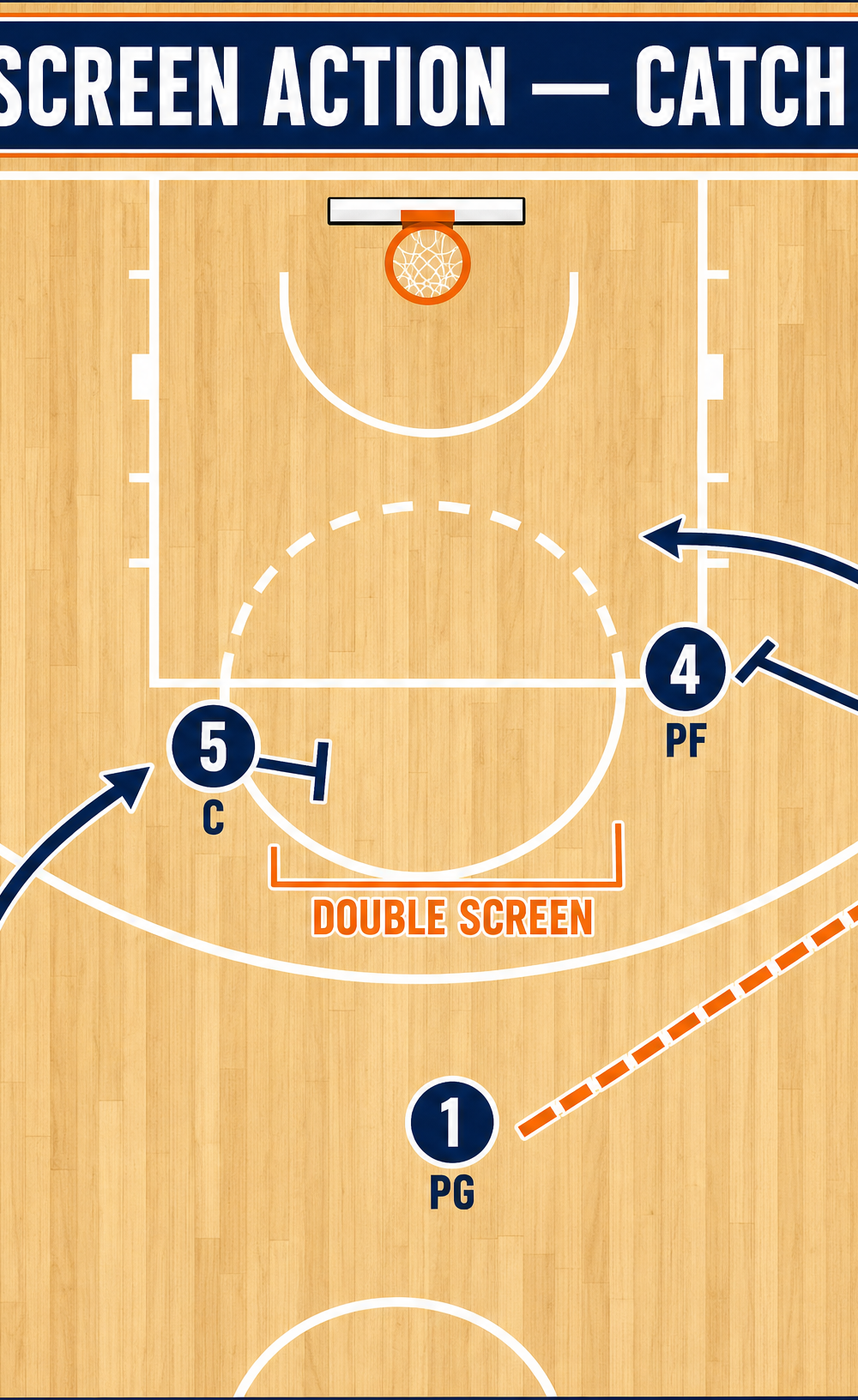
- The Setup: Player 4 and Player 5 simultaneously step toward the middle of the free-throw lane, leaving a small gap (about 1 meter) between them—these are the "elevator doors."
Phase 2: The Elevator Action (1.5 - 3.0 seconds)
4. The Sprint: Player 2 (the shooter) sprints from the weak-side wing directly through the gap between Player 4 and Player 5.
5. Closing the Doors: As soon as Player 2 passes through the gap, Player 4 and Player 5 immediately step together, "closing the elevator doors." They must establish legal screening positions, shoulder-to-shoulder, effectively blocking Player 2's trailing defender.
6. The Pop: Player 2 continues their sprint to the top of the three-point arc, squaring up to the basket upon arrival.
Phase 3: The Execution (3.0 - 5.0 seconds)
7. The Pass: Player 1 delivers a crisp, accurate chest pass or overhead pass to Player 2 at the top of the arc.
8. The Shot: Player 2 catches the ball in rhythm, elevates, and takes the shot before the defense can recover.
Secondary Options (If Player 2 is Denied):
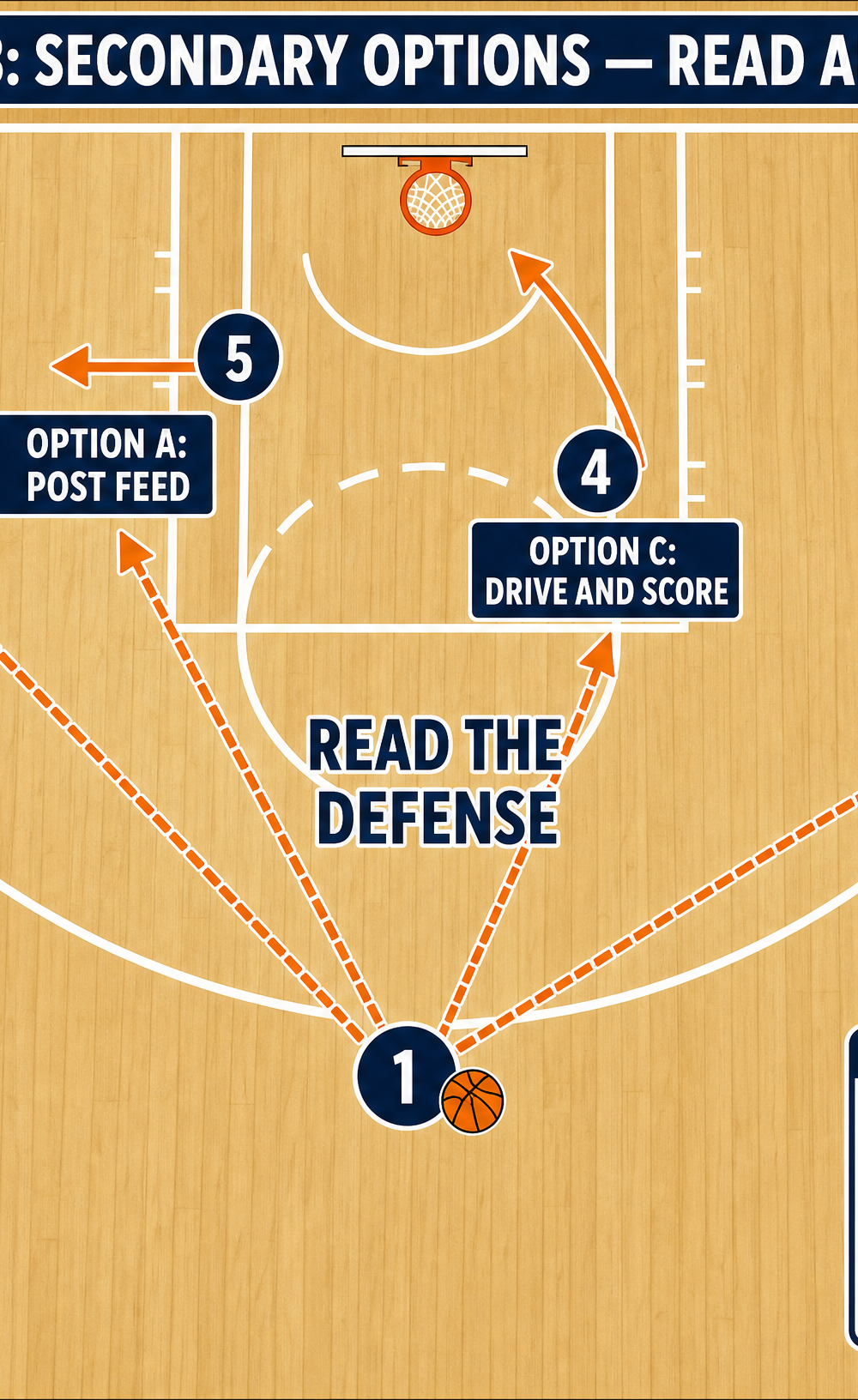
- Option A (The Slip): If the defenders switch aggressively onto Player 2, Player 5 should immediately slip the screen and dive hard to the basket for a lob or bounce pass from Player 1.
- Option B (The Safety): If the pass to Player 2 is entirely cut off, Player 1 looks to Player 3 in the corner as the safety outlet for a contested shot or a quick drive.
4. Key Coaching Points
- Screening Angle and Timing: The success of this play hinges entirely on the timing of Players 4 and 5 closing the gap. If they close too early, Player 2 cannot get through. If they close too late, the defender slips through with them. They must communicate visually and close the doors exactly as Player 2 clears the space.
- Pace of the Cut: Player 2 must sell a fake (e.g., a jab step toward the baseline) before sprinting full speed through the screens. A slow cut allows the defense to adjust and fight over the top.
- Pass Accuracy: Player 1 must deliver the ball directly into Player 2's shooting pocket. A poor pass disrupts the shooter's rhythm and wastes precious fractions of a second.
- Legal Screening: Emphasize to Players 4 and 5 that they must be stationary when the contact occurs. Leaning or moving to block the trailing defender will result in an offensive foul, turning the ball over in a critical moment.
5. Common Mistakes
- Telegraphing the Pass: Player 1 stares down Player 2 the entire time, allowing the defense to anticipate the play and jump the passing lane.
- Weak Screens: Players 4 and 5 fail to establish a wide base or shy away from contact, allowing the defender to push through the "doors" and contest the shot.
- Fading on the Shot: Player 2 catches the ball moving backward or sideways instead of stepping into the pass and elevating straight up, significantly reducing shooting percentage.
6. Variations & Progressions
- Variation 1: The Fake Elevator (Drive): Player 2 runs toward the gap but suddenly plants their foot and back-cuts to the basket, while Player 5 pops to the perimeter. This counters teams that aggressively switch on the elevator screen.
- Variation 2: Double Stagger: Instead of a parallel elevator screen, Players 4 and 5 set a staggered double screen on the wing, providing a different look if the defense is anticipating the middle action.
- Progression: Run the play with a "live" defense in practice, starting the clock at 4.0 seconds. Require the offense to score using either the primary or secondary option before the buzzer sounds.
7. Age Adaptations
- Under 12s: Focus primarily on the concept of passing and cutting. The "elevator" timing may be too complex. Simplify to a single down-screen for a mid-range jump shot.
- Under 14s/16s: Introduce the elevator concept but allow for more spacing. Focus heavily on the legality of the screens and the fundamental footwork of the catch-and-shoot.
- Open/Advanced: Execute the play at full game speed with aggressive defensive switching. Emphasize the secondary reads (the slip by the screener) as advanced defenses will often attempt to take away the primary option.