

Football
Elite Goalkeeper Shot-Stopping & Recovery Progression
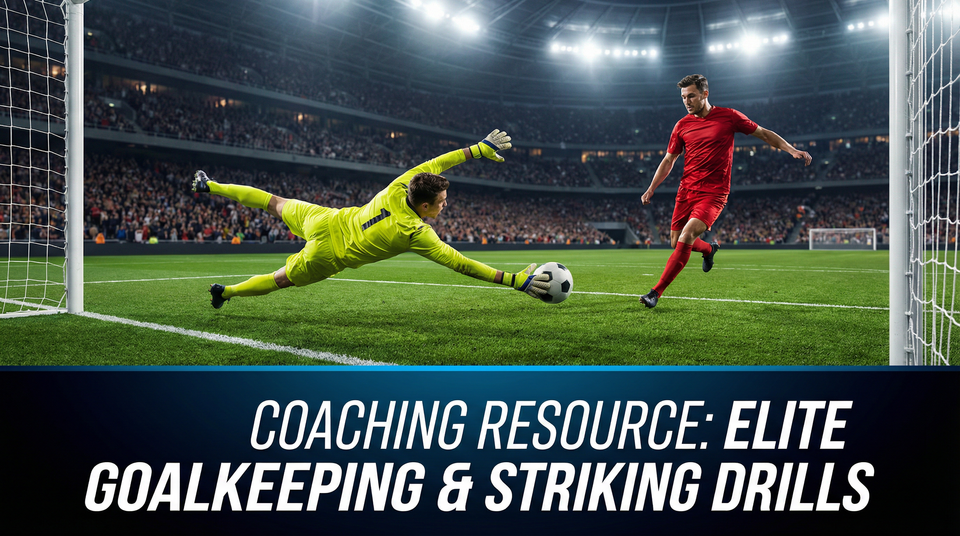
A high-intensity, multi-phase shot-stopping drill designed to improve a goalkeeper's reaction time, positional awareness, and ability to handle second-ball scenarios under pressure.
What you need
1 Full-size goal, 12-15 Footballs, 4-6 Cones/Markers, 1 Rebound board (optional)
1. Overview
The modern goalkeeper must be more than just a shot-stopper; they must be a commanding presence capable of making rapid, successive saves while managing the chaos of the penalty area. This Elite Goalkeeper Shot-Stopping & Recovery Progression is designed to simulate the high-pressure, multi-angle demands of match-day scenarios. By forcing the goalkeeper to transition quickly between different types of saves—from long-range strikes to point-blank rebounds—this drill builds explosive power, reinforces correct footwork, and develops the mental resilience needed to stay engaged when the ball remains in the danger zone.
Use this drill during the main technical phase of a goalkeeping session or as a high-intensity finisher for your shot-stoppers before integrating them into small-sided games.
2. Setup
Pitch Area: Penalty Area (18-yard box) and the D.
Equipment:
- 1 Full-size goal
- 12-15 Footballs (minimum)
- 4-6 Cones/Markers (for starting positions)
- 1 Rebound board (optional, for variations)
Player Positions:
- GK (Goalkeeper): Starting on the goal line, central.
- S1, S2, S3 (Shooters): Positioned around the edge of the penalty area. S1 central (penalty spot/D), S2 left channel, S3 right channel.
- Server/Coach: Positioned outside the area with the supply of footballs to maintain a high tempo.
3. Step-by-Step Instructions
Phase 1: Basic Shot-Stopping Setup
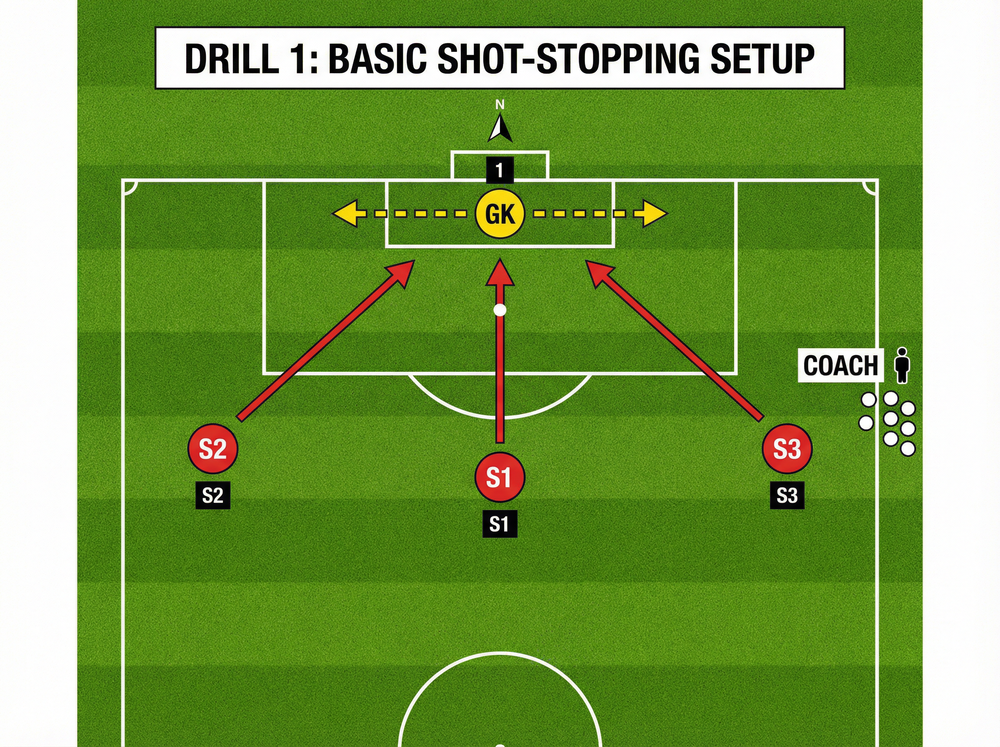
- Starting Position: The GK begins in the centre of the goal, slightly off the line in a balanced set position.
- The Trigger: The Coach calls the number of the shooter (e.g., "One!", "Two!", "Three!").
- The Shot: The designated shooter takes a touch out of their feet and strikes firmly toward the goal.
- The Save: The GK must read the strike, make the save, and attempt to hold the ball or parry it safely away from the central danger zone.
- Reset: The GK quickly resets to the central position before the Coach triggers the next shot.
Phase 2: Rapid-Fire Multi-Angle Progression
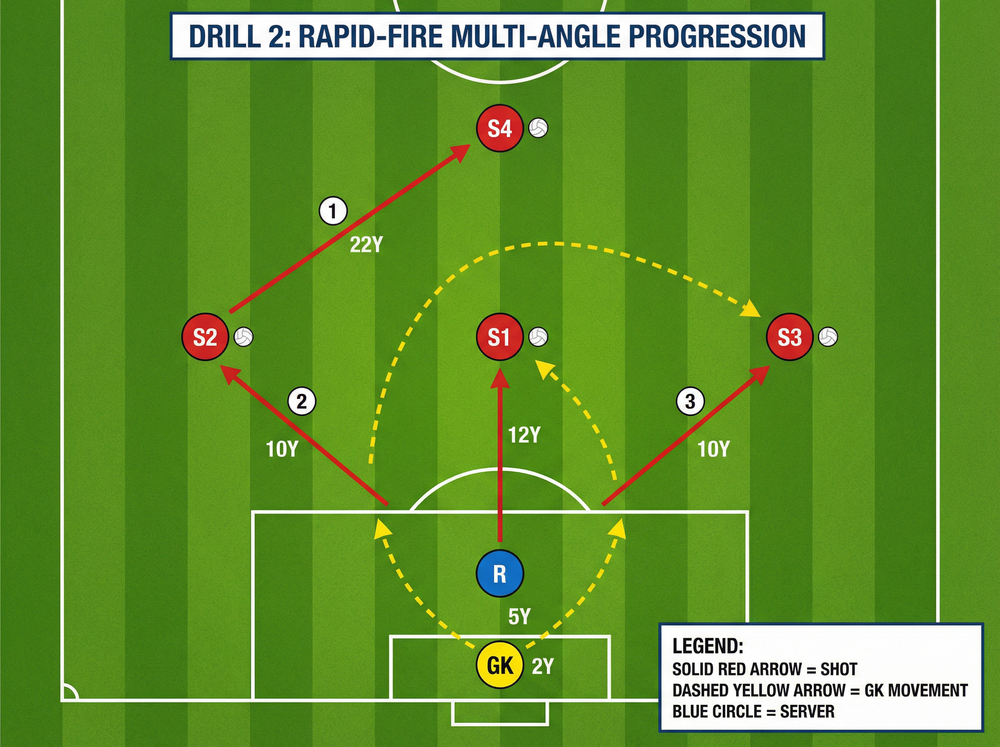
- Starting Position: The GK starts 2 yards off the line, central.
- Sequence Initiation: The Coach initiates a rapid-fire sequence. S4 (long-range) strikes first.
- First Save & Recovery: The GK makes the save and immediately adjusts their angle.
- Subsequent Shots: Without delay, S2 (left angle) strikes, followed immediately by S3 (right angle).
- Rebound Focus: The Server (R) positioned centrally attempts to score any parried ball.
Phase 3: Advanced Pressure & Second-Ball Scenario
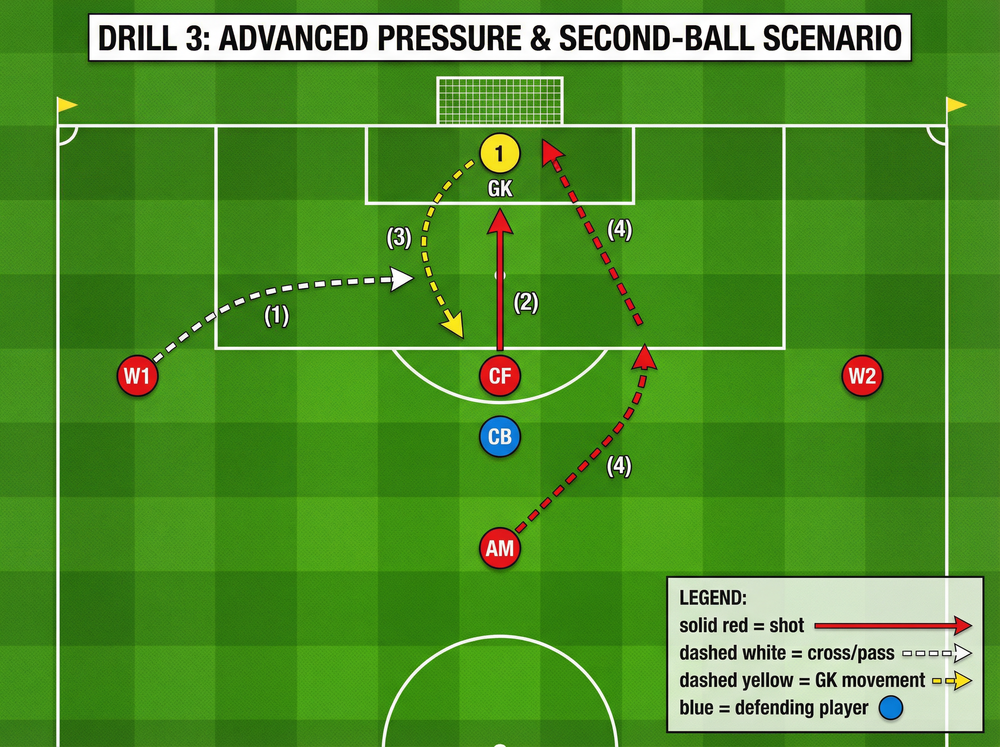
- Dynamic Start: A low, driven cross from W1 on the left flank into the 6-yard box.
- Decision Making: The GK decides whether to attack the cross or hold their line.
- The Save & Transition: After the initial save from the CF, the GK must immediately locate the AM at the edge of the box.
- The Second Ball: The AM receives a pass and shoots through traffic created by the CB and CF.
- Completion: The sequence ends when the GK secures the ball, the ball goes out of play, or a goal is scored.
4. Key Coaching Points
- The Set Position: Feet shoulder-width apart, weight slightly forward on the balls of the feet, hands in a neutral ready position — set before the strike.
- Footwork and Angle Play: Quick, efficient footwork to get into the line of the ball. Constantly adjust starting position based on the shooter's angle.
- Handling and Deflection: Prioritise clean handling (the 'W' catch). If a parry is necessary, push wide and away from the central danger zone.
- Recovery Speed: Use the momentum of the dive and the lower body to spring back up rapidly.
- Communication: Demand 'Keeper!' or 'Away!' calls to build match-day habits.
5. Common Mistakes
- Being Caught Moving: Still adjusting feet when the shot is struck, leading to poor balance and reduced power in the dive.
- Parrying Centrally: Pushing the ball straight back out into the penalty area, gifting the attackers an easy rebound.
- Negative Starting Position: Standing glued to the goal line, increasing the visible target area for the shooter.
- Taking the Eye Off the Ball: Losing focus during flight, especially when dealing with traffic or secondary shots.
6. Variations & Progressions
- The Blind Start: GK starts facing the net. Coach shouts 'Turn!' as the shooter strikes, drastically reducing reaction time.
- Adding Traffic: Introduce 1-2 passive defenders or mannequins to obscure the GK's line of sight.
- The Unpredictable Bounce: Use a deflection ramp or uneven surface to create unpredictable bounces that test reflexes.
7. Age Adaptations
- Under 8–10: Phase 1 only. Reduce distances to 8-10 yards. Emphasise the basic set position and basket catch. Keep tempo manageable.
- Under 12–14: Introduce Phase 2 with more time between shots. Focus on diving technique and parrying wide.
- Under 16–Open: Full progression at match intensity. Demand perfection in handling and rapid recovery. Introduce all variations.
