Essential Post Moves & Footwork: The Drop-Step Mastery Drill
Master the fundamentals of interior scoring with this comprehensive drill focused on establishing position, receiving the entry pass, and executing the perfect drop-step finish.
Equipment Needed
1. Overview
The ability to score consistently from the low post is a crucial element of a balanced offensive attack. This drill isolates the fundamental mechanics of interior scoring, specifically focusing on the drop-step—one of the most effective and reliable moves in a post player's arsenal. By breaking down the sequence from establishing position to the final release, coaches can ensure their players develop the footwork, balance, and touch required to finish under pressure.
This drill is ideal for introducing post play to developing players or refining the technique of experienced forwards and centers. It emphasizes the critical transition from catching the ball to attacking the rim efficiently, minimizing unnecessary dribbles and maximizing scoring angles.
2. Setup
Proper setup is essential for maximizing repetitions and maintaining drill flow.
- Equipment: 2-3 basketballs, cones (optional, to mark starting positions).
- Court Setup: Half-court utilizing the painted area (4.9m wide x 5.8m deep) and the three-point arc.
- Player Positions:
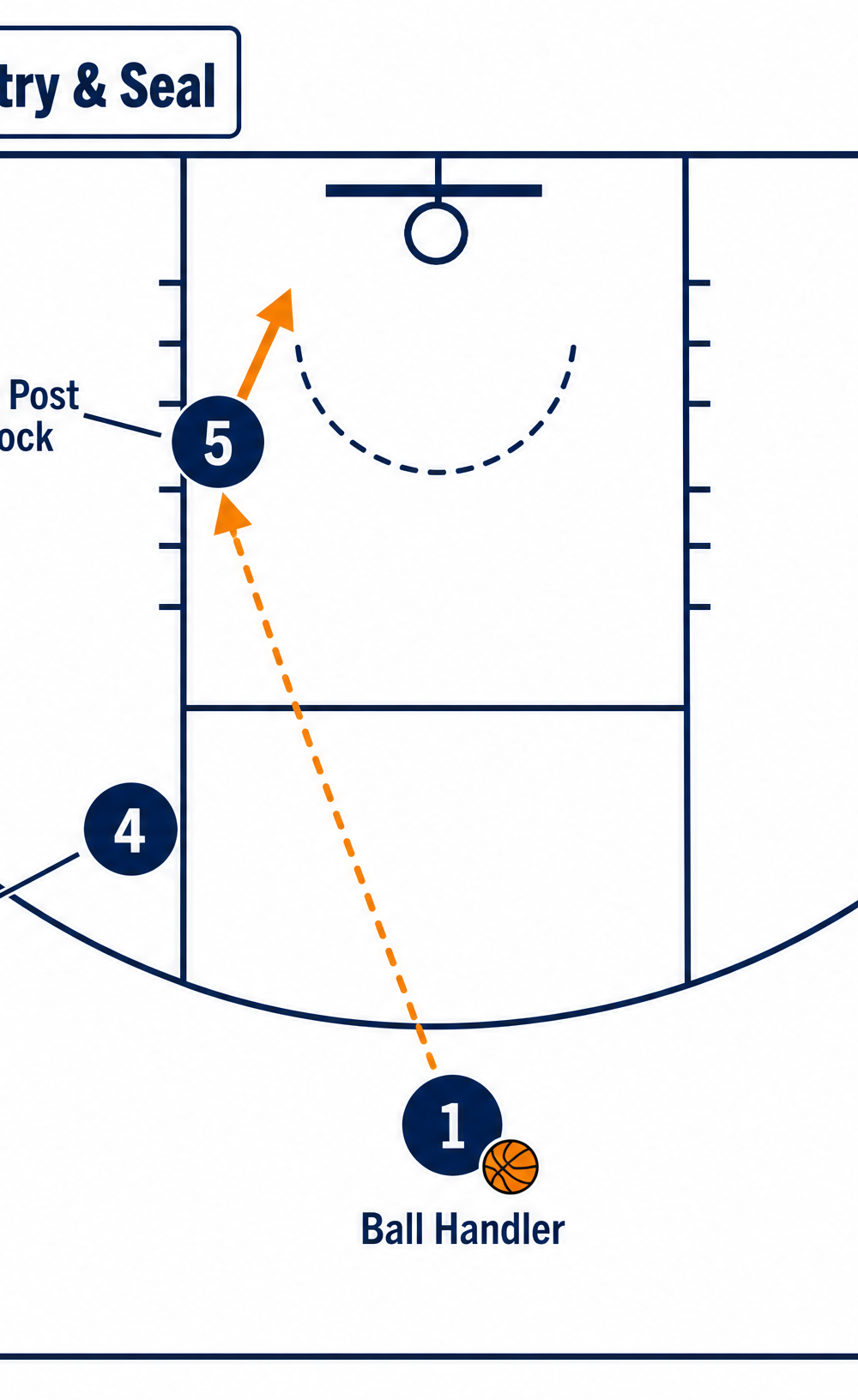
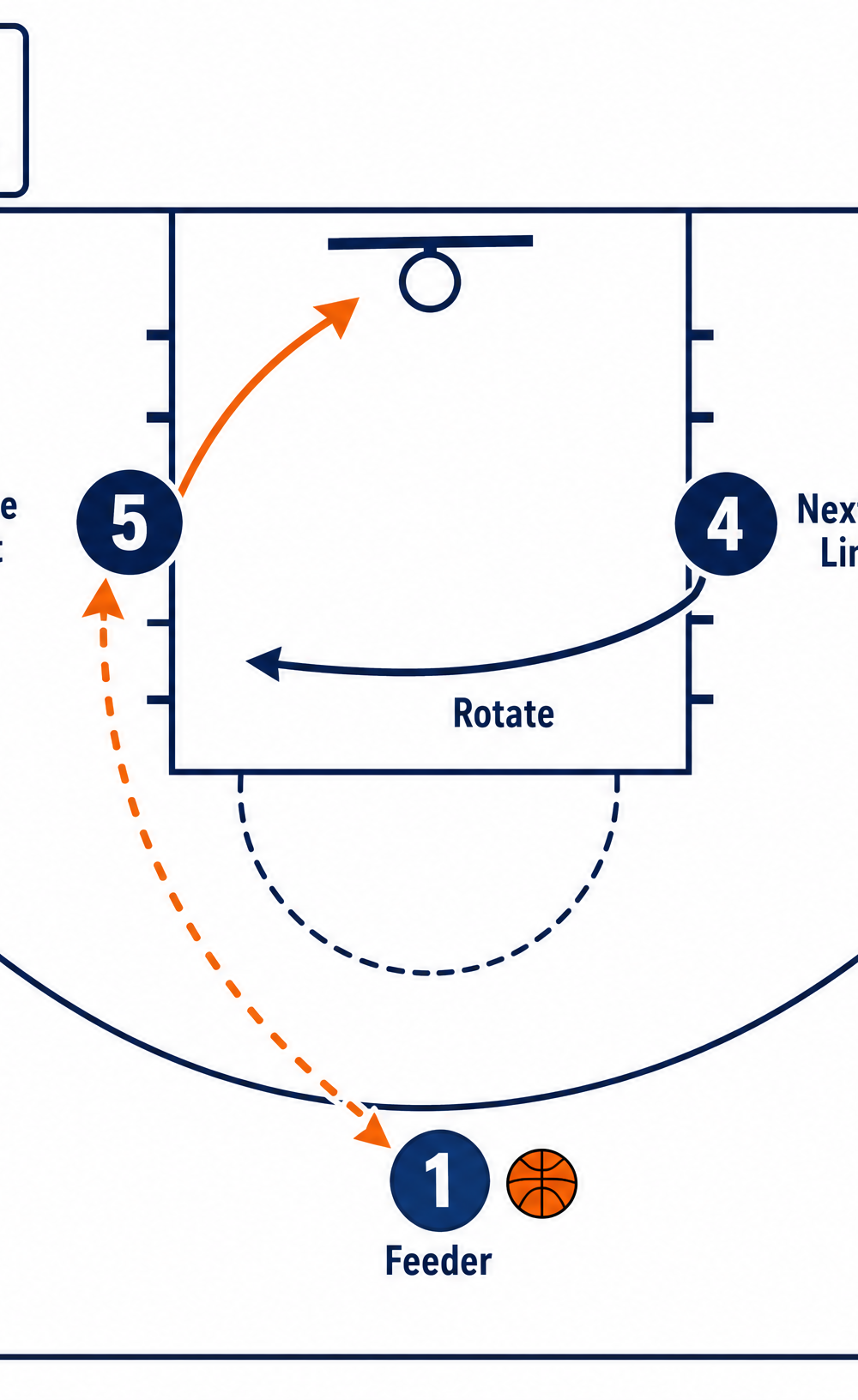
- Feeder (Player 1): Positioned at the top of the key or the wing (free-throw line extended), holding a basketball.
- Active Post (Player 5): Positioned on the low post block, initially facing the feeder.
- Next in Line (Player 4): Positioned on the opposite low post block or baseline, ready to rotate in.
3. Step-by-Step Instructions
Execute the drill with a focus on precision and game-speed execution.
- Establish Position: The Active Post (Player 5) starts on the low post block. They must establish a wide base, knees bent, and provide a clear target hand for the feeder.
- The Entry Pass: The Feeder (Player 1) delivers a crisp, accurate pass (chest or bounce) to the Active Post's target hand.
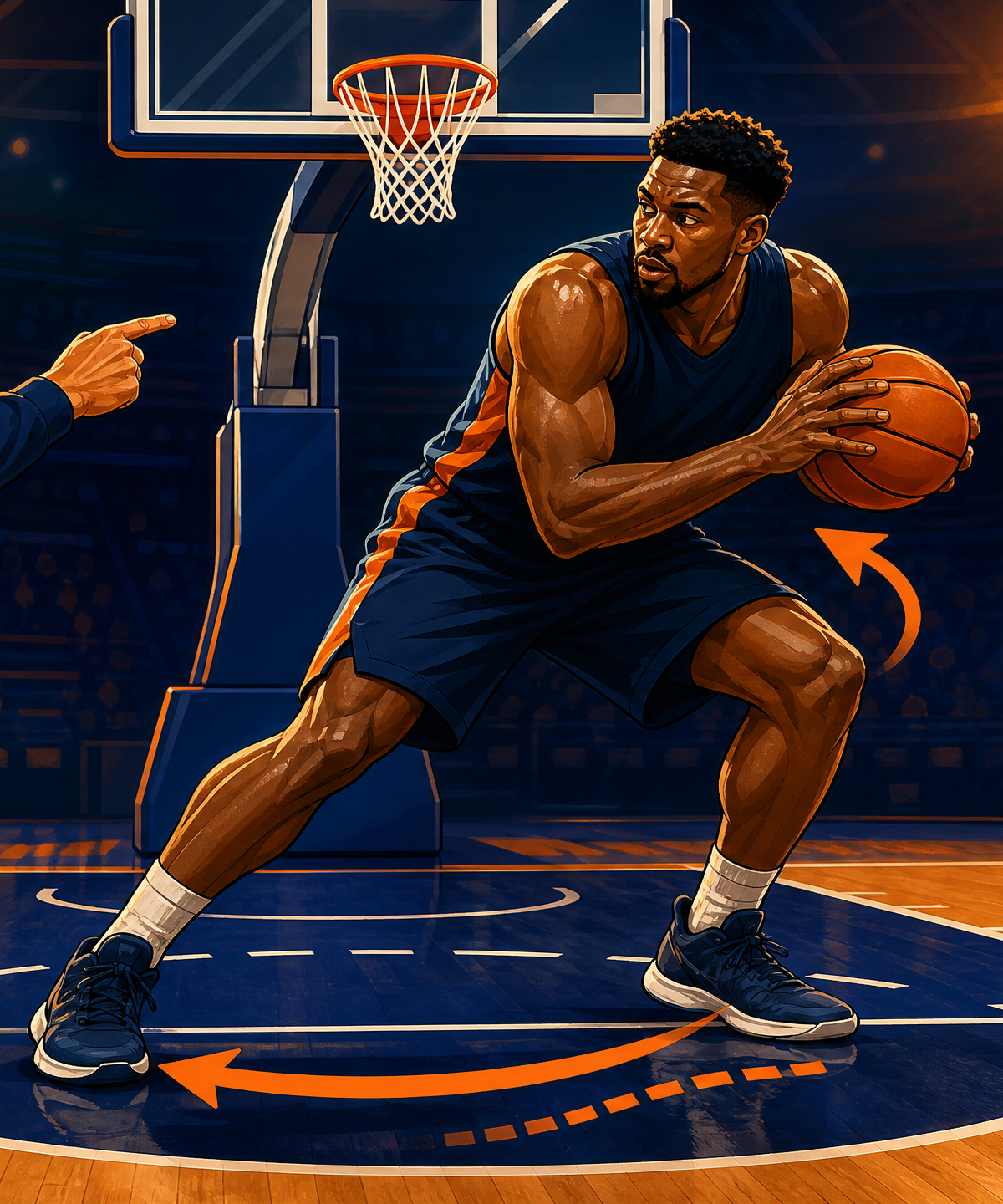
- The Catch and Chin: Upon receiving the pass, the Active Post immediately secures the ball with two hands, bringing it securely under their chin with elbows out to protect it from defenders.
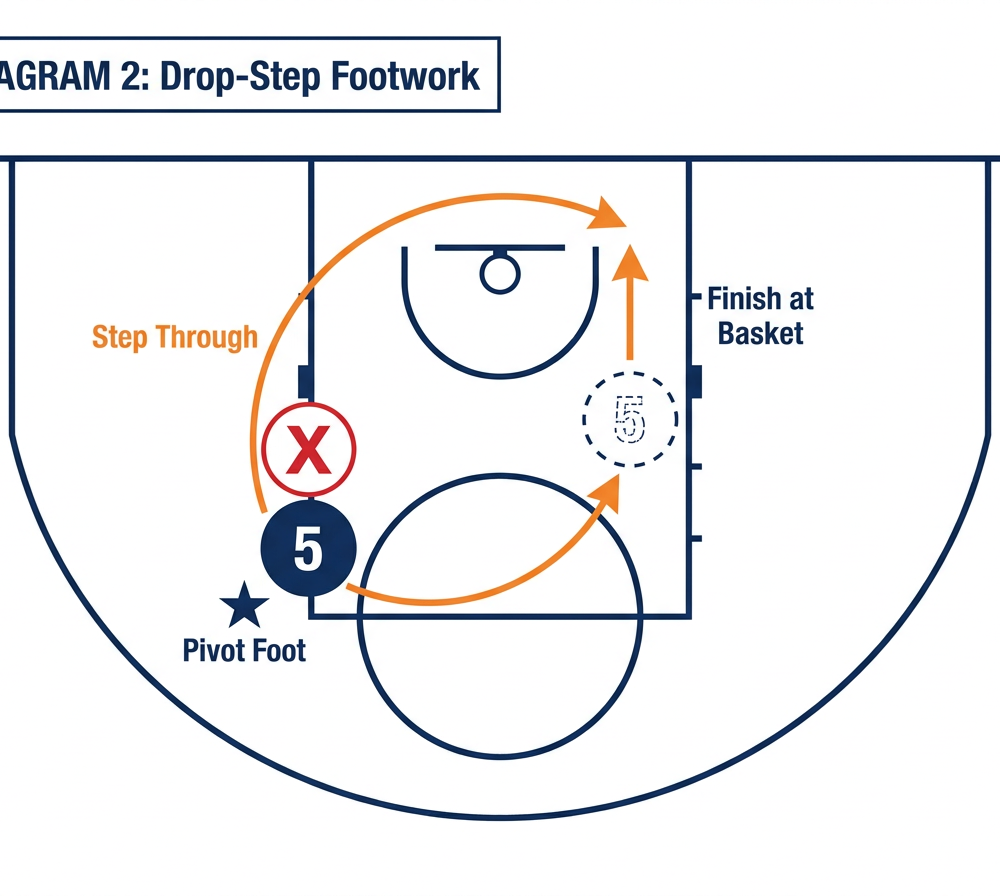
- The Drop-Step: The Active Post identifies the baseline side as the attack route. They pivot on their top foot (the foot closest to the free-throw line) and take a strong, sweeping step with their baseline foot toward the basket, sealing off the imaginary defender.
- The Power Dribble (Optional but Recommended): As the drop-step occurs, the player takes one hard, low power dribble to gather momentum and maintain balance.
- The Finish: Explode off two feet toward the rim, extending the ball high and finishing strong off the glass or with a dunk/layup.
- Rebound and Rotate: The Active Post rebounds their own shot, passes the ball back out to the Feeder, and rotates to the back of the line. The Next in Line (Player 4) immediately steps into the Active Post position.
4. Key Coaching Points
Focus on these critical details to ensure correct technique.
- Provide a Target: Demand that post players show a clear, visible target hand to the passer. No target, no pass.
- Chin the Ball: Emphasize protecting the ball immediately upon catching it. Bringing the ball down exposes it to smaller, quicker guards digging down.
- Wide Base and Balance: The drop-step must be explosive but controlled. A wide stance during the pivot ensures the player cannot be easily pushed off their spot.
- Shoulder to Chest: When executing the drop-step, the offensive player's shoulder should drive into the center of the defender's chest to create space and draw contact.
- Explode Up, Not Out: The final gather and jump should be vertical toward the rim, maximizing height and minimizing the chance of an offensive foul.
5. Common Mistakes
Watch for these frequent errors and correct them immediately.
- Fading Away: Players often lean away from the basket on the finish instead of attacking the rim through contact.
- Narrow Base: Standing too tall or having feet too close together makes the player easy to move and disrupts the pivot.
- Bringing the Ball Down: Dropping the ball below the waist after the catch is a guaranteed turnover against good defense.
- Traveling on the Pivot: Failing to establish a clear pivot foot before initiating the drop-step.
6. Variations & Progressions
Keep the drill challenging by introducing new elements.
- Add a Defender (Live/Dummy): Introduce a coach or player with a pad to provide resistance on the catch and the finish.
- Counter Moves: If the defender overplays the baseline drop-step, progress to an up-and-under or a middle hook shot.
- Weak-Side Flash: Have the post player start on the opposite block and flash across the lane to receive the entry pass before executing the move.
7. Age Adaptations
Tailor the drill to the developmental level of your players.
- Under 10 / Under 12: Focus entirely on footwork without a basketball first. Introduce the ball only when the pivot and step-through are mastered. Use smaller basketballs if necessary.
- Under 14 / Under 16: Demand game-speed execution and introduce light contact with a pad to simulate physical post play.
- Open / Advanced: Incorporate live defenders, read-and-react scenarios, and complex finishing packages (e.g., reverse layups, jump hooks).