Counter-Pressing: Immediate Aggression Upon Losing Possession
Learn how to organise and execute a highly effective counter-press to win the ball back within 5 seconds of losing possession and launch immediate attacks.

Equipment Needed
1. Overview
Counter-pressing (or Gegenpressing) is the immediate, aggressive attempt to win the ball back the moment possession is lost, rather than dropping back into a defensive shape. This set play and tactical concept aims to exploit the opponent's momentary disorganisation during transition.
When a team wins the ball, they typically expand their shape to transition into attack. By pressing them instantly—within a 3 to 5-second window—you can catch them in an expansive, vulnerable state. If the ball is recovered, your team is perfectly positioned to launch a devastating counter-attack against an unsettled defence.
This resource breaks down the exact mechanics of a successful counter-press, focusing on the triggers, player roles, and the immediate transition to attack upon recovery.
2. Setup
Pitch Setup:
- Dimensions: 100-110m length x 64-75m width (Full pitch or adapted large-sided game).
- Zones: Mentally divide the pitch into thirds. This specific scenario focuses on losing the ball in the attacking or middle third.
- Equipment: Full size goals, bibs (two colours), plenty of footballs placed around the perimeter to keep the tempo high.
Player Positions:
- Our Team (Blue): Set up in a 4-2-3-1 or 4-3-3 shape, focusing on a compact attacking structure.
- Opponent (Orange): Set up in a standard defensive block, preparing to transition out.
3. Step-by-Step Instructions
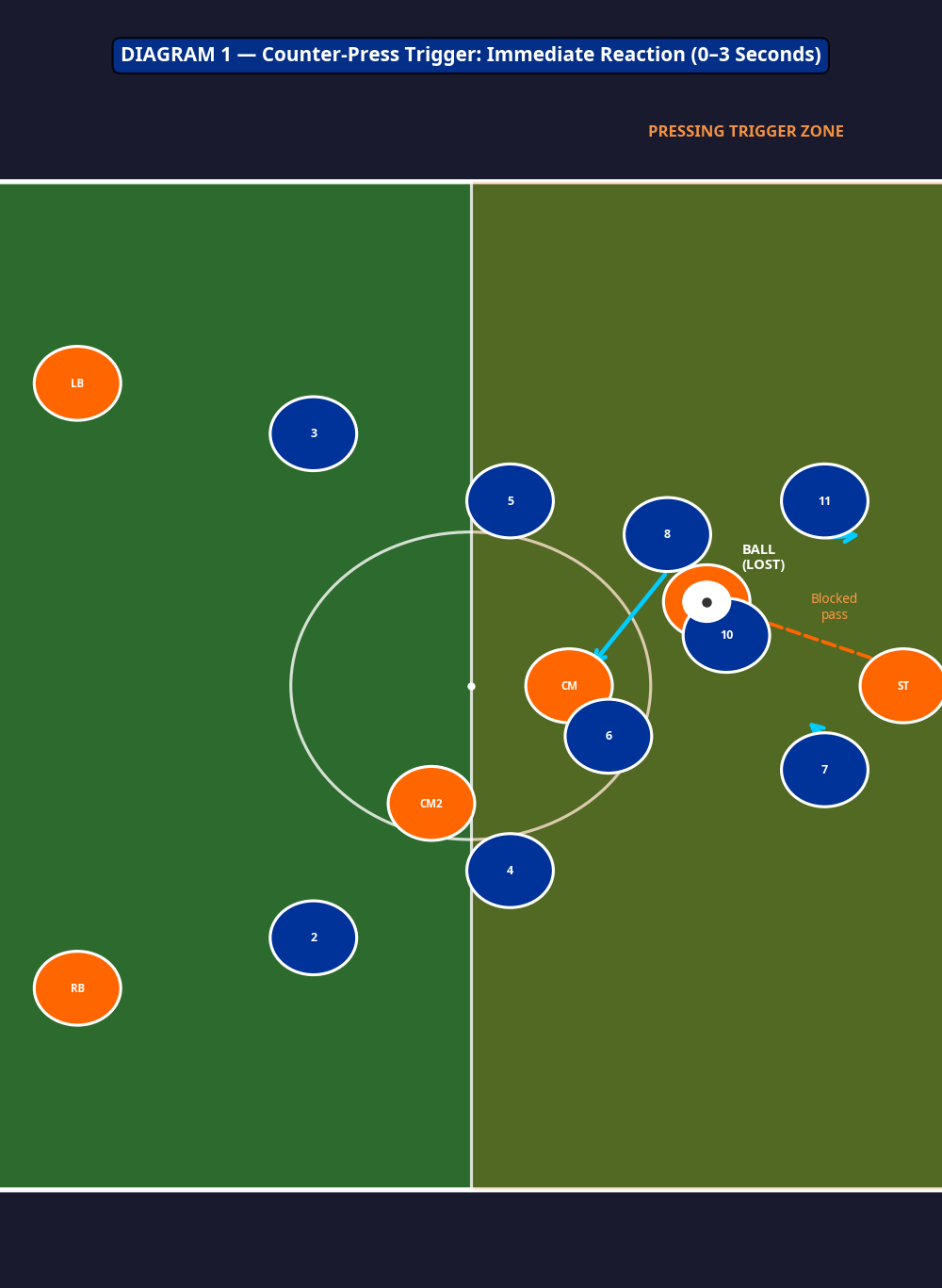
Step 1: The Trigger (0–3 Seconds)
The moment possession is lost (e.g., our #10 is tackled by the opponent's #6 or #8), the counter-press is triggered instantly.
- The Closest Player: The player nearest to the ball (#10 in our example) must immediately aggressively press the ball carrier.
- Secondary Pressers: The next 2-3 closest players (#8, #6, #7) sprint to close down the immediate passing options around the ball carrier.
- The Goal: Prevent the ball carrier from getting their head up or playing a clean forward pass.
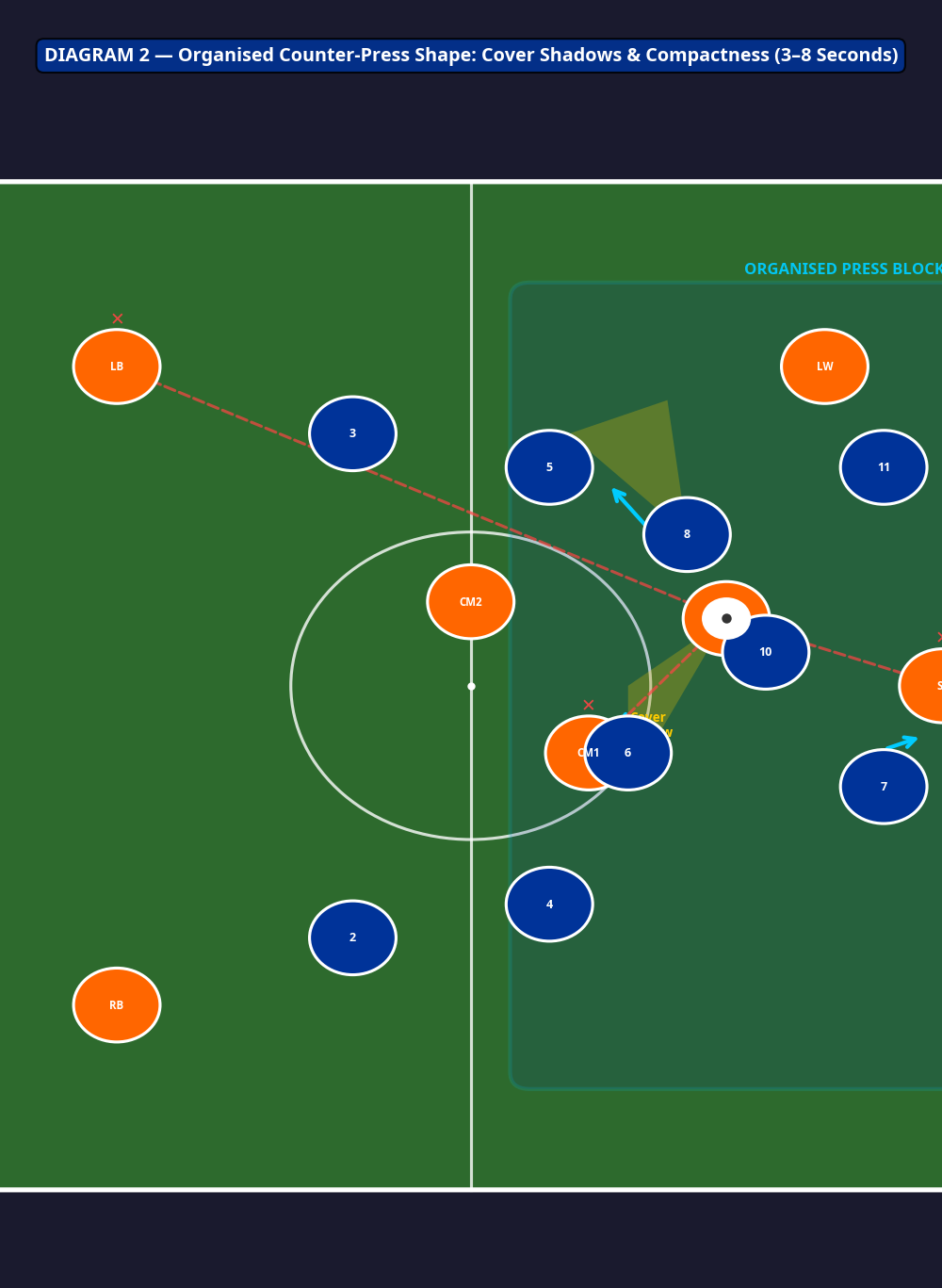
Step 2: Organising the Shape & Cover Shadows (3–8 Seconds)
As the immediate press is applied, the rest of the team must organise the secondary layer of the press.
- Cover Shadows: Players pressing the ball carrier or nearby options must angle their runs to put opponents in their "cover shadow"—blocking the passing lane to players behind them.
- Compactness: The defensive line (#2, #3, #4, #5) must step up to compress the space. If they drop deep, the counter-press will fail as the opponent will simply play over or through the press.
- Wide Players: Wingers (#7, #11) tuck in slightly to cut off wide outlet passes, forcing the opponent to play centrally where the press is thickest.
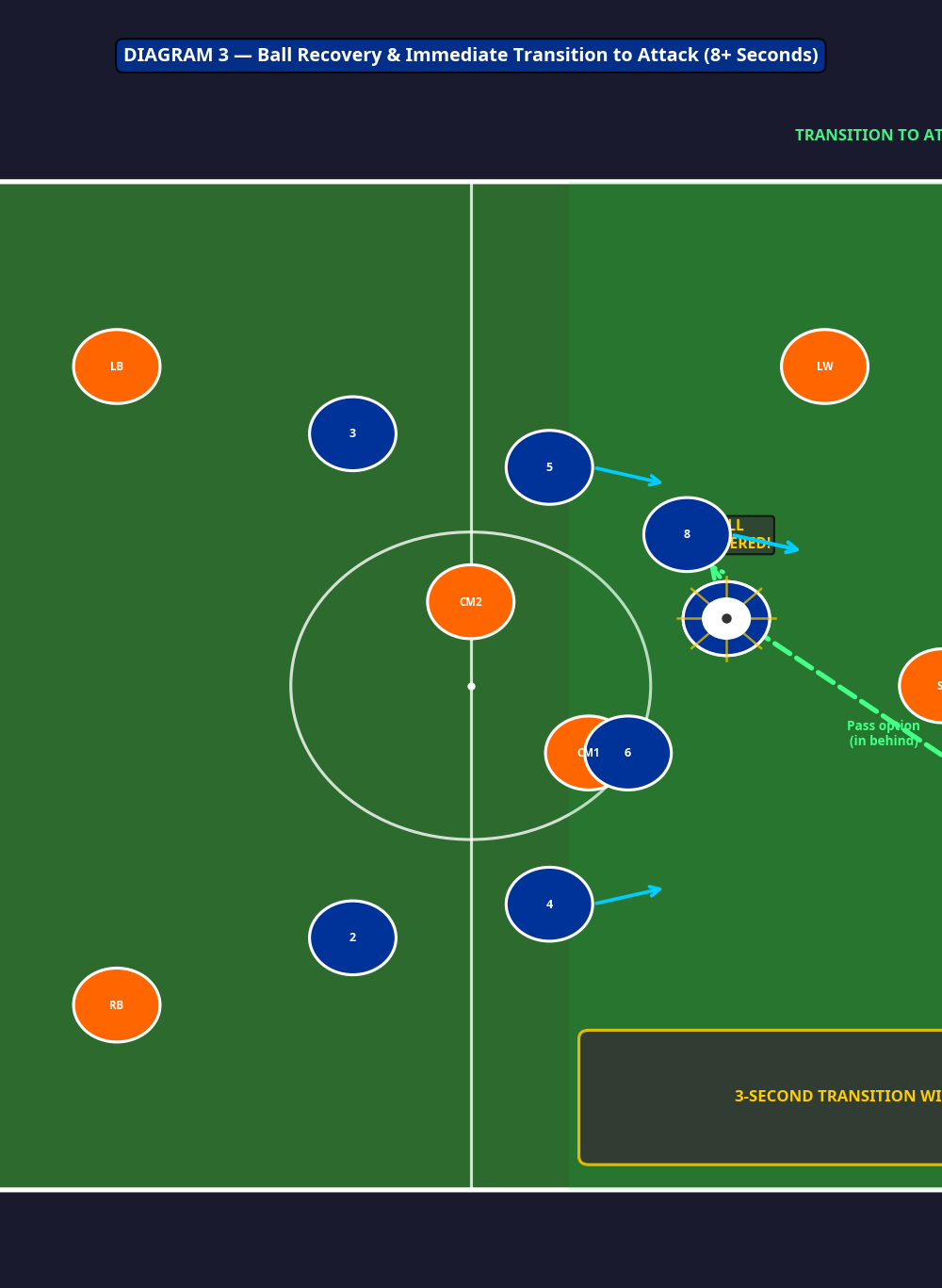
Step 3: Ball Recovery & Immediate Transition (8+ Seconds)
If the counter-press is successful, the ball is recovered in a dangerous area.
- First Look Forward: The player who wins the ball (#10) must immediately look for a forward pass. The opponent will be disorganised and expanding.
- Forward Runs: The moment the ball is won, attackers (#7, #11, #9) must make explosive, diagonal runs in behind the opponent's defensive line.
- Support: If a forward pass isn't on, secure possession with a short pass to a supporting midfielder (#8 or #6) and build the attack.
4. Key Coaching Points
- Reaction Speed: The transition from attack to defence must be instantaneous. There can be zero hesitation or complaining about losing the ball.
- Compact Attacking Shape: A successful counter-press begins before the ball is lost. The team must attack with a compact shape so players are close enough to press when possession changes.
- Aggression vs. Fouling: Press aggressively to win the ball or force an error, but avoid giving away cheap free-kicks which relieve the pressure on the opponent.
- Step Up the Line: The defensive line must be brave and step up to squeeze the space. If they drop, the midfield will be bypassed.
- The 5-Second Rule: If the ball isn't won back or forced out of play within 5 seconds, the team must decide whether to continue pressing or drop into their organised defensive block.
5. Common Mistakes
- Solo Pressing: One player pressing while the rest of the team drops back. This leaves the pressing player isolated and easily bypassed.
- Attacking Too Expansively: If players are spread too far apart while in possession, they cannot effectively counter-press when the ball is lost.
- Not Using Cover Shadows: Pressing straight at the man without considering the passing lanes behind them, allowing the opponent to play through the press easily.
- Defensive Line Dropping: Defenders instinctively dropping deep when the ball is lost, creating massive gaps between the midfield and defence.
6. Variations & Progressions
- Progression 1: Number Advantage: Start the drill with a numerical advantage for the pressing team (e.g., 6v4) to build confidence, then progress to even numbers (e.g., 8v8 or 11v11).
- Progression 2: Time Limit on Counter-Attack: Once the pressing team wins the ball, give them a strict time limit (e.g., 6 seconds) to get a shot on goal to encourage immediate verticality.
- Variation 1: Directional Pressing: Dictate that the team must try to force the opponent towards a specific sideline or central trap.
7. Age Adaptations
- Under 8 - Under 10: Focus purely on the immediate reaction. Teach them the concept of "hunting in packs" immediately after losing the ball. Don't worry about complex cover shadows or defensive line height.
- Under 12 - Under 14: Introduce the concept of cover shadows and the 5-second rule. Start teaching the defenders to step up and compress the space.
- Under 16 - Open: Implement the full tactical model, demanding high-intensity pressing, precise cover shadows, and immediate, ruthless transitions to attack upon recovery.