

Cricket
Mastering the Slip Cordon: Essential Catching Field Setups
Learn how to effectively set up and manage your slip cordon to maximise catching opportunities and build pressure on the opposition.

What you need
Cricket ball, Stumps and bails, Slip cradle (optional), Measuring tape (optional)
1. Overview
The slip cordon is arguably the most critical catching area in cricket, especially in the longer formats of the game or when a new ball is in play. Setting up an effective slip cordon requires precision, clear communication, and an understanding of the bowler's tactics and the pitch conditions. This set play resource provides coaches with the knowledge to structure their catching field to exploit edges and create sustained pressure on the batting side. It is designed to turn half-chances into match-winning wickets.
2. Setup

Proper setup of the slip cordon is fundamental to its success. The fielders must be positioned accurately to cover the angles of deflection off the bat.
Equipment Needed
- 1 x New or semi-new cricket ball (to ensure realistic swing/seam movement)
- Stumps and bails
- Measuring tape or cones (optional, for marking exact spacing during practice)
- Slip cradle or Katchet board (for specific catching drills)
Pitch and Field Setup
- The Pitch: Standard 22-yard cricket pitch.
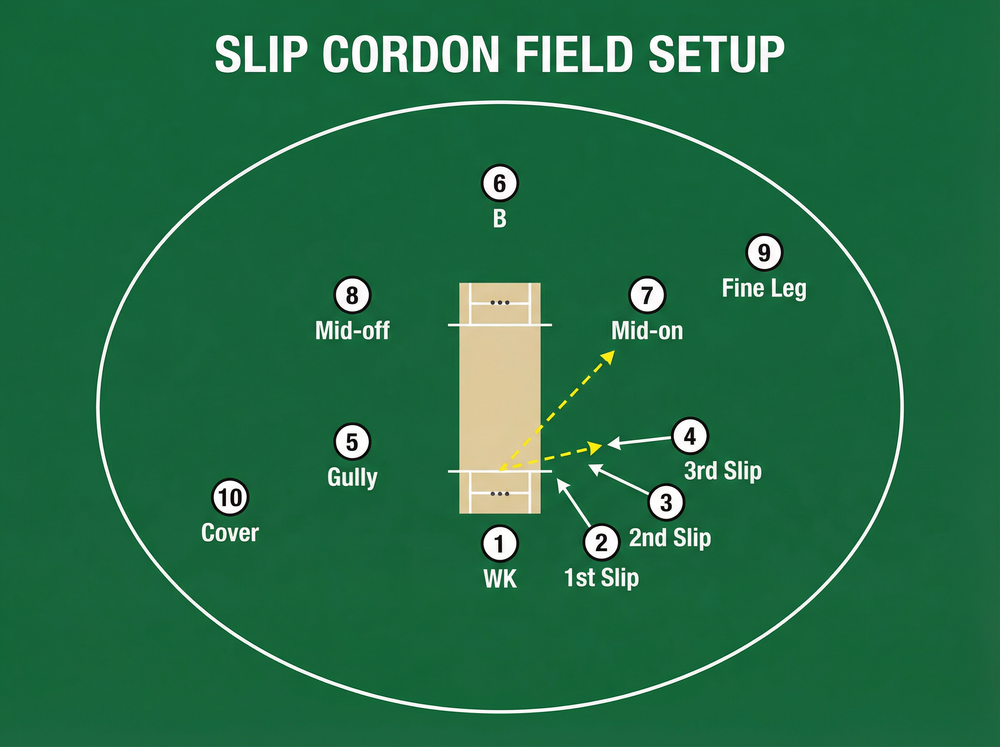
- Player Positions: The core of this setup revolves around the Wicket-Keeper (WK), First Slip, Second Slip, Third Slip, and Gully.

3. Step-by-Step Instructions
Setting the field correctly requires a systematic approach. Follow these steps to ensure your slip cordon is perfectly aligned.
- Position the Wicket-Keeper: The WK is the anchor of the cordon. Depending on the bowler's pace, the WK stands either up to the stumps (for spinners/slow mediums) or back (for fast bowlers). Their position dictates the depth of the entire cordon.
- Align First Slip: First slip positions themselves based on the WK. They should be approximately 1.5 metres to the right of the WK (for a right-handed batter). Crucially, First Slip must stand slightly deeper than the WK to ensure they don't obscure the WK's view or dive into each other.
- Stagger the Cordon: Second Slip stands approximately 1.5 metres to the right of First Slip, and slightly deeper again. Third Slip follows the same pattern. This creates a staggered diagonal line, ensuring no fielder blocks another's line of sight.
- Position the Gully: The Gully fielder stands wider and slightly squarer than the slips. Their exact position depends on the bounce of the pitch; on a bouncy pitch, they stand deeper.
- Adjust for the Bowler: The width of the cordon must be adjusted based on the bowler's line. An outswing bowler requires a wider cordon, while an inswing bowler might only need one or two slips.
4. Key Coaching Points
To maximise the effectiveness of the slip cordon, coaches must emphasize the following technical and tactical points.
- The 'Ready' Position: Fielders must be in a balanced, athletic stance as the bowler delivers the ball. Knees should be bent, weight on the balls of the feet, and hands held low and relaxed. They must watch the ball from the bowler's hand, to the pitch, to the bat.
- Spacing is Critical: The 1.5-metre gap between slips is vital. Too close, and fielders will collide or hesitate; too wide, and edges will fly through the gaps.
- Staggered Depth: Emphasize the diagonal stagger. If the slips stand in a straight horizontal line, the wider slips will be unsighted by the fielders inside them.
- Soft Hands: When catching, fielders must 'give' with the ball, bringing their hands back towards their body to cushion the impact. Snatching at the ball often leads to dropped catches.
- Communication: The WK is the captain of the cordon. They must dictate the spacing and depth, ensuring everyone is aligned correctly before every ball.
5. Common Mistakes
Watch out for these frequent errors that can undermine the effectiveness of your slip cordon.
- Standing Too Close Together: This is the most common error in amateur cricket. It leads to confusion over whose catch it is and results in dropped chances.
- Flat-Footed Stance: Fielders who stand upright and flat-footed cannot react quickly enough to fast edges. The ready position is non-negotiable.
- Not Watching the Ball: Fielders sometimes anticipate the edge rather than watching the ball onto the bat. This leads to them moving too early and losing balance.
- Hands Too High: Edges generally travel downwards or horizontally. Starting with hands too high means the fielder has to fight gravity to get down to the ball.
6. Variations & Progressions
Adapt the slip cordon to suit different match situations and skill levels.
Aggressive Catching Field (Swing & Seam)
When the ball is swinging significantly or the pitch is offering seam movement, you can employ an ultra-aggressive field. This might include up to four slips, a gully, and even a short leg or leg slip if the bowler is targeting the stumps.

Defensive Slip Cordon
In limited-overs cricket or when defending a small total, you might reduce the cordon to just a WK and a wide First Slip or a 'Fly Slip' to cover the thick edge while saving runs in the covers.
7. Age Adaptations
Tailor the setup and expectations based on the age and experience of your players.
- Under 10s / Under 12s: Focus purely on the 'ready' position and catching technique using softer balls. Introduce the concept of First Slip, but don't worry about a full cordon. Use a slip cradle for repetitive catching practice.
- Under 14s: Introduce the 1.5-metre spacing rule and the staggered depth. Begin practicing with a WK, First Slip, and Second Slip. Emphasize communication and calling for the ball.
- Under 16s / Open: Implement the full tactical setup. Players should understand how to adjust their position based on the bowler's pace, the pitch conditions, and the batter's tendencies. Introduce advanced variations like the aggressive swing field.
