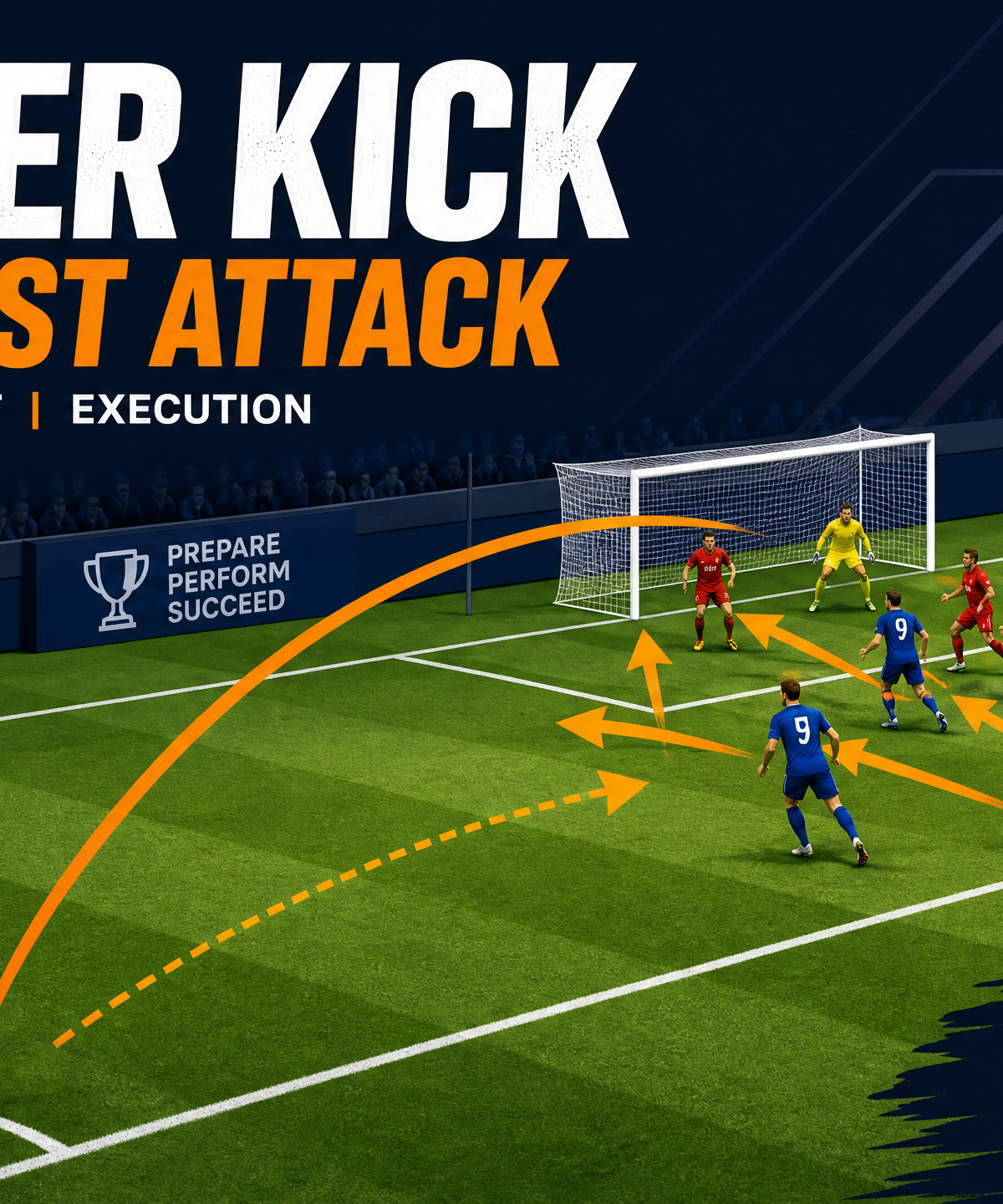
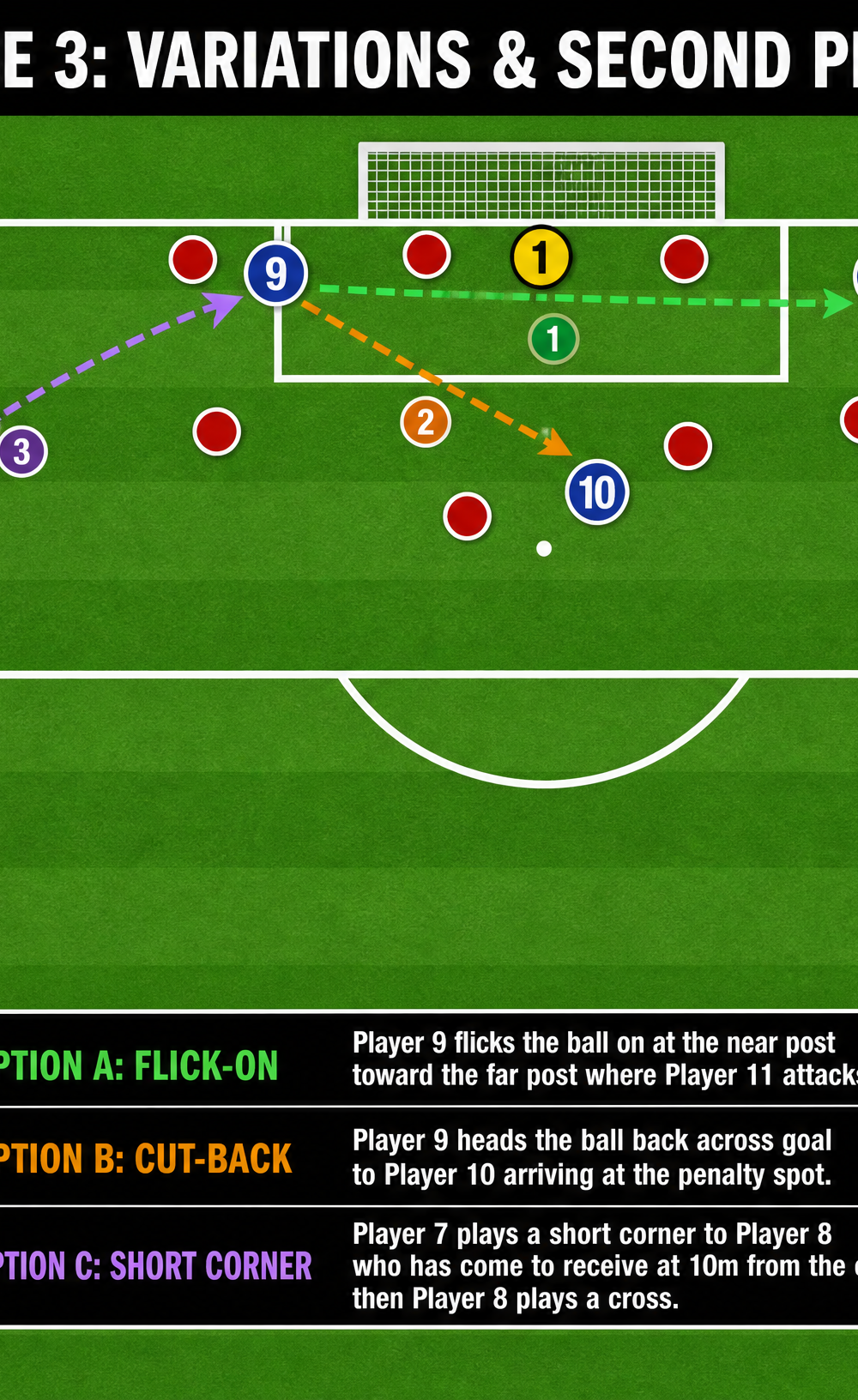
The Near-Post Whip: A Devastating Corner Kick Set Play
Master the near-post corner kick with this comprehensive guide, detailing exact movements, blocking techniques, and variations to break down stubborn zonal marking systems.
Equipment Needed
1. Overview
The near-post corner kick is one of the most effective set plays in modern football. By attacking the space just outside the six-yard box, you bypass the goalkeeper's dominant catching zone and exploit the blind side of zonal defenders. This specific routine is designed to overload the near post area, utilizing a blocker to free up your primary header of the ball, while maintaining dangerous options at the far post and edge of the penalty area. Use this play when facing a team that employs a rigid zonal marking system or when your team possesses a strong, aggressive near-post attacker.
2. Setup
Equipment Needed:
- 1 full-size goal
- Minimum 6 footballs at the corner flag
- Training bibs (2 colors)
- Flat markers or cones (optional, for marking starting positions during walk-throughs)
Pitch Setup:
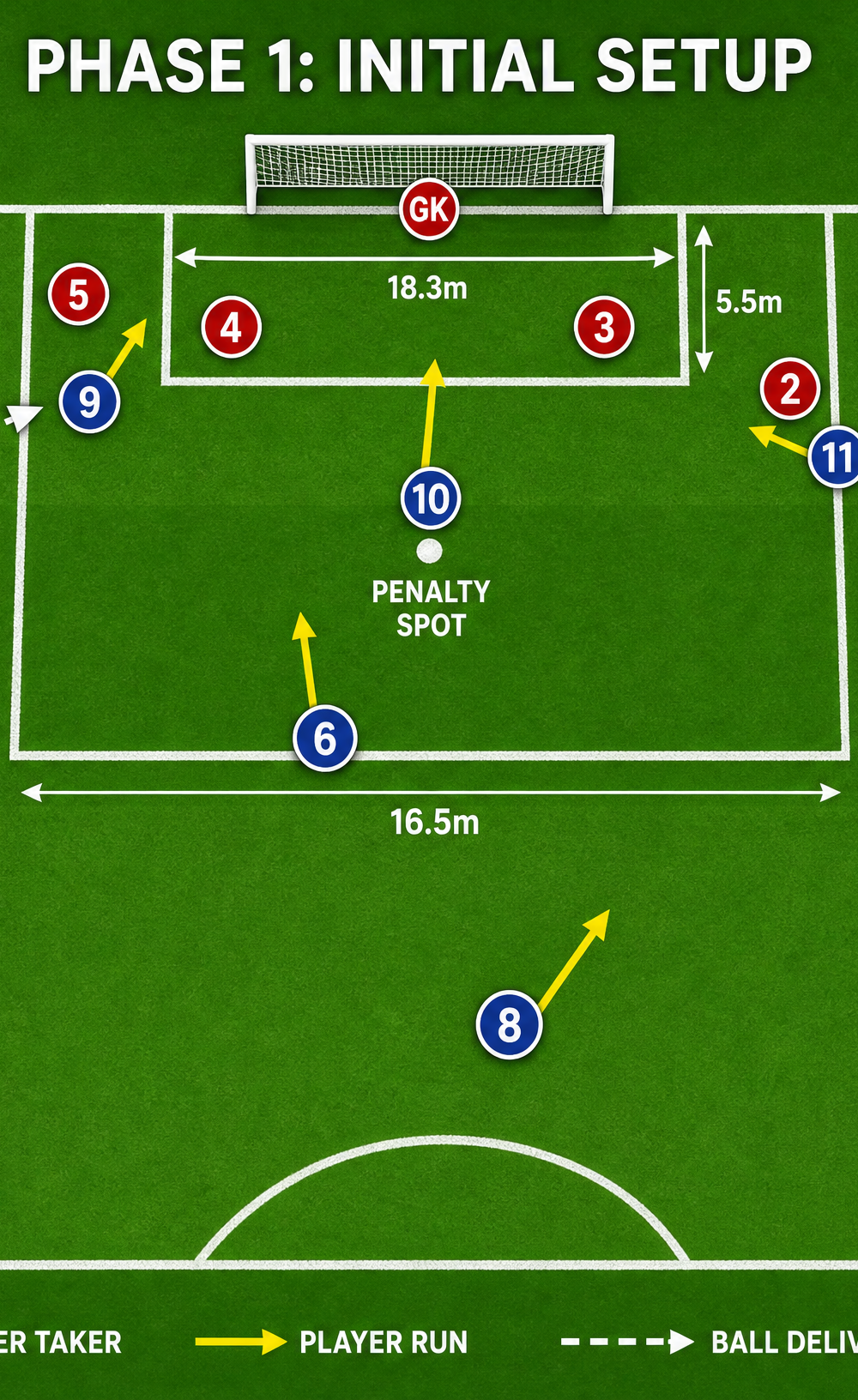
- Standard penalty area (16.5m x 40.3m)
- Goal area (5.5m x 18.3m)
Player Positions:
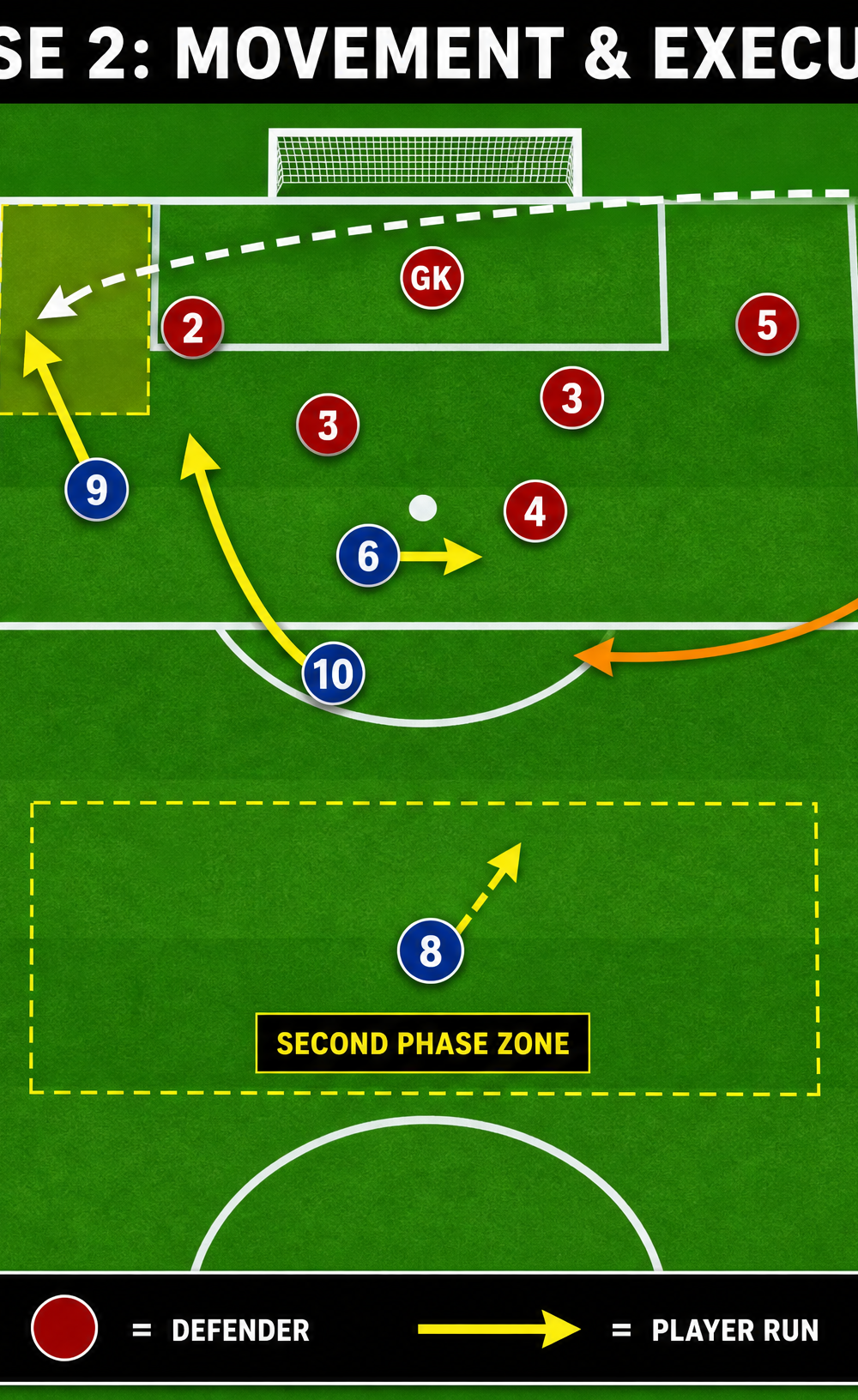
- Player 7 (Corner Taker): Positioned at the corner flag. Needs an inswinging delivery.
- Player 9 (Primary Attacker): Starts on the edge of the penalty area, aligned with the near post.
- Player 6 (The Blocker): Starts centrally, just outside the six-yard box.
- Player 10 (Secondary Attacker): Starts near the penalty spot.
- Player 11 (Far Post Attacker): Starts wide at the far post, ready for flick-ons.
- Player 8 (Edge of Box): Positioned 20m from goal, centrally, to collect clearances.
3. Step-by-Step Instructions
- The Trigger: Player 7 raises one arm to signal the near-post routine. The movement begins when Player 7 begins their run-up to strike the ball.
- The Block: Player 6 makes a short, sharp movement to legally screen or block the primary zonal defender guarding the near-post space. They must hold their ground without extending their arms.
- The Run: Player 9 makes an aggressive, curved run from the edge of the box, accelerating into the space vacated or protected by Player 6. The timing must be impeccable—arriving just as the ball drops.
- The Delivery: Player 7 delivers a hard, driven, inswinging cross aimed at a height of 2-3 meters, landing approximately 4-5 meters from the near post.
- The Decoy/Support: Player 10 makes a delayed run toward the center of the six-yard box, dragging defenders away and preparing for any cut-backs or dropped balls.
- The Far Post: Player 11 holds their width at the far post, anticipating a flick-on from Player 9 or a ball that evades everyone.
- The Second Phase: Player 8 stays alert on the edge of the box, ready to shoot first-time on any headed clearances or to recycle possession if the ball is cleared wide.
4. Key Coaching Points
- Delivery is Everything: The ball must be driven with pace. A floated cross gives the goalkeeper and defenders too much time to adjust. Aim for the "corridor of uncertainty" between the goalkeeper and the defensive line.
- Timing of the Run: Player 9 must not arrive too early. The run should be explosive and timed so they meet the ball at the peak of their jump, attacking it with forward momentum.
- Legal Blocking: Player 6 must establish their position early and stand their ground. They cannot actively push or hold the defender. The goal is simply to impede the defender's path to the ball.
- Commitment to the Header: Player 9 must be brave and fully commit to the header, expecting physical contact. They should aim to direct the ball either on target or flick it on toward the far post.
5. Common Mistakes
- Poor Delivery Trajectory: Hitting the first defender or floating the ball too high, allowing the goalkeeper to claim it easily.
- Arriving Too Early: Player 9 reaching the near post before the ball arrives, forcing them to jump from a static position and losing power.
- Foul by the Blocker: Player 6 being too aggressive and giving away an offensive foul by pushing or holding the defender.
- Lack of Far Post Presence: Player 11 creeping in too early, meaning any flick-on by Player 9 goes out for a goal kick instead of being converted.
6. Variations & Progressions
Once the defending team adjusts to the primary near-post run, you must introduce variations to keep them guessing.
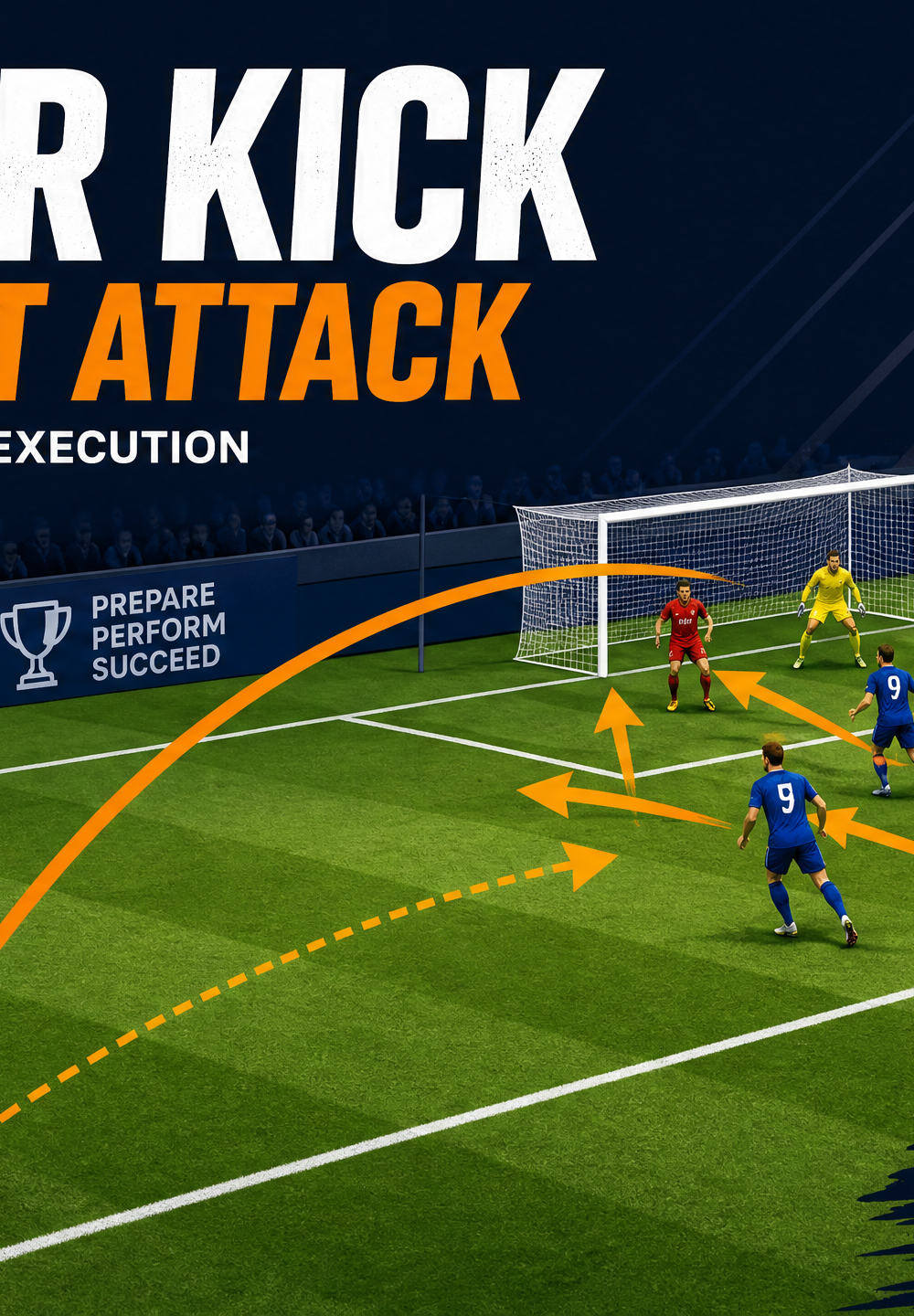
- Variation A (The Flick-On): Instead of heading for goal, Player 9 deliberately flicks the ball on toward the far post where Player 11 is arriving late.
- Variation B (The Cut-Back): If the near post is heavily congested, Player 9 heads the ball back across the face of the goal or back toward the penalty spot for Player 10.
- Variation C (The Short Corner): Player 8 sprints from the edge of the box to receive a short pass from Player 7, changing the angle of delivery and disrupting the defensive structure.
7. Age Adaptations
- Under 8 - Under 10: Focus purely on the delivery and a simple straight run to the near post. Do not introduce blocking, as it is too complex and physically demanding.
- Under 12 - Under 14: Introduce the concept of the "flick-on" and ensure players understand the importance of the far-post runner. Emphasize timing over physical blocking.
- Under 16 - Open: Implement the full routine including the block (Player 6). Focus on the nuances of legal screening, the pace of the delivery, and reading the defensive setup to choose the right variation.