

Netball
The 2-3-2 Zone Defence: Full-Court Disruption Play
Master the 2-3-2 zone defence to disrupt attacking rhythm, force wide passes, and create high-probability intercept opportunities across the court.
What you need
Full standard netball court, Netball, Coloured training bibs, Flat marker cones (optional)
1. Overview
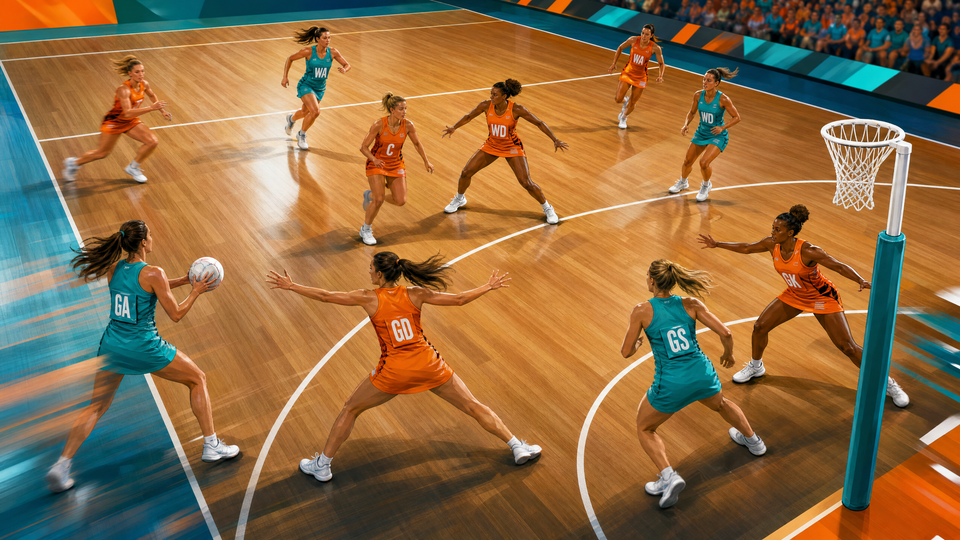
The 2-3-2 Zone Defence is a sophisticated full-court defensive strategy designed to disrupt the opposition's attacking rhythm, force lateral or backward passes, and create high-probability intercept opportunities. Unlike traditional one-on-one (man-to-man) marking, a zone defence requires players to guard specific areas of the court (zones) rather than individual opponents.
This set play is particularly effective when used against teams with dominant, tall shooters or rapid, direct attacking mid-courters. By clogging the middle channel and forcing the ball wide, the defence can dictate the pace of the game and force the attacking team into making risky, high-looping passes that are easier to intercept. It is best deployed as a surprise tactic following a goal, or during crucial momentum-shifting moments in a match.
2. Setup
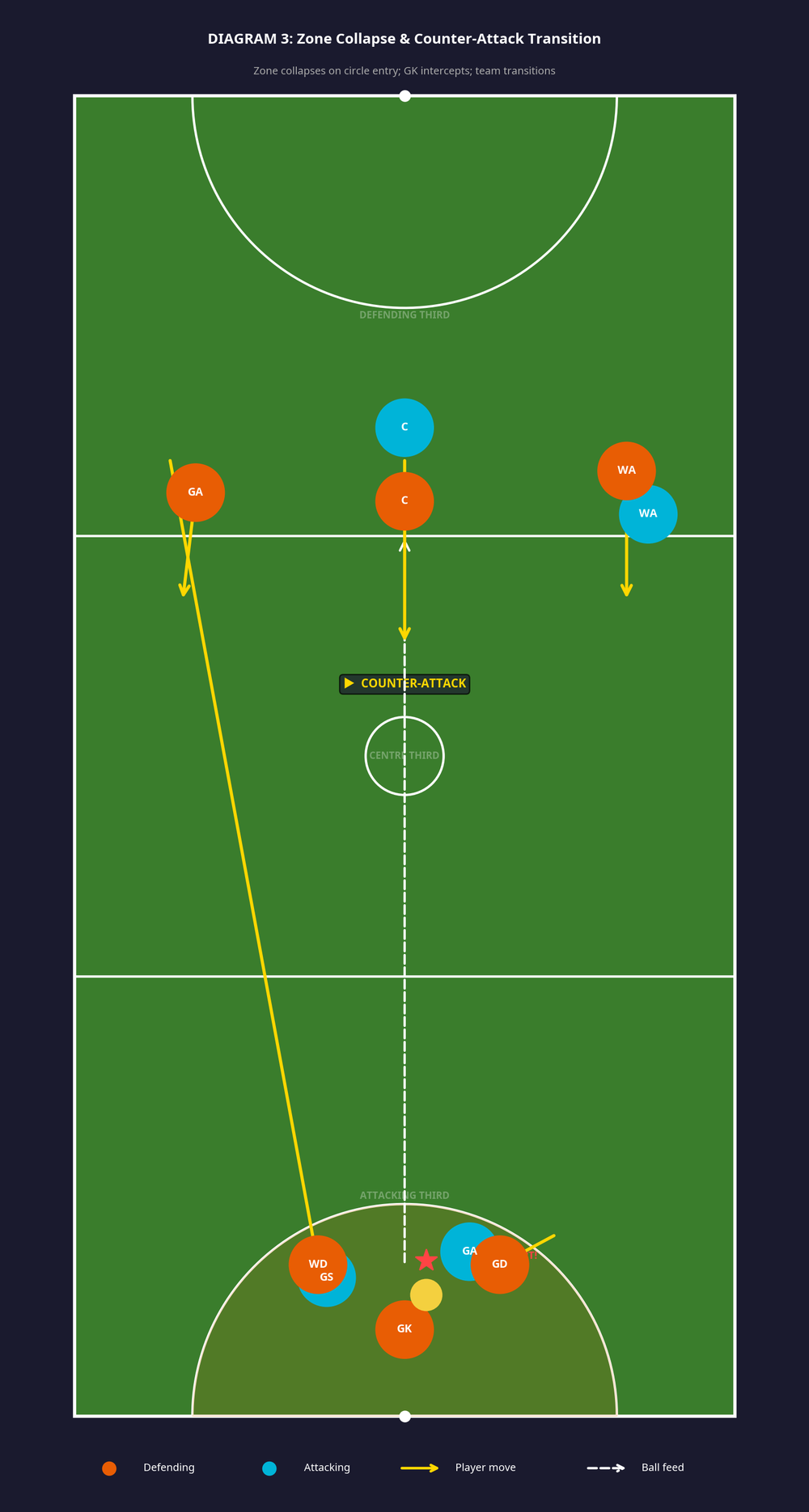
To successfully implement this zone defence, proper court spacing and communication are essential.
Equipment Needed:
- Full standard netball court (30.5m x 15.25m)
- Netball
- Coloured training bibs (two contrasting colours)
- Optional: Flat marker cones to visually designate the three zone layers during initial walk-throughs
Player Positions & Zone Layers:
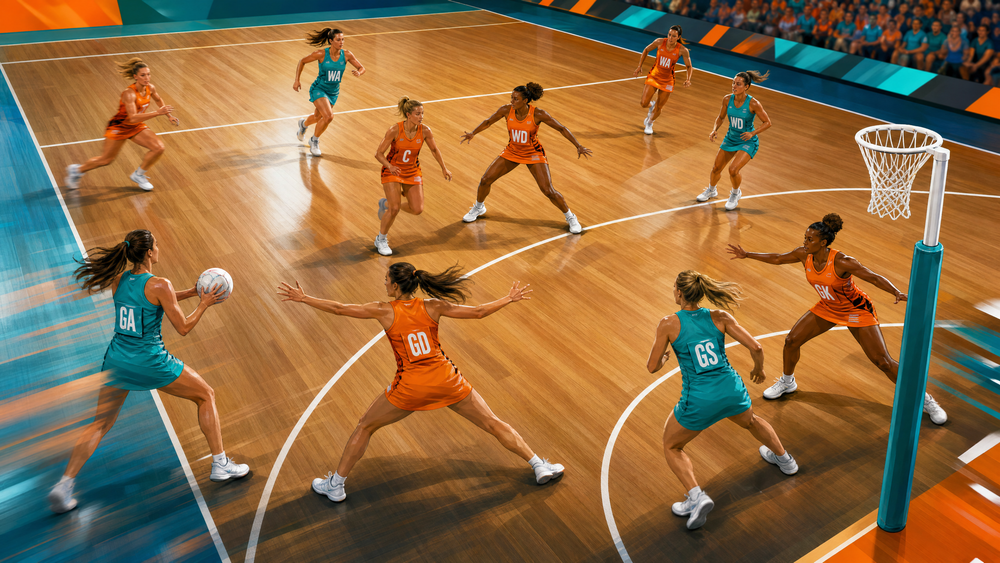
The defence sets up in three distinct layers across the defending and centre thirds:
- Layer 1 (The Deep Block): Goal Keeper (GK) and Goal Defence (GD). Positioned inside or just atop the goal circle.
- Layer 2 (The Mid Press): Wing Defence (WD) and Centre (C). Positioned across the transverse line separating the centre and defending thirds.
- Layer 3 (The High Trap): Wing Attack (WA) and Goal Attack (GA). Positioned high in the centre third to immediately pressure the initial centre pass or transition.
3. Step-by-Step Instructions
Implementing the 2-3-2 zone requires precise timing and coordinated movement. Follow these steps to execute the play:
Step 1: The Initial Setup
As soon as possession is lost or a centre pass is called, players must sprint to their designated zone layers. The GK anchors the deep block, communicating the positioning of the attacking shooters to the players in front of them. The C and WD establish the mid-press on the transverse line, ensuring they are evenly spaced to cover the middle channel.
Step 2: Forcing the Ball Wide
The primary objective of Layer 3 (WA and GA) is to deny direct passes down the centre corridor. They must angle their bodies to force the attacking team to pass the ball out to the flanks (the wide channels).
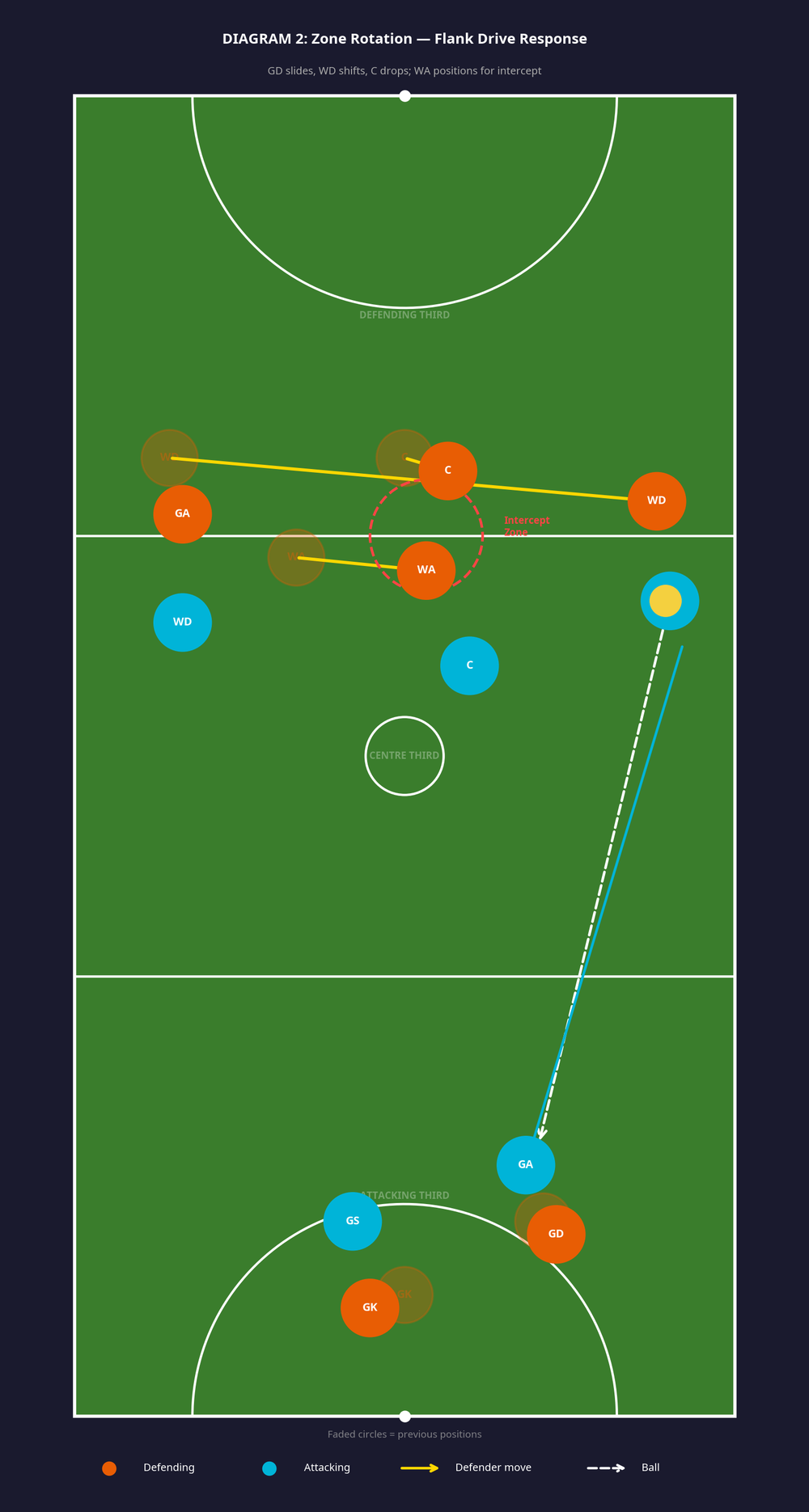
Step 3: The Zone Rotation (The Slide)
As the ball moves to the flank, the entire defensive structure must shift (slide) toward the ball side.
- If the ball goes to the right flank, the GD slides across to cover the drive.
- The C drops slightly deeper to cover the space vacated by the GD.
- The WD shifts across to plug the middle.
- The WA on the opposite side drops into an "intercept position," anticipating a cross-court switch pass.
Step 4: The Circle Collapse
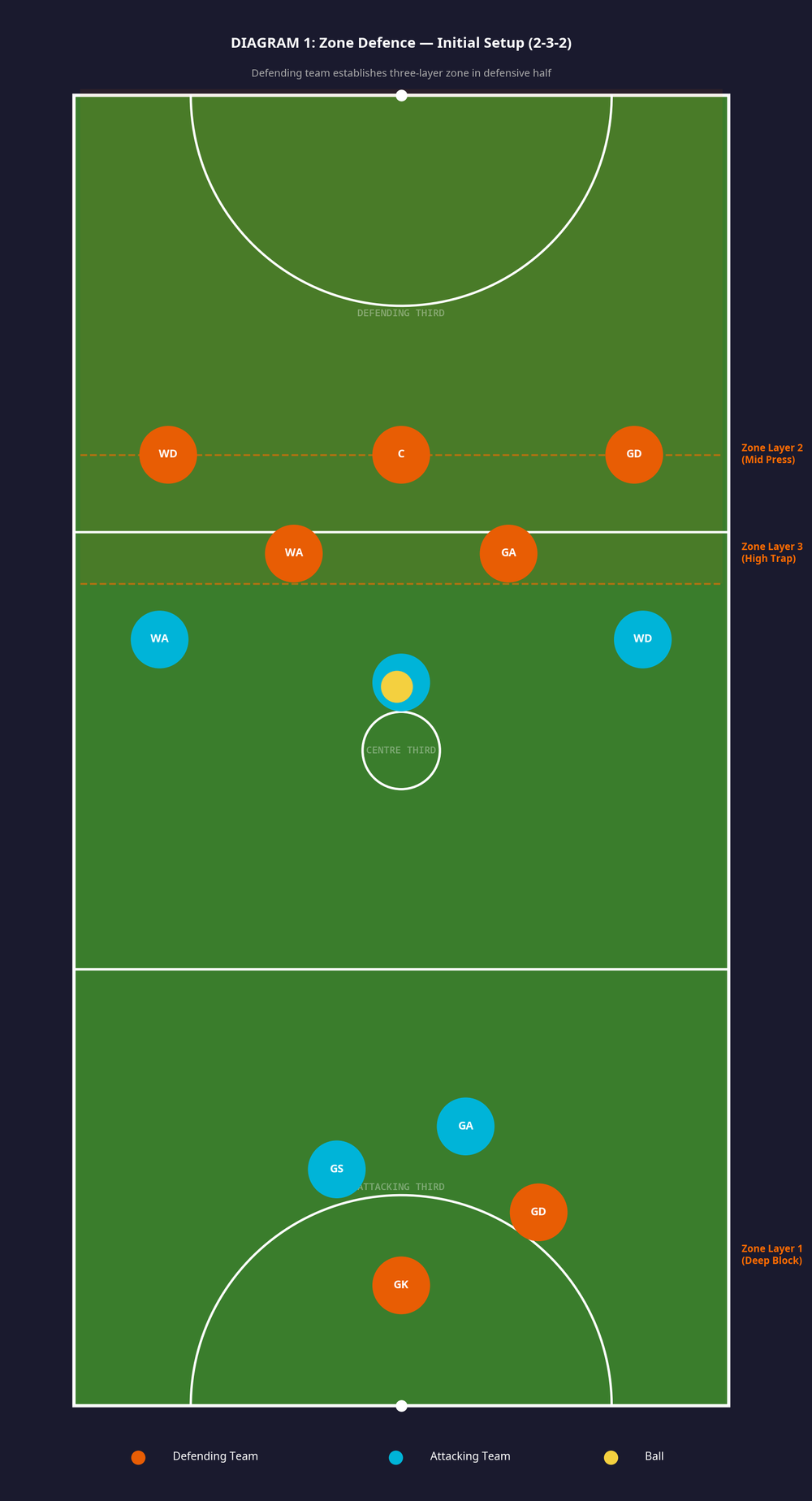
If the attacking team manages to penetrate the zone and feed the ball toward the goal circle edge, the zone must immediately collapse. The GK, GD, and WD converge tightly on the shooters, transitioning momentarily into a tight man-to-man marking scheme to deny the final feed into the circle.
Step 5: The Turnover and Counter-Attack
Upon securing an intercept or a rebound, the transition from defence to attack must be instantaneous. The player who wins the ball (often the GK or GD) looks immediately for the C or WA breaking forward into the centre third to launch the counter-attack before the opposition can reset.
4. Key Coaching Points
To ensure your team executes this zone effectively, emphasize the following coaching points during practice:
- Communication is Non-Negotiable: The GK is the "eyes" of the defence and must constantly talk to the players in Layers 2 and 3, calling out attacker movements behind them.
- Maintain the Structure: Players must trust the zone. Do not get pulled out of position by chasing a single attacker; guard the space, not the player.
- Body Angle and Footwork: Defenders must use their outside foot and angled body positioning to dictate where the attackers can run, physically blocking the middle channel.
- Vision (See Ball and Player): Defenders must maintain an open body stance, allowing them to see both the player entering their zone and the position of the ball simultaneously.
- The "Trap" Trigger: Identify specific triggers for a double-team or trap, such as when an attacker receives the ball near the sideline with their back to the court.
5. Common Mistakes
Watch out for these frequent errors when teaching the zone defence:
- Ball Watching: Players become fixated on the ball and fail to notice attackers slipping into the dangerous spaces behind them.
- Over-Committing: A defender steps too far out of their designated zone to contest a pass they cannot reach, leaving a massive hole in the defensive structure.
- Flat Footedness: Defenders standing flat-footed rather than on the balls of their feet, resulting in a slow reaction time when the ball is passed into their zone.
- Silent Defence: A lack of communication leads to confusion over who is picking up an attacker moving between zones.
6. Variations & Progressions
Once the team has mastered the basic 2-3-2 setup, introduce these variations to keep the opposition guessing:
- The 3-2-2 Variation: Drop the C into the deep block alongside the GK and GD to create a heavily fortified defensive third, ideal for protecting a lead in the final minutes.
- The Half-Court Trap: Instead of setting up full court, allow the attacking team to bring the ball to the transverse line uncontested, then immediately apply a high-pressure double team to force a held ball or wild pass.
- Man-to-Man Switch: Start in the zone structure to confuse the attackers, but have a pre-determined trigger (e.g., a specific call or when the ball crosses the transverse line) where every defender immediately switches to tight man-to-man marking.
7. Age Adaptations
The zone defence is a complex tactical concept that requires modification based on the age and experience of your players:
- Under 10s & Under 12s: Avoid complex full-court zones. Instead, introduce the concept of "guarding space" through simple half-court drills. Use cones to clearly define areas and teach players to communicate when an attacker enters their square.
- Under 14s: Introduce the basic 2-3-2 structure but focus purely on the initial setup and forcing the ball wide. Do not worry about complex sliding rotations yet; emphasize communication and vision.
- Under 16s & Open: Implement the full sliding zone with traps and double-teams. Focus on the speed of the transition from zone collapse to counter-attack.
