Mastering the Dodge and Lead: Creating Space Under Pressure
A foundational attacking drill that teaches players how to effectively lose their defender using sharp changes of direction and explosive acceleration into space.

Equipment Needed
1. Overview
Effective attacking in netball requires players to consistently break free from tight defensive marking. The 'Dodge and Lead' drill is a fundamental attacking exercise designed to teach players how to create separation using a sharp change of direction (the dodge) followed by an explosive sprint into open space (the lead). This drill is essential for all attacking positions, particularly Goal Attack (GA), Wing Attack (WA), and Centre (C), to ensure safe and continuous ball progression down the court.
2. Setup
Equipment Needed:
- 1 Netball per group
- Cones (optional, to mark starting points or target spaces)
- Colored bibs (to distinguish attackers and defenders)
Court Setup:
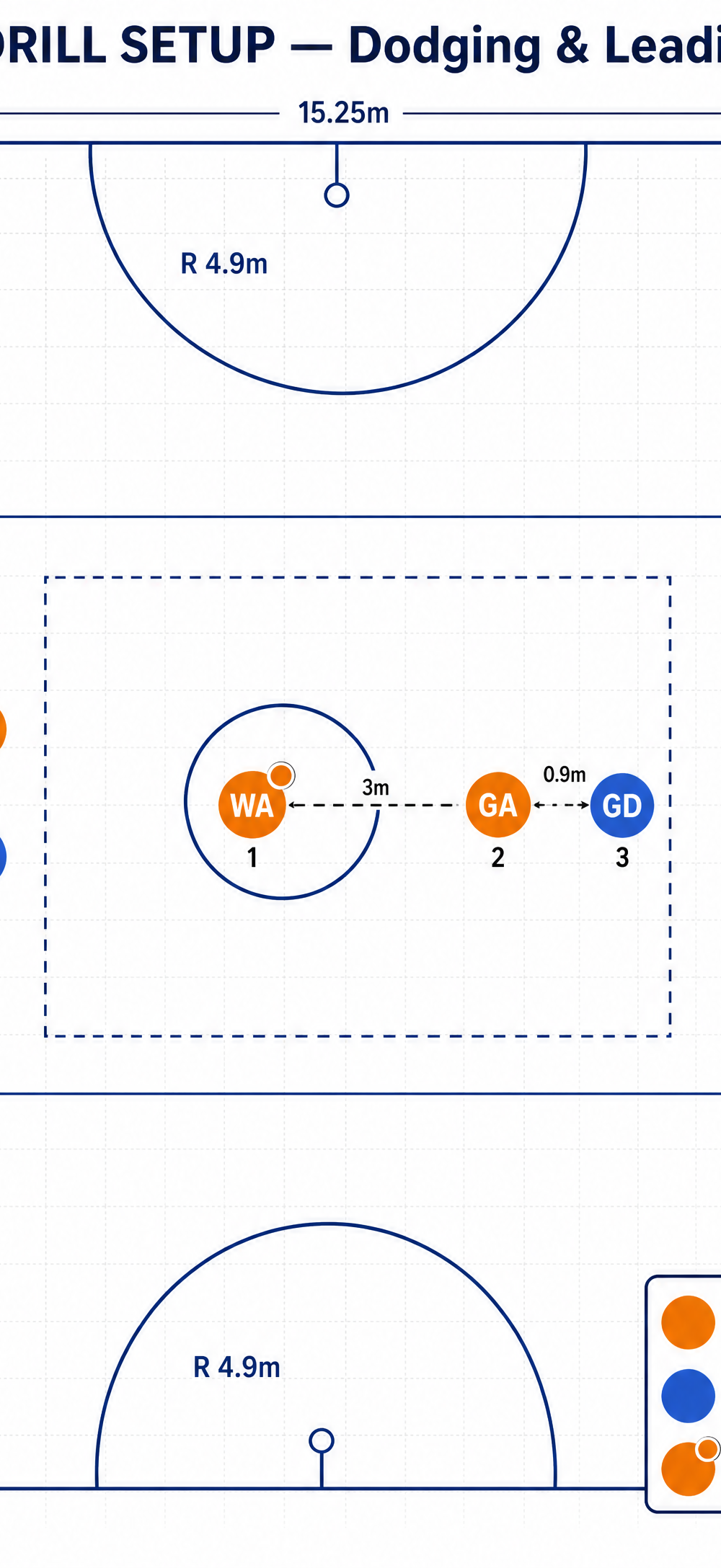
This drill utilizes the center third of a standard netball court (30.5m x 15.25m), but can be adapted to any third depending on the specific positions being coached.
Player Positions:
- Player 1 (Feeder - e.g., WA): Starts near the center circle with the ball.
- Player 2 (Attacker - e.g., GA): Starts approximately 3 meters away from the feeder, facing them.
- Player 3 (Defender - e.g., GD): Marks the attacker closely, maintaining a legal 0.9m distance.
- Additional Players: Wait on the sideline to rotate in.
3. Step-by-Step Instructions
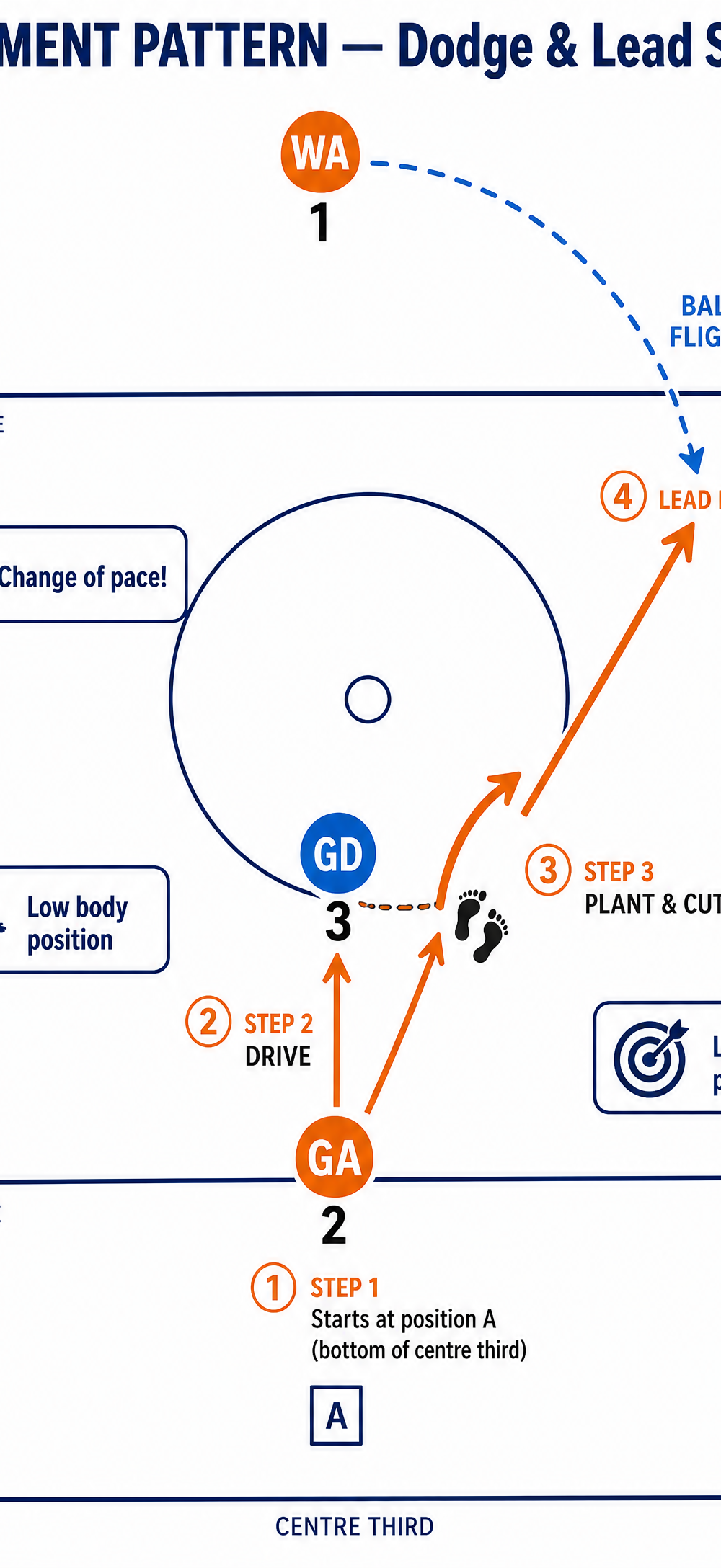
- Starting Position: The feeder (WA) stands stationary with the ball. The attacker (GA) sets up facing the feeder, with the defender (GD) marking them closely from slightly behind or to the side.
- The Drive: The attacker initiates the movement by driving hard for 2-3 steps in one direction, aiming to commit the defender's body weight to that side.
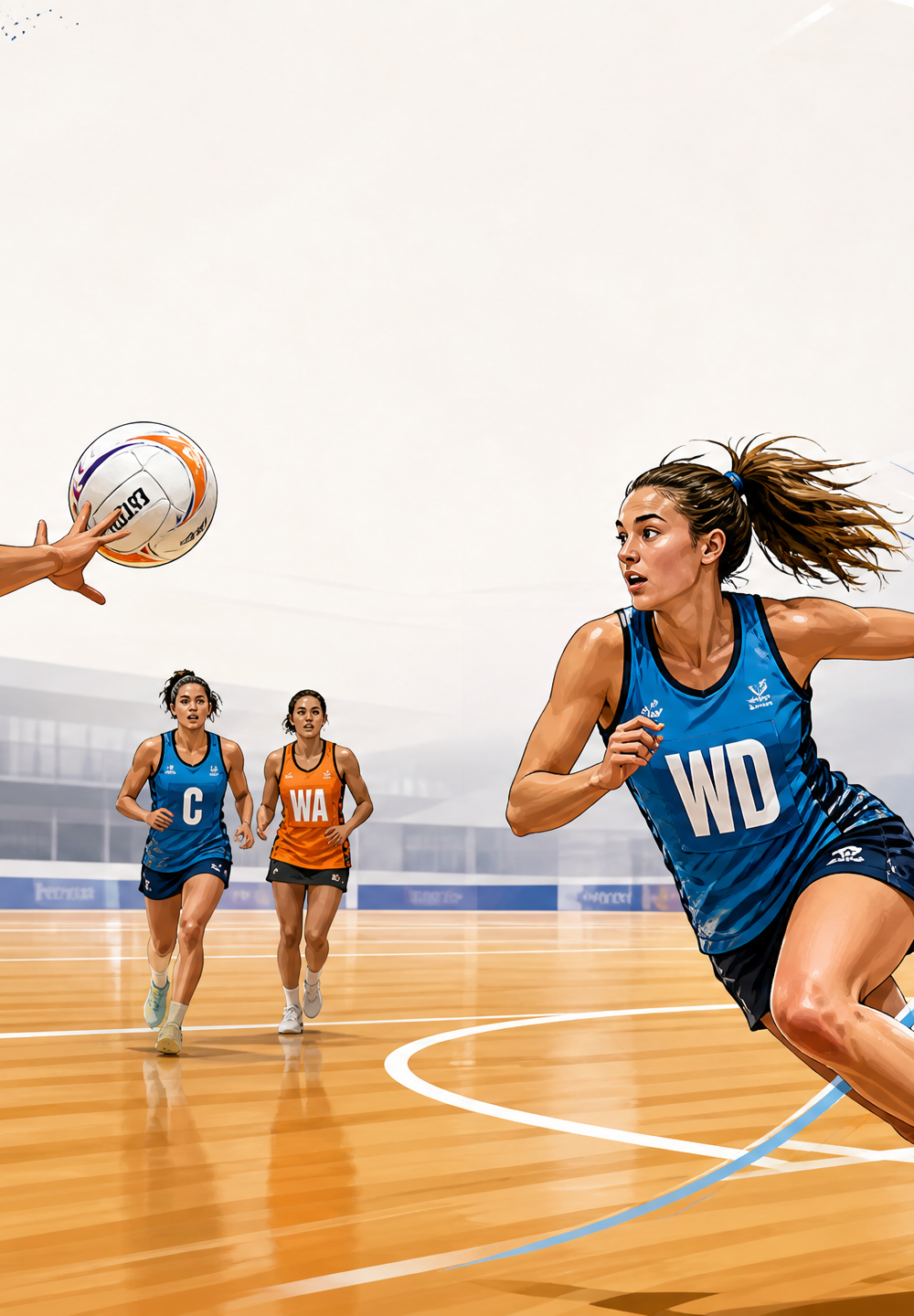
- The Plant and Cut (Dodge): The attacker sharply plants their outside foot (the foot furthest in the direction they were driving), drops their center of gravity slightly, and pushes off explosively in the opposite direction.
- The Lead: The attacker accelerates into the newly created open space, extending their arms and calling for the ball.
- The Pass: The feeder delivers a strong, accurate chest pass or bounce pass into the space ahead of the leading attacker, ensuring the ball arrives just as the attacker reaches the space.
- The Catch: The attacker receives the ball cleanly on the move, lands balanced (observing footwork rules), and immediately pivots to face down the court.
- Rotation: After the catch, players rotate positions (Attacker -> Defender -> Feeder -> Line).
4. Key Coaching Points
- Sell the Fake: The initial drive must be convincing. Attackers should use their eyes, shoulders, and a hard initial step to make the defender believe they are committing to that direction.
- Low Center of Gravity: When planting the foot for the cut, players must bend their knees and drop their hips. This provides stability and power for the explosive push-off.
- Explosive Push-Off: The change of direction must be sharp and immediate. The push-off from the planted foot should propel the player rapidly into the new space.
- Strong Angles: The lead should be at a distinct angle (e.g., 45 degrees) away from the initial drive, not just a curve. This maximizes the separation from the defender.
- Timing the Pass: Feeders must release the ball into the space the attacker is running towards, not at the attacker's current position. The ball and the player should meet simultaneously.
5. Common Mistakes
- Rounding the Cut: Instead of planting and pushing off sharply, players often run in a curve. This allows the defender to easily recover and stay with them.
- Not Selling the Fake: If the initial drive is half-hearted, the defender won't commit their weight, making the dodge ineffective.
- Leading Too Early or Late: If the attacker leads before the feeder is ready, they will run out of space. If they lead too late, the defender will intercept the pass.
- Poor Passing: Feeders passing directly at the attacker instead of into the space, causing the attacker to break their stride.
6. Variations & Progressions
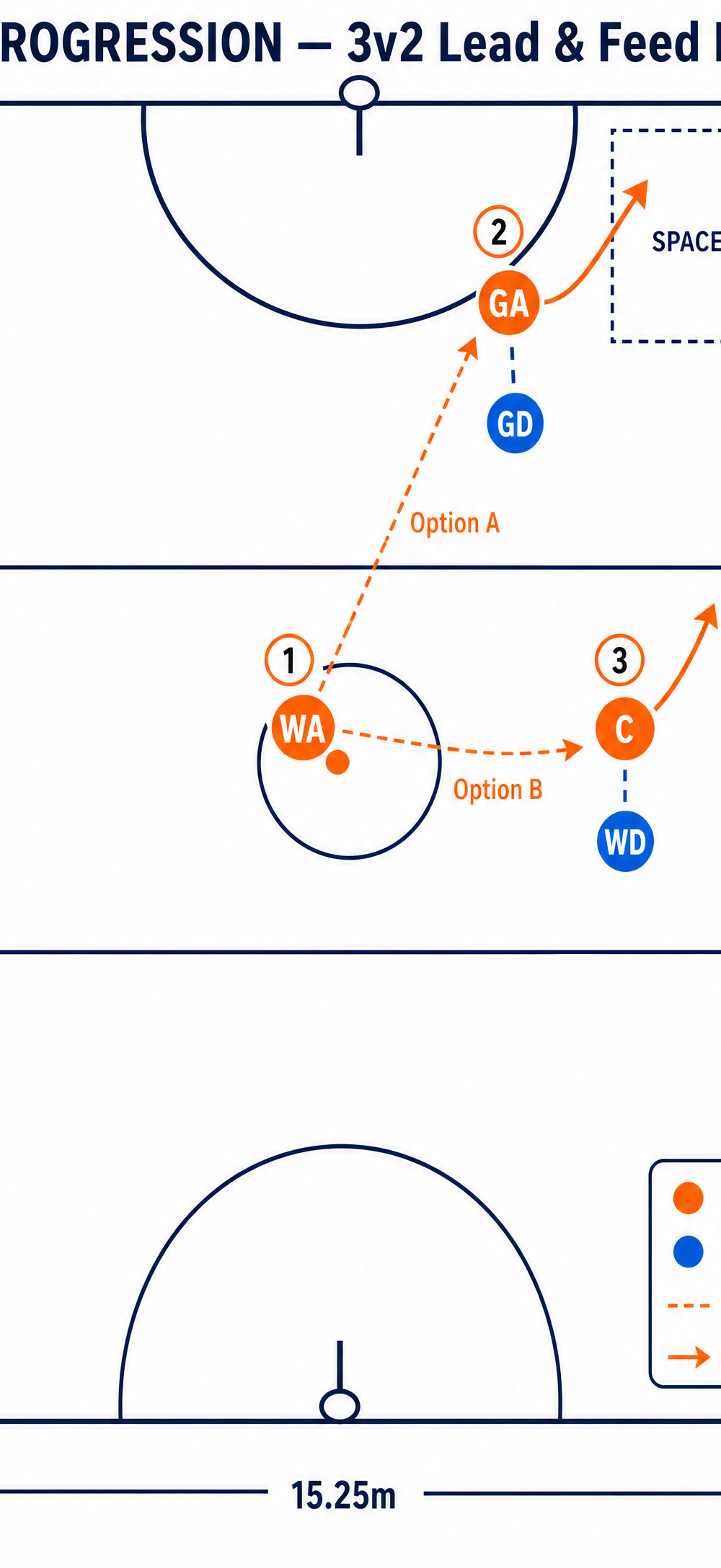
- Add a Second Option (Progression): Introduce a second attacker (e.g., Centre) making a supporting lead. The feeder now has to read the defense and choose the best passing option (Option A or Option B).
- Continuous Flow (Progression): After receiving the ball, the attacker immediately becomes the feeder for the next pair waiting on the sideline, creating a continuous drill down the court.
- Restricted Space (Variation): Set up cones to create a narrow channel. Attackers must execute their dodge and lead within this confined space, simulating tight court areas.
7. Age Adaptations
- Under 8 / Under 10: Focus heavily on the fundamental footwork of the plant and cut without a defender first. Use cones as visual targets for the dodge and the lead. Keep passes short and simple.
- Under 12 / Under 14: Introduce passive defense (shadowing without intercepting) before moving to active defense. Emphasize the timing between the attacker and the feeder.
- Under 16 / Open: Demand high intensity, sharp angles, and explosive speed. Incorporate multiple defenders and complex passing options (like the 3v2 progression) to simulate match conditions.