The Overload Split: Centre Pass Set Play for Quick Goals
Master this fast-paced centre pass set play designed to overload one side of the court, confuse defenders, and deliver the ball to your shooters in three quick passes.
Equipment Needed
Overview
The "Overload Split" is an aggressive, high-tempo centre pass set play designed to create immediate scoring opportunities. By drawing the defence to one side of the court (the overload) and then rapidly switching the point of attack (the split), this play exploits the gaps left behind by reacting defenders. It is particularly effective against a zone defence or when your team needs a quick goal to break momentum.
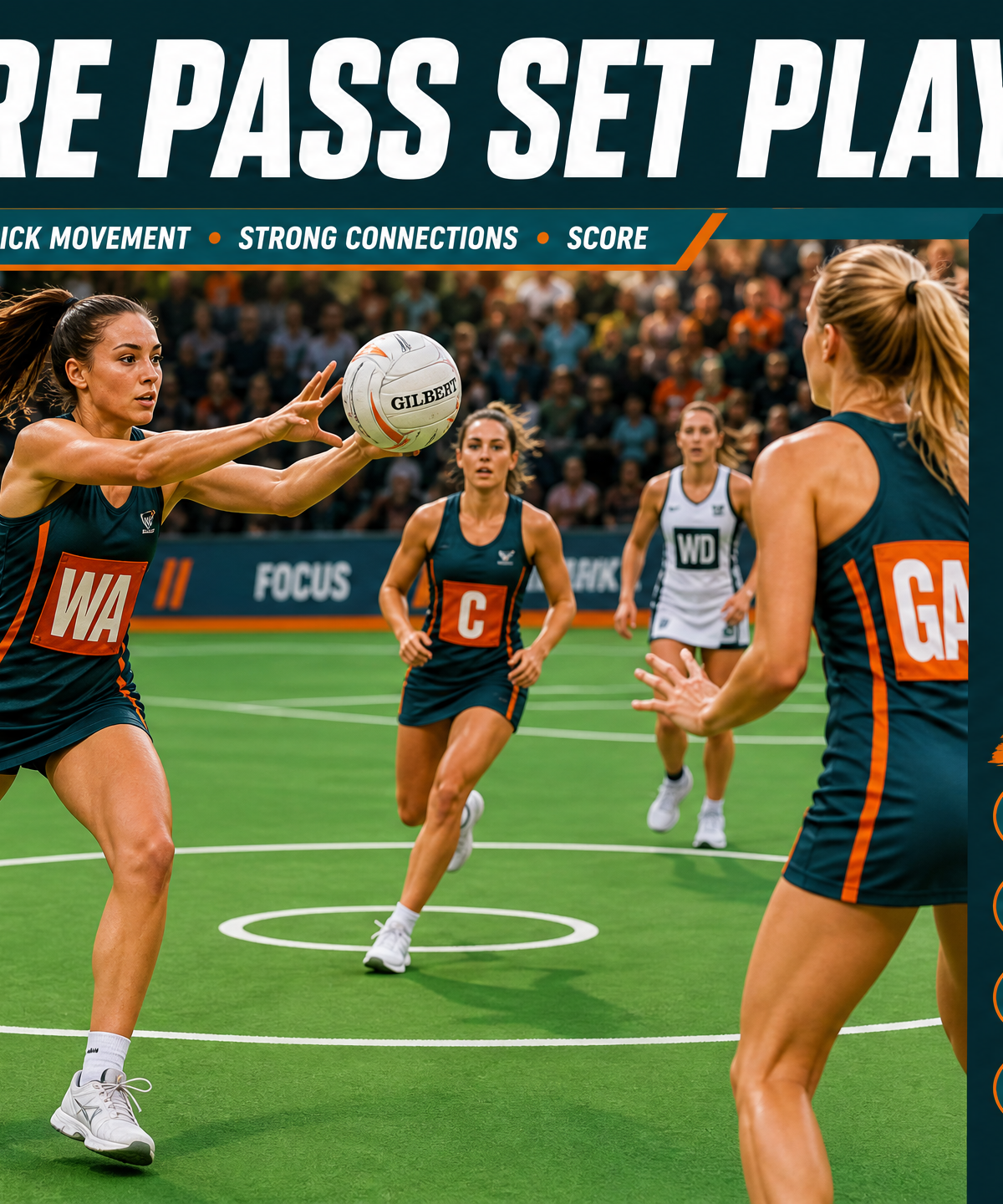
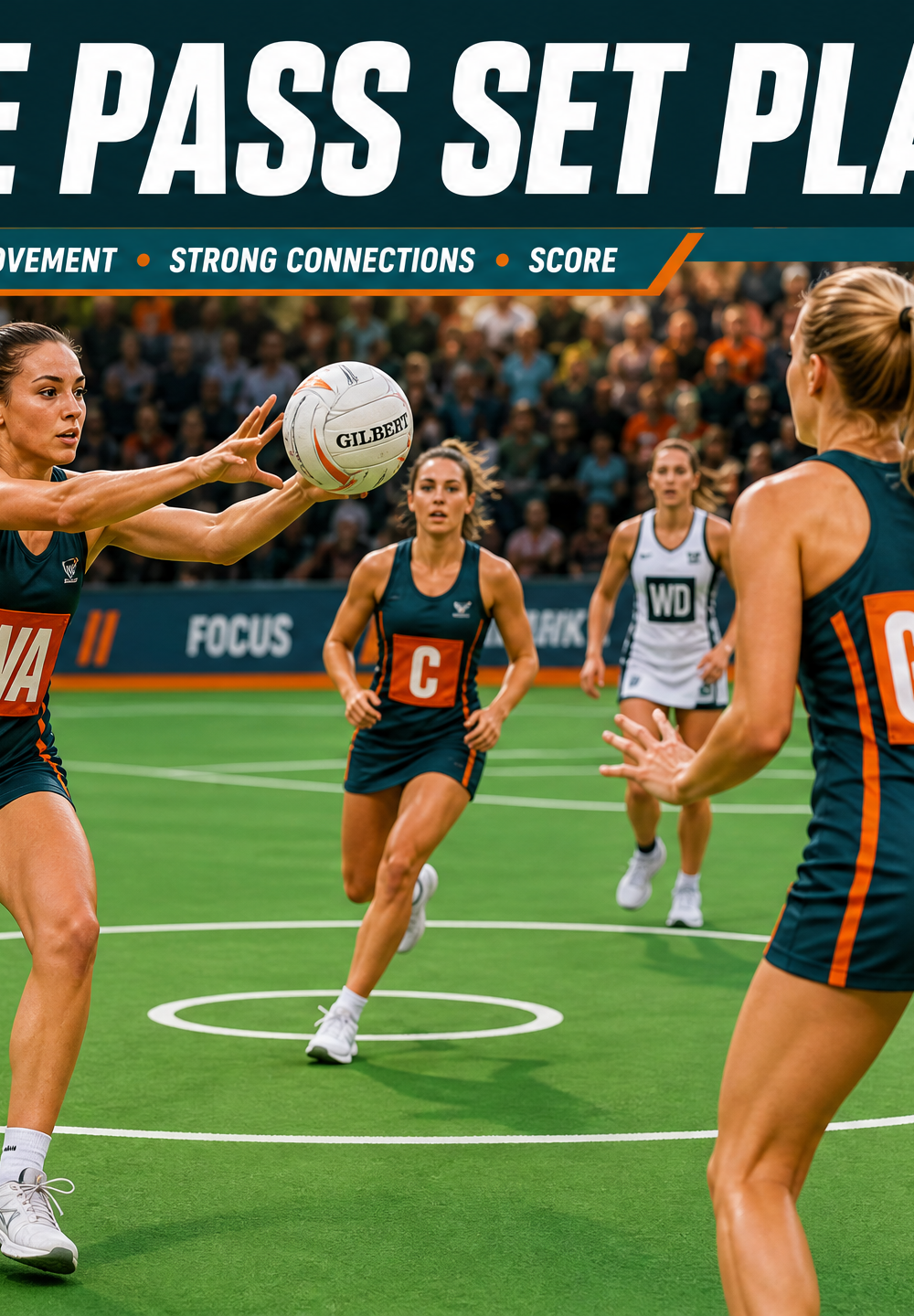
This play relies on sharp timing, decisive movements, and flat, hard passes. When executed correctly, the ball should travel from the Centre (C) to the Wing Attack (WA), then to the Goal Attack (GA), and finally to the Goal Shooter (GS) in under four seconds.
Setup
- Court: Standard Netball court (30.5m x 15.25m)
- Players: Full team of 7, focusing on C, WA, WD, GA, and GS.
- Equipment: 1 Netball, training bibs.
Initial Positions
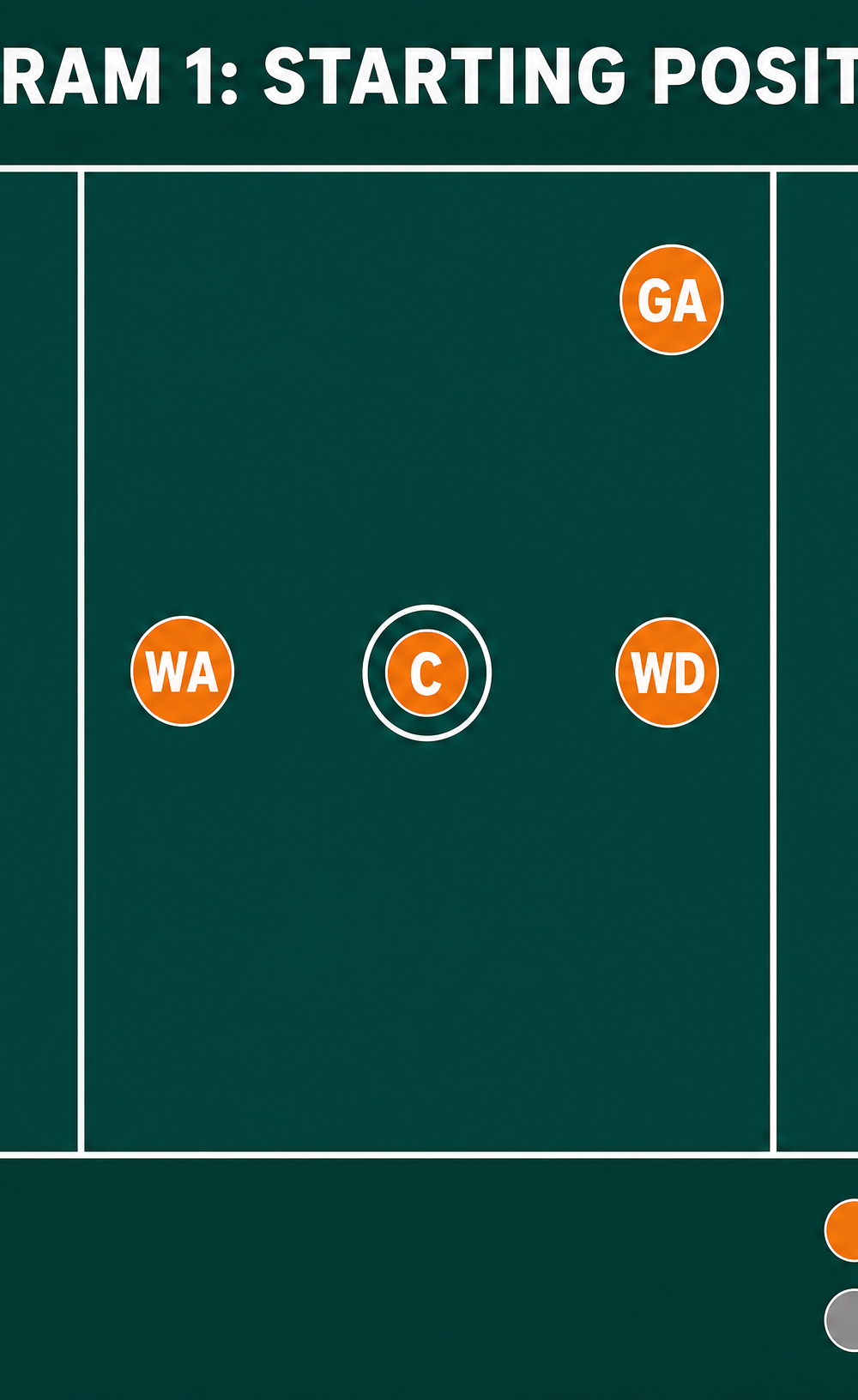
- C (Centre): Standing firmly in the centre circle (0.9m radius), ball in hand, ready to dictate the play.
- WA (Wing Attack): Positioned in the centre third, slightly left of the centre circle, approximately 3 metres away. They are the primary target for the first pass.
- WD (Wing Defence): Positioned in the centre third to the right, mirroring the WA to keep the opposing WA engaged.
- GA (Goal Attack): Starting near the transverse line on the attacking third side, right of centre. They must be ready to cut sharply.
- GS (Goal Shooter): Positioned deep in the attacking goal circle (4.9m radius), initially on the left post.
Step-by-Step Instructions
- The Trigger: The C signals the play (e.g., a specific call or hand signal) and steps forward to initiate the pass.
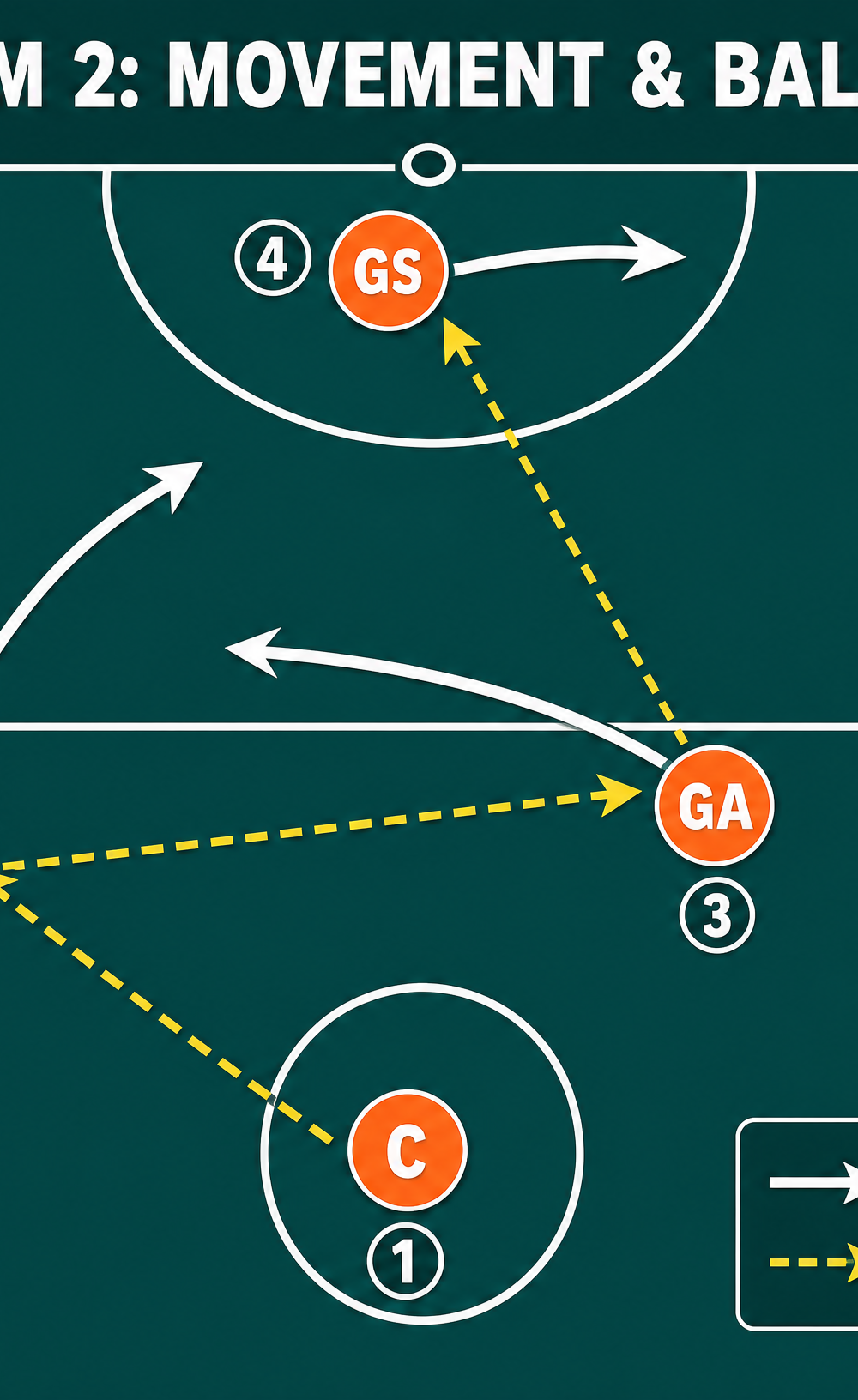
- The First Drive (C to WA): As the whistle blows, the WA drives hard diagonally forward toward the transverse line into the attacking third. The C delivers a flat, chest-height pass into the space ahead of the WA.
- The Decoy (WD): Simultaneously, the WD makes a hard, short drive down the right sideline. This movement is crucial to pull the opposing WA and potentially the C away from the central channel.
- The Split Cut (WA to GA): As the WA receives the ball, the GA executes a sharp, explosive cut across the top of the goal circle from right to left (a lead cut). The WA immediately delivers a strong pass to the GA as they enter the top of the circle.
- The Final Feed (GA to GS): While the GA is receiving the ball, the GS moves from the left post across to the right side of the goal circle, creating space behind the defender. The GA turns and feeds the ball to the GS for a high-percentage shot under the post.
Key Coaching Points
- Timing is Everything: The GA must not start their cut until the WA has secured the first pass. If they go too early, the space will be closed down.
- Pass Quality: Passes must be flat and hard (chest passes or low bounce passes). Loopy passes give the defence time to recover and intercept.
- Decisive Movements: Every player must commit to their drive. Even decoy runs (like the WD) must be performed at 100% intensity to be effective.
- Eye Contact: The WA and GA must establish eye contact before the second pass is thrown to ensure the GA is ready and the lane is clear.
- Court Awareness: The GS needs to read the defender's positioning. If the defender stays back, the GS should hold their ground; if the defender commits to the GA, the GS must exploit the space created.
Common Mistakes
- Telegraphing the Pass: The C looking directly at the WA before the whistle blows, allowing the defence to anticipate the play.
- Crowding the Space: The GA cutting too close to the WA, reducing the passing angle and making it easier for a single defender to cover both players.
- Weak Decoy Runs: The WD jogging their route, which fails to draw the defence and leaves the central channel congested.
- Hesitation: The WA taking too long to release the ball to the GA, allowing the defence to reset.
Variations & Progressions
- The Fake and Go: If the defence anticipates the WA drive, the WA can fake the forward drive, drop back, and receive a lob pass over the defender, before feeding the GA.
- The Direct Feed: If the GA's defender plays very tight, the GA can clear out completely, allowing the WA to feed the GS directly from the top of the circle.
- Adding Pressure (Progression): Introduce passive defenders initially, then progress to active, full-pressure defence to simulate match conditions.
Age Adaptations
- Under 10s / Under 12s: Focus on the basic mechanics of the passes and the timing of the drives. Simplify the play by removing the WD decoy run and focusing solely on the C-WA-GA-GS sequence.
- Under 14s / Under 16s: Emphasize the speed of execution and the quality of the passes. Introduce variations to encourage decision-making under pressure.
- Open / Advanced: Perfect the timing and execution against varied defensive setups (e.g., zone vs. man-on-man). Focus on the GS's ability to read the play and adjust their final position accordingly.