WD to GA Transition Play: Breaking the Centre Third Zone
Master the critical transition from defence to attack by utilizing your Wing Defence to bypass the transverse line and deliver a precision feed to a driving Goal Attack.
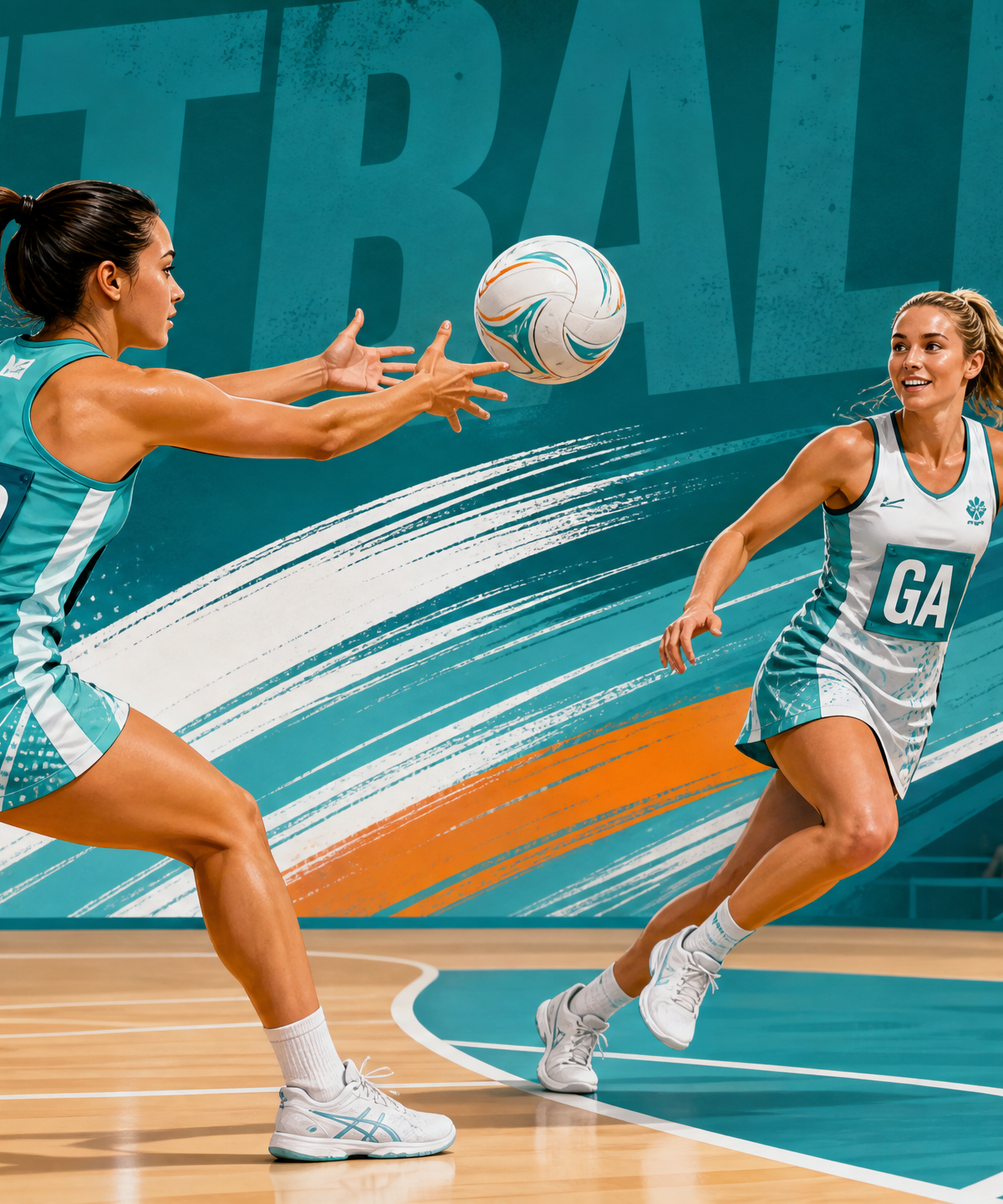
Equipment Needed
1. Overview
The WD to GA Transition Play is a highly effective attacking structure designed to bypass a congested centre third and transition the ball rapidly into the goal circle. Often, teams struggle when the opposition clogs the transverse line. By utilizing the Wing Defence (WD) as a primary ball carrier through the midcourt, you force the opposition's defensive structure to shift, opening up a diagonal lead for the Goal Attack (GA).
This play is particularly useful off a centre pass or after a defensive turnover in your own defensive third. It relies on sharp, decisive movements, clear communication, and the ability of the WD to execute a strong, flat pass over distance.
2. Setup
- Equipment: 1 Netball, full court (30.5m x 15.25m), bibs for two teams.
- Players Required: Minimum 7 (C, WA, WD, GA, GS vs. opposing C, WD, GD, GK). Full 7v7 is ideal for realistic pressure.
- Starting Positions:
- C: On the centre circle (or with the ball in the defensive third).
- WD: Positioned in the centre third, slightly on the defensive side, ready to receive the first pass.
- WA: Positioned wide in the centre third to act as a decoy.
- GA: Positioned just inside the attacking third, ready to initiate the diagonal lead.
- GS: Holding space inside the goal circle to pin the GK.
3. Step-by-Step Instructions
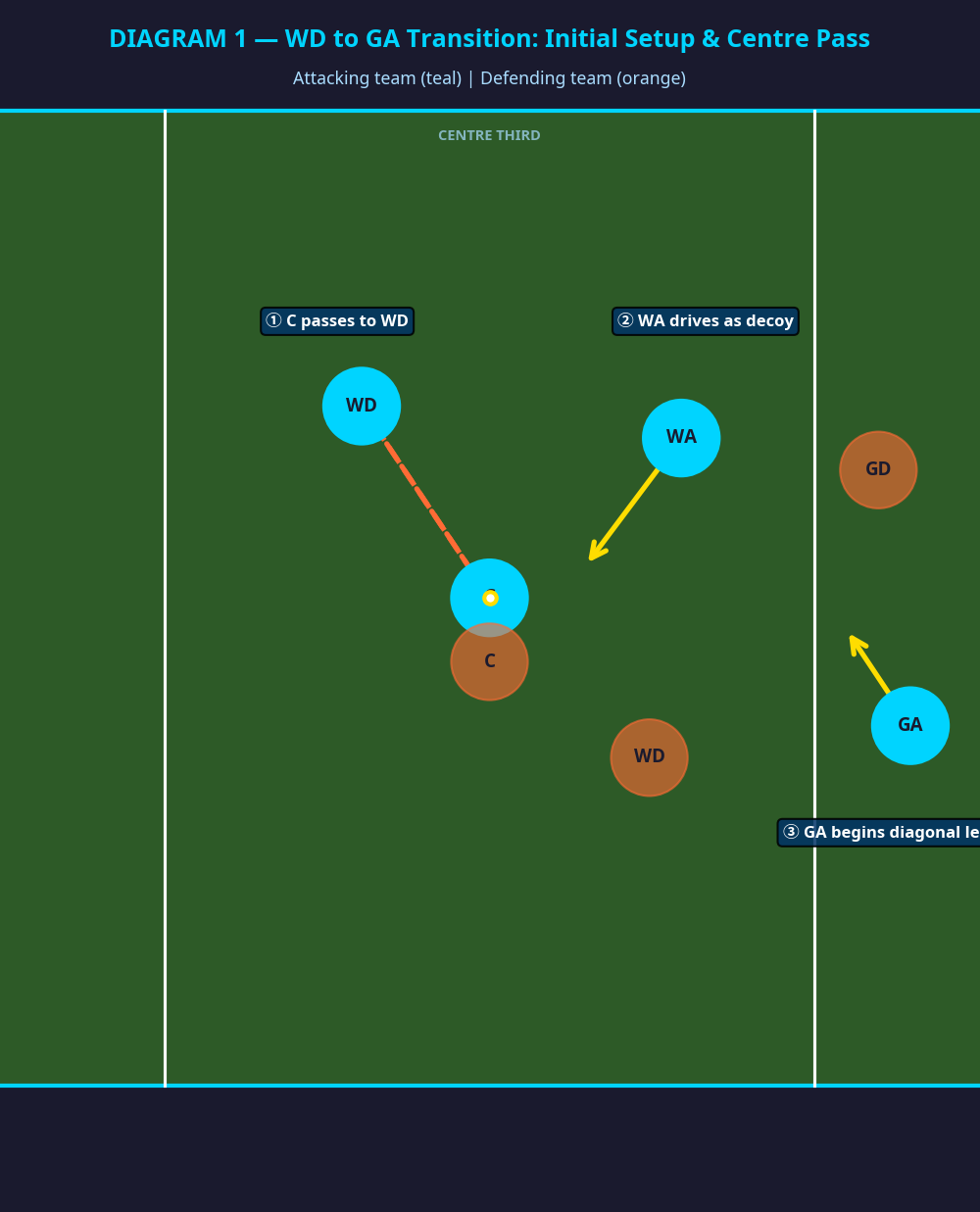
Phase 1: The Initial Setup & Pass
- The Trigger: The Centre (C) takes the centre pass (or initiates the transition from defence). The WD makes a strong, angled drive into the centre third to receive the first pass.
- The Decoy: Simultaneously, the Wing Attack (WA) drives hard toward the centre circle or the opposite wing. This movement is crucial—it draws the opposing WD and potentially the C away from the ball side, clearing the channel for the WD.
- The Catch: The WD receives the ball cleanly on the run, ensuring their momentum carries them forward toward the attacking transverse line.
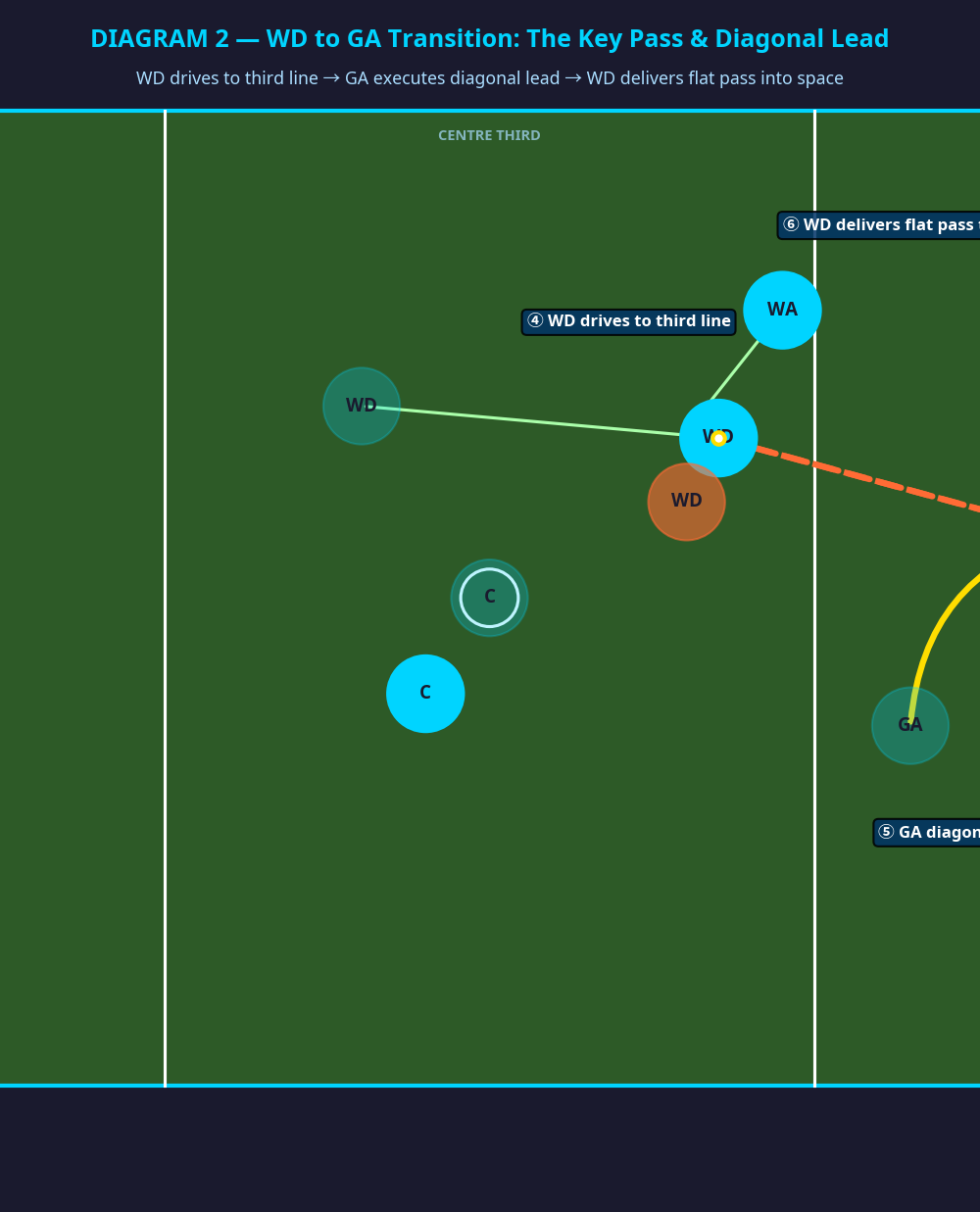
Phase 2: The Movement and Transition
4. The Drive: Upon receiving the ball, the WD immediately turns and drives aggressively straight down the court toward the edge of the attacking third. They must commit the opposing WD or force the GD to step out.
5. The Diagonal Lead: As the WD approaches the transverse line, the Goal Attack (GA) initiates a sharp, explosive diagonal lead from the top of the attacking third, cutting across the face of the Goal Defence (GD) into the open space near the goal circle edge.
6. The Key Pass: The WD delivers a hard, flat, and perfectly timed pass into the space ahead of the driving GA. The pass must be placed so the GA can take it on the run without breaking stride.
7. The Finish: The GA receives the ball smoothly, turns on the circle edge, and either takes the shot or feeds the Goal Shooter (GS) who has held position under the post.
4. Key Coaching Points
- Timing is Everything: The GA must not lead too early. The diagonal cut should trigger exactly as the WD turns and looks downcourt after receiving the first pass.
- Decoy Commitment: The WA must sell the decoy run 100%. If they jog or look disinterested, the defense will not shift, and the channel for the WD will remain closed.
- WD Vision & Execution: The WD must get their head up immediately upon receiving the ball. The pass to the GA must be flat and hard; a lofty pass gives the GD time to recover for an interception.
- GA Change of Pace: The GA's lead must feature a clear change of pace—a slow jog to set up the defender, followed by an explosive sprint into the space.
- GS Positioning: The GS must actively hold the GK away from the space the GA is driving into. If the GS drifts high, they drag the GK into the passing lane.
5. Common Mistakes
- WD Hesitation: The WD catches the ball and stops to look for options, allowing the defense to reset and smother the play.
- GA Running Too Flat: The GA runs parallel to the transverse line rather than diagonally toward the post, making the pass longer and easier for the GD to intercept.
- Poor Pass Placement: The WD passes directly at the GA rather than into the space ahead of them, forcing the GA to stop and breaking the momentum of the attack.
- WA Cluttering the Space: The WA finishes their decoy run in the same channel the GA is driving into, bringing an extra defender into the play.
6. Variations & Progressions
- Progression 1 (The Reset): If the GA is heavily covered by the GD, the WD should use the WA (who has reset on the circle edge) as a secondary option, or drop the ball back to the C to reset the attack.
- Progression 2 (The Give and Go): After feeding the GA, the WD immediately sprints to the circle edge for a return pass, creating an overload against the GD.
- Variation (The GS Pop): Instead of the GA making the diagonal lead, the GA clears out, and the GS pops out of the circle to receive the pass from the WD, while the GA drives baseline.
7. Age Adaptations
- Under 10s / Under 12s: Focus primarily on the WD catching the ball on the run and turning to face downcourt. The pass to the GA can be shorter, and the GA's lead doesn't need to be as aggressively diagonal. Emphasize basic timing.
- Under 14s / Under 16s: Introduce the importance of the WA's decoy run. Demand a flat, hard pass from the WD and a clear change of pace from the GA. Start adding defensive pressure in training.
- Open / Advanced: Execute at full match speed with intense defensive pressure. The WD should be looking to execute the pass almost blindly, relying on the pre-planned timing of the GA's lead. Incorporate the 'Give and Go' progression regularly.