

Rugby
The Crash Ball Play with Decoy Runners
Learn how to effectively execute a crash ball set play using decoy runners to freeze defenders, commit tacklers, and create space on the outside.
What you need
Rugby balls, Cones for marking defensive lines, Tackle shields (optional for contact progression)
Overview
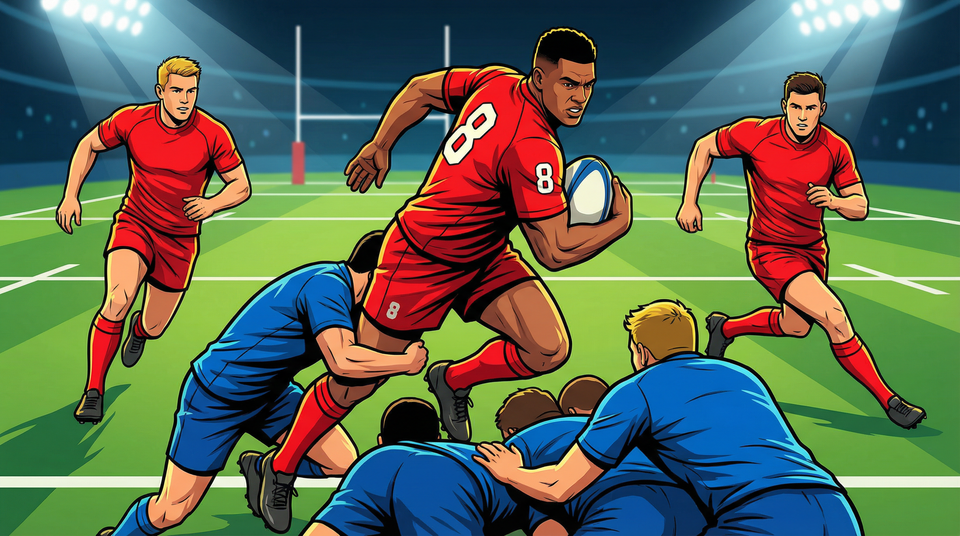
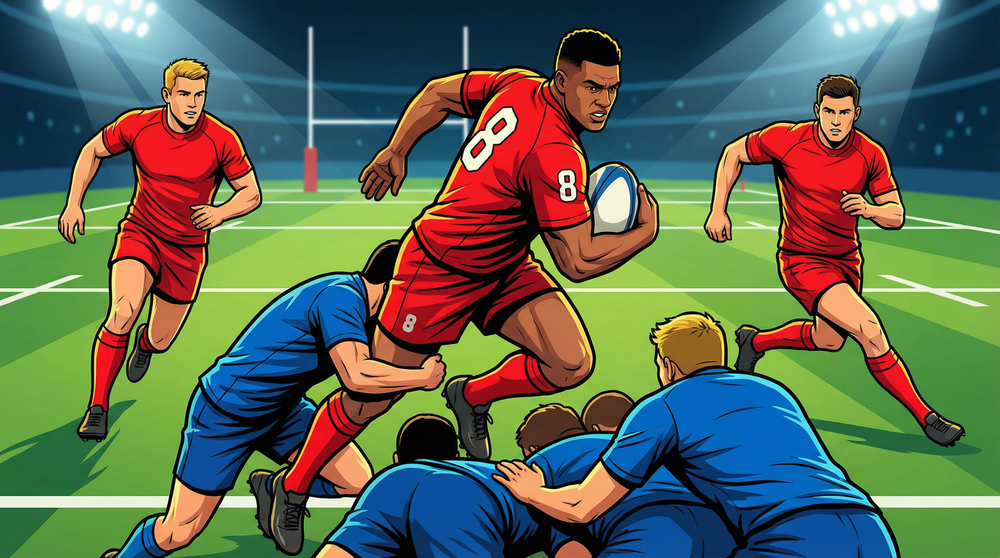
The crash ball play with decoy runners is a fundamental attacking structure designed to punch through the defensive line, commit multiple defenders, and generate quick front-foot ball. By integrating decoy runners (often loose forwards) running hard lines near the primary ball carrier, the attacking team forces the defence to hesitate. This hesitation prevents the defence from drifting early, creating space on the outside for subsequent phases. It is highly effective when executed off a stable platform like a scrum, lineout, or a dominant ruck.
Setup

- Pitch Location: Ideally executed between the 22m and 10m lines, providing enough room for the backline to operate while keeping the defence honest.
- Player Positioning:
- 9 (Scrum-half): Base of the ruck/scrum.
- 10 (Fly-half): Standing approximately 5m deep and slightly wider than usual to draw the defensive 10.
- 12 (Inside Centre): The primary crash ball carrier, positioned 3m inside the 10, running a direct, hard line.
- 8 (Number 8) & 6 (Blindside Flanker): Acting as decoy runners, positioned to run shallow, aggressive angles either side of the 12.
- 13 (Outside Centre) & Wings (11, 14): Positioned wide to exploit any space created.
Step-by-Step Instructions
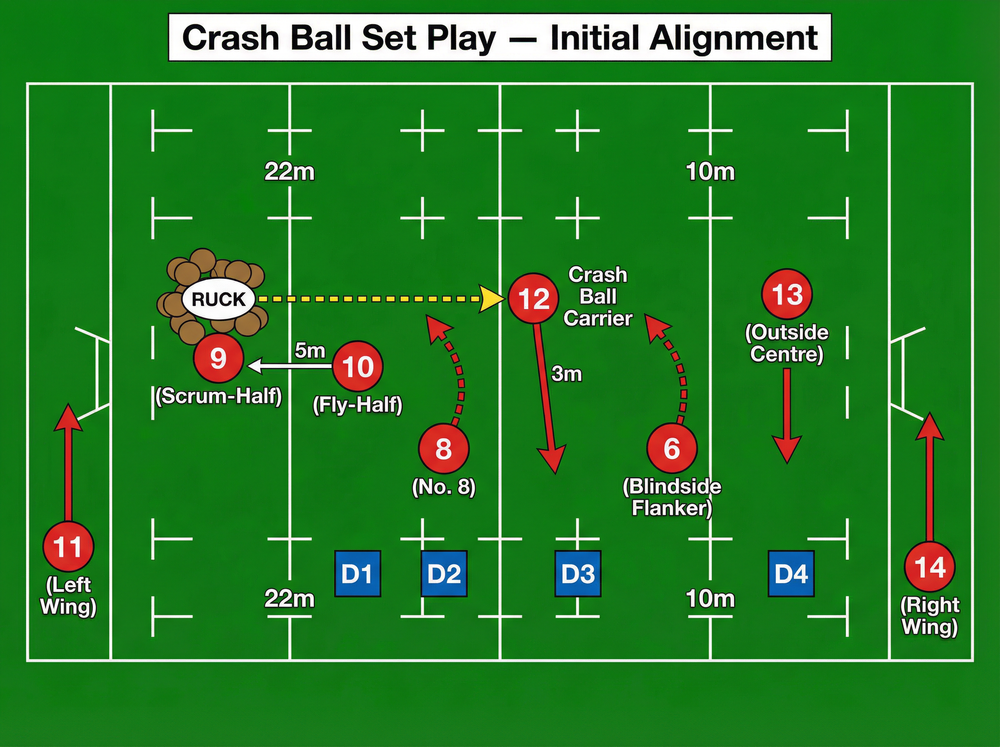
- The Delivery: The scrum-half (9) delivers a swift, accurate pass to the fly-half (10).
- The Decoys: As the ball is in the air, the decoy runners (8 and 6) accelerate on their designated lines. The 8 runs a short, hard line inside the 12, aiming to fix the defensive guards. The 6 runs an 'overs' line outside the 12 to hold the defensive 12 or 13.
- The Pass: The fly-half (10) takes the ball to the line, engaging their opposite number, before throwing a flat, short pass to the inside centre (12).
- The Contact: The inside centre (12) receives the ball at pace, dropping their body height just before contact. They must drive their legs through the tackle to ensure they cross the gain line.
- The Clear-out: The decoy runners (8 and 6), having completed their runs, immediately transition into support players, securing the ruck and providing lightning-quick ball for the next phase.

Key Coaching Points

- Timing is Everything: Decoy runners must be credible threats. If they run too early, the defence will ignore them; if too late, they obstruct the play.
- Square Shoulders: The fly-half (10) must keep their shoulders square to the defensive line to fix the tacklers before passing.
- Body Height in Contact: The crash ball carrier (12) must enter contact low and powerful, protecting the ball and fighting to stay on their feet.
- Aggressive Clear-out: Support players must arrive with urgency and aggression to clear the tackle area, ensuring quick ball for the scrum-half.
Common Mistakes
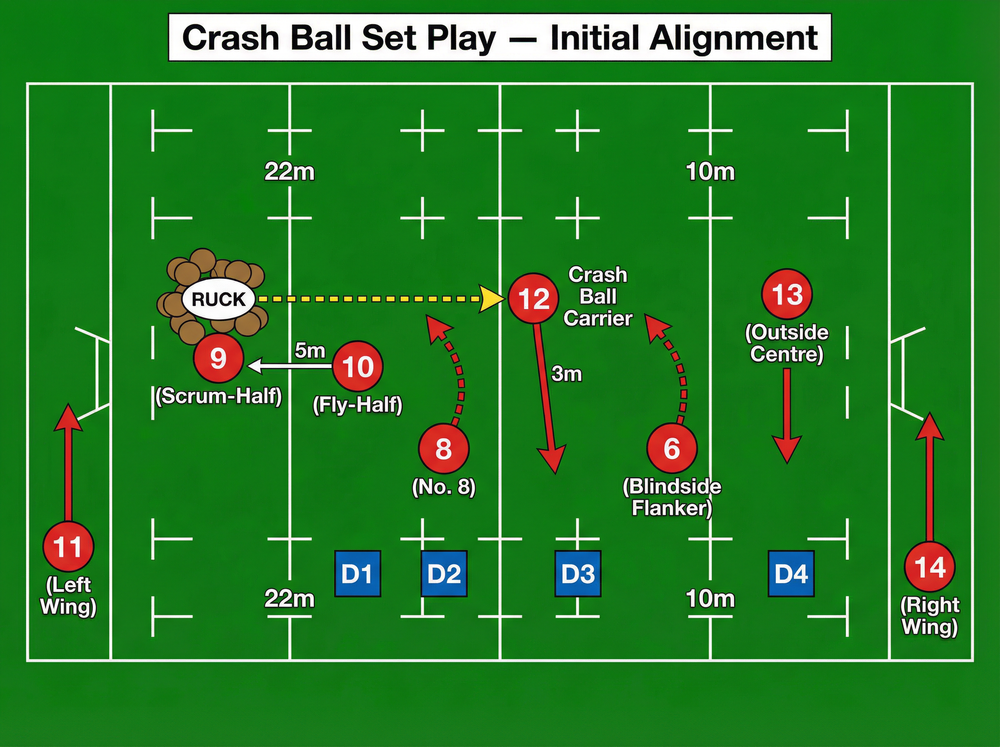
- Drifting Pass: The fly-half drifting sideways instead of attacking the line, which allows the defence to slide and cover the crash ball.
- Unconvincing Decoys: Decoy runners jogging or not calling for the ball, making it easy for the defence to read the play.
- Isolation: The crash ball carrier outrunning their support, leading to a turnover at the breakdown.
Variations & Progressions

- The Pull-Back: Instead of hitting the 12, the 10 pulls the pass back behind the decoy runners to a deep-lying full-back (15) or the 13, exploiting the space out wide.
- The Inside Ball: The 10 shapes to pass to the 12 but instead slips a short inside pass to the 8 running a hard line against the grain.
Age Adaptations

- Under 10s/12s: Focus purely on the timing of the pass and running straight. Introduce only one decoy runner to keep it simple.
- Under 14s/16s: Emphasize the quality of the clear-out and the specific lines run by the decoys. Introduce the 'pull-back' variation as their skill levels improve.
- Open/Senior: Perfect the micro-skills—body height in contact, offloading out of the tackle, and exploiting specific defensive mismatches.
