

Rugby
Forward Pod Play with Offload Option: The 'Hammer' Call
Master the 'Hammer' call to break the gain line and create rapid second-phase momentum using a tight forward pod with dynamic offload options.

What you need
1 Rugby ball, 4-6 training cones, 2-3 tackle shields (optional)
1. Overview
The 'Hammer' is a highly effective set play designed to punch through the defensive line and generate quick front-foot ball. By utilizing a tightly knit forward pod, this play isolates a specific defender, forcing them to commit to the primary ball carrier. The magic of this play lies in the pre-planned offload option, which allows the attacking team to exploit the space created behind the initial contact point.
This play is particularly effective when you have a strong, dynamic ball carrier (typically your Number 8 or a powerful prop) and mobile support players who can read the defense and react quickly. It is best deployed in the middle third of the pitch, where you have options to play both left and right off the ensuing breakdown.
2. Setup
Pitch Setup: Use a standard 100m x 70m pitch or a marked training grid of at least 40m x 40m to allow for full-speed execution.
Equipment Needed: 1 Rugby ball, 4-6 training cones to mark the ruck and defensive line, 2-3 tackle shields (optional for opposed practice).
Player Positions:
- 9 (Scrum-half): Initiates the play from the base of the ruck.
- 8 (Number Eight): Primary ball carrier, positioned centrally behind the pod.
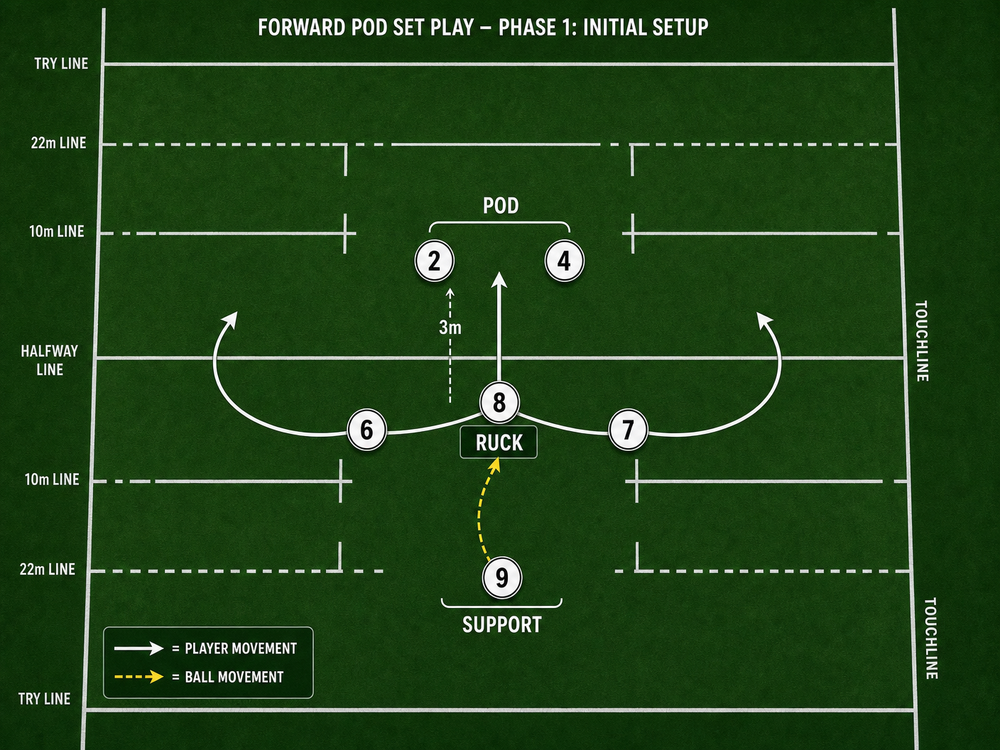
- 2 (Hooker) & 4 (Lock): Form the 'tip' of the pod, positioned 3 meters ahead of the 8.
- 6 (Blindside Flanker) & 7 (Openside Flanker): Support runners, positioned slightly wider and deeper than the 8.
3. Step-by-Step Instructions

Phase 1: The Initial Setup
- Establish the Ruck: The play begins from a static ruck or a breakdown near the center of the pitch. The 9 secures the ball.
- Form the Pod: Players 2 and 4 set up a tight pod 3 meters ahead of the ruck, creating a physical barrier and drawing the attention of the defensive pillars.
- Position the Carrier and Support: The 8 positions themselves directly behind the pod. The 6 and 7 flank the 8, ready to run their support lines.
Phase 2: The Carry and Offload
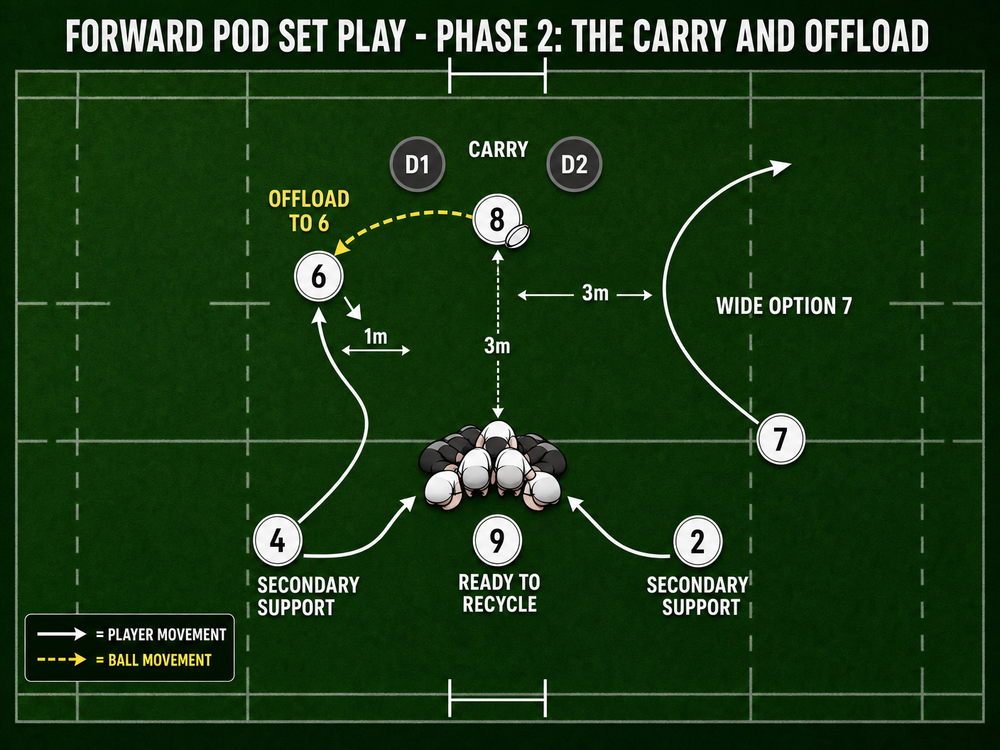
4. The Pass: The 9 delivers a crisp, flat pass to the 8, who accelerates into the space between the 2 and 4.
5. The Carry: The 8 drives hard into the defensive line, aiming to commit at least two defenders (D1 and D2).
6. The Support Lines: As the 8 makes contact, the 6 runs a tight, aggressive support line 1 meter to the left of the 8. Simultaneously, the 7 runs a wider arc, 3 meters to the right, offering an alternative option.
7. The Offload: Upon contact, the 8 fights to keep their arms free. If the 6 is in space, the 8 delivers a short, pop pass (the offload) to the 6, who bursts through the gap. If the defense collapses on the 6, the 8 can look for the wider option to the 7, or simply go to ground and present the ball cleanly for the 9.
Phase 3: Recycling and Next Phase
8. Secure the Breakdown: If the offload is successful, the 6 continues the attack. If the 8 goes to ground, the 2, 4, and 7 must immediately secure the ruck, providing quick ball for the 9 to initiate the next phase.
4. Key Coaching Points
- Depth and Pace: The 8 must start deep enough to hit the ball at full pace. A static carrier is an easy target.
- Pre-Contact Footwork: The 8 should use subtle footwork right before contact to unbalance the defender and ensure they fall forward, keeping the ball alive.
- Support Timing: The 6 and 7 must time their runs perfectly. Arriving too early clogs the space; arriving too late means the offload opportunity is missed.
- Communication: Clear, concise communication is vital. The 8 needs to call the play, and the support players must communicate their availability for the offload.
- Ball Presentation: If the offload isn't on, the 8 must prioritize ball security, fighting to the ground and presenting the ball cleanly for a rapid recycle.
5. Common Mistakes
- Flat Alignment: The pod sets up too flat, giving the defense easy targets and reducing the momentum of the ball carrier.
- Forced Offloads: The 8 attempts an offload when it isn't on, leading to knock-ons or turnovers. Emphasize that taking the tackle and presenting the ball is always a better option than a risky pass.
- Lazy Support Lines: Support players jog into position or run static lines, making them easy to defend. They must run hard, aggressive lines to be genuine threats.
- Poor Body Height: The 8 goes into contact too high, allowing the defense to choke the ball and prevent the offload.
6. Variations & Progressions
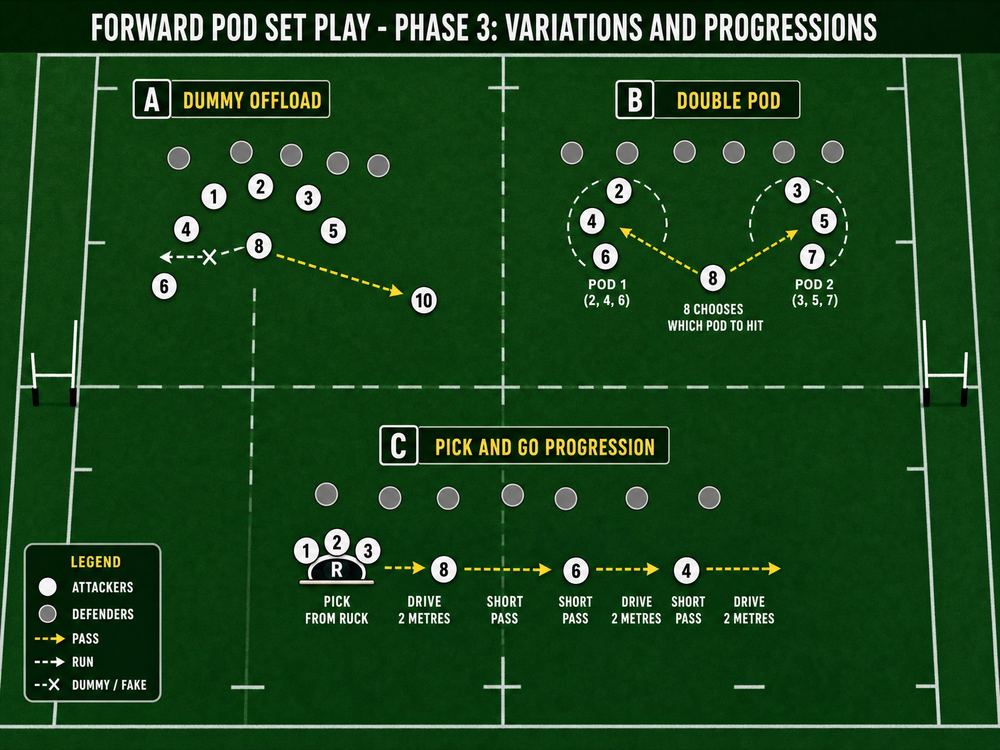
- The 'Dummy' Offload: The 8 fakes the offload to the 6, drawing the defense, and then passes wider to the 10 or 7.
- Double Pod Option: Set up two identical pods on either side of the ruck. The 9 has the option to hit either pod, keeping the defense guessing.
- Pick and Go Progression: Instead of a pass from the 9, the 8 picks the ball directly from the base of the ruck and initiates the pod movement.
7. Age Adaptations
- Under 10s / Under 12s: Focus heavily on the basic carry and ball presentation. Introduce the offload only when players are confident in contact. Use tackle shields to build confidence.
- Under 14s / Under 16s: Emphasize the timing and angle of the support lines. Introduce the 'Dummy' offload variation. Encourage players to read the defense and make decisions under pressure.
- Open Age: Focus on execution speed, pre-contact footwork, and exploiting specific defensive weaknesses. Implement the double pod option to increase complexity.
